

Every homeowner in Bristol and South Gloucestershire has heard that insurance companies reject nearly half of claims due to inadequate security measures. With rising concerns about property crime across the British landscape, making sure your locks comply with strict insurance standards is more important than ever. This guide clarifies exactly what insurance-approved locks are, how the right choices safeguard your home, and how meeting British requirements can even lower your insurance premiums.
Table of Contents
- What Are Insurance Approved Locks?
- Types of Insurance Approved Lock Standards
- How Insurance Approval Affects Home Security
- Meeting UK Insurance Policy Requirements
- Common Pitfalls and How to Avoid Them
Key Takeaways
| Point | Details |
|---|---|
| Insurance-Approved Locks Enhance Security | These locks meet strict standards, reducing the risk of break-ins and potentially lowering insurance premiums for homeowners. |
| Certification is Crucial | Locks should be certified by recognised bodies to ensure compliance with the British Standard BS3621 and other necessary security standards. |
| Regular Maintenance is Essential | Homeowners should conduct annual checks and updates of their locks to maintain compliance with insurance requirements and ensure ongoing security. |
| Prioritise Safety Features | Selecting locks that allow for safe exit during emergencies is vital, ensuring they do not compromise on safety while providing robust security. |
What Are Insurance-Approved Locks?
Insurance-approved locks are specialised security devices that meet strict safety standards set by insurance companies to protect residential and commercial properties. These locks undergo rigorous testing to ensure they can effectively prevent break-ins and meet the security requirements specified by insurance providers. National Security Inspectorate certification represents a critical benchmark in determining whether a lock meets these stringent professional standards.
Typically, insurance-approved locks feature advanced mechanisms designed to resist common burglary techniques such as picking, bumping, and forced entry. They often incorporate sophisticated features like anti-snap cylinder technology, reinforced metal construction, and precision engineering that exceeds standard lock designs. These enhanced security features directly impact an insurance provider’s assessment of property risk, potentially lowering insurance premiums for homeowners who invest in high-quality lock systems.
The primary characteristics of insurance-approved locks include robust construction, compliance with British Standard BS3621, and certification from recognised bodies like the NSI. These locks must demonstrate resistance to manipulation, have secure key control mechanisms, and provide measurable protection against various intrusion methods. Homeowners seeking comprehensive security should prioritise locks that not only meet but also exceed these insurance-mandated standards.
Quick Tip: Before purchasing a new lock, always request documentation confirming its insurance approval status and British Standard compliance to ensure maximum security protection.
Types of Insurance-Approved Lock Standards
Insurance-approved lock standards represent a comprehensive framework of security requirements designed to protect residential and commercial properties from potential intrusions. Certification from the National Security Inspectorate plays a critical role in establishing these stringent security benchmarks, ensuring that locks meet rigorous performance and reliability criteria accepted by insurance providers across the United Kingdom.
The primary standards for insurance-approved locks include the British Standard BS3621, which sets comprehensive specifications for physical security devices. This standard requires locks to demonstrate robust resistance against picking, drilling, and forced entry attempts. Locks meeting BS3621 criteria typically feature hardened steel bolts, anti-pick pins, and precision engineering that significantly reduces vulnerability to sophisticated burglary techniques. Additional standards like SS312 Diamond and Silver offer even more advanced security classifications, with Diamond representing the highest level of lock performance recognised by insurers.
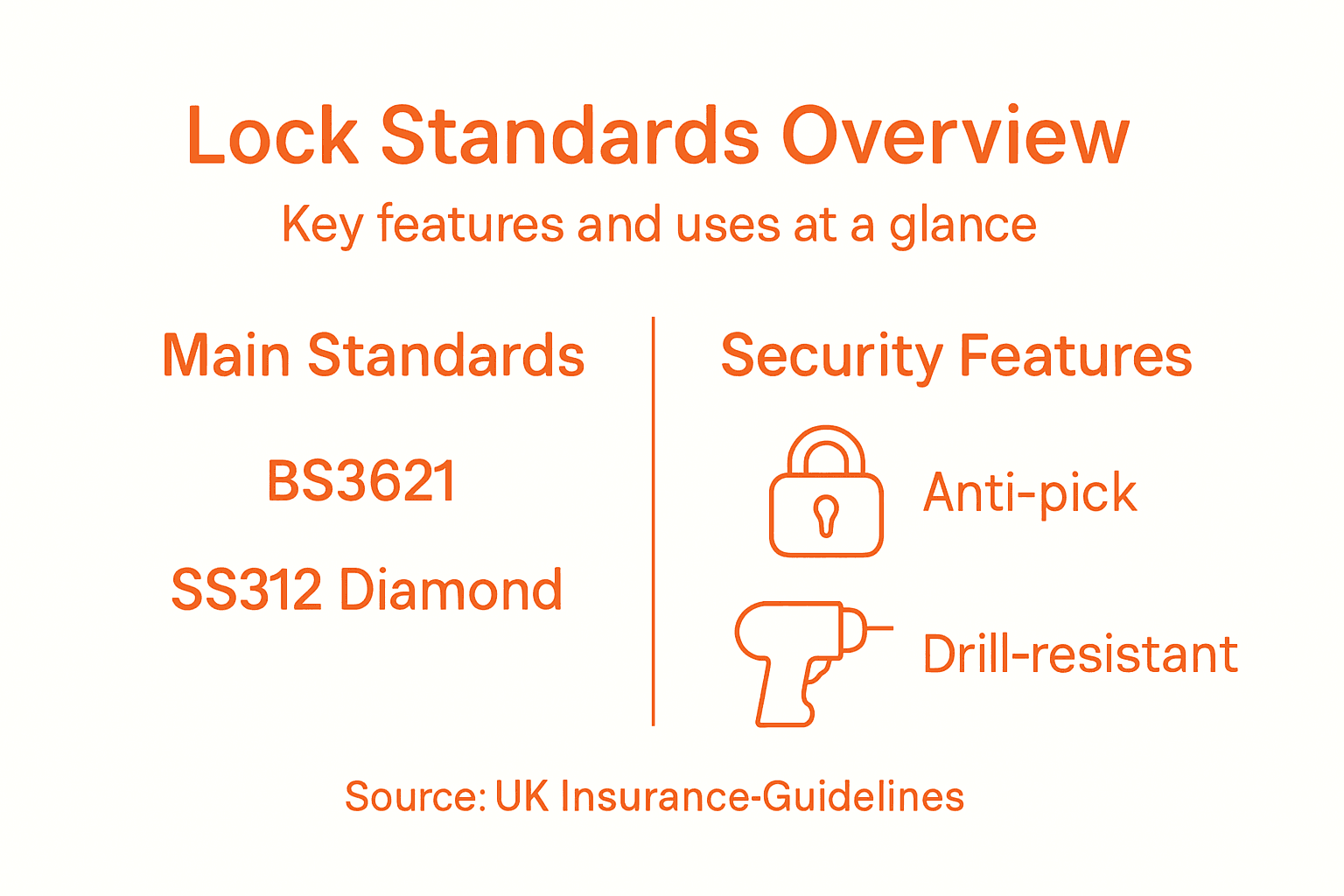
These lock standards are not merely theoretical guidelines but practical security assessments that directly impact insurance coverage. Insurers frequently mandate that properties have locks certified to specific standards, with non-compliant installations potentially leading to reduced claim payouts or increased premiums. The standards evaluate multiple dimensions of lock performance, including material strength, key control mechanisms, and resistance to various manipulation techniques. For homeowners, understanding and investing in these certified lock standards represents a proactive approach to property protection and risk management.
Quick Tip: Always request written certification documentation when purchasing insurance-approved locks to ensure you meet your insurance provider’s specific security requirements.
Below is a comparison of key insurance-approved lock standards used across the UK:
| Standard | Security Features | Typical Use | Certifying Body |
|---|---|---|---|
| BS3621 | Anti-pick, hardened bolt | Home entrances | British Standards Institution |
| SS312 Diamond | Advanced anti-snap tech | High-risk locations | Sold Secure & NSI |
| SS312 Silver | Enhanced resistance | Flats, small shops | Sold Secure & NSI |
| PAS24 | Multi-point protection | New-build properties | British Standards Institution |
How Insurance Approval Affects Home Security
Insurance approval directly influences home security by establishing rigorous standards that significantly reduce the likelihood of property breaches. National Security Inspectorate certification provides a comprehensive framework that insurers use to assess and mitigate potential security risks, creating a robust system of protection for homeowners across the United Kingdom.
The impact of insurance-approved security measures extends beyond simple lock installations. Insurers carefully evaluate the quality, installation, and maintenance of security systems, offering financial incentives for properties that meet or exceed recommended standards. This approach creates a direct correlation between security investments and insurance premiums, motivating homeowners to implement high-quality protective measures. Locks and security systems that meet stringent certification requirements can potentially reduce insurance costs by demonstrating a proactive approach to property protection and minimising the risk of successful burglary attempts.
Practical implications of insurance-approved security standards include more comprehensive risk assessments and potential financial benefits. Homeowners who invest in certified locks and security systems often receive more favourable insurance terms, with some providers offering significant premium reductions for properties that meet or exceed recommended security standards. These standards not only protect against potential financial losses but also provide a measurable framework for assessing and improving home security infrastructure.
Quick Tip: Request a security assessment from a certified locksmith to identify specific improvements that could potentially lower your insurance premiums.
Meeting UK Insurance Policy Requirements
Meeting UK insurance policy requirements for home security demands a comprehensive understanding of specific lock and safety standards. Building Regulations for lock installations establish critical technical standards that insurers use to assess property security, creating a structured approach to protecting residential properties across the United Kingdom.
Insurance policies typically require locks that meet specific technical specifications, with key considerations including fire safety, emergency egress, and robust protection against potential break-ins. For residential properties, particularly Houses in Multiple Occupation (HMOs), insurers mandate locks that balance security with practical safety requirements. This means selecting lock mechanisms that not only deter intruders but also allow quick and safe exit during emergency situations, such as euro-style thumb-turn locks or keypad systems that provide controlled access while maintaining rapid evacuation capabilities.
The practical implementation of these requirements involves careful selection of locks that comply with British Standard BS3621 and other recognised security certifications. Homeowners must ensure their lock installations meet precise criteria, including resistance to picking, drilling, and forced entry. Insurance providers conduct thorough assessments of lock quality, installation standards, and overall security infrastructure, with non-compliant properties potentially facing increased premiums or reduced coverage. This approach encourages proactive investment in high-quality security measures that protect both the property and the homeowner’s financial interests.
Quick Tip: Consult a certified locksmith annually to verify that your property’s locks meet current insurance policy requirements and security standards.
Common Pitfalls and How to Avoid Them
Navigating the complex landscape of insurance-approved locks requires careful attention to specific details that homeowners often overlook. Lock installation standards for HMOs highlight critical mistakes that can compromise both security and insurance compliance, particularly in properties with multiple occupants.
One of the most significant pitfalls involves selecting locks that compromise safety or security. Homeowners frequently make errors such as installing cheap locks that fail to meet British Standard BS3621, using outdated mechanisms that are easily circumvented, or choosing locks that restrict emergency exits. For instance, key-operated locks on internal doors can create dangerous scenarios during fire emergencies, potentially violating both safety regulations and insurance requirements. Proper lock selection must balance robust security with quick and safe evacuation capabilities, ensuring that each lock provides protection without impeding potential emergency escape routes.
Insurance providers are meticulous about lock compliance, and seemingly minor oversights can result in significant financial consequences. Common mistakes include failing to update locks after moving into a new property, using mismatched lock types across different doors, or neglecting professional installation. Some homeowners inadvertently void their insurance by using non-approved lock mechanisms or failing to maintain their existing security infrastructure. Regular security assessments, professional installation, and staying informed about current lock standards are crucial steps in avoiding these potentially costly errors.
The following table summarises common insurance pitfalls and practical solutions to avoid them:
| Pitfall | Impact on Insurance | Solution |
|---|---|---|
| Using non-compliant locks | Reduced payout risk | Choose BS3621 certified locks |
| Neglecting annual lock maintenance | Increased premiums | Schedule yearly locksmith checks |
| Failing to update locks after a property move | Invalidated cover | Replace or upgrade immediately |
| Inadequate emergency exit mechanisms | Safety hazard | Install thumb-turn or keypad locks |
Quick Tip: Arrange an annual security review with a certified locksmith to ensure your property’s locks remain fully compliant with current insurance standards.
Secure Your Property with Insurance-Approved Locks from AHLP Locksmiths
Understanding the importance of insurance-approved locks and compliance with standards such as BS3621 is essential for protecting your home or business from break-ins and avoiding insurance complications. If you worry about meeting the strict security requirements or want to reduce your insurance premiums by upgrading to certified locks, AHLP Locksmiths offers expert solutions tailored to your needs. We specialise in installing anti-snap, insurance-approved locks and provide comprehensive security consultations to ensure your property is fully compliant and safeguarded.
Take control of your property’s security today by contacting our trusted Local Locksmith team. With fast response times, reliable service, and transparent pricing, AHLP Locksmiths is here to help you upgrade your locks efficiently and confidently. Don’t leave your home or business vulnerable any longer. Book a consultation now via our Contact Page or explore our full range of expert Locksmith Services. Your peace of mind is just a call or click away.
Frequently Asked Questions
What are insurance-approved locks?
Insurance-approved locks are security devices that meet specific safety standards set by insurance companies. They are rigorously tested to provide enhanced protection against break-ins, which can also positively impact insurance premiums.
How do I know if a lock is insurance-approved?
To determine if a lock is insurance-approved, look for documentation confirming compliance with standards such as British Standard BS3621 or certifications from recognised bodies like the National Security Inspectorate (NSI).
What types of locks are considered insurance-approved?
Common types of insurance-approved locks include those that meet BS3621 standards, SS312 Diamond, and SS312 Silver classifications. Each of these standards specifies unique features for enhanced security against various intrusion methods.
How can using insurance-approved locks affect my home insurance premiums?
Using insurance-approved locks can potentially lower your home insurance premiums. Insurers often incentivise homeowners who use high-quality security measures, as these locks reduce the risk of successful burglary attempts.