
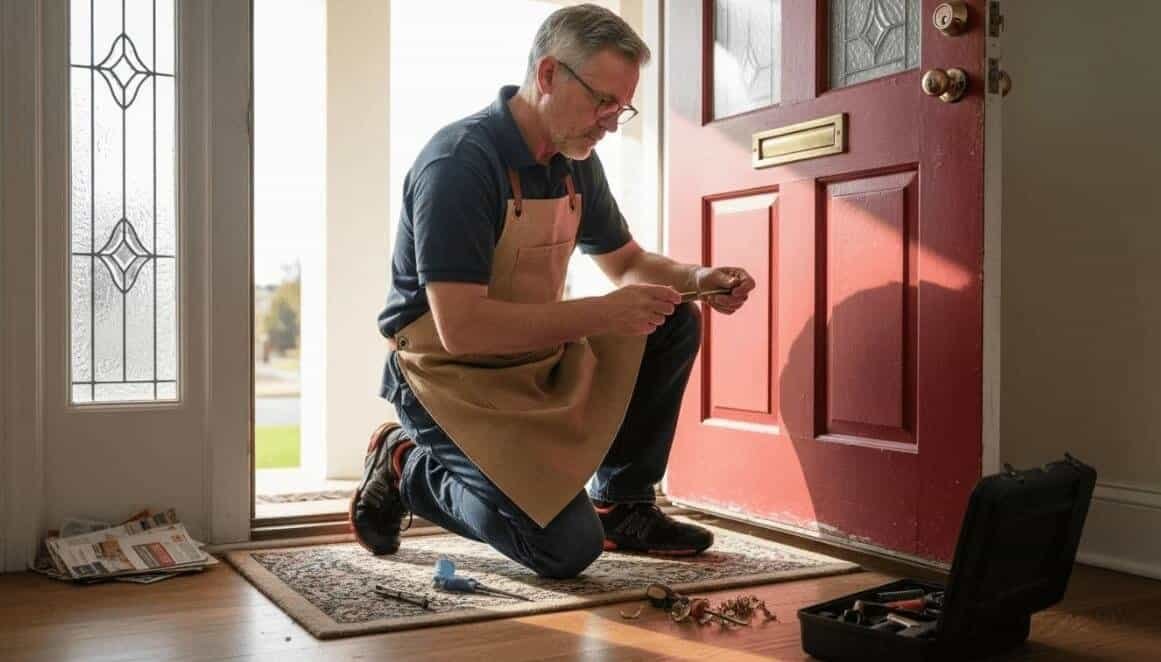
Most British homeowners in Bristol and South Gloucestershire will face a jammed lock problem or stiff key at some point, risking both daily convenience and security. In fact, over half of burglaries exploit weaknesses in faulty locks or misaligned doors, highlighting why basic maintenance matters. This guide offers practical advice for identifying and resolving common lock troubles, empowering you to handle issues yourself or know when to call a trusted local locksmith.
Table of Contents
- Jammed Lock Mechanisms and Simple Remedies
- Key Won’t Turn or Gets Stuck in the Lock
- Misaligned Door and Frame Causing Lock Issues
- Worn or Broken Lock Cylinders Explained
- Problems With UPVC Door Locking Systems
- Loose Handles and Failed Deadbolts
- How to Spot Early Signs of Lock Damage
Quick Summary
| Takeaway | Explanation |
|---|---|
| 1. Regular Lubrication Prevents Jamming | Use graphite lubricant in locks to reduce friction and prevent jamming. This simple step can significantly enhance their smooth operation. |
| 2. Check for Misalignment Early | Inspect doors for misalignment and make adjustments as needed to avoid future locking issues and ensure proper security. |
| 3. Monitor Wear and Tear on Cylinders | Look for signs of wear in lock cylinders, such as difficulty inserting keys, to avoid security risks before complete failure occurs. |
| 4. Address Loose Handles Immediately | Tighten loose handles promptly to maintain the integrity of the locking system and prevent potential security vulnerabilities. |
| 5. Regular Inspections Are Essential | Conduct quarterly checks of your locks and their mechanisms to catch early signs of damage and maintain optimal security over time. |
1. Jammed Lock Mechanisms and Simple Remedies
A jammed lock can transform a simple entry into a frustrating ordeal, blocking access and potentially compromising your property’s security. Whether it’s a sliding patio door or a standard home entrance, understanding how to address lock mechanism issues can save you time, money, and unnecessary stress.
Lock mechanisms typically jam due to several common reasons: accumulated dirt, rust, misalignment, or mechanical wear. When your lock becomes stiff or refuses to turn, it’s signalling that something is preventing its smooth operation. Sliding aluminium patio door locks are particularly prone to these issues, often requiring careful maintenance and strategic intervention.
The first step in resolving a jammed lock is gentle lubrication. Use a graphite-based lock lubricant rather than oil-based products, which can attract more dirt and potentially gum up the internal mechanism. Spray the lubricant directly into the keyhole, then insert and withdraw the key several times to help distribute the lubricant evenly throughout the lock’s internal components.
If lubrication doesn’t resolve the issue, carefully examine the lock for visible obstructions. Check for bent keys, debris, or misaligned components that might be blocking smooth operation. Sometimes, gentle manipulation using the key or a lock pick tool can help realign internal mechanisms without causing damage.
For more stubborn locks, partial disassembly might be necessary. However, proceed with caution. Removing securing screws can provide access to the lock’s internal structure, but be mindful of the vertical bolt mechanism that might be holding components in place. If you’re uncertain about the disassembly process, consulting a professional locksmith is always recommended.
Expert Tip: Before attempting complex lock repairs, photograph the lock’s current configuration to help with reassembly and prevent potential mistakes.
2. Key Won’t Turn or Gets Stuck in the Lock
A key that refuses to turn or becomes lodged in a lock can quickly transform a routine moment into a frustrating experience. Understanding the underlying causes and potential solutions can help you navigate this common lock challenge efficiently and effectively.
Mechanical issues in locks often stem from various factors that impede smooth key operation. UPVC window locking mechanisms are particularly susceptible to problems like misaligned shoot bolts or internal component damage that can prevent your key from functioning correctly.
First, carefully examine the key and lock for visible signs of damage or obstruction. Bent keys, accumulated dirt, or rust can significantly impair the lock’s performance. Gently wiggle the key to determine if there’s any resistance or unusual stiffness that might indicate internal mechanical issues.
Lubrication is often the first line of defence against stubborn locks. Use a graphite-based lubricant specifically designed for locks, applying it sparingly into the keyhole. Insert and withdraw the key several times to help distribute the lubricant throughout the internal mechanism. Avoid using oil-based products, as these can attract additional dirt and potentially worsen the problem.
If lubrication does not resolve the issue, the problem might be more complex. Check the handle tension on UPVC mechanisms. Sometimes, a loose handle prevents proper bolt retraction, making key turning difficult. Tightening the handle or adjusting the mechanism can sometimes restore smooth operation.
Should these initial steps fail, the lock may require more comprehensive intervention. Internal components like espag mechanisms might be broken or misaligned, necessitating professional assessment or complete lock replacement.
Expert Tip: Keep a spare key and have your locksmith’s contact information readily available for situations where DIY solutions prove insufficient.
3. Misaligned Door and Frame Causing Lock Issues
Doors that do not align properly with their frames represent more than just a minor inconvenience; they can compromise your home’s security and create persistent locking challenges. Understanding how misalignment occurs and learning to address it can save you significant time and frustration.
Misalignment typically results from several potential factors, including building settlement, temperature fluctuations, humidity changes, or improper initial installation. Building Regulations advise careful fitting to ensure structural integrity and prevent lock mechanisms from malfunctioning.
The most common signs of door misalignment include difficulty closing the door, visible gaps between the door and frame, uneven strike plate contact, or the lock mechanism not engaging smoothly. These symptoms indicate that your door has shifted from its original position, creating mechanical stress on the locking system.
To diagnose misalignment, start by examining the door’s edges and frame. Look for signs of warping, uneven gaps, or areas where the door rubs against the frame. Use a spirit level to check vertical and horizontal alignment. Pay particular attention to the strike plate area, where the lock bolt must precisely align to function correctly.
Remedying minor misalignments often involves careful adjustments. For wooden doors, gentle planing of edges can help restore proper fit. Metal door frames might require repositioning of mounting brackets or adjustment of hinges. In some cases, repositioning the strike plate can resolve locking mechanism issues without extensive structural work.
For more significant alignment problems, professional intervention might be necessary. Structural shifts or severe warping could indicate deeper issues requiring expert assessment and potential frame or door replacement.
Expert Tip: Perform quarterly door alignment checks and address minor issues promptly to prevent escalation of lock and structural problems.
4. Worn or Broken Lock Cylinders Explained
Lock cylinders are the intricate heart of any locking mechanism, responsible for translating your key’s unique profile into secure access. When these precision components become worn or damaged, your entire security system can be compromised.
Understanding the lock and key mechanical relationship reveals how critical cylinder integrity is for proper functioning. Each cylinder contains a complex series of pin tumblers that must align perfectly with your key’s specific cuts and grooves. Wear gradually erodes these precise tolerances, making smooth key operation increasingly difficult.
Recognising early signs of cylinder deterioration is crucial. Symptoms include keys becoming harder to insert, increased resistance when turning, visible metal shavings around the keyhole, or keys that no longer sit flush within the lock mechanism. These indicators suggest internal components are losing their precise mechanical alignment.
The primary causes of cylinder wear include frequent use, environmental exposure, low-quality manufacturing, and improper maintenance. Dust, dirt, and moisture gradually accumulate inside the mechanism, creating friction and accelerating component degradation. Cheap locks with inferior metallurgy are particularly susceptible to rapid deterioration.
While some minor cylinder issues can be addressed through professional servicing, significant wear typically requires complete cylinder replacement. This process involves removing the existing mechanism and installing a new unit that restores the lock’s original precision and security functionality.
Professional locksmiths can assess whether repair or replacement is most appropriate, considering factors like the lock’s age, overall condition, and your specific security requirements. They can also recommend upgraded cylinder designs that offer enhanced resistance to wear and potential tampering.
Expert Tip: Replace lock cylinders proactively every seven to ten years, or immediately after experiencing significant mechanical issues, to maintain optimal home security.
5. Problems With UPVC Door Locking Systems
UPVC door locking systems represent a modern security solution that can unexpectedly transform from reliable protection to a source of significant frustration. Understanding the common mechanical challenges these systems encounter can help homeowners prevent security vulnerabilities and costly repairs.
UPVC door lock mechanisms are complex systems involving multiple interconnected components like espag handles, shoot bolts, and locking points. These intricate mechanisms can develop problems due to environmental exposure, poor installation, or simple wear and tear.
Moisture represents one of the most insidious threats to UPVC door functionality. Dampness can cause subtle warping, misalignment, and mechanical stress that gradually compromise the locking system’s integrity. This environmental pressure can prevent shoot bolts from fully extending or retracting, making your door difficult to secure or open.
The most common symptoms of UPVC lock problems include difficulty turning the handle, keys becoming increasingly hard to insert, visible gaps when the door is closed, or hearing unusual grinding noises during operation. These signs indicate that internal components are experiencing mechanical stress or have become misaligned.
Repairing UPVC lock systems often requires a methodical approach. Initial steps include thorough cleaning, careful lubrication of moving parts, and checking for visible damage. Professional locksmiths can perform precise adjustments, replacing individual components like espag mechanisms or realigning locking points to restore smooth functionality.
In some cases, persistent locking issues may necessitate complete mechanism replacement. Factors such as the door’s age, extent of damage, and overall condition will determine whether repair or replacement represents the most cost-effective solution for restoring your door’s security and functionality.
Expert Tip: Conduct quarterly inspections of your UPVC door mechanisms, paying close attention to handle tension, key insertion ease, and smooth locking point engagement to catch potential issues early.
6. Loose Handles and Failed Deadbolts
Loose handles and malfunctioning deadbolts represent more than just an inconvenience; they can significantly compromise your home’s security and potentially create dangerous entry points for intruders. Understanding how these critical components deteriorate can help you maintain robust protection for your property.
Regular safety inspections reveal that mechanical components like door handles and deadbolts require consistent maintenance to prevent potential failures. These mechanisms undergo significant stress during daily use, which gradually weakens their structural integrity.
Loose handles often result from repeated use, improper installation, or gradual metal fatigue. When handle mounting screws become loose, they create wobbling movement that increases mechanical strain on the entire locking system. This continuous movement can cause misalignment, preventing smooth operation and potentially damaging internal lock components.
Deadbolts represent the primary security barrier in most doors, and their failure can leave your property vulnerable. Common signs of deadbolt issues include difficulty extending or retracting the bolt, visible rust or corrosion, and inconsistent movement when the key is turned. These symptoms indicate that internal mechanisms are wearing down and require immediate attention.
Addressing loose handles involves carefully tightening mounting screws, checking for stripped threads, and potentially replacing worn handle assemblies. For deadbolts, lubrication with graphite powder, cleaning internal mechanisms, and replacing damaged components can often restore proper functionality. However, persistent problems may necessitate complete lock replacement.
Professional locksmiths can provide comprehensive assessments, identifying subtle signs of wear that might not be immediately apparent to homeowners. They can recommend targeted repairs or suggest upgraded locking systems that offer enhanced durability and security.
Expert Tip: Perform quarterly handle and deadbolt inspections, checking for smooth operation, tight mounting, and absence of rust or corrosion to prevent unexpected security failures.
7. How to Spot Early Signs of Lock Damage
Understanding how to identify subtle signs of lock damage can save you from expensive repairs and potential security vulnerabilities. Locks, like many mechanical systems, provide early warning signals before complete failure occurs.
Detecting early lock damage requires careful observation and proactive maintenance. Mechanical lock components experience continuous stress during daily use, making them susceptible to gradual deterioration.
The most critical early warning signs include increased resistance when turning your key, unusual grinding or scraping sounds during lock operation, and visible rust or corrosion around the lock mechanism. These symptoms suggest internal components are experiencing mechanical strain and may be on the verge of significant failure.
Physical indicators of lock damage extend beyond operational issues. Examine your lock for misalignment, where the mechanism no longer sits flush with the door surface. Look for loose mounting screws, visible gaps, or areas where the lock seems slightly askew. These visual cues often precede more serious mechanical breakdown.
Environmental factors play a significant role in lock deterioration. Damp conditions can accelerate metal corrosion and cause internal components to swell or warp. Locks in areas with high humidity or frequent temperature fluctuations are particularly vulnerable to premature damage.
Regular maintenance can help mitigate these risks. Periodic lubrication with graphite powder, careful cleaning, and professional inspections can identify potential issues before they escalate into complete lock failure. Professional locksmiths can perform detailed assessments that reveal subtle signs of wear invisible to the untrained eye.
Expert Tip: Perform a monthly visual and functional check of all locks, testing their smooth operation and looking for any signs of unusual wear or resistance.
Below is a comprehensive table summarising the discussed topics on lock mechanism issues, their identification, potential remedies, and maintenance strategies.
| Topic | Key Insights | Practical Recommendations |
|---|---|---|
| Jammed Locks | Accumulation of dirt, rust, or misalignment can hinder lock operation. | Use graphite-based lubricants to restore smooth function. Inspect for visible obstructions or damage. |
| Stuck or Unresponsive Keys | Misalignment, dirt, or wear in UPVC or standard locks can cause difficulty. | Lubricate internally, tighten handles, and ensure proper mechanical alignment. |
| Misaligned Doors | Building settlement or environmental factors can shift doors, straining locks. | Adjust hinges or strike plates for proper bolt engagement. Seek professional intervention when needed. |
| Wear or Damage in Lock Cylinders | Prolonged use and exposure degrade cylinder components. | Replace cylinders approximately every seven to ten years or when mechanical issues arise. |
| Challenges with UPVC Locking Systems | Moisture induces warping, and interconnected components are vulnerable to stress. | Conduct regular maintenance, align locking points, and assess damaged sections for repair or renewal. |
| Loose Handles and Faulty Deadbolts | Gradual loosening or wear compromises lock security. | Inspect and tighten mounting screws, and replace defective assemblies for secure functionality. |
| Identifying Early Lock Problems | Increased resistance, unusual sounds, or visible corrosion can indicate pending issues. | Perform routine inspections, apply preventive maintenance, and consult professionals for complex cases. |
Resolve Your Lock Problems with Trusted Professional Help
Many common lock issues, like jammed mechanisms, misaligned doors, worn cylinders, and problematic UPVC locking systems, can cause daily stress and threaten your home security. If you recognise symptoms such as keys that won’t turn, loose handles, or stiff deadbolts from the article’s examples, it is vital to act quickly and ensure your property stays safe and accessible.
AHLP Locksmiths offers expert solutions tailored to your needs. Whether you require emergency assistance with a malfunctioning lock or a thorough repair of your UPVC door mechanism, our skilled team delivers reliable, non-destructive services using British Standard hardware. Don’t let lock problems disrupt your life or compromise your security.
Contact us at Auto Home Lock Pro or explore our full range of locksmith services today. With no call-out fees and fast response times across Bristol, South Gloucestershire, and Gloucester, get in touch now by calling 07700 100146 to restore peace of mind and secure your property effectively.
Frequently Asked Questions About Common Lock Problems
What should I do if my lock won’t turn?
If your lock won’t turn, the first step is to lubricate the keyhole with a graphite-based lubricant. Insert and remove the key several times to distribute the lubricant evenly and solve any internal friction issues.
How can I fix a jammed lock mechanism?
To fix a jammed lock mechanism, start by applying graphite lubricant into the keyhole and gently work the key in and out to free any stuck components. If the lock remains jammed, check for visible debris or misalignment before considering disassembly.
How can I identify door misalignment causing lock issues?
Identify door misalignment by checking the door edges for visible gaps and using a spirit level to assess horizontal and vertical alignment. If misalignment is present, consider adjusting hinges or repositioning the strike plate to ensure proper locking mechanism engagement.
What are the signs of wear in lock cylinders?
Signs of wear in lock cylinders include increased resistance when inserting the key, metal shavings around the keyhole, and difficulty when turning the key. To address this, consider lubricating and inspecting the cylinder or consult a professional for potential replacement.
How can I maintain my UPVC door locking system?
To maintain your UPVC door locking system, regularly clean and lubricate all moving parts every three months. Pay close attention to handling tension and ensure the locking points engage smoothly to prevent long-term mechanical issues.
What steps can I take for loose handles and failed deadbolts?
For loose handles, tighten the mounting screws and check for any stripped threads. For deadbolts, lubricate the mechanism and replace any damaged components to ensure secure functionality and protect your home.