
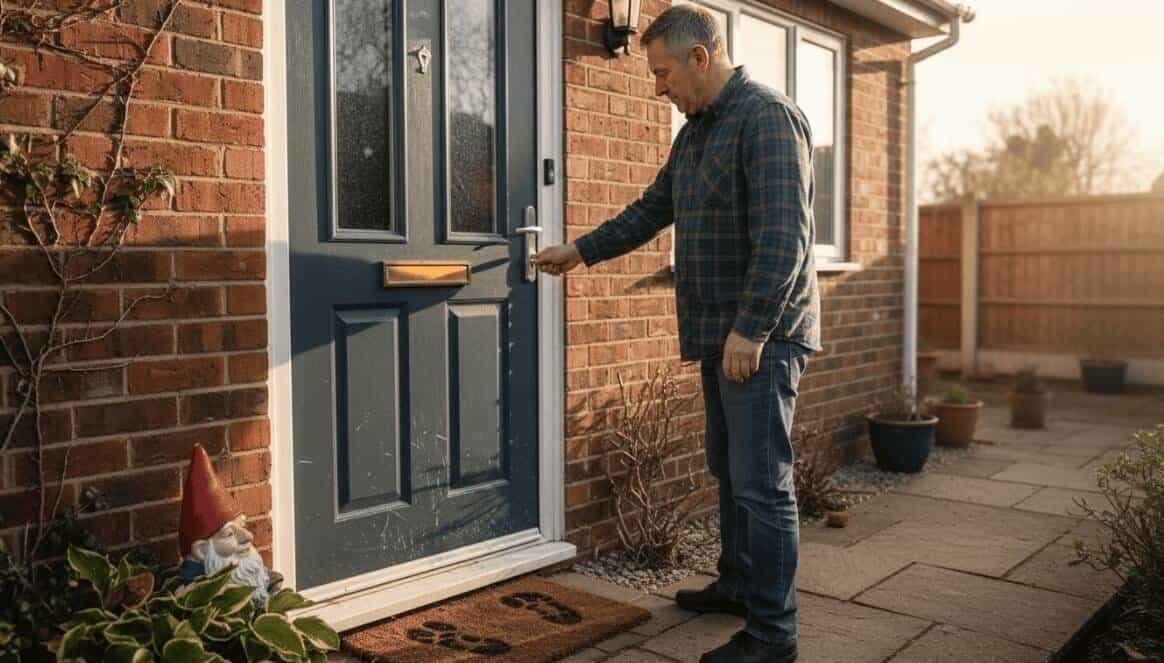
Securing your home in Bristol and South Gloucestershire means facing the challenge of choosing locks strong enough to protect against modern threats. Homeowners know that a robust front door is only as effective as its locking mechanism, especially when it comes to composite doors made with advanced materials. Opting for a professional locksmith ensures proper installation of composite door locks that meet British Standards, reinforcing your property with layers of security built to last for decades.
Table of Contents
- What Is a Composite Door Lock?
- Types of Composite Door Lock Mechanisms
- How Composite Door Locks Improve Security
- British Standards and Insurance Compliance
- Costs, Upgrades, and Common Pitfalls
Key Takeaways
| Point | Details |
|---|---|
| Composite Door Locks Enhance Security | Designed for modern composite doors, these locks offer advanced protection features such as multi-point locking systems and anti-snap technology. |
| Compliance with British Standards is Crucial | Ensure locks meet BS3621 and PAS 24 standards to safeguard against burglary and comply with insurance requirements. |
| Professional Installation is Recommended | Avoid common pitfalls by opting for professional assessments and installations to ensure optimal security and compatibility. |
| Consider Long-term Value | While initial costs may seem high, investing in quality composite door locks provides significant long-term security benefits and potential insurance savings. |
What Is a Composite Door Lock?
A composite door lock is a sophisticated security mechanism specifically designed for modern composite doors, which represent a significant advancement in home protection technology. Composite doors combine multiple materials including a robust timber core surrounded by weatherproof layers like uPVC and glass reinforced plastic (GRP), creating an incredibly durable entryway.
Unlike traditional wooden door locks, composite door locks are engineered to integrate seamlessly with these multi-layered door structures. These locks provide enhanced security by matching the door’s inherent strength and resilience. They typically feature advanced mechanisms such as multi-point locking systems, which secure the door at multiple points along the frame, dramatically reducing the potential for forced entry.
The construction of composite door locks involves precision-engineered components designed to withstand significant external pressure. Most incorporate anti-snap cylinder technology, which prevents intruders from breaking the lock by applying excessive force. These locks often include additional security features like hardened steel hooks, rollers, and deadbolts that extend deep into the door frame, creating multiple secure connection points.
Pro tip: When selecting a composite door lock, prioritise British Standard-accredited options that provide documented resistance against common burglary techniques and meet insurance compliance requirements.
Types of Composite Door Lock Mechanisms
Composite door locks come in several sophisticated mechanisms designed to provide enhanced security for modern homes. These mechanisms range from traditional keyed systems to advanced electronic options, each offering unique protective features. Locks for Houses in Multiple Occupation (HMOs) demonstrate the versatility of modern lock technologies, highlighting different security approaches for various residential settings.
The primary types of composite door lock mechanisms include multi-point locking systems, which are the most robust security option. These systems feature multiple locking points along the door frame, typically with three or more steel hooks, rollers, and deadbolts that engage simultaneously when the door is closed. Euro cylinder locks are another common mechanism, offering a standard design that can be upgraded with anti-snap technology to prevent forced entry. Keypad and electronic locks represent the cutting-edge of door security, allowing homeowners to control access through digital codes or smartphone applications.
Some advanced composite door lock mechanisms incorporate additional security features like panic exit devices, which ensure rapid egress during emergencies while maintaining external security. These mechanisms often include integrated fire safety compliance elements, allowing quick evacuation without compromising overall door integrity. Smart lock technologies are increasingly popular, offering remote access control, activity logging, and integration with home security systems.
Pro tip: When selecting a composite door lock mechanism, consider not just the security rating but also compatibility with your specific door type, ensuring seamless installation and maximum protective performance.
Here is a summary comparing common composite door lock mechanisms:
| Mechanism Type | Main Advantage | Example Feature |
|---|---|---|
| Multi-point locking | Superior break-in resistance | Three or more steel hooks |
| Euro cylinder | Easy to upgrade for security | Anti-snap cylinder technology |
| Electronic keypad | Keyless convenient access | Programmable access codes |
| Smart lock | Remote monitoring and control | Smartphone app integration |
How Composite Door Locks Improve Security
Composite door locks represent a quantum leap in home security, offering comprehensive protection through advanced design and engineering. Doors with secure locks combine durable materials that create formidable barriers against potential intruders. These sophisticated mechanisms go far beyond traditional locking systems, integrating multiple layers of defence to protect residential properties.
The primary security enhancement comes from multi-point locking mechanisms that engage simultaneously across different points of the door frame. Unlike standard single-point locks, these systems distribute force prevention across multiple steel hooks and rollers, making forced entry exponentially more challenging. Anti-snap cylinder technology provides an additional layer of protection, specifically designed to prevent criminals from breaking the lock cylinder through brute force techniques. Advanced composite door locks also incorporate hardened steel components and precision-engineered locking points that resist drilling, prising, and other common intrusion methods.
Modern composite door locks integrate intelligent security features that extend protection beyond physical barriers. Electronic and smart lock technologies now offer real-time monitoring, allowing homeowners to track access attempts, receive instant notifications, and remotely control door security. These systems can be programmed with temporary access codes, integrated with home alarm systems, and provide comprehensive logs of all entry attempts, giving homeowners unprecedented insight and control over their property’s security.
Pro tip: Regularly inspect your composite door lock’s mechanical components and consider professional security assessments to ensure ongoing optimal protection and identify potential vulnerabilities.
British Standards and Insurance Compliance
Navigating the complex landscape of lock security requires a thorough understanding of British Standards and insurance requirements. Landlords must select locks compliant with specific standards to ensure both legal protection and insurance validity. These standards represent critical benchmarks that define acceptable security levels for residential and commercial properties across the United Kingdom.
Two primary standards dominate the composite door lock compliance landscape: BS3621 and PAS 24. The BS3621 standard specifically addresses lock performance, requiring rigorous testing for resistance against picking, drilling, and forced entry. Locks meeting this standard typically feature hardened steel components, anti-pick mechanisms, and sophisticated internal engineering. PAS 24 goes further, establishing comprehensive security requirements for entire door systems, including the lock, frame, and overall structural integrity. Insurance providers frequently mandate compliance with these standards, using them as baseline criteria for valid home and commercial property policies.
Non-compliance can have significant financial implications for property owners. Most insurance policies contain specific clauses requiring locks to meet predetermined security standards. Failure to install British Standard-approved locks can result in claim rejections, leaving homeowners financially vulnerable in the event of a burglary. This means that beyond the immediate security benefits, these standards serve as a critical mechanism for risk management, providing both physical protection and financial security.
Pro tip: Consult a professional locksmith to verify that your current door locks meet British Standards and insurance requirements, potentially saving you from future claim complications.
This table outlines key British Standards relevant to composite door locks:
| Standard | Focus | Insurance Requirement | Main Benefit |
|---|---|---|---|
| BS3621 | Lock performance against forced entry | Frequently required | Enhanced cylinder security |
| PAS 24 | Whole door system security | Common for new installations | Comprehensive protection |
Costs, Upgrades, and Common Pitfalls
Homeowners considering composite door lock upgrades must navigate a complex landscape of investment, security, and potential challenges. Composite door lock costs depend on multiple factors including materials, mechanism quality, and installation expertise. The initial financial outlay might seem significant, but the long-term security benefits and potential insurance savings make this a strategic investment for property protection.
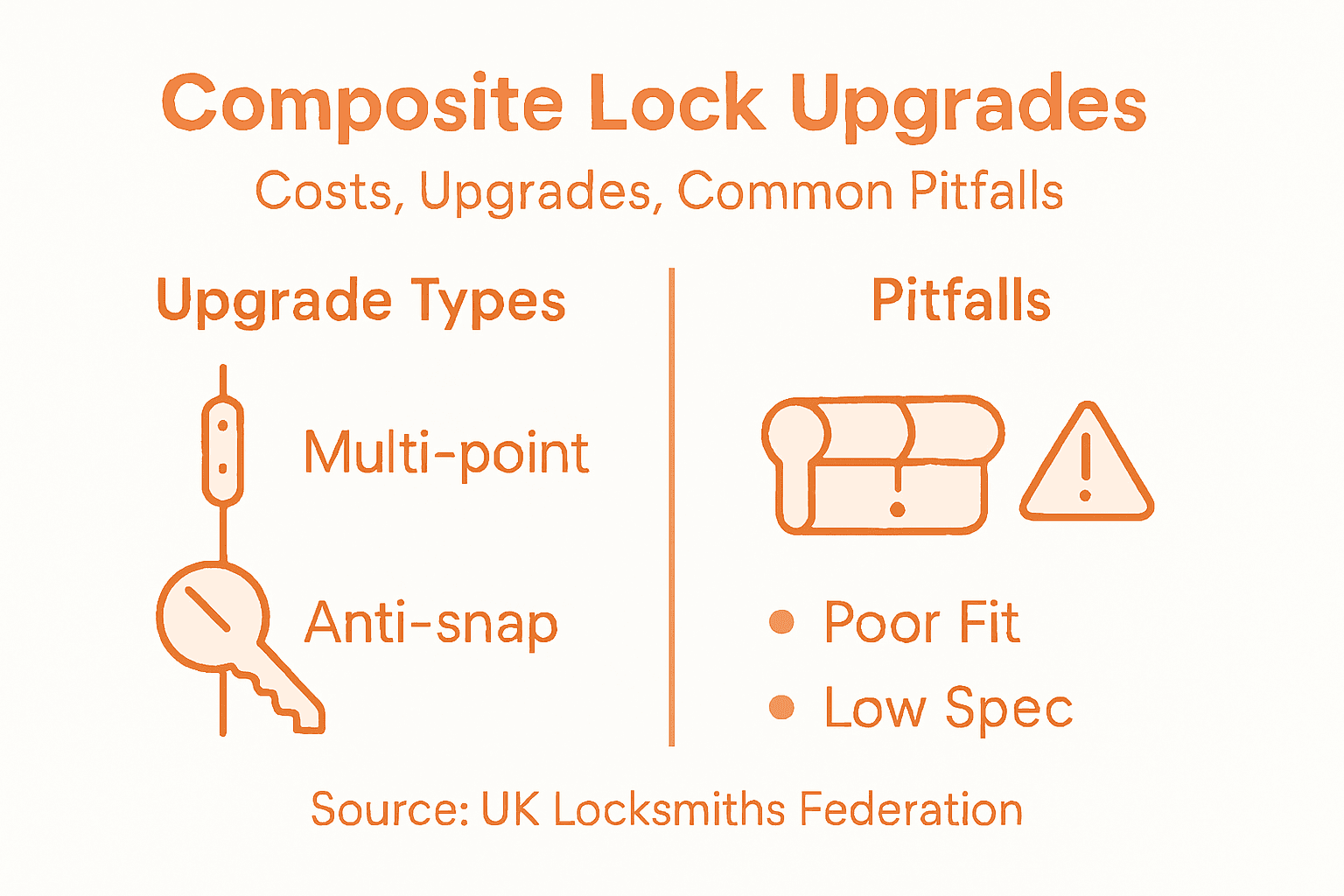
Common pitfalls in composite door lock upgrades often stem from improper selection and installation. Homeowners frequently make critical errors such as choosing non-standard locks that fail to meet British security requirements, selecting incompatible mechanisms for their specific door type, or attempting DIY installations that compromise overall security. Professional locksmiths recommend comprehensive assessments that match lock mechanisms precisely to door construction, ensuring optimal performance and insurance compliance. Smart lock technologies introduce additional complexity, requiring careful consideration of compatibility, network security, and potential vulnerability points.
Budgeting for a composite door lock upgrade involves more than the initial purchase price. Homeowners should factor in professional installation costs, potential door modification expenses, and the long-term value of enhanced security. Multi-point locking systems, while more expensive, typically offer superior protection compared to traditional single-point locks. Budget-conscious consumers should prioritise quality over cost, recognising that inferior locks can create false economy by increasing vulnerability to break-ins and potentially invalidating home insurance policies.
Pro tip: Obtain multiple professional quotes and request detailed security assessments before investing in composite door lock upgrades, ensuring you balance cost-effectiveness with comprehensive protection.
Enhance Your Home Security with Expert Composite Door Lock Services
Composite door locks significantly boost home security by offering multi-point locking systems and anti-snap cylinder technology that deters break-ins and complies with British Standards. If you are concerned about selecting the right lock mechanism or worry about installation errors compromising your security and insurance compliance, you are not alone. Many homeowners face challenges matching the perfect lock to their composite door or managing upgrades that balance cost with comprehensive protection.
At AHLP Locksmiths, we specialise in professional composite door lock installations, upgrades, and repairs that meet strict British Standards and insurance requirements. Our trusted locksmiths provide efficient, non-destructive services across Bristol, South Gloucestershire, and Gloucester, ensuring your door’s security matches its robust construction. With our thorough security consultations and ability to fit advanced anti-snap and multi-point locking systems, you gain peace of mind knowing your home is protected against forced entry and compliant with insurance policies.
Don’t wait until a security breach occurs. Explore our locksmith services for tailored lock solutions. Find your local expert for quick response times through Auto Home Lock Pro. Ready to upgrade your composite door lock security today? Call AHLP Locksmiths today on 07700 100146 or fill out our contact form to arrange a visit and secure your home efficiently.
Frequently Asked Questions
What is a composite door lock?
A composite door lock is a sophisticated security mechanism specifically designed for modern composite doors, offering enhanced protection through features such as multi-point locking systems and anti-snap technology.
How do composite door locks improve home security?
Composite door locks improve home security by using sturdy materials and advanced locking mechanisms that make forced entry more challenging. Multi-point locks engage at multiple points, while additional features like anti-snap cylinders provide superior resistance against common burglary techniques.
What should I consider when upgrading my composite door lock?
When upgrading your composite door lock, consider factors such as the lock’s security rating, compatibility with your door type, and whether it meets British Standards for security, ensuring optimal installation and performance.
What are the different types of composite door lock mechanisms available?
The primary types of composite door lock mechanisms include multi-point locking systems, euro cylinder locks, electronic keypads, and smart locks, each offering varying levels of security and convenience for homeowners.