
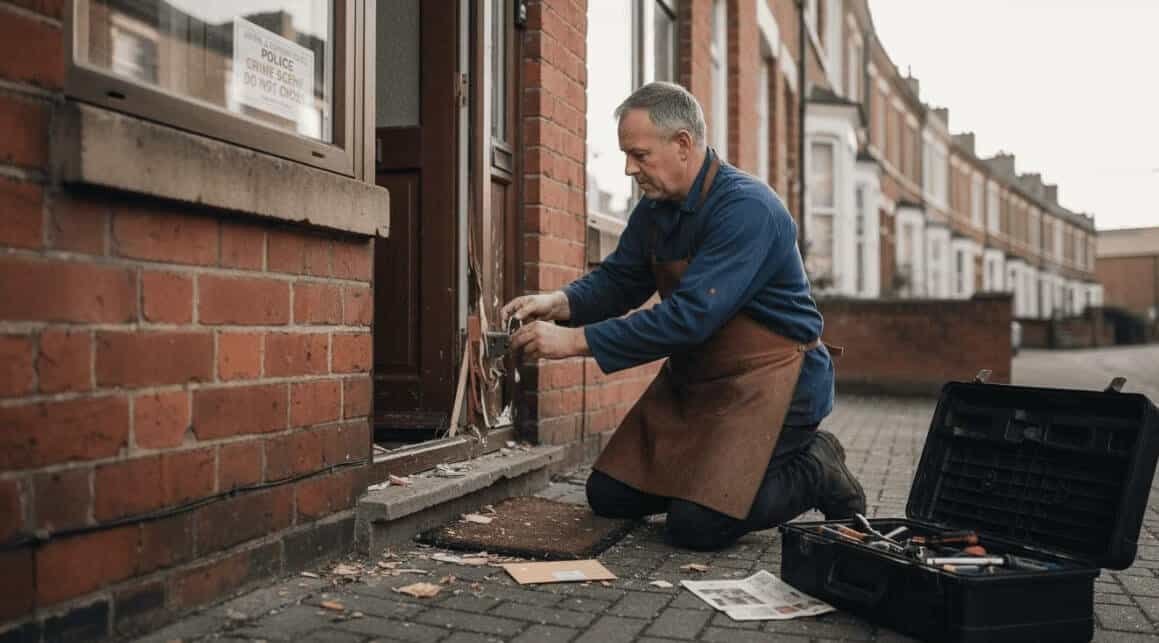
When a break-in shatters the safety of your Bristol home, the damage left behind goes far beyond lost possessions. Each broken lock, smashed window, or splintered door is a stark reminder of how exposed your property feels. For homeowners facing this reality, burglary repair means restoring not just your home’s condition, but your sense of security. Expert help brings fast, thorough solutions that address physical damage and reinforce vulnerable entry points, helping you reclaim comfort and confidence in your space.
Table of Contents
- What Is Burglary Repair in the UK?
- Types of Damage Requiring Burglary Repair
- Key Steps in the Burglary Repair Process
- Legal Duties and Insurance Considerations
- Avoiding Common Mistakes After a Break-In
- Upgrading Security to Prevent Future Burglaries
Key Takeaways
| Point | Details |
|---|---|
| Importance of Documentation | Photograph all damage immediately and document everything before proceeding with repairs to support your insurance claim. |
| Immediate Security Measures | Secure entry points within the first 24 hours after a break-in to prevent further incidents, using temporary fixes if necessary. |
| Insurance Protocol | Notify your insurance provider and local police promptly after a burglary, as delays can jeopardise your claim. |
| Upgrade Security | After repairs, consider upgrading your locks and security systems to prevent future burglaries and meet insurance requirements. |
What Is Burglary Repair in the UK?
Burglary repair covers everything needed to restore your home’s security and physical condition after a break-in. When someone forces their way into your Bristol home, they typically cause damage beyond the stolen items. Doors get kicked in, windows break, locks get smashed, and frames splinter. Burglary repair addresses all of this, bringing your property back to a secure and habitable state. This isn’t just about cosmetic fixes. It’s about making your home safe again and preventing further incidents. The process often involves working with police, insurers, and security specialists to ensure nothing is overlooked.
Residential burglary causes genuine trauma and violates your personal space in ways that go deeper than material loss. Once a burglar has breached your home, the psychological impact can last long after repairs finish. Burglary repair work tackles the practical side of recovery by securing entry points, replacing compromised locks, and restoring damaged frames and doors. In the UK, building standards like Approved Document Q set expectations for door and window security with robust fittings designed to resist unauthorised access. When repairing after a break-in, the goal is to exceed your original security level, not just return it to pre-burglary condition. This might mean upgrading to anti-snap locks, reinforcing door frames, or installing additional security hardware that wasn’t there before.
The work typically includes assessing what the burglar damaged, determining what needs replacing versus repairing, and sourcing the right materials. For Bristol homeowners, this means working with locksmiths who understand the specific vulnerabilities that attract break-ins in the area. Your insurance often covers these repairs, but you’ll need detailed documentation of what happened and what was damaged. The priority is always getting your doors and windows functional and secure first, then addressing secondary damage to frames, walls, or other areas. A proper burglary repair job also considers whether your current security level meets what your insurance provider requires, since some policies specify minimum standards you must maintain.
Pro tip: Document all damage with photos and dates before any repairs begin, then work with your locksmith to prioritise securing entry points within the first 24 hours, which protects both your insurance claim and prevents repeat incidents.
Types of Damage Requiring Burglary Repair
When a burglar forces their way into your Bristol home, the damage extends far beyond what they steal. The physical destruction they leave behind requires systematic repair work to restore your property to a secure state. Understanding what types of damage you’re likely to face helps you work more effectively with your locksmith and insurance provider, ensuring nothing gets missed during the recovery process.
Entry point damage is the most obvious category. Burglars typically force doors open by kicking them hard, which splinters door frames, cracks door panels, and warps the entire door structure. Windows get smashed to gain access or create additional escape routes, leaving broken glass, damaged frames, and compromised sills. Criminal damage during burglary includes destruction of locks, hinges, and security hardware as burglars break through these components. Composite and UPVC doors suffer particularly badly because the force required to breach them causes irreversible damage to frames and locking mechanisms. Wood doors splinter, UPVC doors crack and warp, and the surrounding brickwork or plasterboard gets damaged from the impact. Your locksmith will need to assess whether the door frame itself can be repaired or requires complete replacement, which affects both the timescale and cost.
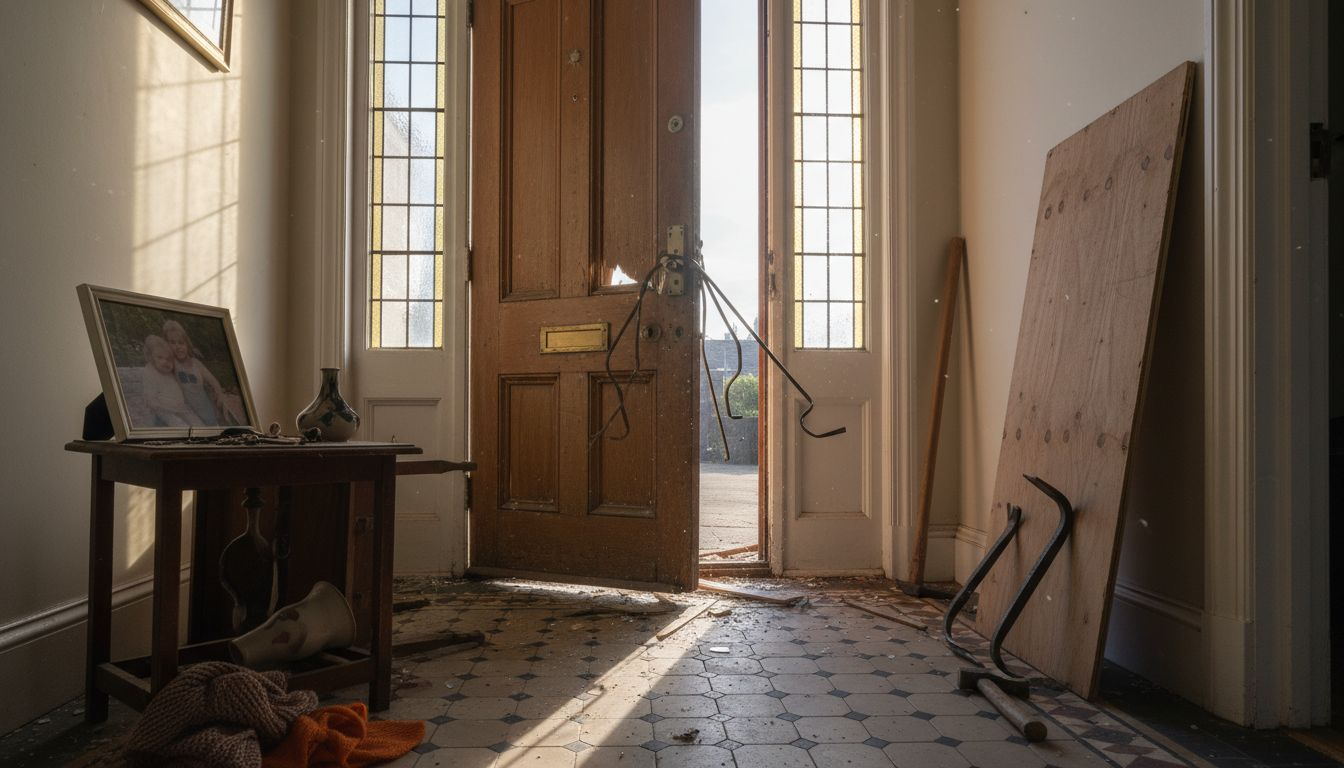
Secondary damage often goes unnoticed at first. Burglars might punch through walls to access adjoining rooms, damage internal doors as they move through your home, or smash additional locks on cupboards and storage areas. Wall plaster cracks, light switches break, and door hinges tear away from frames. Window sills get damaged when forced open, and the surrounding brickwork can crack. Floors might be scratched or gouged by tools used to prise entry points open. Once you decide on replacing compromised locks, your locksmith can advise on whether UPVC lock repair is viable or if the entire mechanism needs replacing, which directly impacts the extent of work needed.
The damage assessment process itself requires careful attention. You’ll need to document everything photographically before any repairs begin, noting the specific damage to doors, windows, locks, frames, and surrounding areas. Your insurance claim depends on this documentation, and it helps your locksmith understand exactly what work is required. Some damage might be repairable, whilst other components need complete replacement. The priority is always securing your home first, then addressing cosmetic and secondary damage afterwards.
Here’s a summary of common structural damage and recommended repair actions following a burglary:
| Area Affected | Typical Damage | Repair or Replacement | Notes on Insurance Coverage |
|---|---|---|---|
| External Doors | Kicked in, frames split | Replace/Repair | Usually covered under the buildings policy |
| Windows | Smashed glass, damaged sills | Replace glass/frames | The insurer may require an approved contractor |
| Locks & Hardware | Forced, broken mechanisms | Fit new locks | Coverage may depend on lock type |
| Internal Walls/Floors | Cracked plaster, gouged floors | Restore/Repair | May fall under contents or buildings |
| Outbuildings | Forced entry, damaged doors | Replace/Repair | Check if the garage/shed is included in the policy |
Pro tip: Take detailed photographs of all damage from multiple angles before touching anything, as this documentation supports your insurance claim and helps your locksmith prioritise which repairs prevent further security breaches.
Key Steps in the Burglary Repair Process
The hours and days immediately following a burglary are critical. Your actions during this time affect both your safety and your ability to recover through insurance. The process isn’t complicated, but it does require following a specific sequence to protect yourself legally and practically. Getting this right means your home gets secured quickly and your claim gets processed smoothly.
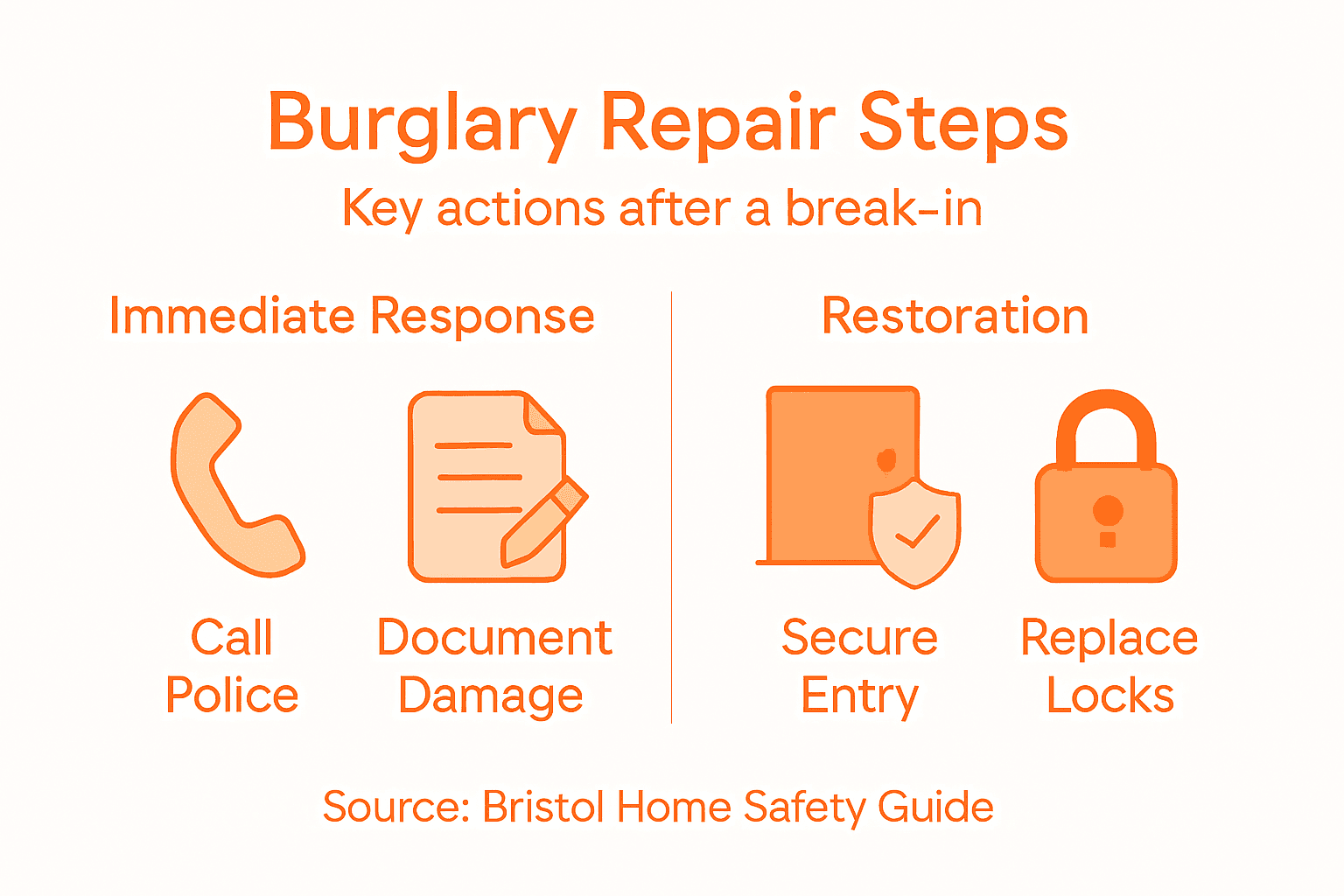
Start by calling 999 if the burglary is happening or if you arrive home to find a break-in in progress. Once you’re certain the intruder has left and you’re safe, you can begin documenting what happened. Taking photographs after a burglary is essential before you touch anything, as this creates evidence for both the police and your insurer. Photograph broken windows, forced doors, damaged locks, and any items that have been disturbed or stolen. Don’t clean up or move things around before this documentation is complete. Next, ring the police non-emergency line (101) and file a formal report. You’ll receive a crime reference number, which you must keep safe because your insurer will ask for it. Contact your insurance provider immediately with this crime reference number and begin your claim. Don’t delay this step because most policies require notification within specific timeframes.
Once the initial reporting is done, your priority shifts to securing your home. If your door won’t close properly or your windows are broken, you need temporary measures immediately. Boarding up windows, propping doors closed with wedges, or installing temporary locks prevents further break-ins whilst you arrange permanent repairs. This is where your locksmith becomes invaluable. A professional can assess the damage quickly and advise whether components can be repaired or require full replacement. They’ll prioritise securing your entry points first because this prevents copycat burglaries, which are surprisingly common in Bristol. The role of locksmiths after break-ins includes evaluating structural damage, recommending upgraded security hardware, and ensuring your home meets insurance requirements for future protection.
Permanent repairs come next. Your locksmith will replace compromised locks, repair or replace damaged doors and frames, and secure windows. Work with your insurer throughout this process because they often have approved contractors or specific requirements about the standard of repairs. Keep all receipts and documentation because you’ll need these to support your insurance claim. The entire process typically takes one to three weeks, depending on the extent of damage and how quickly your insurer approves the work.
Pro tip: Ring your locksmith on the same day as the burglary to arrange emergency board-up if windows are broken, then schedule the permanent repairs once your insurer has approved the claim, and you have your crime reference number.
Legal Duties and Insurance Considerations
After a burglary, the legal and financial side of recovery can feel overwhelming. Understanding who’s responsible for what repairs, how your insurance works, and what obligations exist helps you navigate the process confidently. The situation differs depending on whether you own or rent your home, and your specific insurance policy terms matter enormously.
If you own your Bristol home, you’re responsible for arranging and paying for repairs unless your building insurance covers the damage. Most standard building policies do cover burglary damage, but the extent of coverage varies significantly. Your contents insurance covers stolen items and personal possessions, whilst your buildings insurance handles structural damage like doors, windows, and frames. Read your policy carefully because some insurers specify the standard of repairs required or insist on using approved contractors. Many policies also set limits on how much they’ll contribute to certain types of work. Report the burglary to your insurer immediately with your crime reference number because delays in notification can void your claim. Keep every receipt, quote, and piece of documentation because you’ll need these to substantiate your claim. Your locksmith’s invoice becomes crucial evidence, so ensure it details exactly what work was done and what materials were used.
If you rent your home, responsibilities are split between you and your landlord. Landlords typically cover damage to building structures such as doors, frames, windows, and exterior security features, whilst tenants cover their personal possessions and contents. Your tenancy agreement should clarify these responsibilities, though most follow this standard split. Notify your landlord immediately after the burglary so they can arrange urgent repairs like boarding up windows. Your landlord must also maintain the property to a standard that allows you to live there safely and securely. If your landlord refuses to arrange necessary repairs, you may have grounds for complaint. Document everything in writing when communicating with your landlord about repairs needed.
Both homeowners and renters should understand that insurance claims require prompt action. Most policies require notification within days, not weeks. Delays give insurers grounds to reject or reduce your claim. Photograph all damage thoroughly, obtain quotes from your locksmith before committing to repairs, and keep your insurer informed at each stage. If repairs exceed your policy excess or limits, discuss this with your insurer before proceeding so you understand your financial obligation.
Pro tip: Contact your insurer before arranging repairs and obtain their approval, as some policies require quotes from approved contractors or have specific requirements about repair standards that protect your claim eligibility.
Avoiding Common Mistakes After a Break-In
In the chaos and stress following a burglary, it’s easy to make decisions that damage your insurance claim or compromise police investigations. These mistakes often seem harmless at the time, but they can cost you thousands in uncovered repairs or prevent the police from catching the person responsible. Knowing what to avoid is just as important as knowing what to do.
The biggest mistake is disturbing the crime scene. Your instinct is to clean up, tidy broken glass, and restore normality as quickly as possible. Don’t. Even small actions like moving items, sweeping up, or touching damaged areas can destroy evidence that police need to investigate and potentially catch the burglar. Police may need to examine fingerprints on broken glass, tool marks on door frames, or fibres left behind by the intruder. Avoiding common mistakes after burglary means photographing everything exactly as you found it, then leaving the scene untouched until police have finished their investigation. This discipline protects both the criminal investigation and your insurance claim. Your insurer needs to see the damage in its original state before any repairs begin.
Delaying police notification is another costly error. You might feel embarrassed, think the police won’t help recover your items, or assume there’s no rush since the burglar is gone. Report it immediately by calling 101 (or 999 if the burglary is happening). The crime reference number you receive is essential for your insurance claim. Many policies explicitly require notification within 24 or 48 hours. Missing this deadline gives your insurer grounds to reject your claim entirely. Similarly, don’t wait to contact your insurer. The moment you’ve reported to the police, contact your insurance company with your crime reference number and begin documenting your claim. Delays suggest you weren’t genuinely concerned about the incident, which insurers view sceptically.
Neglecting to document damage thoroughly undermines your entire claim. Take photographs and videos of every damaged area before touching anything. Photograph broken windows from multiple angles, forced door frames, damaged locks, and any stolen items, if you have before pictures. Write down everything missing, including item descriptions and approximate values. If you’ve had bank cards or cheques stolen, contact your bank immediately to freeze accounts and prevent fraud. Keep all receipts from repairs and replacements because without them, your insurer won’t reimburse you. Missing documentation is one of the most common reasons claims get reduced or rejected.
Pro tip: On discovering a burglary, call 999 or 101 immediately, photograph everything without moving anything, then contact your insurer with your crime reference number before arranging any repairs.
Upgrading Security to Prevent Future Burglaries
After a burglary, many homeowners realise their security was weaker than they thought. The good news is that upgrading doesn’t require massive expense or complicated installation. Strategic improvements to doors, locks, lighting, and visibility around your Bristol home can dramatically reduce the chances of a repeat break-in. Burglars look for easy targets, and making your home less appealing forces them to move on to somewhere easier.
Your entry points are the priority. Doors and locks are where most burglaries start, so upgrading these offers the highest return on investment. Anti-snap locks and deadlocks provide significantly better security than standard locks because they resist forced entry and picking techniques. Composite doors with reinforced frames are harder to kick in than older wooden doors, and multi-point locking systems spread the force across multiple points rather than concentrating it on a single lock. If you’re renting, speak to your landlord about these upgrades because they benefit both of you. Windows are often overlooked, but equally important. Ensure all accessible windows have working locks, and consider upgrading to lockable window restrictors that prevent full opening even if someone breaks the glass. Ground floor windows are particularly vulnerable, so prioritise these.
For reference, here is a comparison of security upgrade options and their impact on future burglary risk:
| Security Upgrade | Ease of Installation | Effectiveness Against Burglars | Typical Insurance Benefit |
|---|---|---|---|
| Anti-snap locks | Moderate | Highly resistant to lock snapping | May reduce premium |
| Reinforced door frames | Skilled required | Strong defence against forced entry | Often required by insurer |
| Security lighting | Simple | Good deterrence improves visibility | May boost claim approval |
| CCTV cameras | Professional best | Enables evidence, deters entry | Supports police investigation |
| Window restrictors | Easy for the ground floor | Limits access, delays intruders | Improves window claim eligibility |
Security lighting makes your home less attractive to burglars. Motion sensor lights near doors and windows light up if someone approaches, which deters opportunistic break-ins and helps neighbours spot suspicious activity. CCTV cameras with visible signage work similarly, announcing that your property is monitored. Even fake cameras deter some burglars, though genuine systems are better. Clear sightlines around your property matter too. Trim hedges and trees that could hide someone attempting entry, and ensure your front door is visible from the street rather than obscured by vegetation.
Alarms and neighbourhood watch participation complete your defence. A loud alarm system triggers when someone forces entry, often scaring burglars away and alerting neighbours to call police. Consulting a professional security assessor or crime prevention officer helps you prioritise upgrades based on your specific property vulnerabilities. Five-lever mortice deadlocks on external doors and secured outbuildings like sheds and garages prevent thieves from accessing tools or having hidden access points. Work with an accredited locksmith like AHLP to ensure upgrades meet insurance standards and genuinely improve your security rather than just creating an illusion of protection.
Pro tip: Start with lock upgrades and external door reinforcement, which offer the greatest protection per pound spent, then add lighting and alarms once the basics are secure.
Secure Your Bristol Home with Trusted Burglary Repair Experts
Experiencing a burglary can leave you feeling vulnerable and overwhelmed by the damage to your doors, locks, and windows. The immediate challenge is restoring safety and securing your entry points quickly to prevent further harm. At AHLP Locksmiths, we understand the importance of prompt, professional burglary repair that not only fixes the damage but also upgrades your home security beyond the original level. With expertise in repairing UPVC locks, composite and wooden door mechanisms, and comprehensive lock replacements, our team ensures your property meets all insurance and safety standards.
Don’t wait until a small breach becomes a bigger risk. Take action today by contacting our local locksmith team for efficient and reliable burglary repairs. Whether you need emergency lock replacement or a full security upgrade, our services cover every aspect of post-burglary recovery. Protect your home and peace of mind by reaching out through our contact page now. For immediate assistance, explore our emergency locksmith services and secure your home without delay.
Frequently Asked Questions About Burglary Repairs
What should I do immediately after a burglary?
Document the damage by taking photographs, notify the police to file a report, and contact your insurance provider with the crime reference number to start your claim.
How can I secure my home after a break-in?
You can secure your home by boarding up broken windows, propping doors closed, and installing temporary locks until permanent repairs are made by a locksmith.
What types of damage can occur during a burglary?
Burglary can cause damage to doors, windows, locks, and surrounding structures. Entry points may be splintered or smashed, and secondary damage to walls and floors can also occur.
What are the best upgrades to improve home security?
Upgrading to anti-snap locks, reinforced door frames, security lighting, and installing window restrictors are effective ways to enhance home security after a burglary.