

Dealing with a jammed lock in your Bristol home can quickly turn a simple task into a source of frustration. When your front door sticks or your key refuses to turn, knowing what steps to take can save time and money. With practical advice on gathering essential tools, checking alignment and applying lubricant, this guide shows how a few careful actions can restore smooth lock operation before you need to call a professional. Bold action and attention to detail make the difference between a quick fix and a costly mistake.
Table of Contents
- Step 1: Gather Necessary Tools And Safety Items
- Step 2: Inspect The Lock And Door Alignment
- Step 3: Apply Lubricant To The Keyhole And Mechanism
- Step 4: Gently Manipulate The Key And Handle
- Step 5: Test Lock Operation And Check For Proper Movement
Quick Summary
| Key Point | Explanation |
|---|---|
| 1. Gather essential tools and safety gear | Have a precision screwdriver set, lubricants, pliers, gloves, safety glasses, and a light source ready for the repair process. |
| 2. Inspect lock and door alignment | Check for uneven gaps, door warping, and alignment issues to identify the source of the jammed lock. |
| 3. Apply lubricant correctly | Use appropriate lubricants like graphite powder or silicone to reduce friction and ensure smooth operation of the lock. |
| 4. Manipulate the key gently | Apply even pressure when turning the key, listening for changes to avoid damaging the internal mechanism. |
| 5. Test lock functionality after repairs | Verify smooth operation by testing key insertion, turning, and latch movement to ensure successful repairs. |
Step 1: Gather necessary tools and safety items
Before diving into lock repair, you’ll want to prepare yourself with the right equipment and protective gear. A well-organised approach prevents unnecessary complications and keeps you safe during the repair process.
For this task, you’ll need several key items to successfully manage a jammed lock. Your essential toolkit should include:
- A precision screwdriver set with multiple head types
- Lubricating graphite powder or specialised lock lubricant
- Needle-nose pliers
- Work gloves to protect your hands
- Safety glasses
- Torch or headlamp for better visibility
- Fine-tipped metal probe or lock pick tool
While assembling your toolkit, consider the specific lock type you’re working with. Different mechanisms might require slightly varied approaches and specialised tools.
Preparation is half the battle when dealing with mechanical repairs.
Your safety gear is equally important. Protect your hands with sturdy work gloves that offer dexterity, and wear safety glasses to shield your eyes from potential debris or spring-loaded components that might suddenly release.
Expert Tip: Always keep your tools clean and organised in a dedicated toolbox to prevent misplacing small but critical components during lock repair.
Step 2: Inspect the lock and door alignment
Before attempting any repairs, a thorough inspection of your lock and door alignment is crucial to understanding the underlying issues causing the jamming. Carefully examining the components will help you diagnose whether you’re dealing with a minor misalignment or a more significant mechanical problem.
Begin by checking the lock mechanism’s alignment with careful visual and physical assessment. Look for these key indicators of potential lock and door misalignment:
- Uneven gaps between the door and frame
- Visible warping or twisting of the door
- Difficulty closing or opening the door smoothly
- Loose or misaligned strike plate
- Signs of wear on the latch or lock mechanism
Small misalignments can cause significant locking difficulties if left unaddressed.
Pay close attention to the door handle movement and how it interacts with the lock mechanism. Subtle changes in building structure, such as house settling or temperature fluctuations, can cause slight shifts that impact your lock’s functionality. Proper door alignment assessment involves checking not just the lock itself, but the entire door frame and surrounding structure.
Expert Tip: Use a carpenter’s level to check horizontal and vertical alignment of your door frame, which can quickly reveal hidden misalignment issues.
To help you assess lock and door alignment, here’s a summary of key inspection points and their possible causes:
| Inspection Focus | Possible Indication | Common Cause |
|---|---|---|
| Uneven door gaps | Structural shifting | House settling or humidity |
| Stiff handle movement | Lock mechanism fault | Dirt or worn components |
| Misaligned strike plate | Poor latch alignment | Loose screws or warping |
| Visible door warping | Frame or door defect | Water damage or age |
Step 3: Apply lubricant to the keyhole and mechanism
Lubricating a jammed lock is a critical step that can often restore smooth functionality and prevent future mechanical issues. The right approach can help eliminate friction, remove debris, and restore your lock’s operational capacity.
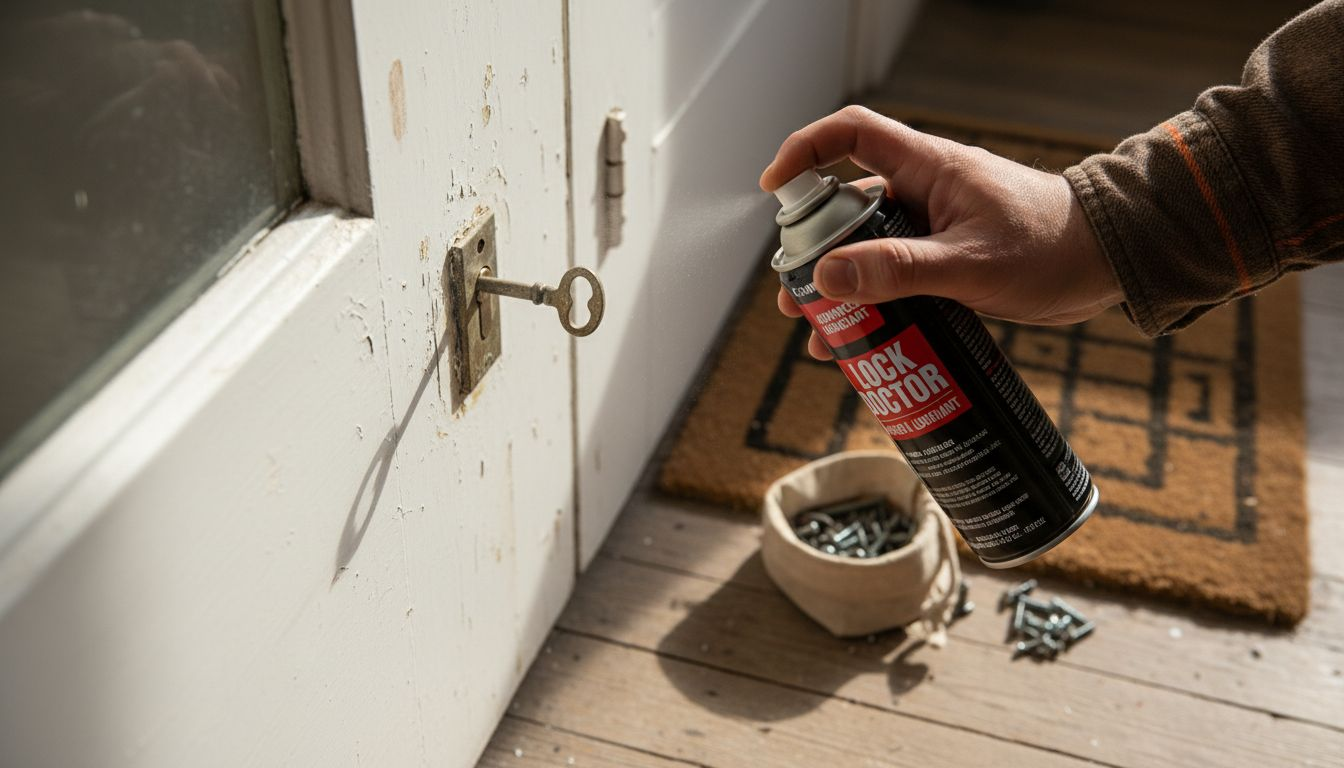
Applying lubricant correctly involves selecting the appropriate product and using precise application techniques. Choose between these recommended lubricant types:
Here’s a quick reference comparing common lock lubricants and their best applications:
| Lubricant Type | Ideal Application | Advantages |
|---|---|---|
| Graphite powder | Internal lock cylinders | Non-greasy, repels dust |
| Silicone-based spray | Multi-purpose, moving parts | Resists moisture, no residue |
| Specialised lock oil | Precise application zones | Reduces friction effectively |
| White lithium grease | Hinges and external metal | Long-lasting, protects metal |
- Graphite powder (recommended for most locks)
- Silicone-based spray lubricant
- Specialised lock lubricant
- White lithium grease (for external metal components)
Proper lubrication can significantly extend the life of your lock mechanism.
To apply the lubricant effectively, follow these critical steps. Insert the straw attachment directly into the keyhole, and spray a small amount of lubricant. Gently insert and wiggle the key to distribute the lubricant evenly throughout the internal mechanism. Avoid over-application, which can attract dirt and potentially cause more harm than good.
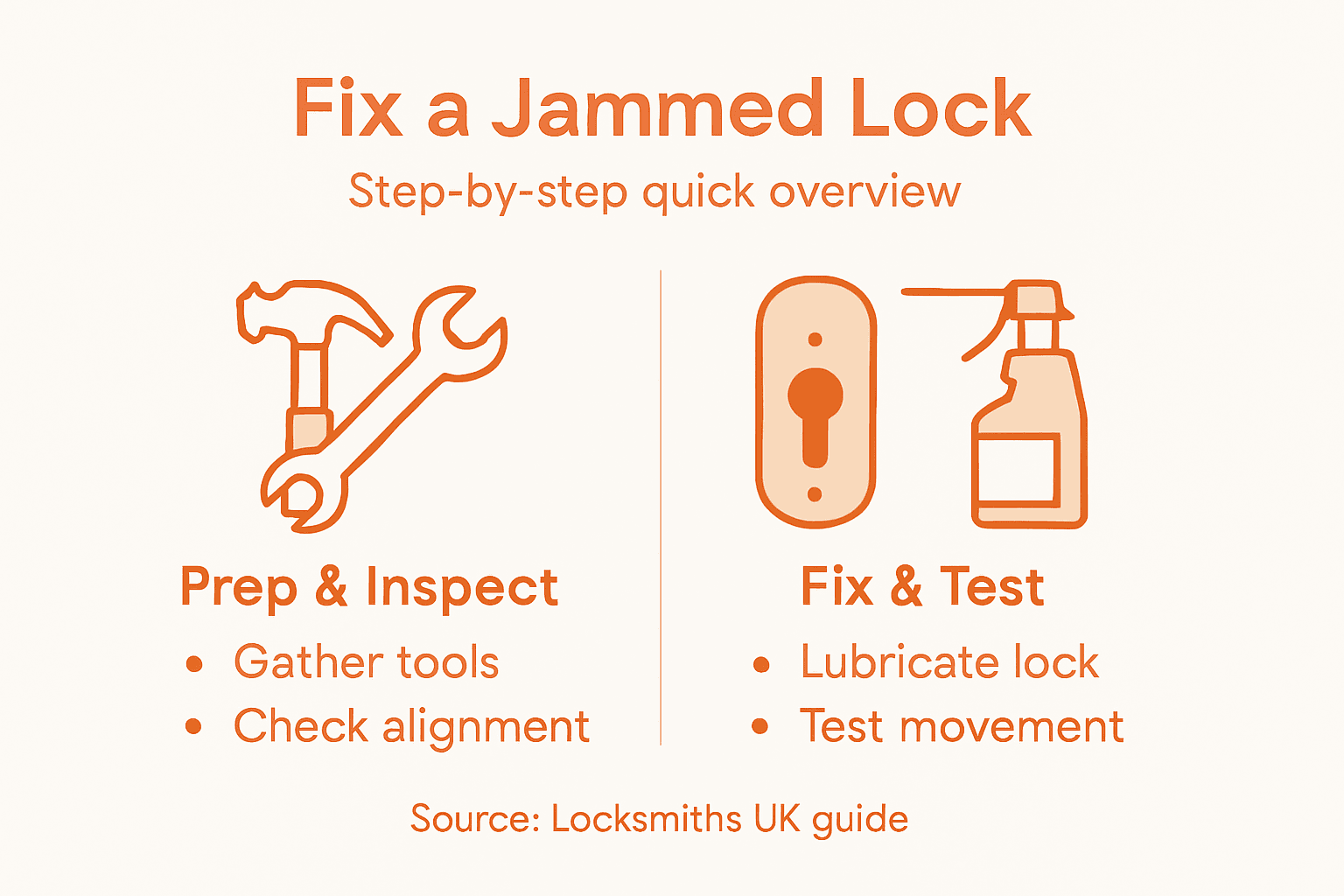
Expert Tip: Clean your key with rubbing alcohol before lubrication to remove any existing grime or residue that might interfere with the lock’s smooth operation.
Step 4: Gently manipulate the key and handle
Carefully working with a jammed lock requires a delicate touch and precise technique. Your goal is to gradually restore movement without causing additional damage to the internal mechanism.
Begin by applying gentle, consistent pressure to both the key and the door handle. Use these strategic manipulation techniques:
- Apply steady, even pressure
- Avoid forcing or sudden movements
- Rotate the key in multiple small directions
- Listen for subtle changes in the lock’s resistance
- Move the handle slightly while turning the key
Patience during manipulation can prevent costly lock damage.
The key manipulation process involves a series of careful micro-movements. Wiggle the key incrementally while maintaining light pressure, paying attention to any slight give or reduced resistance. If the lock begins to respond, continue with slow, deliberate motions.
Expert Tip: If manipulation does not work after several gentle attempts, stop immediately to prevent potential internal mechanism damage.
Step 5: Test lock operation and check for proper movement
After performing repair work on a jammed lock, systematic testing is crucial to confirm that your efforts have successfully restored functionality. Verifying the lock’s performance involves a comprehensive series of careful checks and movements.
Thorough lock testing requires methodical evaluation of multiple mechanical aspects. Perform these specific operational checks:
- Insert and remove the key smoothly
- Turn the key completely in both directions
- Check handle movement without resistance
- Confirm latch extends and retracts fully
- Verify lock engages securely when closed
A well-functioning lock should operate with minimal effort and consistent motion.
Carefully observe the key’s insertion point and monitor how smoothly it moves through the keyhole. Test the locking mechanism repeatedly to ensure there are no lingering signs of stiffness or unexpected catching. If any unusual resistance persists, you may need to repeat previous lubrication or alignment steps.
Expert Tip: Make multiple test cycles, paying close attention to any subtle changes in the lock’s behaviour that might indicate incomplete repair.
Reliable Solutions for Jammed Locks: Expert Locksmith Services Near You
Jammed locks can be frustrating, especially when you have followed every careful step from inspection and lubrication to gentle key manipulation without success. If your door lock is still sticking despite trying to fix misalignment or applying lubricants, you deserve fast and professional help that guarantees safety and precision. At AHLP Locksmiths, we understand the importance of reliable lock operation and offer comprehensive Locksmith Services tailored to restore your peace of mind.
Our skilled local locksmiths have experience with all lock types, including UPVC and wooden door mechanisms, and use only British Standard and insurance-approved hardware. Whether you find your lock mechanism stiff, your door handle difficult to move, or suspect internal wear, we perform non-destructive repairs or replacements with transparency and care. Act now to prevent damage or security risks by contacting our local locksmith team. For urgent situations, our emergency locksmith service delivers rapid assistance around Bristol, South Gloucestershire and Gloucester.
Do not let a jammed lock compromise your safety or cause emotional stress. Reach out today through our contact page or by calling 07700 100146 to book a prompt visit. Your lock’s smooth operation and your property’s protection are just a call away.
Frequently Asked Questions About Jammed Locks
What tools do I need to fix a jammed lock?
To fix a jammed lock, gather a precision screwdriver set, lubricating graphite powder or specialised lock lubricant, needle-nose pliers, work gloves, safety glasses, a torch or headlamp, and a fine-tipped metal probe or lock pick tool. Assemble these items before beginning to ensure you have everything necessary for a smooth repair process.
How can I check if the lock and door are properly aligned?
Inspect the lock and door alignment by looking for uneven gaps between the door and frame, any warping in the door, and checking for a loose or misaligned strike plate. Use a carpenter’s level to assess horizontal and vertical alignment, which may reveal hidden misalignment issues contributing to the jamming.
What type of lubricant should I use for a jammed lock?
For a jammed lock, use graphite powder for internal lock cylinders, silicone-based spray for multi-purpose lubrication, or a specialised lock oil for precise application areas. Apply the lubricant conservatively—it helps to insert the straw attachment into the keyhole and spray a small amount while wiggling the key to distribute the lubricant evenly.
How should I manipulate the key and handle to unjam the lock?
Gently apply steady pressure to the key and handle, avoiding any forceful movements. Rotate the key in small increments and listen for changes in resistance, making sure to wiggle the key slightly while maintaining light pressure, to help restore movement gradually.
What should I do after fixing the lock?
After completing the repair, test the lock operation by inserting and removing the key smoothly and checking if the latch extends and retracts fully. Make multiple test cycles to ensure the lock functions well without any stiffness or unusual resistance, confirming it is back to normal operation.