
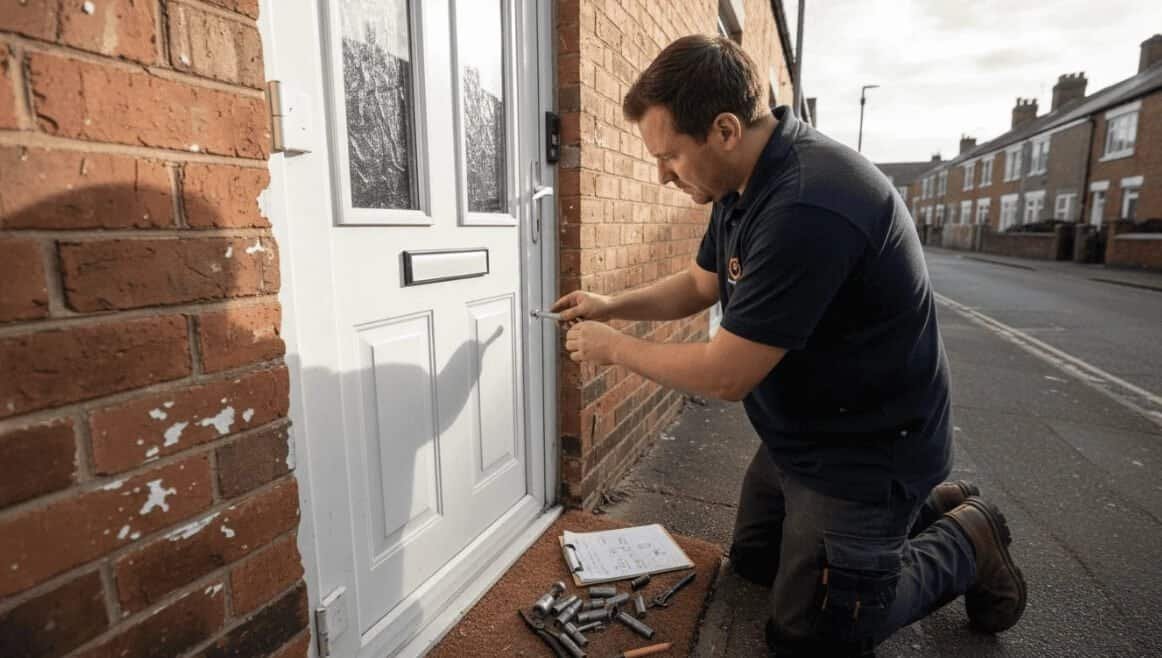
Coming home to find a door forced open is a nightmare no one wants to face. For families across Bristol and South Gloucestershire, threats like lock snapping can put more than peace of mind at risk. Home security takes centre stage when you realise that insurance claims for break-ins often hinge on the type of locks installed, making the choice of secure locking systems not just a preference but a necessity for keeping both your property and your finances protected.
Table of Contents
- What Is Lock Snapping And Why It Matters
- Types Of Locks Most At Risk
- How Lock Snapping Is Carried Out
- Risks To Homeowners And Insurance Issues
- Effective Methods To Prevent Lock Snapping
Key Takeaways
| Point | Details |
|---|---|
| Lock Snapping Vulnerability | Lock snapping is a critical security risk affecting standard Euro cylinder locks used in many British homes. Understanding this method is essential for effective home security measures. |
| Invest in Anti-Snap Locks | Upgrading to British Standard TS007 3-star locks significantly enhances resistance to lock snapping, providing better security against break-ins. |
| Professional Installation Recommended | Engaging a qualified locksmith for proper installation ensures the effectiveness of security measures and minimises vulnerabilities. |
| Insurance Compliance Awareness | Homeowners must ensure their locks meet current insurance requirements to avoid potential claim denials or increased premiums following a burglary. |
What Is Lock Snapping and Why Does It Matters
Lock snapping represents a serious security vulnerability that targets the most common type of door locks in British homes. This destructive technique allows criminals to quickly break a lock’s cylinder, gaining unauthorised entry with minimal effort and noise. Understanding how lock snapping works is crucial for home security in Bristol and throughout South Gloucestershire.
At its core, lock snapping exploits weaknesses in standard Euro cylinder locks, which are prevalent in UPVC doors. Criminals apply specific leverage and pressure techniques to deliberately fracture the lock mechanism, effectively rendering the entire locking system useless. These attacks typically take less than 30 seconds, making them an attractively quick method for opportunistic burglars targeting residential properties.
The potential risks associated with lock snapping are significant and warrant serious attention from homeowners. Vulnerable locks can be compromised through several methods:
- Applying direct, targeted force to the lock cylinder
- Using specialised tools designed to snap the lock mechanism
- Exploiting manufacturing weaknesses in standard cylinder designs
- Targeting locks with insufficient anti-snap protection
Anti-snap locks have been developed specifically to combat this security threat. These advanced mechanisms incorporate design features that prevent complete cylinder separation, making it substantially more challenging for criminals to breach the lock.
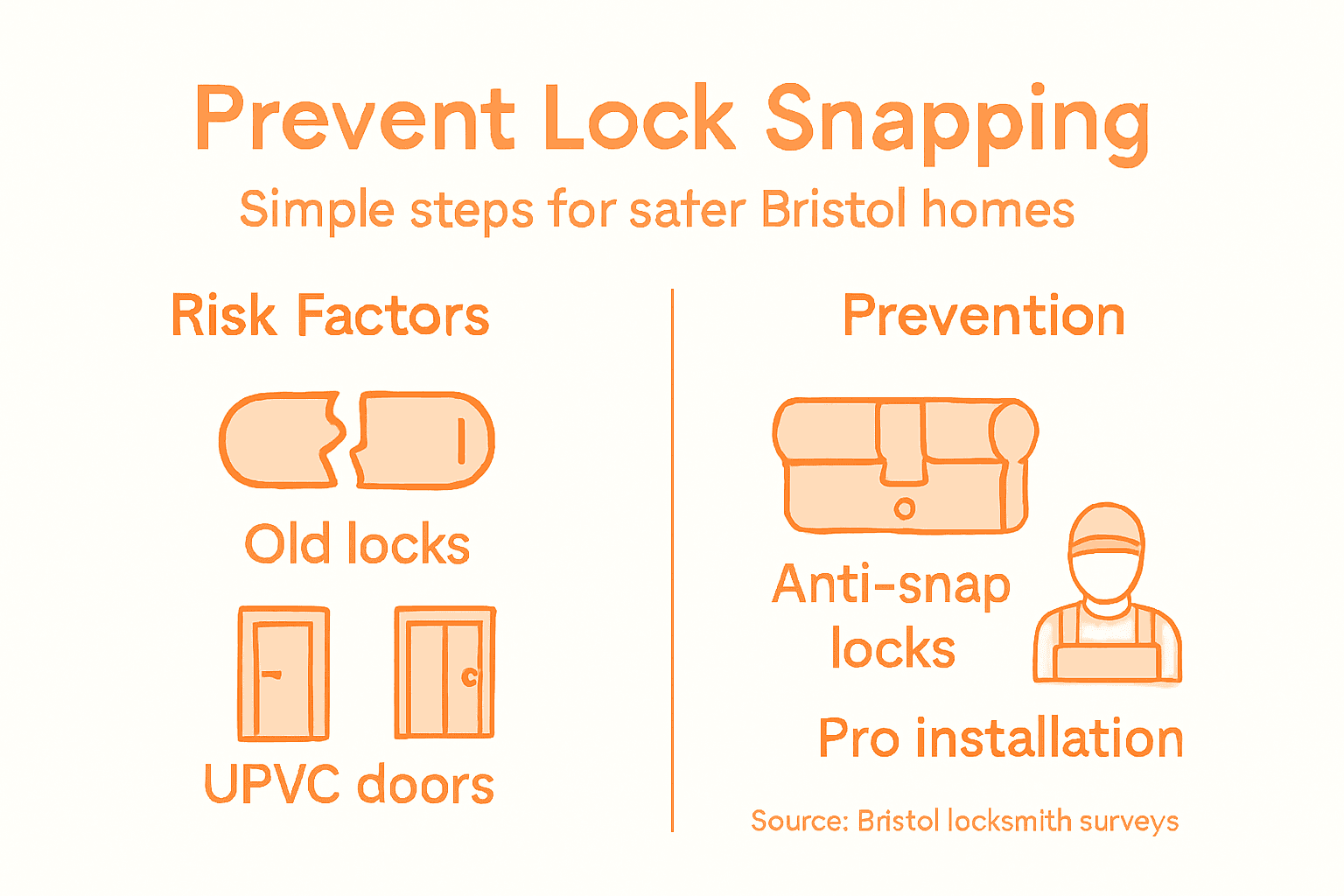
Advanced lock mechanism insights reveal that modern security technologies are continuously evolving to address emerging criminal techniques. Homeowners must stay informed about these developments to protect their properties effectively.
Pro tip: Arrange a professional security assessment to identify and replace vulnerable locks before becoming a potential target.
Types of Locks Most at Risk
Certain lock types are significantly more vulnerable to lock snapping techniques, making them prime targets for opportunistic criminals in Bristol and surrounding areas. Euro cylinder locks, which are predominantly used in UPVC doors, represent the most at-risk lock mechanism for this type of security breach.
Types of door locks reveal that not all locks are created equal when it comes to security resilience. The most vulnerable locks typically share several critical characteristics that make them attractive to potential intruders:
- Standard Euro profile cylinders with minimal anti-snap protection
- Locks manufactured before 2010 with outdated design standards
- Poorly installed or low-quality cylinder mechanisms
- Locks without additional security reinforcements
- Single-cylinder designs with exposed external components
UPVC door locks are particularly susceptible due to their widespread use and inherent structural weaknesses. These locks often feature a protruding cylinder that extends beyond the door’s surface, providing criminals with a convenient leverage point for applying destructive force. The design typically allows attackers to apply precise pressure, potentially breaking the lock in less than 30 seconds.
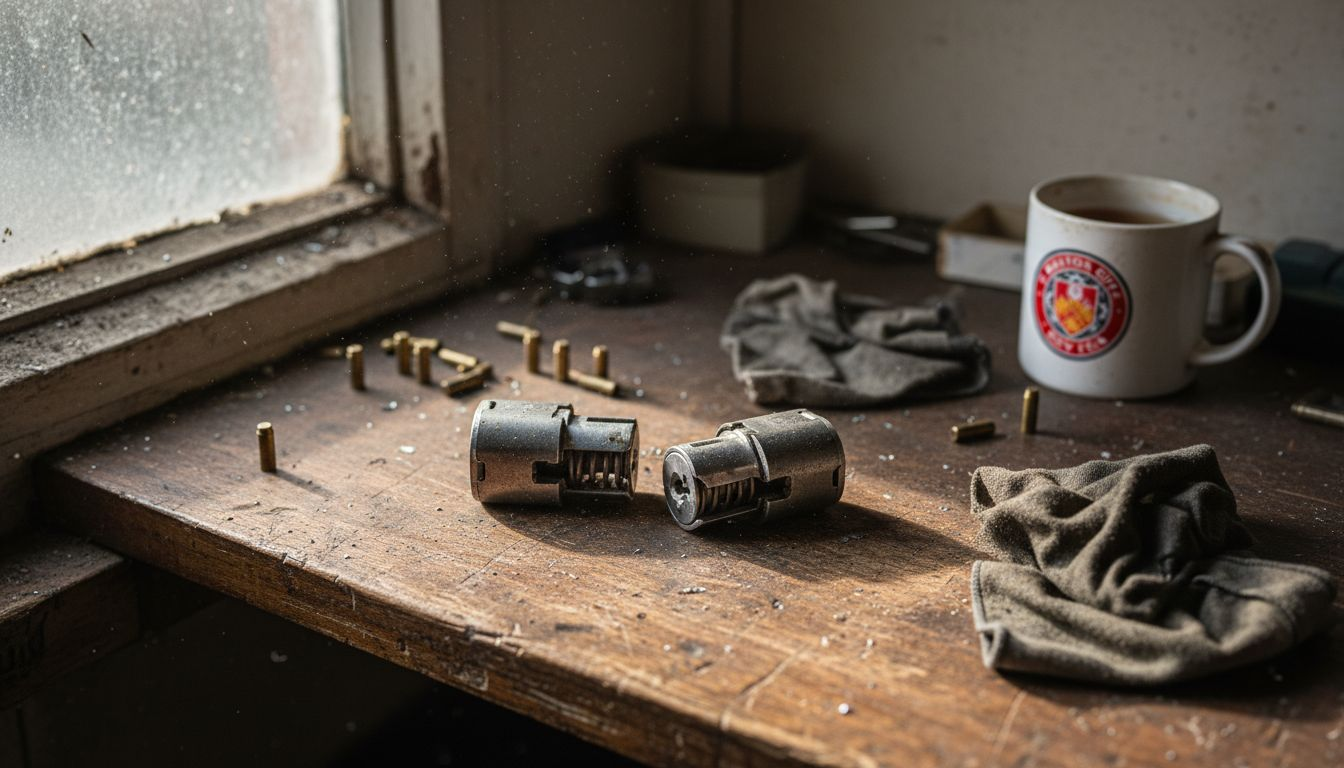
Residential properties with older British Standard locks are especially vulnerable. Locks manufactured prior to the introduction of enhanced security specifications are essentially open invitations to skilled burglars. Modern anti-snap locks incorporate specific design features that prevent complete cylinder separation, making them substantially more resistant to these attacks.
Here’s a comparison of standard Euro cylinder locks and anti-snap locks:
| Lock Type | Security Level | Typical Vulnerabilities | Insurance Compliance |
|---|---|---|---|
| Standard Euro Cylinder | Low | Easily snapped by force | Often does not meet modern standards |
| Anti-Snap Euro Cylinder | High | Resistant to snapping attempts | Meets current insurance requirements |
| Pre-2010 Cylinder | Very low | Outdated design, weak alloys | Rarely compliant with insurers |
| TS007 3-Star Cylinder | Very high | Engineered break points, reinforced pins | Favoured by leading insurance providers |
Lock snapping can compromise an entire property’s security in mere moments, making proactive protection critical for homeowners.
Pro tip: Invest in British Standard TS007 3-star-rated locks and have them professionally installed to significantly reduce your risk of lock snapping.
How Lock Snapping Is Carried Out
Lock snapping is a calculated and surprisingly straightforward technique that exploits fundamental vulnerabilities in standard door lock mechanisms. Criminals use specific tools and precise techniques to quickly compromise Euro cylinder locks, turning what should be a secure entry point into an easy access route for burglary.
Lock mechanism insights reveal the technical process involves several calculated steps. The primary method of lock snapping typically includes:
- Identifying locks with exposed cylinder edges
- Applying extreme pressure using specialised breaking tools
- Targeting the weakest point of the lock cylinder
- Splitting the lock mechanism cleanly
- Manipulating the broken cylinder to gain entry
Most lock-snapping attempts involve using purpose-built snap tools that apply concentrated force directly to the lock’s most vulnerable section. Professional criminals often carry modified pipe wrenches, mole grips, or specifically designed breaking implements that allow them to apply precise leverage and destructive pressure.
The entire process can be alarmingly quick, with experienced criminals potentially breaking a standard lock in under 30 seconds. UPVC door locks are particularly susceptible due to their standard manufacturing design, which often leaves critical structural weaknesses exposed. Criminals exploit these design limitations by applying targeted force that deliberately fractures the lock cylinder, rendering the entire locking mechanism ineffective.
Lock snapping transforms a secure entry point into an open invitation for criminal activity in mere moments.
Pro tip: Invest in locks with anti-snap technology and reinforced cylinders to dramatically reduce your vulnerability to this specific type of break-in technique.
Risks to Homeowners and Insurance Issues
Lock snapping poses significant financial and security risks that extend far beyond the immediate threat of property invasion. Homeowners in Bristol and South Gloucestershire face potential consequences that can dramatically impact their insurance coverage and personal financial stability.
Insurance-approved locks are critical in mitigating potential claim rejections and premium increases. Insurance providers increasingly scrutinise the security measures implemented by homeowners, with specific requirements for lock standards that directly influence policy terms.
The potential insurance-related risks associated with vulnerable locks include:
- Complete claim denial for theft-related losses
- Significant premium increases
- Potential policy cancellation
- Personal liability for property damage
- Reduced compensation for burglary-related claims
Most insurance policies contain explicit clauses requiring homeowners to maintain adequate security measures. A standard Euro cylinder lock that can be easily compromised through lock snapping might be considered negligence, potentially leaving homeowners financially exposed in the event of a break-in. Insurers assess risk based on the vulnerability of existing lock mechanisms, and outdated or substandard locks can trigger immediate coverage complications.
Inadequate home security isn’t just a physical risk — it’s a financial liability that can cost thousands in unrecoverable losses.
Pro tip: Schedule a professional security assessment to ensure your locks meet current insurance compliance standards and protect your financial interests.
Effective Methods to Prevent Lock Snapping
Protecting your home against lock snapping requires a multi-layered approach that combines advanced technology, strategic hardware selection, and professional installation. Homeowners in Bristol and South Gloucestershire can significantly reduce their vulnerability by implementing targeted security measures.
Lock mechanism insights demonstrate that modern anti-lock snapping technologies offer robust protection against break-in attempts. The most effective prevention strategies focus on replacing vulnerable Euro cylinder locks with technologically advanced alternatives.
Key methods to prevent lock snapping include:
- Installing British Standard TS007 3-star rated cylinders
- Using lock guards and protective reinforcement plates
- Selecting locks with dedicated anti-snap features
- Ensuring professional installation by qualified locksmiths
- Implementing additional physical security barriers
Professional-grade anti-snap locks incorporate specific design features that prevent criminals from applying destructive leverage. These advanced mechanisms include internal sacrificial breaks, hardened steel pins, and unique geometric designs that resist manipulation. Some models are engineered to deliberately fracture in a controlled manner, preventing complete lock removal while maintaining the door’s overall security integrity.
Not all locks are created equal — investing in high-quality, professionally installed security hardware is your first line of defence against intrusion.
Pro tip: Request a comprehensive security assessment from a certified locksmith to identify and address potential vulnerabilities in your current locking systems.
The following table summarises key steps for effective lock snapping prevention:
| Prevention Step | Purpose | Added Benefit |
|---|---|---|
| Upgrade to TS007 3-star locks | Enhanced attack resistance | Satisfies most insurance policies |
| Install reinforcement plates | Shields lock cylinder from direct force | Increases overall door strength |
| Use professional locksmiths | Guarantees correct and secure fitting | Reduces risk of faulty installation |
| Request regular assessments | Identifies vulnerabilities early | Maintains ongoing security |
Secure Your Home Against Lock Snapping Today
Lock snapping is a real and urgent threat that can leave your Bristol home vulnerable in seconds. This technique targets standard Euro cylinder locks, often found on UPVC doors, allowing criminals easy access and risking both your property and insurance coverage. Don’t wait until it is too late to protect your home with the right security solutions designed specifically to prevent lock snapping.
At AHLP Locksmiths, we understand these risks and provide expert services including anti-snap lock upgrades, professional lock replacements, and security consultations to keep your home safe and compliant with insurance standards. Whether you need immediate help or want to upgrade your locking systems, our trusted team uses British Standard and insurance-approved hardware to shield your property.
Act now and safeguard your home from lock snapping by contacting our local locksmith team on 07700 100146. For urgent support, visit our emergency locksmith service page. Your peace of mind in Bristol is just a call or click away.
Frequently Asked Questions
What is lock snapping, and how does it work?
Lock snapping is a technique that targets Euro cylinder locks, commonly found in UPVC doors. Criminals exert force on the lock cylinder, causing it to snap and granting unauthorised entry in under 30 seconds.
How can I tell if my lock is vulnerable to lock snapping?
Locks that are standard Euro cylinders with minimal anti-snap features, especially those manufactured before 2010, are most at risk. Look for exposed cylinder edges and poor installation as additional indicators of vulnerability.
What types of locks should I consider to prevent lock snapping?
Invest in British Standard TS007 3-star rated locks, which are specifically designed to resist snapping attempts. Anti-snap locks incorporate key features that enhance security against such vulnerabilities.
How do I improve my home security against lock snapping?
To enhance security, consider installing anti-snap locks, using lock guards or reinforcement plates, and having a professional locksmith install these devices. Regular security assessments can also help identify vulnerabilities in your locking systems.