

Worrying about burglary risks keeps many Bristol shop owners up at night, especially when insurance compliance demands reliable security measures. Street-level doors and older lock designs often leave homes exposed, making regular lock assessments a cornerstone of modern protection. Discover how selecting the right British Standard locks and taking a thorough, step-by-step approach to upgrades secures your home, strengthens your peace of mind, and keeps your policy valid with robust lock installation and verification.
Table of Contents
- Step 1: Assess Existing Lock Vulnerabilities
- Step 2: Select Suitable British Standard Locks
- Step 3: Prepare Doors And Lock Mechanisms
- Step 4: Install New Locks Securely
- Step 5: Verify Lock Functionality And Compliance
Quick Summary
| Key Point | Explanation |
|---|---|
| 1. Assess Locks for Vulnerabilities | Conduct a visual and functional inspection to identify weak points in your existing locks. |
| 2. Choose British Standard Locks | Select locks that meet BS 3621 certification for better security and compliance with legal standards. |
| 3. Prepare Doors Before Installation | Ensure accurate measurements and structural integrity to facilitate a smooth lock installation. |
| 4. Install Locks with Precision | Follow manufacturer guidelines closely to ensure secure and effective lock installation. |
| 5. Verify Functionality After Installation | Test locks for smooth operation and compliance with British safety standards to ensure security. |
Step 1: Assess existing lock vulnerabilities
Evaluating the security of your shop’s locks is the critical first step in developing a robust protection strategy. This process involves systematically identifying potential weaknesses that could compromise your business’s physical security.
Begin by conducting a comprehensive visual and functional inspection of all existing locks. The HSE risk assessment guidance recommends a structured approach to identifying potential vulnerabilities. Look for these specific indicators of lock weakness:
- Visible physical damage such as scratches, dents, or rust, around the lock mechanism
- Signs of previous tampering or attempted break-ins
- Outdated lock designs that do not meet current British security standards
- Loose or wobbly lock fixtures
- Evidence of wear that might compromise lock integrity
Carefully examine each lock’s resistance to common forced entry techniques. Check whether the lock cylinder can be easily manipulated, and test the strength of the lock’s mounting points. Pay special attention to external doors and any secondary entrances that might be perceived as less secure.
The UK Government’s National Risk Register emphasises the importance of regular security evaluations, highlighting that emerging threats require proactive assessment. Document each lock’s condition, noting specific vulnerabilities and potential upgrade requirements.
Professional tip: Always photograph each lock during your assessment to create a visual record and track changes over time.
Step 2: Select suitable British Standard locks
Choosing the right locks is crucial for ensuring your shop’s security and meeting legal requirements. Your selection must balance robust protection with compliance to British safety standards and regulations.
Prioritise locks that meet BS 3621 certification, which is the gold standard for insurance-approved security. UK government approved documents provide comprehensive guidance on selecting locks that satisfy regulatory requirements for commercial premises. When evaluating potential locks, consider these essential characteristics:
- Resistance to picking and drilling
- Robust construction with hardened steel components
- Compliance with British Standard specifications
- Appropriate for your specific door type and material
- Compatible with your existing security infrastructure
Different lock types serve various security needs. For external doors, look for 5-lever mortice locks that meet BS 3621 standards, which provide superior protection against forced entry. Internal doors might require different mechanisms, such as cylinder deadlocks or panic bar locks, depending on your specific business requirements.
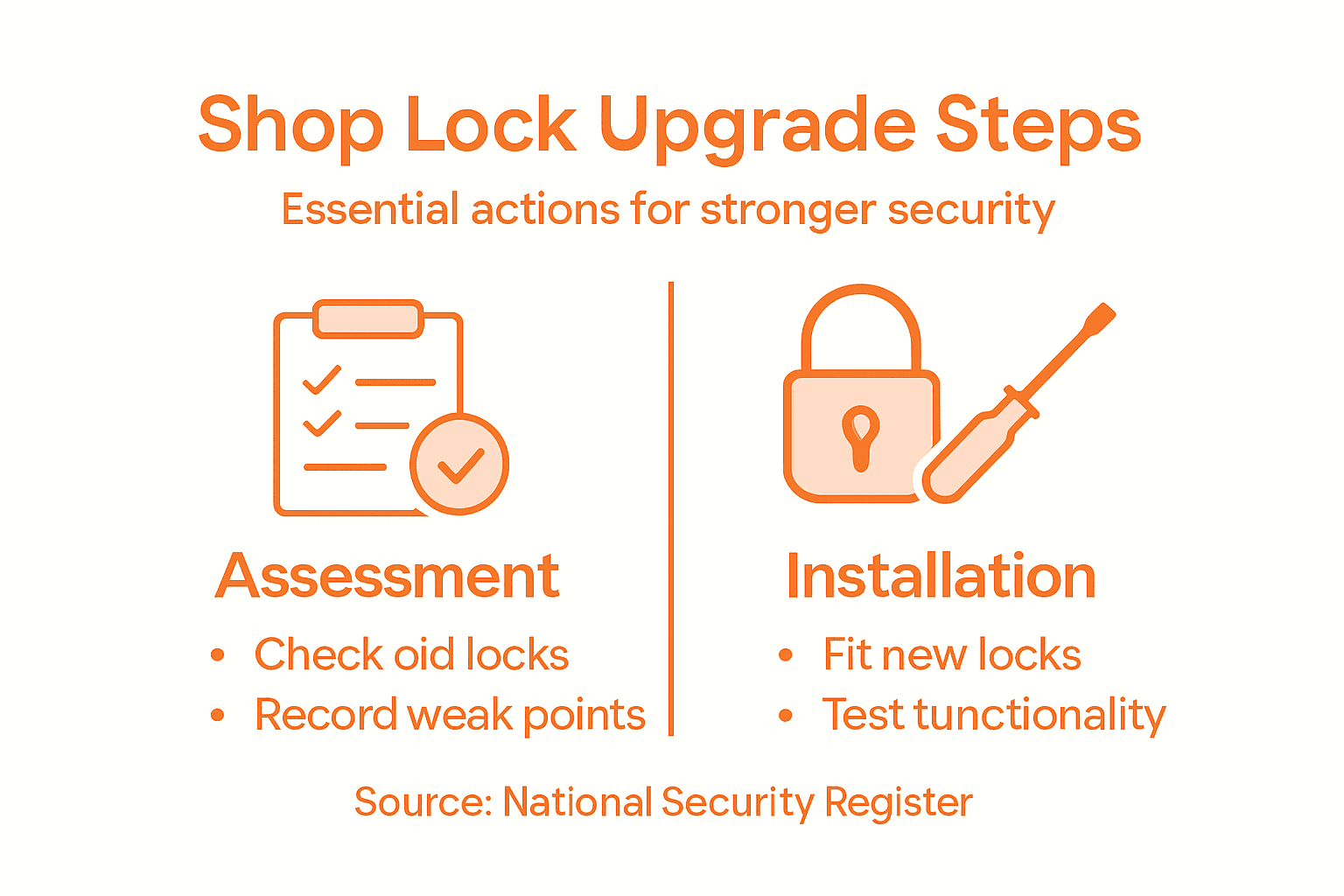
Here’s how common lock types compare for shop premises:
| Lock Type | Security Level | Typical Use | Key Benefit |
|---|---|---|---|
| 5-lever mortice | Very high | External main doors | Superior attack resistance |
| Cylinder deadlock | Moderate to high | Internal access doors | Simple key management |
| Panic bar lock | Moderate | Fire/emergency exits | Enables rapid exit |
| Nightlatch | Moderate | Secondary entrances | Convenient for staff |
A high-quality lock is your first line of defence against potential security breaches.
Carefully match your lock selection to your specific security context. Consider factors like foot traffic, building layout, and potential vulnerability points when making your decision.
Expert advice: Always purchase locks from reputable manufacturers and have them professionally installed to ensure maximum effectiveness and compliance.
Step 3: Prepare doors and lock mechanisms
Successfully upgrading your shop’s locks requires meticulous preparation of both doors and existing lock mechanisms. This critical stage ensures a smooth, secure installation that maintains the integrity of your security system.
Fire door installation guidelines emphasise the importance of comprehensive door preparation before introducing new hardware. Begin by thoroughly inspecting your door frames and surfaces, looking for these key indicators:
- Surface evenness and structural integrity
- Precise measurements of existing lock cavities
- Signs of wear or damage in door material
- Compatibility with new lock mechanism dimensions
- Potential need for additional reinforcement
Measurement is paramount when preparing for new locks. Carefully document the exact dimensions of your current lock housing, including:
- Depth of existing lock cavity
- Width of door frame
- Distance between mounting points
- Thickness of door material
Precision in preparation prevents problematic installations later.
Consider consulting a professional locksmith who can assess whether your existing door structure requires modification. Some locks might need additional routing or structural adjustments to ensure a perfect fit.

Expert tip: Always create a template of your existing lock mechanism before removing it to guarantee accurate placement of new hardware.
Below is a summary of preparation steps and their impact on installation quality:
| Preparation Step | Why It’s Important | Installation Impact |
|---|---|---|
| Frame inspection | Detects weak or damaged points | Prevents insecure fitting |
| Accurate measurement | Ensures the lock will fit precisely | Avoids future adjustments |
| Template creation | Guarantees correct hardware placement | Smooth, professional result |
| Assessing need for reinforcement | Prevents long-term wear issues | Enhances door durability |
Step 4: Install new locks securely
Installing new locks requires precision, patience, and careful attention to detail. Your goal is to create a robust security barrier that protects your shop while ensuring smooth, reliable operation.
Fire door installation guidelines emphasise the critical importance of following manufacturer instructions meticulously during lock installation. Begin by gathering all necessary tools and components, ensuring compatibility and readiness before starting:
- Precision screwdrivers
- Drill and appropriate drill bits
- Measuring tape
- Alignment level
- Safety glasses
- Manufacturer’s installation manual
Follow these detailed installation steps:
- Remove the existing lock mechanism completely
- Clean and prepare the lock cavity
- Test the new lock’s fit before permanent installation
- Align the lock mechanism precisely
- Secure with recommended fixings
- Test lock functionality multiple times
Precision during installation prevents security vulnerabilities later.
Ensure your new lock meets British Standard BS 3621 requirements, which guarantee a minimum level of security performance. Pay special attention to mounting depth, screw placement, and ensuring the lock sits flush with the door surface.
Expert tip: If you feel uncertain about any step, consult a professional locksmith to guarantee correct installation.
Step 5: Verify lock functionality and compliance
After installing your new locks, thoroughly verifying their functionality and compliance is crucial to ensure maximum security for your shop. This final step transforms your hardware installation into a robust protection system.
Government-approved documents outline comprehensive criteria for assessing lock performance and safety standards. Conduct a systematic verification process by examining these critical aspects:
- Smooth locking and unlocking mechanism
- Precise alignment with the door frame
- Resistance to physical manipulation
- Consistent engagement of locking points
- No excessive play or wobbling
Perform these detailed functionality tests:
- Test lock under different pressure conditions
- Check key insertion and rotation
- Verify internal and external cylinder operation
- Test emergency release mechanisms
- Confirm compliance with British Standard BS 3621
Rigorous testing prevents potential security vulnerabilities.
Ensure your new lock meets insurance and regulatory requirements by documenting your verification process. Take photographs and maintain a record of your testing to demonstrate due diligence in securing your premises.
Expert tip: Keep your installation and testing documentation readily accessible for potential insurance or security audit purposes.
Secure Your Shop Today with Professional Locksmith Expertise
Upgrading your shop locks to meet British Standard BS 3621 is essential for protecting your business from break-ins and compliance issues. If assessing your current locks, preparing doors, or choosing the right high-security 5-lever mortice locks feels overwhelming, AHLP Locksmiths can provide the expert support you need. We understand the pain points of dealing with outdated or vulnerable locks and the importance of precise installation and verification to eliminate security gaps.
Take advantage of our comprehensive locksmith services designed for commercial premises. Our trusted local team uses quality insurance-approved hardware to upgrade your locks quickly and reliably. Do not wait until a security breach puts your business at risk. Contact us now on 07700 100146 to arrange a consultation and secure your premises with confidence. For urgent needs, our emergency locksmith services are available to respond promptly. Let AHLP Locksmiths help safeguard your shop so you can focus on what matters most.
Frequently Asked Questions
How can I assess the vulnerabilities of my current shop locks?
To assess vulnerabilities, conduct a visual and functional inspection of each lock. Look for signs of damage, tampering, or outdated designs and document your findings thoroughly to identify upgrade needs.
What are the key features to look for when selecting new locks?
Prioritise locks that meet BS 3621 certification, ensuring resistance to picking and drilling, robust construction, and compatibility with your doors. Match your lock choice to your specific security needs and potential vulnerabilities in your shop.
How should I prepare doors for new lock installations?
Inspect the door frames for structural integrity and measure the existing lock cavities to ensure compatibility with the new locks. Document your findings and consult a professional if modifications are necessary to accommodate the new hardware.
What steps should I follow for a secure lock installation?
Begin by removing the existing lock, cleaning the cavity, and ensuring a precise fit before permanently securing the new lock. Follow the manufacturer’s instructions thoroughly to guarantee maximum effectiveness and compliance with standards.
How can I verify that my new locks are functioning correctly?
Test the lock by checking for smooth operation, precise alignment, and resistance to manipulation. Perform multiple tests under different conditions and keep a record of your verification process to demonstrate compliance and security diligence.