
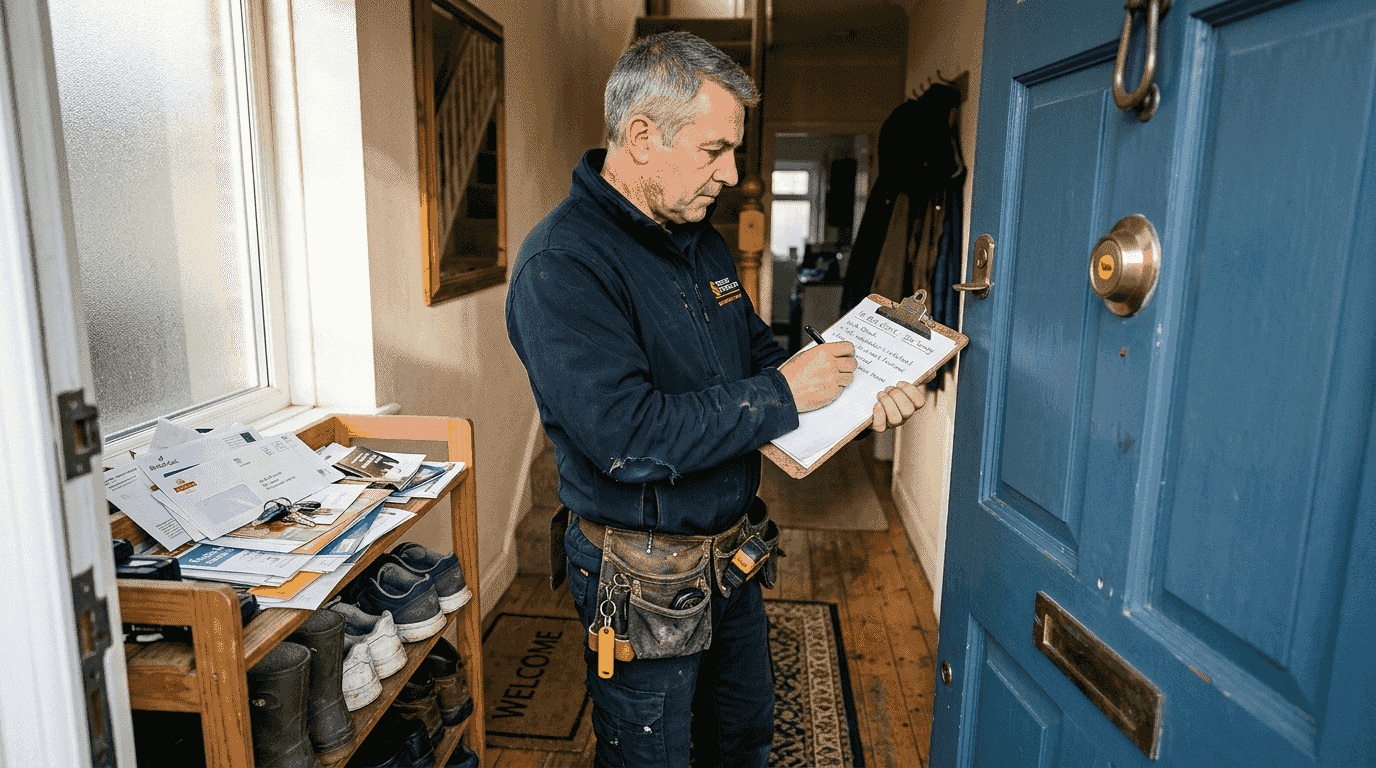
Most homeowners in South Gloucestershire assume their locks and alarm systems provide adequate protection, yet professional home security assessments identify vulnerabilities that standard installations miss entirely. A proper home security consultation goes far beyond checking your front door. It evaluates entry points, environmental risks, access controls, and emergency preparedness through a systematic process tailored to your property’s unique features and local crime patterns. This guide explains what happens during a professional consultation, why South Gloucestershire’s specific home security landscape matters, and how to implement expert recommendations that genuinely reduce burglary risks and satisfy insurance requirements.
Table of Contents
- Understanding Home Security Consultations
- Why Local Context Matters For South Gloucestershire Properties
- Essential Security Upgrades: Why Lock Replacement Is Non-Negotiable
- Implementing A Layered Security Approach For Lasting Protection
- Professional Locksmith And Security Consultation Services In South Gloucestershire
- Frequently Asked Questions
Key Takeaways
| Point | Details |
|---|---|
| Tailored assessments | Home security consultations evaluate vulnerabilities specific to your property features and local South Gloucestershire crime conditions |
| Immediate lock replacement | Changing locks after moving protects against unknown keyholders and ensures insurance compliance with British Standard requirements |
| Risk prioritisation | Professional assessments categorise threats by likelihood and impact, recommending prioritised actions for effective upgrades |
| Layered protection | Combining locks, surveillance, alarms, and environmental design reduces successful break-ins by 60% compared to single measures |
| Ongoing reassessment | Regular reviews adapt protection to evolving threats and maintain effectiveness against new burglary techniques |
Understanding Home Security Consultations
A home security consultation is a detailed evaluation of your property’s physical security measures and systems, customised to address your specific vulnerabilities. Unlike generic advice, professional home security assessments identify vulnerabilities across facility layout, access controls, surveillance systems, and emergency preparedness measures. The process examines every potential entry point, evaluates existing locks and alarm systems, analyses environmental factors that could facilitate unauthorised access, and reviews your emergency response capabilities.
During the assessment, consultants collect comprehensive data about your property’s infrastructure, security processes, and surrounding environment. They compare your current setup against industry standards and local crime intelligence. This isn’t a quick visual inspection. Professionals measure door frame strength, test lock mechanisms, evaluate window security, assess lighting conditions, identify blind spots in surveillance coverage, and examine access control procedures if you operate a business.
The evaluation produces a risk matrix that rates potential threats by both likelihood and impact. High likelihood, high impact risks receive immediate attention, whilst lower priority items form part of a longer term security strategy. Your final report details specific vulnerabilities discovered, assigns risk ratings to each finding, and provides clear, actionable recommendations ranked by urgency and effectiveness.
Key components assessed include:
- Physical barriers such as doors, windows, gates, and perimeter fencing
- Lock quality and compliance with British Standard specifications
- Surveillance system coverage, recording quality, and monitoring capabilities
- Access control measures including key management and authorisation protocols
- Environmental design factors like lighting, landscaping, and natural surveillance opportunities
- Emergency procedures and response plans for security incidents
Understanding these elements helps you appreciate why security consultation benefits risk reduction extends far beyond simple lock checks. The comprehensive nature of professional assessments ensures no vulnerability goes unnoticed, giving you a complete picture of your property’s security posture and a roadmap for meaningful improvements.
Why Local Context Matters for South Gloucestershire Properties
Home security recommendations must reflect local crime patterns and property characteristics to provide genuine protection. Generic security advice fails because burglary methods, target preferences, and crime hotspots vary dramatically between regions. South Gloucestershire presents a unique security landscape that demands tailored consultation approaches.
The crime rate in South Gloucestershire stands at 74.6 crimes per thousand residents, rated 3 out of 10 and considered low compared to other UK regions. However, this overall figure masks important variations. Specific neighbourhoods experience higher burglary rates, and certain property types attract more attention from opportunistic criminals. Terraced homes face different vulnerabilities than detached properties, whilst business premises require distinct security considerations from residential addresses.
| Property type | Primary vulnerabilities | Recommended focus areas |
|---|---|---|
| Terraced homes | Rear access, shared boundaries | Back door locks, window security, garden gates |
| Detached properties | Multiple entry points, larger perimeters | Comprehensive surveillance, perimeter lighting, all door upgrades |
| Semi-detached | Side access, limited natural surveillance | Side gate security, motion-activated lighting, visible deterrents |
| Commercial premises | Multiple keyholders, extended closure periods | Access control systems, alarm monitoring, master key protocols |
Entry point security proves critical regardless of property type. Homeowners should prioritise comprehensive assessments focusing on entry points and neighbourhood crime patterns to address the most likely attack vectors. Burglars typically spend less than five minutes attempting entry. If your doors and windows resist initial attempts, most intruders move to easier targets.
Local factors influencing your home security consultation include:
- Neighbourhood watch participation and community vigilance levels
- Street lighting quality and coverage during evening hours
- Natural surveillance from neighbouring properties and pedestrian traffic
- Proximity to main roads enabling quick getaway routes
- Historical burglary patterns and seasonal crime variations
- Local police response times and patrol frequencies
Community safety initiatives and council-installed CCTV provide valuable support but cannot replace private security measures. Your home security checklist Bristol homes 2026 must account for these environmental factors whilst maintaining robust individual protections. A professional consultation integrates local crime data with your property’s specific characteristics, creating recommendations that address real threats rather than hypothetical scenarios.
Essential Home Security Upgrades: Why Lock Teplacement is Non-negotiable
Replacing outdated or compromised locks represents the single most important home security action you can take. Many homeowners underestimate this critical upgrade, yet the risks of maintaining old locks extend far beyond simple wear and tear. Replacing locks immediately upon moving is essential because of unknown keyholders and insurance requirements that directly impact your coverage validity.
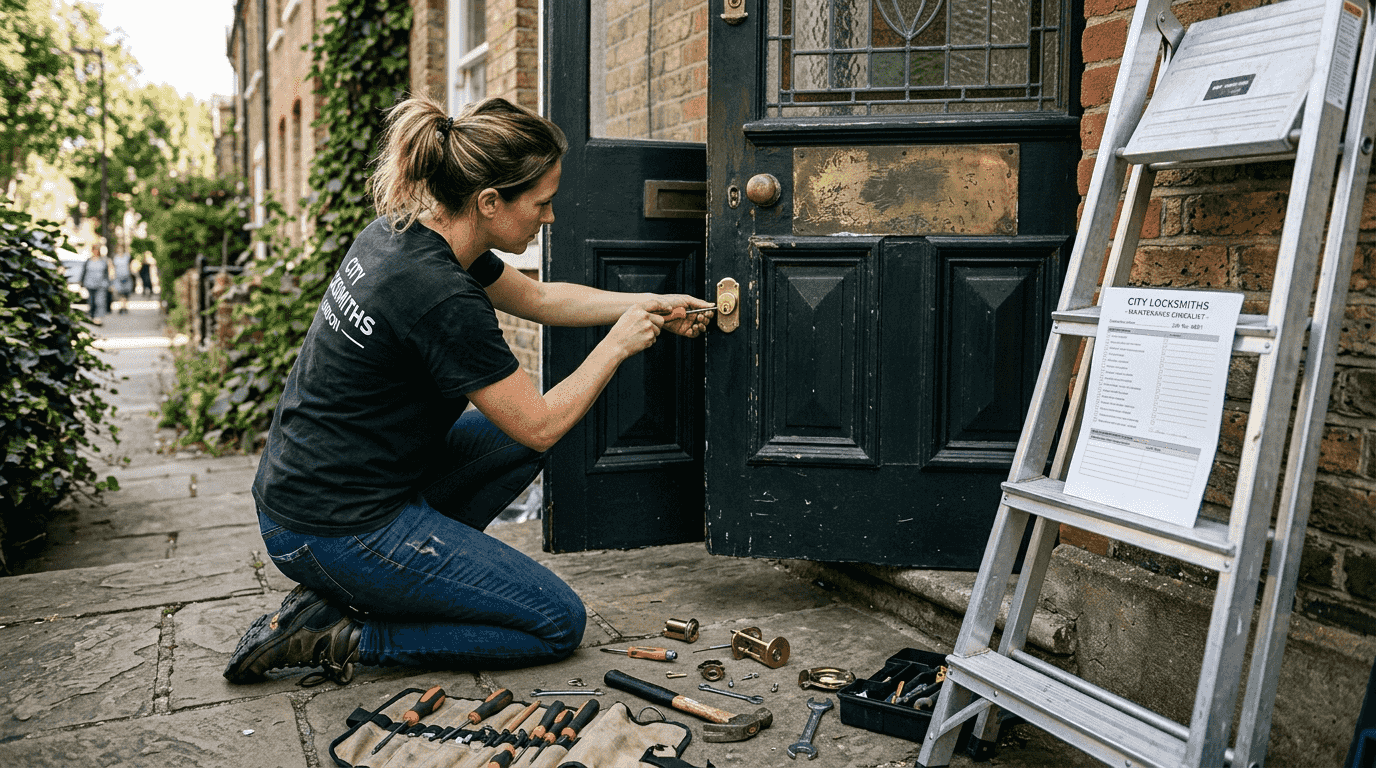
When you move into a property, you inherit an unknown number of key copies distributed to previous owners, their family members, tradespeople, cleaners, and estate agents. Any of these individuals could retain access, creating an unacceptable security vulnerability. Beyond this obvious risk, older lock mechanisms often lack modern security features that resist common burglary techniques. Lock snapping, bumping, and picking exploit weaknesses in outdated cylinder designs, allowing skilled intruders to gain entry within seconds.
Insurance implications make lock replacement legally and financially crucial. Most UK insurers require British Standard locks (BS3621 or TS007) on external doors, and failure to meet this standard can invalidate claims after a burglary. Even if you’ve paid premiums faithfully for years, your insurer may refuse to cover losses if your locks don’t meet specified standards. This requirement isn’t arbitrary. British Standard locks undergo rigorous testing for pick resistance, drill resistance, and physical strength, providing measurable protection that generic hardware cannot match.
Upgrading to compliant locks delivers multiple benefits:
- Eliminates access by unknown previous keyholders
- Resists modern burglary techniques including snapping and bumping
- Satisfies insurance policy requirements for valid coverage
- Provides documented evidence of home security measures for claims
- Increases property value through enhanced home security features
Professional locksmith services ensure correct installation and specification compliance. DIY lock replacement often results in improper fitting that compromises home security benefits. Experienced locksmiths assess your door construction, recommend appropriate lock types, and install mechanisms to manufacturer specifications. They also advise on additional security measures such as hinge bolts, door chains, and reinforced strike plates that complement primary locks.
Pro Tip: Schedule lock replacement within 48 hours of moving into any property. Don’t wait until you’ve settled in. The security risk exists from day one, and insurance coverage may be compromised immediately if your locks don’t meet policy requirements.
Regular lock maintenance and upgrades should form part of your ongoing security strategy. As burglary techniques evolve, lock technology advances to counter new threats. Why change locks after moving extends beyond initial property purchase. Consider upgrading locks every five to seven years, after any security incident, when keys go missing, or following relationship breakdowns where key access becomes disputed. Professional lock changing and upgrading services provide expert guidance on timing and specifications suited to your evolving security needs.
Implementing a Layered Home Security Approach for Lasting Protection
Single home security measures create single points of failure. Layered security combines multiple independent protections that work together, forcing intruders to defeat several obstacles rather than one. This multiplicative effect dramatically reduces successful break-in rates. Properties employing layered security experience a 60% reduction in successful break-ins compared to single layer defences, demonstrating the measurable effectiveness of comprehensive protection strategies.
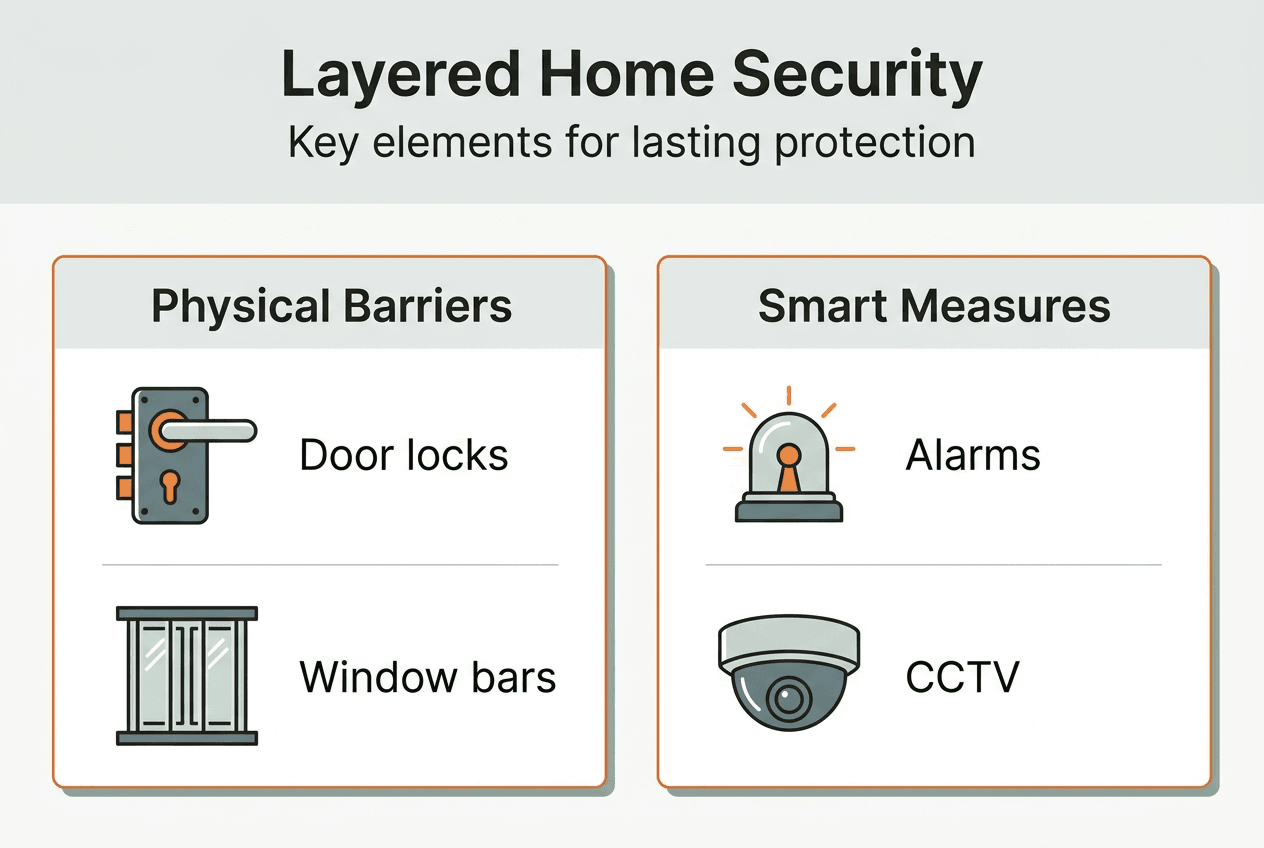
A layered approach integrates physical barriers, electronic surveillance, alarm systems, access controls, and environmental design principles. Each layer addresses different attack methods and compensates for potential weaknesses in other defences. Whilst a determined professional might bypass one home security measure, the combination of multiple systems increases detection likelihood, extends intrusion time, and creates psychological deterrents that discourage attempts entirely.
| Security approach | Components | Effectiveness against opportunistic burglary | Effectiveness against planned intrusion |
|---|---|---|---|
| Single layer | Quality locks only | Moderate (40-50% deterrent) | Low (15-25% deterrent) |
| Dual layer | Locks plus visible alarm | High (70-80% deterrent) | Moderate (45-55% deterrent) |
| Multi-layer | Locks, alarm, CCTV, lighting, environmental design | Very high (85-95% deterrent) | High (70-80% deterrent) |
Implementing a comprehensive layered security plan follows a systematic process:
- Conduct a professional security assessment identifying all vulnerabilities and entry points across your property
- Prioritise upgrades based on risk ratings, addressing high likelihood and high impact threats first
- Install British Standard locks on all external doors and secure windows with appropriate locking mechanisms
- Add monitored alarm systems covering main entry points and vulnerable ground floor access areas
- Position CCTV cameras to eliminate blind spots and capture clear footage of approaches and entry points
- Enhance environmental security through motion activated lighting, trimmed landscaping, and visible deterrents
- Establish access control protocols including key management, visitor procedures, and emergency response plans
- Schedule regular maintenance and testing of all security systems to ensure continued functionality
- Review and update your security plan annually or after any significant changes to property or threat landscape
Modern smart home technology enhances traditional security layers through remote monitoring, automated alerts, and integration between systems. You can receive instant notifications when sensors detect unusual activity, view live camera feeds from anywhere, and control lighting or alarms remotely. Professional monitoring services add another layer by ensuring human response to alerts even when you’re unavailable, though this represents an ongoing cost consideration.
Pro Tip: Document your security measures with photographs and receipts. This evidence proves compliance with insurance requirements and supports claims if incidents occur. Keep digital copies stored securely off-site or in cloud storage.
Human factors significantly influence security effectiveness. The best hardware fails if procedures aren’t followed consistently. Train all household members or employees on security protocols including lock engagement, alarm activation, key handling, and incident reporting. Regularly reviewing and updating protocols adapts protection to evolving threats and addresses complacency that develops over time. Your security consultation benefits risk reduction insurance savings multiply when technical measures combine with disciplined security behaviours and ongoing vigilance.
Professional Locksmith and Home Security Consultation Services in South Gloucestershire
Protecting your South Gloucestershire property requires expert knowledge of local security challenges and professional implementation of proven protection measures. AHLP Locksmiths provides comprehensive security consultations informed by current crime data and tailored to your specific property characteristics. Our assessments identify vulnerabilities you might overlook and recommend practical upgrades that deliver measurable risk reduction whilst satisfying insurance requirements.
We offer complete locksmith services available 24/7, including emergency lockouts, British Standard lock installations, anti-snap upgrades, and full security system reviews. Whether you need immediate assistance or planned security enhancements, our experienced team handles residential, commercial, and educational premises with the same careful attention to your safety and peace of mind. From trusted locksmith services for homes and businesses to specialised locksmith services for schools and nurseries, we understand the unique requirements of different property types.
Get started with a professional security consultation that examines your property’s current protections, identifies priority improvements, and provides clear recommendations you can implement immediately or phase over time. Our transparent pricing and no call-out fee policy ensure you receive honest advice focused on your security needs, not unnecessary upsells. Discover how security consultation benefits extend beyond immediate protection to include insurance savings and long term peace of mind.
Frequently Asked Questions
What does a home security consultation involve?
A professional visits your property to assess all entry points, existing security measures, environmental factors, and emergency procedures. The consultant examines locks, doors, windows, surveillance systems, lighting, and access controls, then provides a detailed report rating vulnerabilities by risk level. You receive prioritised recommendations with specific upgrade suggestions tailored to your property type and local crime patterns.
How often should I reassess my property’s security?
Security threats evolve continuously as burglary techniques advance and your property circumstances change. Reassessment is crucial because threat landscapes, facilities, and staff change over time, creating new vulnerabilities that weren’t present during initial evaluations. Schedule professional reassessments annually or immediately after significant changes such as renovations, staffing alterations, nearby crime incidents, or technology upgrades to ensure your protections remain effective.
Why is it important to replace locks after moving in?
Replacing locks immediately upon moving is non-negotiable due to unknown keyholders, home insurance requirements, and outdated locking systems that compromise your security from day one. Previous owners, their relatives, tradespeople, and estate agents may retain key copies, giving them continued access to your property. Most insurance policies require British Standard locks to validate burglary claims, and older mechanisms lack resistance to modern break-in techniques like snapping and bumping. Immediate replacement eliminates these risks and ensures compliance. Learn more about why change locks after moving.
How does layering security measures reduce burglary risk?
Combining locks, alarms, surveillance, lighting, and environmental design creates multiple independent barriers that intruders must defeat sequentially. Properties employing layered security experience a 60% reduction in successful break-ins compared to single layer defences because each additional measure increases detection likelihood and extends intrusion time. The psychological impact of visible multiple protections deters opportunistic criminals who seek easy targets, whilst the practical challenge of bypassing several systems discourages even planned intrusions.