
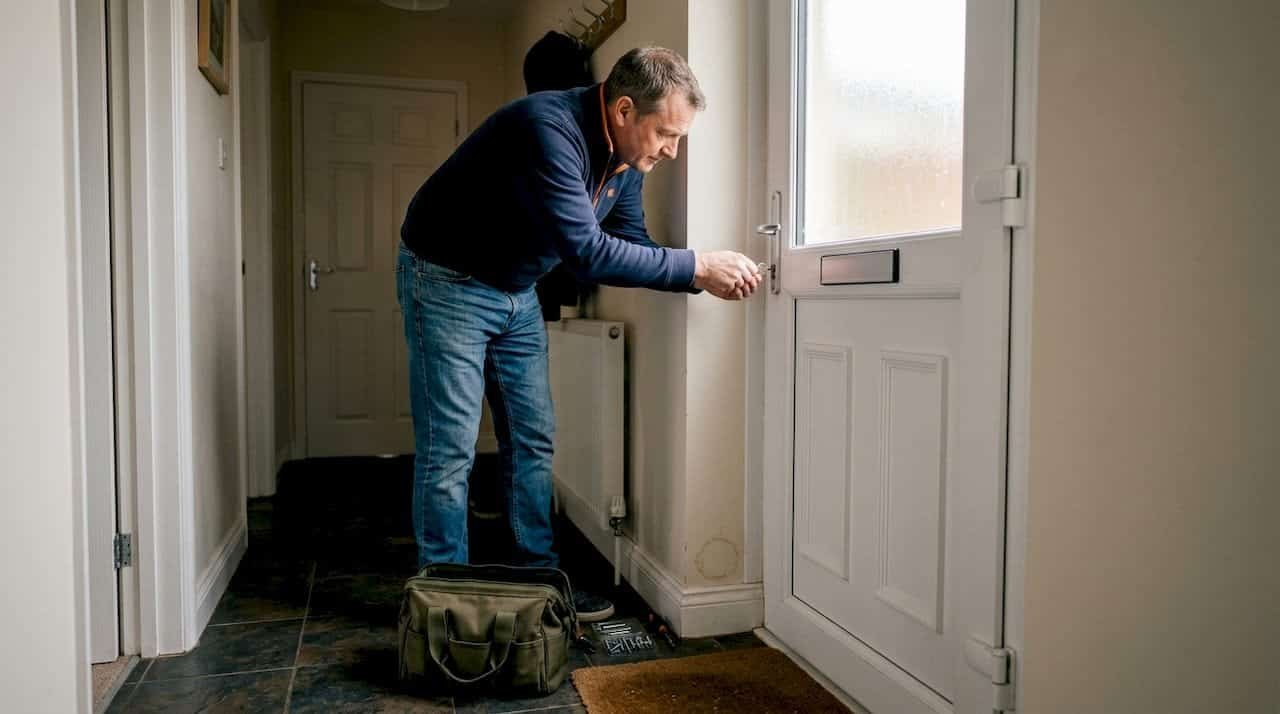
Once you know what has gone wrong with a uPVC door lock, the next question is whether the faulty part can be adjusted, repaired or needs replacing.
That distinction matters because a uPVC locking system is made up of several separate components. A problem with the Euro cylinder does not necessarily mean you need a new multipoint mechanism, and a door alignment problem may not require a new lock at all.
This guide explains the repair process, including cylinder replacement, gearbox faults, multipoint mechanisms, cylinder sizing and typical costs.
Still trying to work out what is wrong? Start with our uPVC door lock troubleshooting guide. That guide diagnoses symptoms such as a handle that will not lift, a key that will not turn and a door that locks when open but not when closed.
Once the fault has been identified, come back here for the repair itself.
What Parts of a uPVC Door Lock Can Be Repaired or Replaced?
What people commonly call a “uPVC door lock” is actually several components working together.
The main parts are:
Euro cylinder: the part you put the key into
Handles and spindle: transfer movement from the handle into the lock
Gearbox: the central mechanism operated by the handle and cylinder
Multipoint locking strip: runs along the edge of the door
Hooks, rollers and bolts: engage with the frame when the handle is lifted
Keeps: the corresponding metal sections attached to the frame
Hinges: affect whether the door and locking points remain correctly aligned
The repair depends on which of these has failed.
That is why replacing the cylinder, for example, will not solve a broken gearbox.
Repair or Replace? A Quick Guide
| Fault | Typical repair |
|---|---|
| Door locks when open but not closed | Door or keep adjustment |
| Loose handle | Tighten or replace handle/fixings |
| Faulty Euro cylinder | Replace cylinder |
| Broken or worn gearbox | Replace gearbox or compatible mechanism |
| Damaged multipoint strip | Replace multipoint mechanism |
| Hooks or rollers not aligning with frame | Adjust door or keeps |
| Mechanism damaged through prolonged forcing | Repair or mechanism replacement depending on damage |
If you have not established which fault you have yet, use the uPVC door lock troubleshooting guide before buying replacement parts.
Repairing a Misaligned uPVC Door
If the locking mechanism works normally while the door is open but becomes stiff or refuses to lock when the door is closed, the mechanism itself may not be broken.
The locking points may simply no longer line up correctly with the keeps in the frame.
Look for:
Scrape marks around the keeps
A door that has visibly dropped
Uneven gaps between the door and frame
A handle that needs extra force when the door is closed
A door that needs to be pulled or pushed before the key turns
Depending on the cause, the repair can involve adjusting the hinges or repositioning the keeps so the hooks, rollers and bolts can engage without resistance.
Small adjustments should be made incrementally and tested after each change.
The important point is to correct the alignment rather than continue forcing the handle. Persistent resistance can put additional strain on the gearbox and turn an adjustment job into a mechanism failure.
Replacing a uPVC Door Euro Cylinder
Cylinder replacement is one of the simpler uPVC lock repairs because the Euro cylinder can usually be removed independently of the multipoint mechanism.
You might replace the cylinder because:
The key no longer operates it correctly
The cylinder is physically damaged
Keys have been lost or stolen
You have moved into a property
You want to upgrade to an anti-snap cylinder
Before buying anything, you need the correct cylinder size.
How to Measure a uPVC Door Lock Cylinder
Euro cylinders are measured from the centre of the fixing screw hole to each end of the cylinder.
For example, a 35/45 mm cylinder measures:
35 mm from the centre fixing point to one end
45 mm from the centre fixing point to the other end
That distinction matters because Euro cylinders are not necessarily symmetrical.
A cylinder might be:
35/35 mm
35/40 mm
35/45 mm
40/50 mm
or another combination appropriate to the door and hardware.
Do not simply measure the total length and buy another cylinder of the same overall length. You need the measurement on both sides of the centre fixing point.
Why cylinder size matters
A cylinder that is too short may not sit correctly within the handle or security hardware.
One that projects too far from the external handle can also leave more of the cylinder exposed than necessary.
The aim is a correctly sized cylinder that sits appropriately within the fitted door furniture.
If replacing an existing cylinder, record its internal and external measurements before ordering the new one.
How a Euro Cylinder Is Replaced
With the door open, the cylinder is normally held in place by a retaining screw on the edge of the door.
The basic process is:
Open the door.
Locate the cylinder retaining screw on the lock faceplate.
Remove the retaining screw.
Insert the key into the cylinder.
Turn the key slightly so the cylinder cam lines up with the lock body.
Slide the cylinder carefully out of the door.
Confirm the measurements before fitting the replacement.
Insert the correctly sized new cylinder.
Refit the retaining screw.
Test the key with the door open before closing and locking the door.
Do not force a cylinder that will not slide out. The cam may simply not be correctly aligned.
Likewise, avoid excessively tightening the retaining screw when fitting the replacement.
If the new cylinder operates correctly while the door is open but becomes difficult when the door closes, go back to the alignment checks. The new cylinder may not be the source of the resistance.
What Is the Gearbox in a uPVC Door Lock?
The gearbox is the central operating part of many uPVC multipoint locking systems.
It normally sits behind the handles and cylinder.
When you lift the handle, the gearbox transfers that movement into the multipoint strip so the hooks, rollers or bolts move into position. The cylinder then controls the locking action.
This explains why a failed gearbox can produce symptoms that initially look like a handle or cylinder problem.
For example:
The handle may become floppy
The handle may stop lifting
The key may turn without operating the door
The locking points may stop moving
The door may become stuck locked or unlocked
A gearbox can therefore fail even though the Euro cylinder itself is still perfectly usable.
Can a uPVC Door Lock Gearbox Be Repaired?
Minor resistance caused by alignment should be corrected before assuming the gearbox has failed.
But once internal gearbox components are physically broken or badly worn, replacing the affected gearbox or compatible mechanism is normally more practical than trying to rebuild damaged internal parts.
This is particularly relevant where a stiff door has been forced repeatedly.
A door that has gradually dropped can place additional resistance on the multipoint system. Every time the handle is forced upwards against that resistance, the gearbox has to work harder.
Eventually an alignment problem can become a mechanical one.
That is why diagnosing the original cause matters even when a gearbox is being replaced. Fitting a new mechanism without correcting severe door alignment can put the replacement under the same strain.
How Is a uPVC Gearbox Replaced?
Gearbox replacement is more involved than replacing a Euro cylinder.
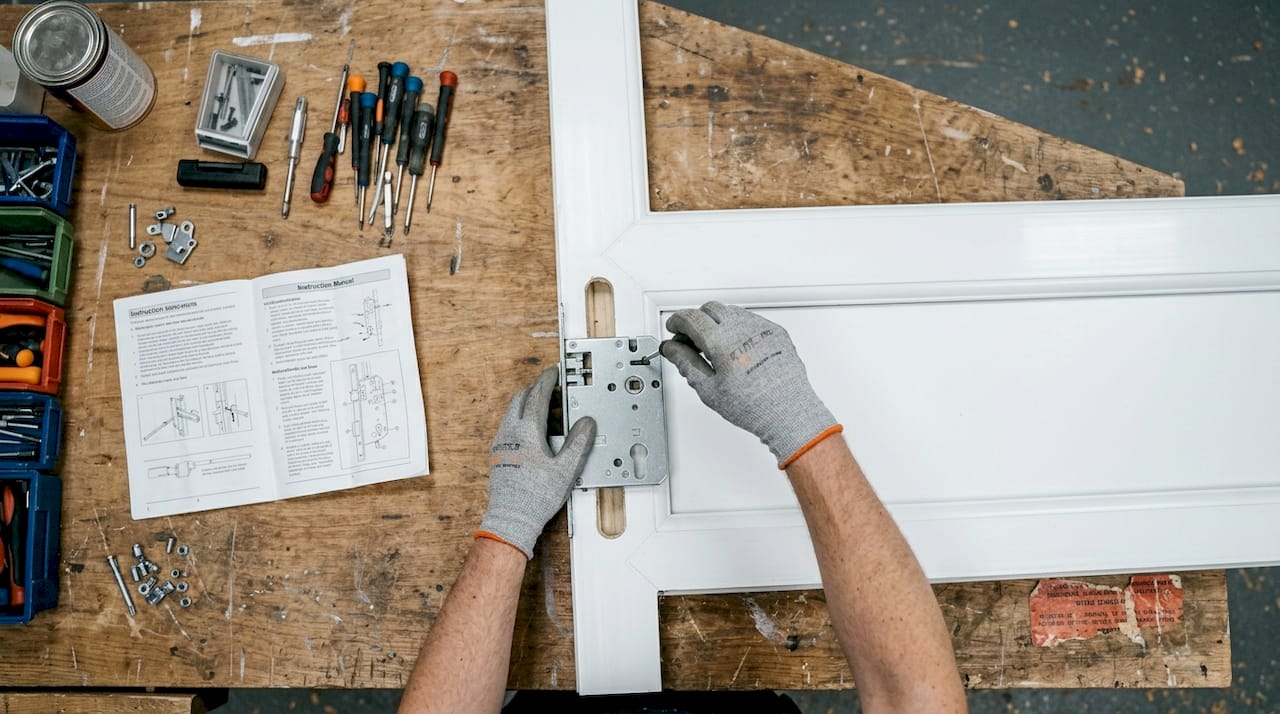
The handles and cylinder generally need to be removed before the multipoint strip can be released from the edge of the door.
The existing mechanism also needs to be identified correctly.
Important details can include:
Manufacturer
Faceplate dimensions
Backset
Centres
Position of the gearbox
Hook, roller or bolt configuration
Overall multipoint strip arrangement
The old gearbox or mechanism then needs to be matched with a suitable replacement.
This is why buying a gearbox based only on how it looks in an online photograph is risky.
Older uPVC doors can make matching particularly important because the original mechanism may no longer be manufactured in exactly the same form.
Photographing the faceplate and any manufacturer markings before parts are ordered can help identify what is fitted.
Gearbox Replacement vs Full Multipoint Mechanism Replacement
These terms are sometimes used as though they mean the same thing, but they do not always describe the same repair.
The gearbox is the central operating unit.
The multipoint mechanism includes the longer locking strip and its associated locking points.
If the central gearbox has failed but the rest of the system remains suitable and a compatible gearbox is available, the repair may centre on that component.
If the wider mechanism is worn, damaged, incompatible with available replacement gearboxes or has multiple failed components, replacing more of the multipoint system may be the better repair.
The decision therefore depends on the condition and availability of the existing hardware rather than automatically replacing everything.
What If the Original uPVC Lock Mechanism Is Obsolete?
Older uPVC doors do not automatically need replacing just because the original lock mechanism is no longer manufactured.
The first step is to identify the existing system accurately.
A locksmith can check the manufacturer, dimensions and locking-point configuration and determine whether there is a compatible replacement mechanism or suitable alternative.
The objective is to restore reliable operation without replacing serviceable parts unnecessarily.
If the door or frame itself is badly damaged, however, the decision may extend beyond the lock mechanism.
How Do You Know the Repair Has Worked?
Always test a repaired uPVC door before relying on it.
Start with the door open.
Check that:
The handle moves smoothly
All locking points move correctly
The key turns without excessive force
The handle returns normally
There are no grinding or cracking noises
Then test the door closed.
It should lock and unlock without needing to be pulled, pushed or forced into position.
If a new cylinder or gearbox works perfectly with the door open but becomes difficult when closed, the remaining problem may be alignment rather than the replacement component.
How Much Does uPVC Door Lock Repair Cost in Bristol?
The cost depends on what actually needs replacing.
AHLP’s current published starting prices include:
| uPVC lock work | Starting price |
|---|---|
| Standard lock change | From £95 |
| Anti-snap Euro cylinder supplied and fitted | From £120 |
| uPVC multipoint mechanism replacement | From £180 |
These are different repairs.
A faulty Euro cylinder should not automatically lead to a £180 multipoint replacement. Equally, fitting a new cylinder will not repair a mechanically failed gearbox.
AHLP confirms the price before starting work and currently states that there is no separate call-out fee.
You can see examples of lock replacement for local homes for more context on when replacing a component makes sense.
What About DIY Parts Prices?
The previous version of this guide listed approximate retail parts prices of:
Euro cylinder: £15 to £40
Replacement gearbox: £30 to £80
Anti-snap cylinder: £25 to £60
Full locking system: £80 to £200+
Those figures describe approximate parts costs, not a professionally supplied and fitted repair.
That distinction is important when comparing prices.
The fitted cost includes identifying the correct component, removing the failed hardware, fitting and adjusting the replacement, and checking that the complete door operates correctly afterwards.
For that reason, a retail gearbox price should not be compared directly with the price of a completed multipoint lock repair.
Is It Worth Repairing an Older uPVC Door Lock?
Often, yes.
A door does not necessarily need replacing because its cylinder, gearbox or multipoint mechanism has failed.
Repair is particularly worthwhile when:
The door and frame remain sound
The problem is alignment
A compatible replacement gearbox is available
Only the Euro cylinder has failed
The multipoint mechanism can be replaced without damaging the door
A more extensive decision may be needed if the door itself is warped, badly damaged or has suffered forced entry.
The useful question is therefore not simply “How old is the door?”
It is “Which component has failed, and what condition are the door and frame in?”
Should You Upgrade the Cylinder During a Repair?
A repair can be a convenient opportunity to review the existing Euro cylinder.
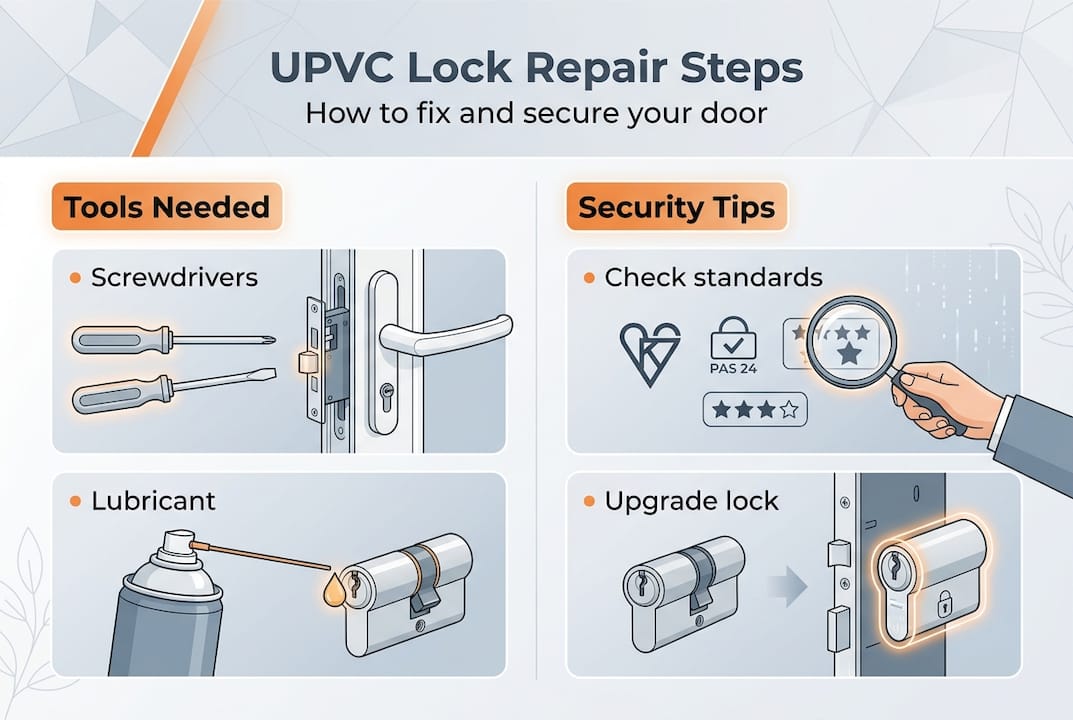
If the mechanism needs work but the existing cylinder provides limited protection against snapping, replacing it with a suitable anti-snap cylinder at the same time can avoid dismantling the hardware again later.
AHLP’s current anti-snap cylinder price starts from £120 supplied and fitted.
For more detail about the security differences between cylinders, see our guide to anti-snap locks for secure homes.
The cylinder still needs to be correctly sized and fitted. A security rating does not compensate for poor installation or excessive projection from the external handle.
Repair First, Diagnose First
If you already know that the cylinder, gearbox or multipoint mechanism has failed, this guide explains what the repair involves.
If you are still at the stage where:
The handle lifts but the key will not turn
The handle will not lift
The door locks while open but not when closed
The key turns but nothing happens
The handle has become floppy or stiff
use our uPVC door lock troubleshooting guide first.
That page answers what is probably wrong.
This page answers what happens once the faulty component has been identified.
Keeping those two stages separate helps avoid replacing perfectly serviceable parts.
uPVC Door Lock Repair in Bristol
If the repair involves a failed gearbox, multipoint mechanism or a door that cannot be opened safely, AHLP provides locksmith services across Bristol and South Gloucestershire.
When contacting Sam, describe the diagnosed fault or the exact behaviour of the door. Photographs of the faceplate, handles and any manufacturer markings can also be useful when identifying replacement parts.
For a straightforward cylinder replacement, knowing the existing cylinder measurements can make the conversation more specific.
For a failed multipoint mechanism, identifying the hardware correctly is the important first step before replacement.
Frequently Asked Questions
Can a uPVC door lock be repaired without replacing the whole mechanism?
Yes. The Euro cylinder, handles, gearbox, multipoint mechanism and door alignment are separate parts of the overall system. A cylinder fault may only require a new cylinder, while a door that locks normally when open may only need adjustment. A failed gearbox or badly worn multipoint mechanism is more likely to require replacement. Diagnosis should therefore come before ordering parts.
How do I know what size Euro cylinder I need?
Measure from the centre of the cylinder’s fixing screw hole to each end. A 35/45 mm cylinder measures 35 mm in one direction from the centre point and 45 mm in the other. Record both measurements rather than relying only on the cylinder’s total length. The replacement should sit appropriately within the fitted door furniture without unnecessary external projection.
What is the difference between a gearbox and a multipoint lock?
The gearbox is the central operating component around the handle and cylinder area. The multipoint system extends along the door edge and operates hooks, rollers or bolts at several positions. A gearbox can fail while other parts of the locking system remain serviceable. Whether only the gearbox or a larger mechanism needs replacing depends on the hardware and extent of the failure.
Can you replace the gearbox in a uPVC door?
In many cases, yes, provided a compatible component can be identified. The existing manufacturer, dimensions and locking configuration need to be checked before a replacement is selected. Older mechanisms may require a compatible alternative if the original part has been discontinued. The door’s alignment should also be checked so a replacement is not subjected to the same excessive resistance.
How much does uPVC door lock replacement cost in Bristol?
AHLP currently lists standard lock changes from £95, anti-snap cylinders from £120 supplied and fitted, and uPVC multipoint mechanism replacement from £180. The appropriate price depends on which component has actually failed. A cylinder replacement and complete multipoint mechanism replacement are different jobs, so diagnosis should come first. AHLP states that the price is confirmed before work starts.
Is it worth replacing a uPVC lock on an old door?
It can be. If the door leaf and frame remain in good condition, replacing a failed cylinder, gearbox or multipoint mechanism can restore normal operation without replacing the complete door. Age alone does not determine whether repair is worthwhile. The condition of the door, availability of compatible parts and reason for the original failure matter more.
Why did my new uPVC lock become stiff after fitting?
If the replacement operates normally with the door open but becomes stiff after the door is closed, alignment should be checked. The hooks, rollers or bolts may be meeting their keeps incorrectly and placing resistance on the mechanism. Continuing to force the handle can put unnecessary load on a new gearbox. Correcting the underlying alignment is therefore part of a proper repair.