
TL;DR:
- A security audit is an independent review of physical, technical, and administrative controls to identify vulnerabilities and improve safety. It helps homeowners and businesses in Bristol detect gaps in locks, CCTV, policies, and device security that may be overlooked otherwise. Ongoing security audits are essential to maintaining effective protection against evolving threats and physical or digital breaches.
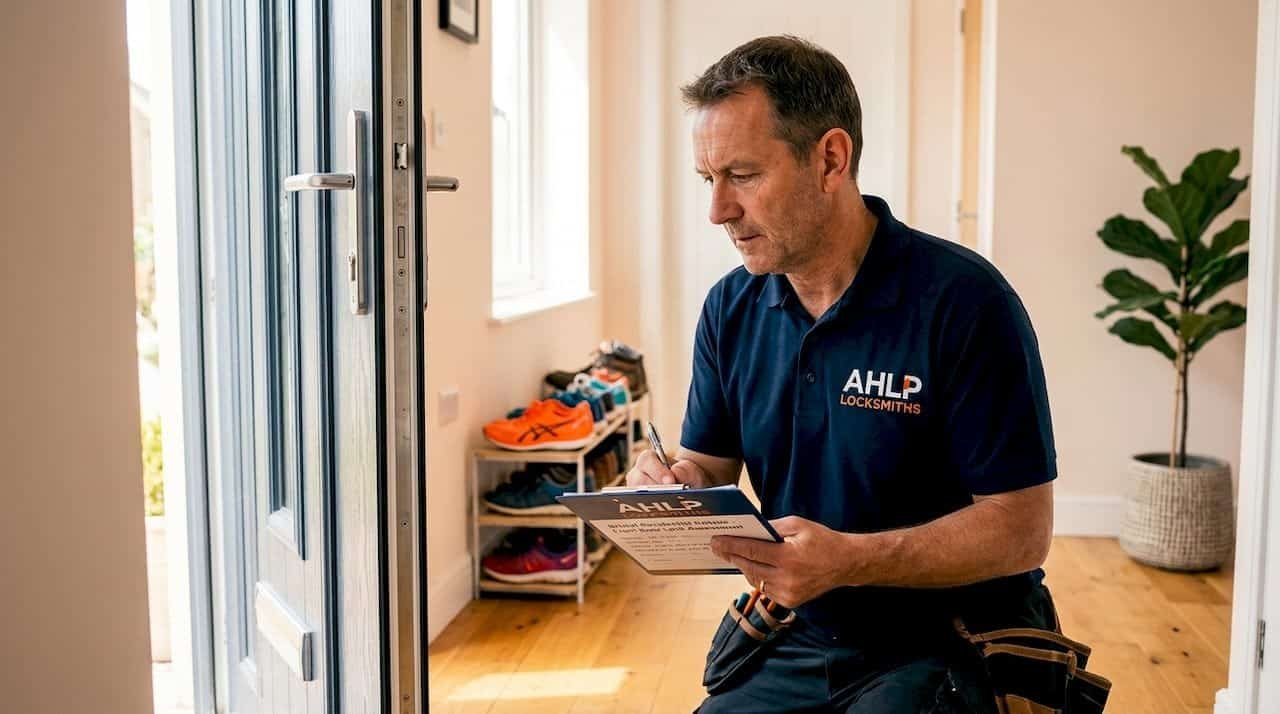
Most people hear “security audit” and picture IT professionals hunched over screens, scanning networks for digital threats. But if you own a home or run a business in Bristol, a security audit is something far more relevant to your everyday safety than that image suggests. A security audit is a structured, independent review of everything protecting your property, from your locks and access controls to your data handling and staff habits. It finds the gaps that thieves, fraudsters, and opportunists look for. This article explains exactly what a security audit involves and why one could be one of the most practical steps you take this year.
Table of Contents
- What is a security audit?
- Key components of a security audit for homes and businesses
- Why security audits matter beyond compliance
- The ongoing nature of security audits: making security lasting
- Choosing the right security audit for your property
- Our perspective: the audit most Bristol properties actually need
- Secure your Bristol property with AHLP Locksmiths
- Frequently asked questions
What Is a Security Audit?
At its core, a security audit is an independent review and examination of a system’s records and activities, performed to assess security controls, compliance, and risks, and to recommend improvements. That definition covers a lot of ground. “Independent” is the key word here. An audit is not a self-assessment. It is carried out by someone with no stake in the current setup, which means you get an honest picture of where your protection falls short.
For homeowners and businesses in Bristol, this matters because we tend to overestimate how secure we are. You bought decent locks when you moved in. You have a CCTV camera above the front door. That feels sufficient. But an independent review might reveal that your door lock is a standard Euro cylinder without anti-snap protection, that your CCTV has a blind spot covering the rear gate, or that a spare key has been circulating among people who no longer need it.
A security audit covers several interconnected areas:
- Physical security: locks, doors, windows, gates, and access points
- Technical controls: alarms, CCTV systems, and any networked devices
- Administrative practices: who has keys or access codes, and whether that access is reviewed regularly
- Policy adherence: whether the people in your building actually follow the security procedures you think they do
- Recommendations: specific, prioritised actions to close the gaps found
If you have been thinking about a security consultation for your property, understanding what a full audit involves helps you ask the right questions and get real value from the process.
Key Components Of a Security Audit For Homes and Businesses
With a clear security audit definition in place, let’s look at what the assessment process actually covers in practice.
Security audits typically evaluate IT security elements such as networks, servers, endpoints, software, and related policies and procedures to determine how strong an organisation’s overall security posture is. For Bristol businesses, this means examining routers, point-of-sale systems, staff devices, and any cloud storage you use. For homeowners with smart locks, video doorbells, or home automation systems, these connected devices fall squarely within scope too.
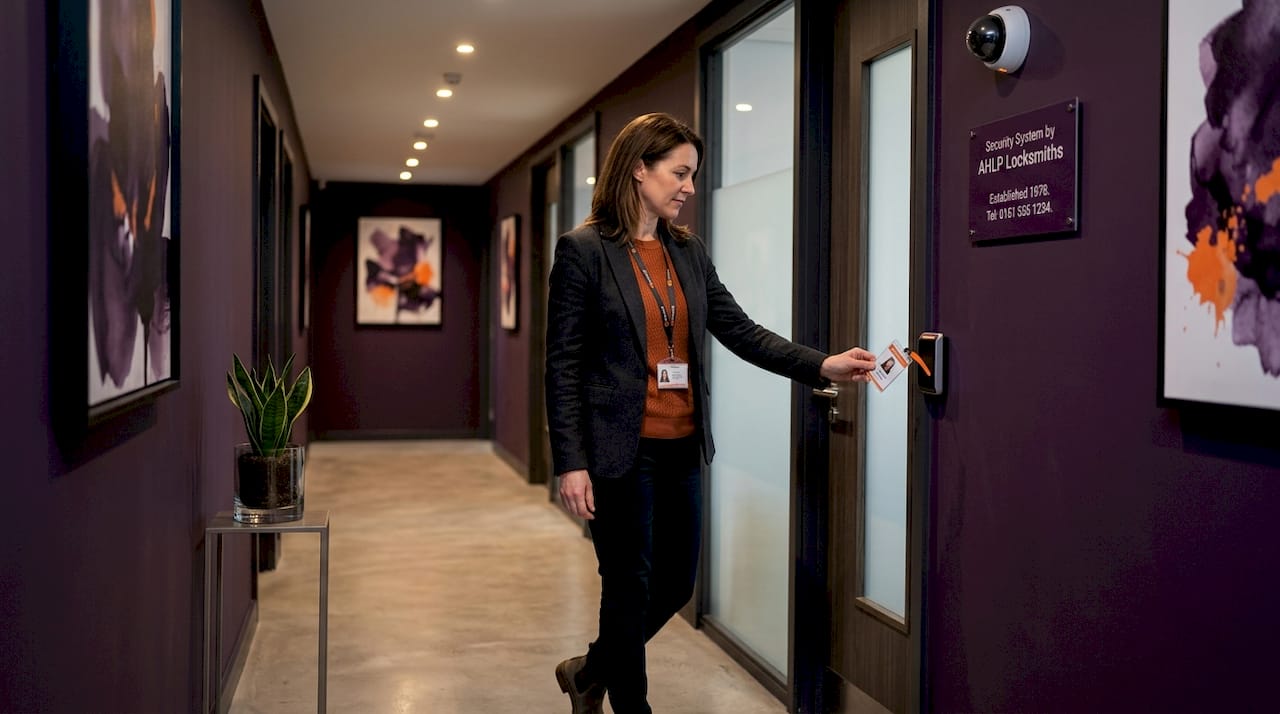
Physical security is equally central. ICO guidance recommends conducting audits and tests of physical controls and keeping records of physical access rights, including auditing that access is revoked when it is no longer required. In plain terms, that means checking whether old employees still have working key fobs, whether your CCTV footage is actually being recorded to a retrievable location, and whether your fire exits could be exploited as an entry point.
Here is a summary of the three main audit components:
| Audit area | What it examines | Examples for Bristol properties |
|---|---|---|
| Technical | Networks, software, connected devices | Wi-Fi security, smart lock firmware, CCTV recording settings |
| Physical | Entry points, locks, surveillance, access control | Door locks, window latches, key management, alarm coverage |
| Administrative | Policies, procedures, staff behaviour | Key issue records, visitor logs, data handling practices |
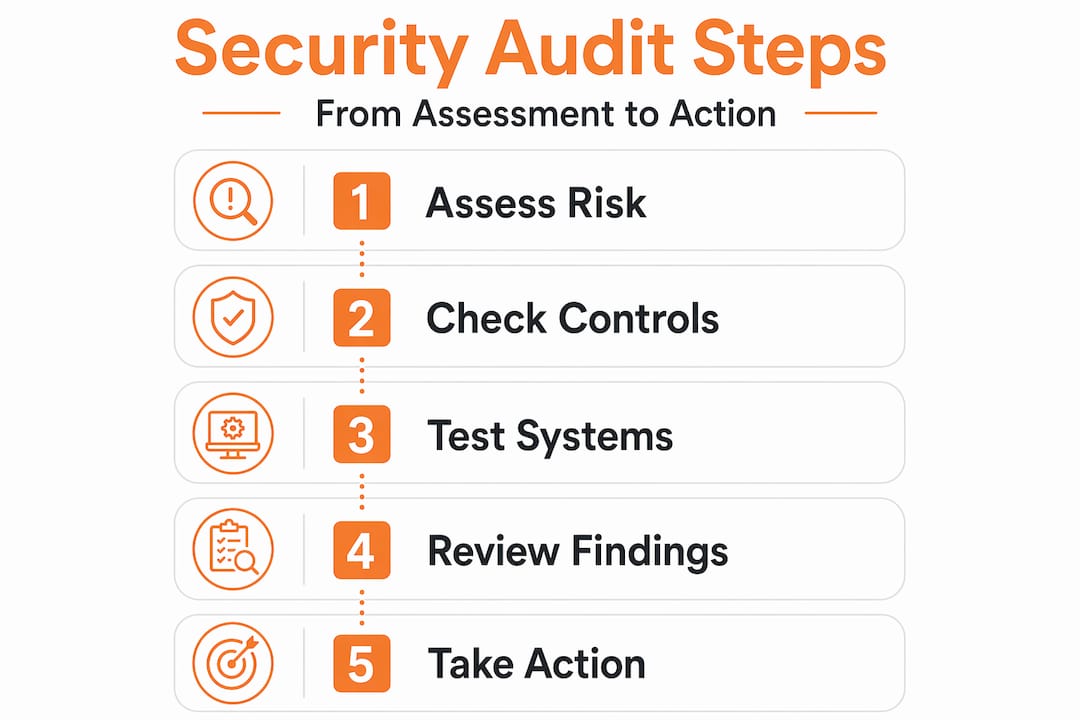
Most audits follow a consistent security assessment process: define the scope, gather evidence through observation and testing, analyse the findings against a recognised standard, then produce a prioritised report of recommendations.
Pro Tip: Before any audit begins, ask the auditor to confirm which standard or framework they are assessing against. In the UK, common benchmarks include Cyber Essentials for IT and British Standards such as BS EN 1303 for cylinder locks. Knowing the benchmark means you can compare results over time.
Use our home security checklist to prepare a basic picture of your current security before a professional audit, so you can make the most of the auditor’s time.
Why Security Audits Matter Beyond Compliance
Many people assume security audits exist mainly to satisfy regulators or insurers. That is a significant underestimation of their value. The real purpose of security audits is to find real vulnerabilities before someone else does.
A security audit is commonly used both to identify vulnerabilities and risks, and to ensure compliance with relevant requirements such as GDPR or PCI DSS, not simply to tick boxes. For a Bristol shop owner storing customer card data, that distinction matters enormously. An audit might reveal that your chip-and-pin terminal connects to the same unsecured Wi-Fi network as your guest access point. That is not a compliance paperwork problem. That is a live risk of financial fraud.
For residential properties, the benefits of security audits are equally concrete. Consider a common Bristol terraced house. The front door has a Yale nightlatch, which can be opened with a credit card, and a deadlock that has not been used in years because the key was lost. An audit surfaces both issues immediately. No amount of GDPR training fixes a door that can be opened with a plastic card.
The importance of security audits also shows up in areas most people never consider:
- Liability reduction: If a break-in occurs and your insurer finds you were using non-approved locks, your claim may be rejected. An audit confirms compliance with insurance requirements before that situation arises.
- Staff and resident awareness: The audit process itself often raises awareness among people in a building, changing behaviour for the better.
- Priority clarity: Rather than guessing what to upgrade first, an audit gives you a ranked list based on actual risk, so you spend money where it counts.
If you want to understand more about how a professional review can apply to your home specifically, our home security consultation explained page covers the process in detail.
The Ongoing Nature of Security Audits: Making Security Lasting
One of the most common misconceptions about security audits is that they are a one-time event. You get the report, fix the issues, and you are done. That thinking leaves properties exposed within months.
Security auditing is best treated as an ongoing activity, used to evaluate whether a security framework remains effective over time, not just a one-time assessment. Threats change. Buildings change. Staff come and go. A security measure that was appropriate in 2023 may be entirely inadequate now.
Here is how a continuous audit process typically works:
- Initial audit: Establish a baseline. Document every access point, control, and policy in its current state.
- Remediation: Address the highest-priority findings, replacing inadequate locks, updating access records, patching software vulnerabilities.
- Follow-up review: Confirm that changes were implemented correctly and effectively.
- Scheduled reassessment: Return at a defined interval, usually every six to twelve months, to check for new vulnerabilities introduced by changes to the building, staff, or threat landscape.
- Incident review: If a security event occurs, conduct an immediate targeted audit to understand how it happened and prevent recurrence.
Pro Tip: Tie your audit schedule to natural events in your property’s calendar. For a business, annual lease renewals, staff changes, or IT upgrades are natural triggers. For a home, moving in, having building work done, or changing tenants are all moments that warrant a fresh look at your security.
Keeping regular lock maintenance as part of your broader security calendar sits naturally alongside scheduled audits. Locks that have been checked and properly maintained are far more likely to perform as expected when it counts.
Choosing The Right Security Audit For Your Property
Not all security audits are the same, and choosing the wrong type means paying for information that does not match your actual risk. Here is how to think about the types of security audits available.
For UK businesses, Cyber Essentials defines a fixed set of baseline IT controls, while a broader security audit can expand to cover how those controls work in your particular environment and other risk areas beyond that baseline. That distinction matters. A small Bristol accountancy firm might need Cyber Essentials certification to satisfy a client contract, but that certification alone says nothing about whether the office front door has a British Standard mortice lock or whether the filing cabinet with client documents is actually locked at night.
IT security audits focus specifically on technical infrastructure such as networks, servers, and endpoints. Broader security audits also include administrative and physical safeguards. For most homeowners and small business owners in Bristol, a combined physical and administrative audit delivers the most immediate practical value.
| Audit type | Focus | Best suited to |
|---|---|---|
| IT security audit | Networks, software, devices, data | Businesses with significant digital infrastructure |
| Physical security audit | Locks, access points, CCTV, alarms | Homes and businesses with physical assets to protect |
| Combined audit | Both IT and physical, plus policies | Businesses handling both digital and physical risk |
When you are choosing an auditor, ask these questions:
- What standard or framework will you assess against?
- Does your scope include physical entry points, not just IT systems?
- Will you provide a prioritised action list, not just a findings report?
- Do you have experience with properties similar to mine in Bristol or the surrounding area?
A good auditor welcomes those questions. One who cannot answer them clearly is worth reconsidering. Review our upgrade home security guide to understand what practical improvements typically follow a security audit for Bristol properties.
Our Perspective: The Audit Most Bristol Properties Actually Need
After working across homes and businesses in Bristol, South Gloucestershire, and Gloucester, we see the same pattern repeatedly. People invest in visible security, a camera above the front door, a sign saying the premises are protected, and assume the work is done. The gaps are almost always invisible until something goes wrong.
The most valuable security audits we witness are not the ones that generate thick reports full of IT recommendations. They are the ones where someone walks around a property with fresh eyes and notices that the rear door has a single-point UPVC lock with no deadlock, that the window in the back office opens fully from outside with a screwdriver, or that the master key for a business premises has been copied twice without any record kept.
Physical security is tactile and immediate. A lock either holds or it does not. That is why we believe every formal security audit should give physical controls at least equal weight to digital ones. Cybercriminals are a real threat, but in Bristol, most residential burglaries still involve forcing or bypassing a physical entry point. Any audit that focuses entirely on your firewall while ignoring your front door cylinder is not giving you the full picture.
The best practice for security audits is to treat them as a conversation, not an inspection. The auditor should explain what they found and why it matters in plain terms, not hand you a document written for a corporate compliance team. If you leave the process without a clear understanding of your three most urgent risks and how to address them, the audit has not done its job.
Secure Your Bristol Property with AHLP Locksmiths
If a security audit has highlighted gaps in your physical security, or if you simply want to know where your home or business stands, we are here to help. At AHLP Locksmiths, we offer professional security consultations across Bristol, South Gloucestershire, and Gloucester, covering everything from lock types and entry point vulnerabilities to insurance compliance and anti-snap upgrades. We use British Standard and insurance-approved hardware on every job, and we will always explain your options clearly before carrying out any work. Call us on 07700 100146 or visit ahlp.co.uk to arrange a visit from one of our trusted, DBS-checked locksmiths.
Frequently Asked Questions
What does a security audit include for a residential property?
A residential security audit covers physical security measures such as locks, doors, and alarms, evaluates any connected IT systems like smart locks or video doorbells, and reviews how access is managed and recorded, including who holds keys and whether access rights are kept up to date.
How often should I have a security audit done?
Security auditing is an ongoing activity rather than a single event, so most properties benefit from a review every six to twelve months, as well as after any significant change such as a house move, building work, or staff turnover.
Will a security audit help me comply with laws like GDPR?
Yes. Security audits help find vulnerabilities and ensure your measures meet compliance standards including GDPR, reducing the risk of regulatory penalties and protecting any sensitive information you hold about customers or residents.
Can I conduct a security audit myself for my home?
Basic checks are a useful starting point, but a thorough audit requires an independent review of records and controls by someone without a stake in the current setup, which is why professional auditors consistently surface risks that self-assessments miss.
Recommended
- Security consultation: protect and insure your Bristol property
- Security consultation explained: expert guide for Bristol
- Why get a security consultation for your home or business
- Why Security Consultations Matter for Safer Properties