
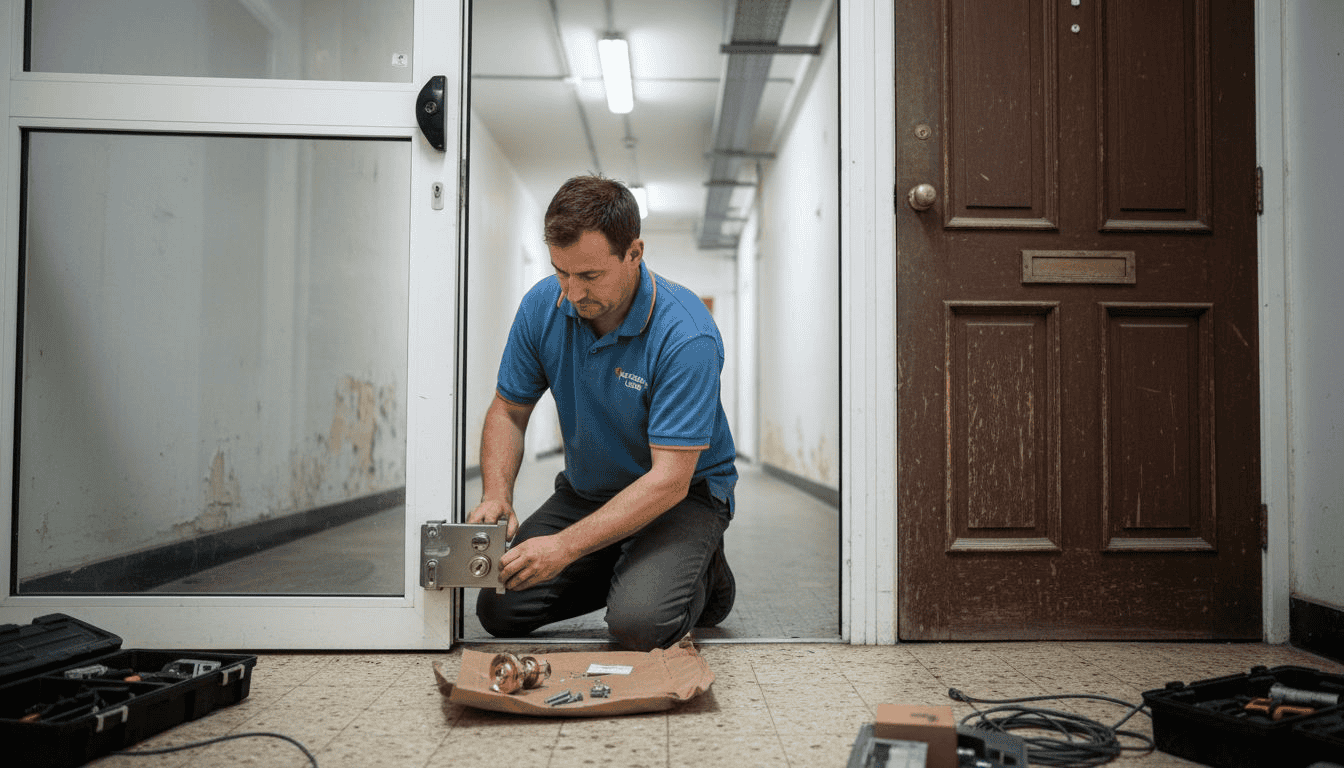
Most people do not realise that choosing the wrong lock can put both homes and businesses at risk across the British market. With so many options available, it is easy to overlook how commercial locks differ in strength and features compared to residential ones. By understanding the contrasts between lock types, you can confidently protect your property and ensure every entry point meets British security standards, whether for family safety or business compliance.
Table of Contents
- Defining Commercial And Residential Locks
- Key Security Features And Functionality
- Legal And Insurance Standards In The UK
- Cost, Installation And Common Applications
- Choosing The Right Lock For Your Property
Key Takeaways
| Point | Details |
|---|---|
| Type of Locks | Residential locks focus on aesthetics and basic security, while commercial locks prioritise durability and advanced security features. |
| Usage and Traffic | Residential locks are suited for low to moderate use, whereas commercial locks are designed for high-traffic areas with frequent access. |
| Security Standards | UK insurers have stringent standards requiring specific certifications for locks, especially in commercial settings, to ensure adequate security and insurance compliance. |
| Professional Advice | It is crucial to consult a professional locksmith for a security assessment tailored to your specific property needs and risks before selecting locks. |
Defining Commercial And Residential Locks
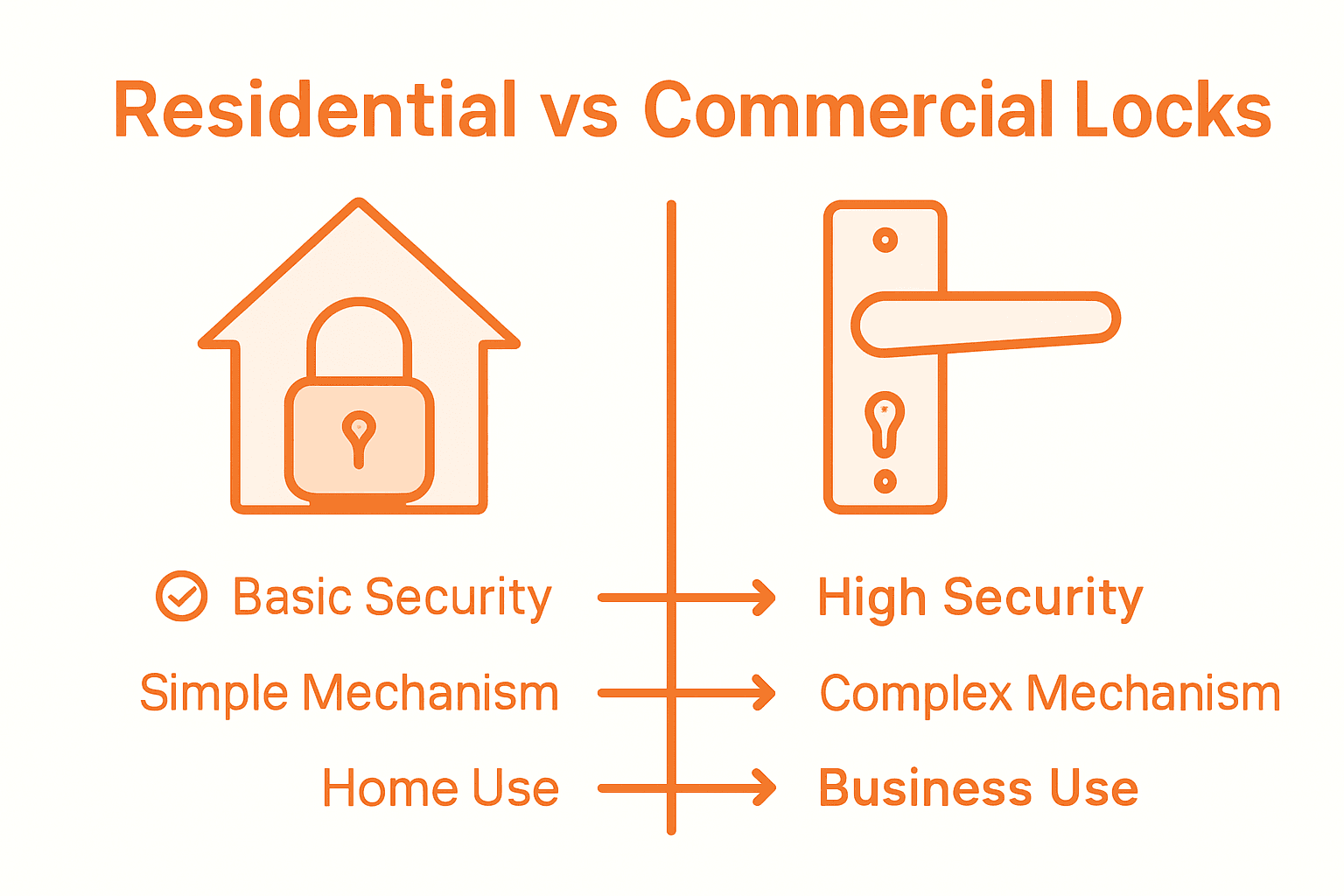
Understanding the fundamental differences between commercial and residential locks is crucial for selecting the right security solution. Residential locks are primarily designed for home environments, focusing on aesthetic appeal and basic security measures, while commercial locks are engineered to withstand significantly more rigorous conditions.
Commercial locks differ substantially from residential locks in their core design and functionality. Where home locks typically protect personal spaces with moderate security requirements, business locks must endure high-traffic areas, multiple daily users, and potential security threats. These locks are constructed with more robust materials, advanced mechanism designs, and enhanced durability to manage constant use in professional settings.
Key Distinguishing Features:
- Residential locks prioritise aesthetic design
- Commercial locks emphasise durability and advanced security
- Home locks handle light to moderate usage
- Business locks are built for heavy, continuous interaction
The engineering behind commercial locks reflects their more demanding environment. They are specifically designed to protect business assets and manage complex access control scenarios, incorporating features like master key systems, electronic access controls, and more sophisticated locking mechanisms that residential locks simply do not require.
Here is a concise comparison of residential and commercial lock types:
| Aspect | Residential Locks | Commercial Locks |
|---|---|---|
| Main Purpose | Home security and aesthetics | Asset protection and heavy use |
| Usage Level | Low to moderate daily use | High-traffic, frequent access |
| Common Technology | Basic keyed or electronic | Biometric, access control, audit trail |
| Installation Complexity | Often DIY feasible | Requires professional installation |
| Insurance Requirement | Meets basic standards | Must meet strict compliance |
| Cost Range | £150–£350 | £350 and above |
Pro Tip: Security Assessment: Always consult a professional locksmith to evaluate your specific security needs, as the right lock depends on your unique environment and risk profile.
Key Security Features And Functionality
Commercial and residential locks differ dramatically in their security capabilities, with each designed to meet distinct protective requirements. Commercial locks often incorporate sophisticated security features that go far beyond traditional locking mechanisms, integrating advanced technologies to provide comprehensive protection for business environments.
Advanced Security Components:
- Electronic access control systems
- Comprehensive audit trail capabilities
- Multi-point locking mechanisms
- Biometric authentication options
- Integration with broader security infrastructure
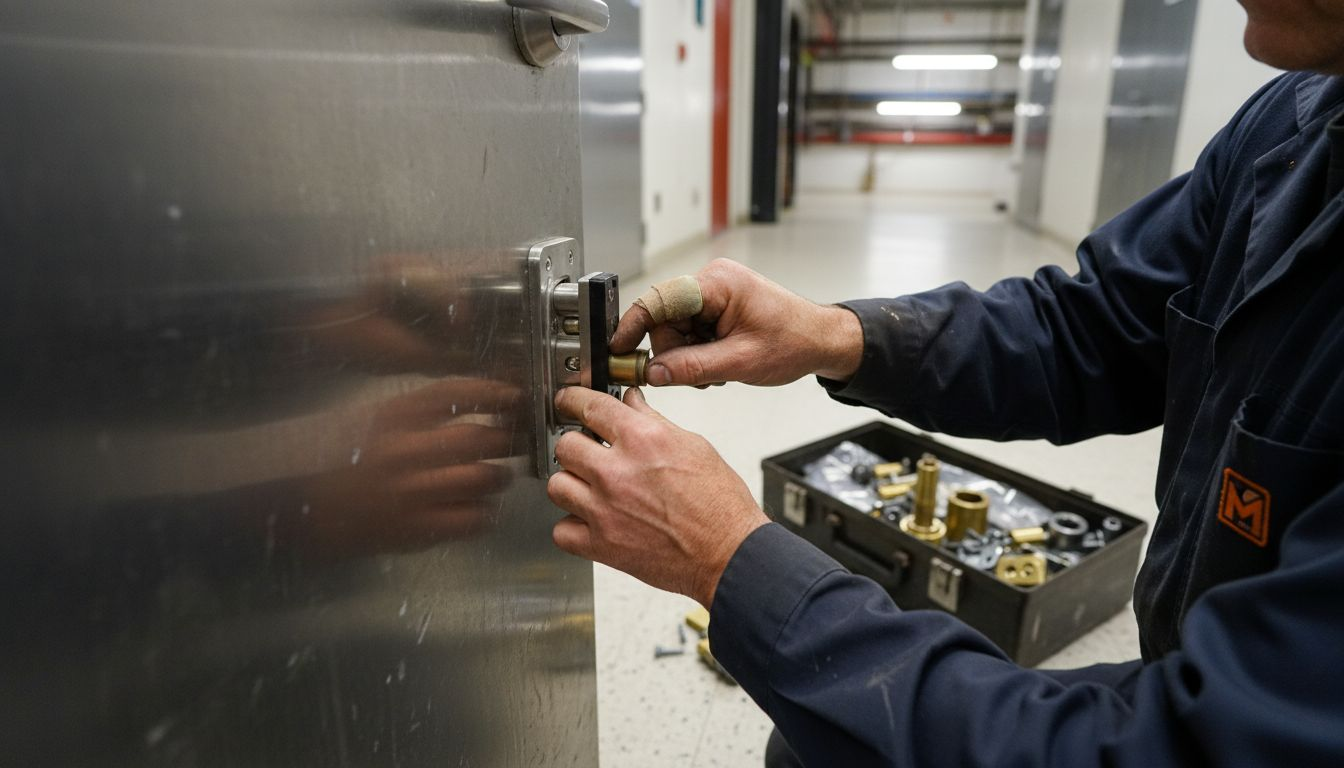
Commercial locks are constructed from significantly more robust materials like hardened steel, offering superior resistance against tampering, forced entry, and prolonged mechanical stress. These locks must withstand continuous usage in high-traffic areas while maintaining consistent performance and security standards.
The technical sophistication of commercial locks extends beyond physical durability. Modern business security systems include digital tracking, remote management capabilities, and complex access hierarchies that allow precise control over who enters specific areas. Unlike residential systems, these locks can generate detailed logs, track individual user movements, and provide instantaneous security alerts in case of unauthorised access attempts.
Pro Tip: Security Configuration: Always request a comprehensive security assessment that evaluates your specific environmental risks and recommends lock systems tailored to your precise operational needs.
Legal And Insurance Standards In The UK
UK insurers have established stringent security standards that businesses and homeowners must adhere to when selecting locks for their properties. These legal requirements are designed to ensure comprehensive protection and maintain insurance policy validity, creating a robust framework for security across residential and commercial settings.
Key Insurance Lock Standards:
- BS 3621 standard for wooden doors
- TS007 standard for uPVC and composite doors
- British Standard kite mark for verified security
- Minimum 5-lever mortice deadlock requirements
- External door security certification
Commercial properties face more complex legal compliance compared to residential environments. Insurance providers typically mandate advanced security mechanisms that demonstrate proactive risk management. These requirements often include documented security assessments, professional installation certificates, and locks that meet specific technical specifications designed to prevent potential breaches.
The implications of non-compliance can be significant, potentially resulting in insurance claim rejections or increased premium costs. Property owners must carefully select locks that not only provide physical protection but also satisfy the precise technical standards set by insurers. This means investing in professionally installed, certified lock systems that meet or exceed current British security regulations.
This table highlights major UK lock certification standards and who they apply to:
| Certification | Applies To | Security Focus |
|---|---|---|
| BS 3621 | Wooden doors (home/business) | Approved lock mechanism |
| TS007 | uPVC/composite doors | Cylinder security, anti-snap |
| British Standard Kite Mark | All certified locks | Verified construction testing |
| 5-Lever Mortice Deadlock | External doors (home) | Minimum insurance requirement |
| External Door Security Certificate | Commercial properties | Demonstrates advanced compliance |
Pro Tip: Security Verification: Always request official certification documents from your locksmith to ensure your locks meet current insurance and legal standards, protecting both your property and your insurance coverage.
Cost, Installation And Common Applications
Commercial and residential locks differ significantly in their pricing and application ranges, reflecting the diverse security requirements across different environments. Residential digital locks typically range from £150 to £350, whereas commercial-grade systems can cost £350 or more, accounting for their advanced technological features and enhanced durability.
Common Lock Application Scenarios:
- Residential homes: Front doors, back doors, internal access points
- Small businesses: Office entry points, reception areas
- Large commercial spaces: Multi-entry buildings, restricted access zones
- Industrial facilities: Secure storage areas, equipment rooms
- Healthcare settings: Patient privacy and controlled access
Commercial locks are specifically engineered for high-traffic areas and sustained heavy use, making them fundamentally different from residential solutions. The installation process for commercial locks is typically more complex, requiring professional assessment, precise measurements, and often integration with broader security infrastructure such as access control systems and electronic monitoring.
Installation complexity varies dramatically between residential and commercial environments. While homeowners might manage simple lock replacements, commercial installations demand specialised expertise. Professional locksmiths must consider factors like building structure, traffic flow, security hierarchies, and potential compliance requirements when designing and implementing lock systems.
Pro Tip: Cost Comparison: Always obtain multiple professional quotes and consider long-term security value rather than focusing solely on initial installation expenses, as investing in quality locks can significantly reduce potential future security risks.
Choosing The Right Lock For Your Property
Selecting the most appropriate lock requires careful consideration of multiple critical security factors, tailored specifically to your property’s unique requirements. Property owners must evaluate several key aspects to ensure optimal protection, including usage frequency, potential security risks, and specific environmental challenges.
Critical Lock Selection Criteria:
- Traffic volume and usage intensity
- Security risk assessment
- Budget considerations
- Compliance with insurance standards
- Integration with existing security systems
- Material durability and environmental resistance
When choosing between residential and commercial lock systems, property owners must carefully analyse their specific security needs, understanding that one-size-fits-all solutions rarely provide comprehensive protection. Residential properties typically require locks that balance aesthetic appeal with fundamental security, while commercial spaces demand more robust mechanisms capable of managing complex access control and withstanding constant usage.
The selection process involves understanding the nuanced differences between lock types. Residential locks prioritise simplicity and aesthetic integration, whereas commercial locks focus on advanced technological features, multiple user management, and extensive durability. Professional locksmiths can provide detailed assessments that consider factors like building structure, potential security vulnerabilities, and specific operational requirements.
Pro Tip: Security Consultation: Arrange a professional security assessment before purchasing locks, ensuring you select systems precisely matched to your property’s unique security profile and potential risk factors.
Secure Your Property with Expert Locksmith Solutions Tailored to Your Needs
Understanding the vital differences between commercial and residential locks is the first step to ensuring robust security for your home or business. Whether you are concerned about compliance with UK insurance standards or need durable, high-traffic lock systems, AHLP Locksmiths is here to help. We tackle key challenges mentioned in the article such as advanced access control, legal requirements like BS 3621 or TS007 certifications and the complexity of installation with professional skill and care.
Choose from our comprehensive Locksmith Services – Auto Home Lock Pro, designed to meet your specific security needs. Our local experts understand the emotional importance of feeling safe and confident in your living or working environment. Act now to upgrade your property with insurance-approved, burglary-resistant locks that provide peace of mind and compliance with industry standards.
Contact AHLP Locksmiths today to arrange a personalised security consultation or emergency lock service through our Local Locksmith – Auto Home Lock Pro. Don’t wait until vulnerabilities become risks. Reach out at https://ahlp.co.uk/contact/ and secure your property with trusted professionals committed to your safety and convenience.
Frequently Asked Questions
What are the main differences between commercial and residential locks?
Commercial locks are designed for high-traffic use and advanced security, while residential locks prioritise aesthetics and basic security measures suitable for home environments.
Why are commercial locks more expensive than residential locks?
Commercial locks typically cost more due to their robust construction, advanced technology features, and the need for professional installation, reflecting their ability to withstand heavy daily use and potential security threats.
What key features should I look for in a commercial lock?
Key features to consider include electronic access control, audit trail capabilities, multi-point locking systems, and durability against tampering and forced entry to meet the demands of high-traffic environments.
What legal standards apply to locks in commercial properties?
Commercial locks must adhere to strict insurance and legal compliance standards, such as the BS 3621 for wooden doors and the TS007 for uPVC and composite doors, ensuring they meet specific security requirements set by insurers.