
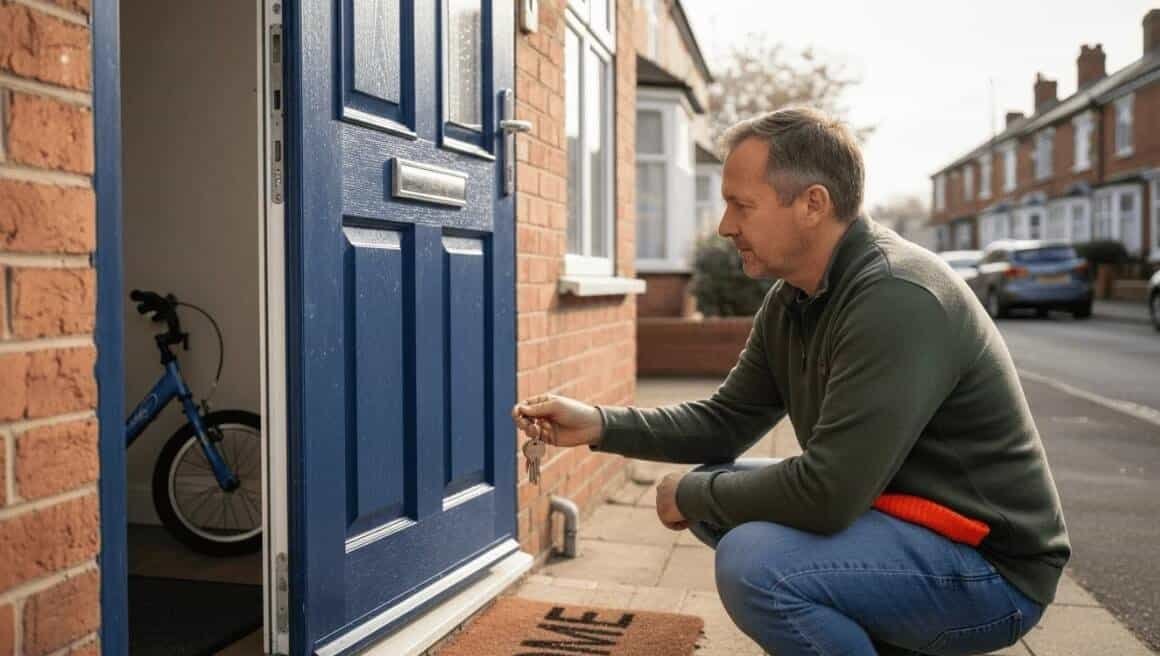
Facing the reality of unwanted intrusions can be unsettling for Bristol and South Gloucestershire homeowners. Securing your composite door is more than a simple upgrade, it is a vital step toward comprehensive home protection. With reinforced construction and multi-point locking systems endorsed by British Standards, these doors create a formidable barrier against break-ins while balancing safety for residents. Explore locksmith-backed strategies to safeguard your property and strengthen your peace of mind.
Table of Contents
- What Composite Door Security Means
- Different Lock Types For Composite Doors
- Key Security Features And Standards
- Risks Of Inadequate Door Security
- Upgrades And Mistakes To Avoid
Key Takeaways
| Point | Details |
|---|---|
| Composite Doors Offer Enhanced Security | Composite doors are designed with advanced materials and locking mechanisms that significantly reduce the risk of forced entry. |
| Regular Security Assessments Are Crucial | Homeowners should conduct annual security inspections to identify vulnerabilities and ensure optimal protection. |
| Upgrade Lock Mechanisms for Better Protection | Replacing outdated locks with modern multi-point systems enhances the overall security of composite doors. |
| Understand Risks of Poor Security | Inadequate door security can lead to increased vulnerability to burglary and potential insurance complications. |
What Composite Door Security Means
Composite door security represents a comprehensive approach to protecting residential properties, particularly in Bristol’s urban landscape. Unlike traditional wooden or uPVC doors, composite doors combine multiple materials to create a robust barrier against potential intrusions. These sophisticated entry points integrate advanced security features designed to withstand significant physical challenges.
Understanding composite door security involves recognising its key protective elements, which are meticulously engineered to prevent unauthorised access. Security standards for residential doors highlight the critical balance between maintaining safety and preventing potential break-ins. The essential components that define composite door security include:
- Reinforced frame construction that resists forced entry
- Multi-point locking mechanisms spread pressure across multiple points
- High-density core materials providing exceptional structural integrity
- Advanced impact-resistant exterior layers
- Precision-engineered weatherproofing that maintains security
The design philosophy behind composite door security goes beyond simple physical resistance. Modern iterations incorporate sophisticated technological elements that transform doors from passive barriers into active security systems. These doors are engineered to meet stringent insurance-approved security standards, ensuring homeowners receive comprehensive protection against potential threats.
Here is a comparison of traditional door types versus composite doors in terms of core security factors:
| Security Factor | Traditional Wooden Door | uPVC Door | Composite Door |
|---|---|---|---|
| Resistance to Forced Entry | Moderate, prone to warping | Moderate, frame can flex | High, reinforced structure |
| Weatherproof Durability | Prone to swelling and rot | Can degrade in sunlight | Excellent, multi-layer design |
| Insulation Performance | Poor to fair | Fair | Superior, energy-efficient |
| Typical Insurance Rating | Often lower | Moderate | Usually the highest available |
Government and industry safety guidelines consistently emphasise the importance of holistic security approaches. Professional locksmiths recommend periodic security assessments to ensure your composite door maintains optimal protective capabilities, including checking lock mechanisms, assessing frame integrity, and verifying weatherproofing seals.
Pro tip: Arrange an annual security inspection with a certified locksmith to identify and address any potential vulnerabilities in your composite door’s security system.
Different Lock Types for Composite Doors
Composite doors require sophisticated locking mechanisms that provide robust security for Bristol homeowners. Door security standards emphasise the importance of selecting appropriate lock types that offer comprehensive protection against potential intrusions.
The primary lock types for composite doors include:
- Multi-point locking systems that secure the door at multiple points
- Cylinder locks with advanced anti-snap technology
- Mortice deadlocks provide additional structural security
- Hook bolt locks that interlock with the door frame
- Electronic smart locks offering modern digital security features
Each lock type serves a unique security purpose. Multi-point locks are particularly effective, engaging several locking points simultaneously across the door frame. This distribution of pressure makes forced entry significantly more challenging, creating a formidable barrier against potential intruders.
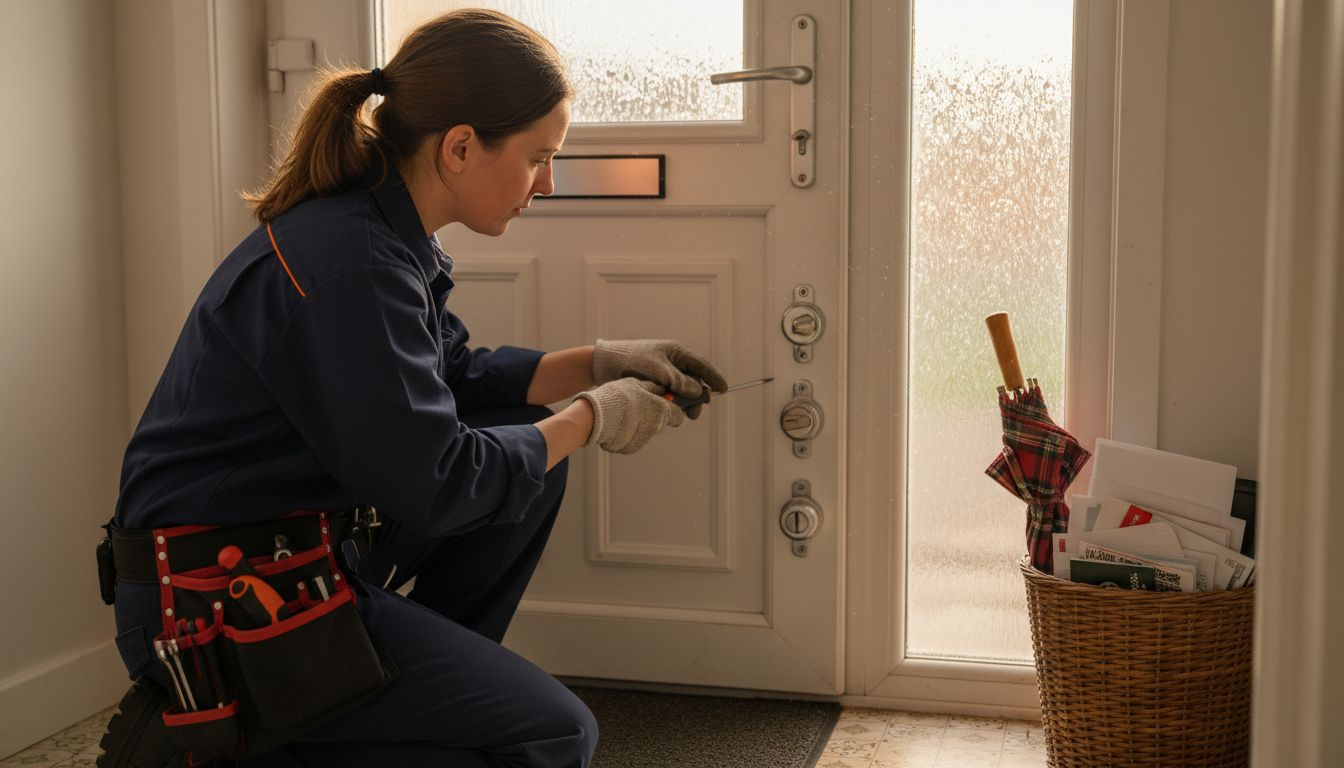
Professional locksmiths recommend selecting locks that meet British Standard PAS 24 security certifications. These standards ensure the lock has undergone rigorous testing to resist various forced entry techniques. Electronic smart locks are increasingly popular, providing homeowners with remote monitoring and keyless entry options that complement traditional security approaches.
Pro tip: Consult a professional locksmith to assess your specific composite door and recommend the most appropriate lock configuration for your home’s unique security requirements.
Key Security Features and Standards
Composite door security is underpinned by stringent British Standards for door performance, which establish comprehensive guidelines for protecting residential properties across Bristol and beyond. These standards define critical security requirements that ensure homeowners receive robust protection against potential break-ins.
The key security features that define high-quality composite doors include:
- Robust material composition providing exceptional structural integrity
- Multi-point locking mechanisms that distribute security pressure points
- Impact-resistant exterior layers designed to withstand forced entry attempts
- Precision-engineered weatherproofing that maintains long-term security performance
- Advanced thermal insulation that supports both security and energy efficiency
Professional security assessments typically focus on specific performance standards such as PAS 24, which rigorously tests doors against various intrusion scenarios. Structural integrity plays a crucial role, with manufacturers required to demonstrate their doors can withstand significant physical challenges while maintaining their protective capabilities.
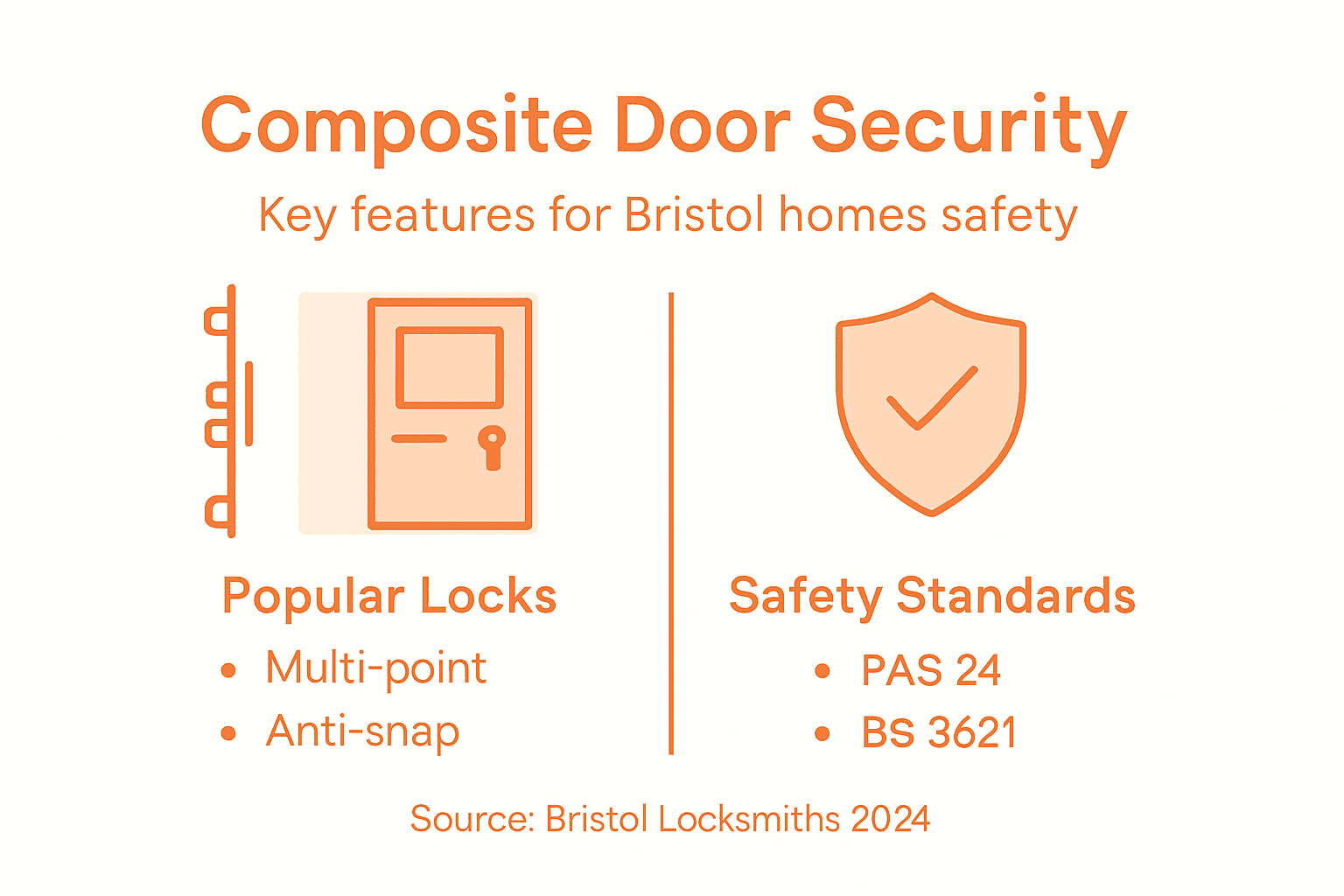
Modern composite doors incorporate sophisticated security technologies that go beyond traditional mechanical barriers. Electronic integration, smart lock systems, and advanced materials create a multilayered security approach that adapts to evolving home protection needs. These innovations ensure that homeowners can rely on comprehensive protection tailored to contemporary security challenges.
Pro tip: Request certification documentation from your door installer to verify that your composite door meets the latest British Standard security requirements.
Risks of Inadequate Door Security
Homeowners often underestimate the profound consequences of inadequate door security. Building safety regulations underscore the critical importance of maintaining robust door protection to prevent potentially catastrophic security breaches.
The primary risks associated with insufficient composite door security include:
- Increased vulnerability to burglary with estimated financial losses
- Compromised household safety leaves residents exposed to potential intruders
- Potential insurance invalidation due to poor security measures
- Reduced property value resulting from perceived security weaknesses
- Higher personal safety risks for household occupants
Statistical evidence reveals that homes with weak door security are significantly more likely to experience break-ins. Criminals typically target properties with visible security vulnerabilities, such as outdated locks, weak frames, or damaged entry points. Structural weaknesses can be identified rapidly by experienced burglars, making comprehensive door protection essential for comprehensive home defence.
Beyond immediate physical risks, inadequate door security can have broader implications for household insurance and personal safety. Insurers increasingly require demonstrable security measures, and failure to maintain appropriate protection can lead to claim rejections. Modern home security demands a proactive approach that anticipates and mitigates potential vulnerabilities before they can be exploited.
Pro tip: Conduct a professional security audit annually to identify and address potential vulnerabilities in your home’s door protection systems.
Upgrades and Mistakes to Avoid
Upgrading composite door security requires strategic planning and professional insight. Composite repair best practices emphasise the importance of maintaining structural integrity throughout any security enhancement process.
Critical upgrades homeowners should consider include:
- Replacing outdated locking mechanisms with modern multi-point systems
- Upgrading to anti-snap cylinder locks that resist sophisticated intrusion techniques
- Installing additional security hardware like door chains and viewer systems
- Reinforcing door frames to prevent potential structural vulnerabilities
- Implementing smart security technology for remote monitoring
Common mistakes during door security upgrades can significantly compromise overall protection. Inexperienced homeowners often select incompatible hardware, use incorrect installation techniques, or neglect professional assessment. Structural modifications require precise execution to maintain the door’s original security rating and prevent potential weakness.
Professional locksmiths recommend comprehensive security evaluations before implementing upgrades. This approach ensures that each enhancement integrates seamlessly with existing door structures, maintaining manufacturer warranties and insurance compliance. Understanding the nuanced requirements of composite door security prevents costly errors that might inadvertently create new vulnerabilities.
Below is a summary of composite door security upgrade strategies and their key benefits:
| Upgrade Strategy | Key Benefit | Typical Professional Advice |
|---|---|---|
| Replacing outdated locks | Stronger defence against attacks | Choose PAS 24-certified models |
| Adding smart lock technology | Enables remote access and alerts | Ensure compatibility with the door |
| Reinforcing frame and hardware | Prevents frame manipulation attempts | Use manufacturer-approved components |
| Annual security inspections | Early detection of weaknesses | Schedule with a certified locksmith |
Pro tip: Always consult a certified locksmith to assess your specific composite door before implementing any security upgrades to ensure compatibility and effectiveness.
Secure Your Composite Door with Expert Locksmith Support in Bristol
Protecting your home starts with strong, reliable composite door security that meets the highest standards. If you are concerned about weak locks, outdated hardware, or want to upgrade your door to multi-point locking systems that resist forced entry and anti-snap cylinder locks, AHLP Locksmiths is here to help. We understand the importance of certified British Standards and insurance-approved security features that keep your property safe and compliant.
Don’t leave your home vulnerable to burglary risks or insurance issues caused by inadequate door security. Our trusted local locksmith team serves Bristol, South Gloucestershire, and Gloucester with fast, professional service tailored to your composite door’s unique needs. Contact us now at AHLP Locksmiths to arrange a security consultation or emergency lock upgrade. Act today to secure your home with confidence and peace of mind.
Frequently Asked Questions
What makes composite doors more secure than traditional doors?
Composite doors utilise a combination of materials for enhanced strength, including reinforced frames and multi-point locking systems, making them more resistant to forced entry compared to traditional wooden or uPVC doors.
How often should I have my composite door security assessed?
It is recommended to arrange an annual security inspection with a certified locksmith to ensure your composite door’s locking mechanisms, frame integrity, and weatherproofing are all functioning optimally.
What types of locks are suitable for composite doors?
Suitable locks for composite doors include multi-point locking systems, anti-snap cylinder locks, mortice deadlocks, hook bolt locks, and electronic smart locks, all of which provide robust security measures against intrusions.
How can I upgrade my composite door security effectively?
Effective upgrades include replacing outdated locking mechanisms with modern multi-point systems, installing anti-snap cylinder locks, reinforcing door frames, and integrating smart security technologies for enhanced monitoring capabilities.