

Protecting your South Gloucestershire property means more than just locking the door at night. With so many options available, choosing the right lock can feel confusing, especially when different entrances require different levels of security. Understanding the core concepts behind cylinder locks, mortice designs, and multi-point locking systems helps you make choices that protect against threats while also meeting insurance standards. Get clear guidance on the features and proper uses of each lock type so you can create a safer home or business.
Table of Contents
- Defining Lock Types And Core Concepts
- Types Of Locks For UK Properties
- How Key Features Affect Security
- British Standard And Insurance Compliance
- Typical Mistakes When Choosing Locks
Key Takeaways
| Point | Details |
|---|---|
| Understand Lock Types | Familiarise yourself with different lock types, such as Cylinder and Mortice locks, to choose the best option based on your security needs. |
| Prioritise Security Ratings | Always select locks that meet British Standard certifications to ensure adequate protection and potential insurance compliance. |
| Consider Installation Quality | Professional installation is crucial; improper fitting can compromise even high-quality locks. |
| Regularly Assess Locks | Keep locks maintained and periodically assessed by professionals to uphold security standards and privacy. |
Defining Lock Types and Core Concepts
Understanding lock types requires knowledge of their fundamental characteristics and mechanisms. UK door locks encompass various designs tailored to different security needs and architectural requirements. At their core, locks are mechanical or electronic devices designed to prevent unauthorised access by securing an entry point through a sophisticated combination of moving parts.
Locks can be categorised by several critical attributes: their operational mechanism, installation location, and security rating. The primary categories include cylinder locks, mortice locks, rim locks, and multi-point locking systems. Each type serves a specific function and provides varying levels of protection. Cylinder locks, for instance, are prevalent in residential properties and use a pin tumbler mechanism where a precisely cut key manipulates internal pins to enable or restrict movement.
The complexity of lock mechanisms varies significantly. Some locks incorporate advanced features like anti-pick technologies, hardened steel components, and drill-resistant plates. Lever locks represent another traditional British design, typically found in older properties, which use a series of strategically positioned levers that must align perfectly to allow the lock to open. Modern locks increasingly integrate electronic components, offering features like remote access, digital tracking, and integrated alarm systems.
Quick tip: When selecting a lock, prioritise British Standard ratings and ensure compatibility with your specific door type and frame construction.
The following table summarises the key differences between common UK lock types and their recommended use cases:
| Lock Type | Main Mechanism | Best Application | Security Level |
|---|---|---|---|
| Cylinder lock | Pin tumbler system | Residential front doors | Moderate |
| Mortice lock | Lever-based mechanism | Older British properties | Medium to high |
| Rim lock | Surface-mounted mechanism | Internal doors | Basic |
| Multi-point system | Multiple bolts across the frame | Composite and uPVC doors | High |
Types of Locks for UK Properties
Homeowners in the United Kingdom have diverse lock options designed to meet specific security requirements for different property types. Door locks in the UK typically fall into several primary categories, each offering unique protective features for residential and commercial spaces. These lock types are carefully engineered to address the nuanced security challenges faced by British property owners.
The most common lock types include sash locks, deadlocks, night latches, and multi-point locking systems. Sashlocks, which combine a bolt and a latch mechanism, are particularly popular in wooden and composite front doors, providing both security and convenient entry. Deadlocks offer enhanced security by requiring a key to open from both inside and outside, making them ideal for main entrance doors. Night latches provide an additional layer of protection, allowing residents to secure the door without using a key, which is especially useful during evening hours.
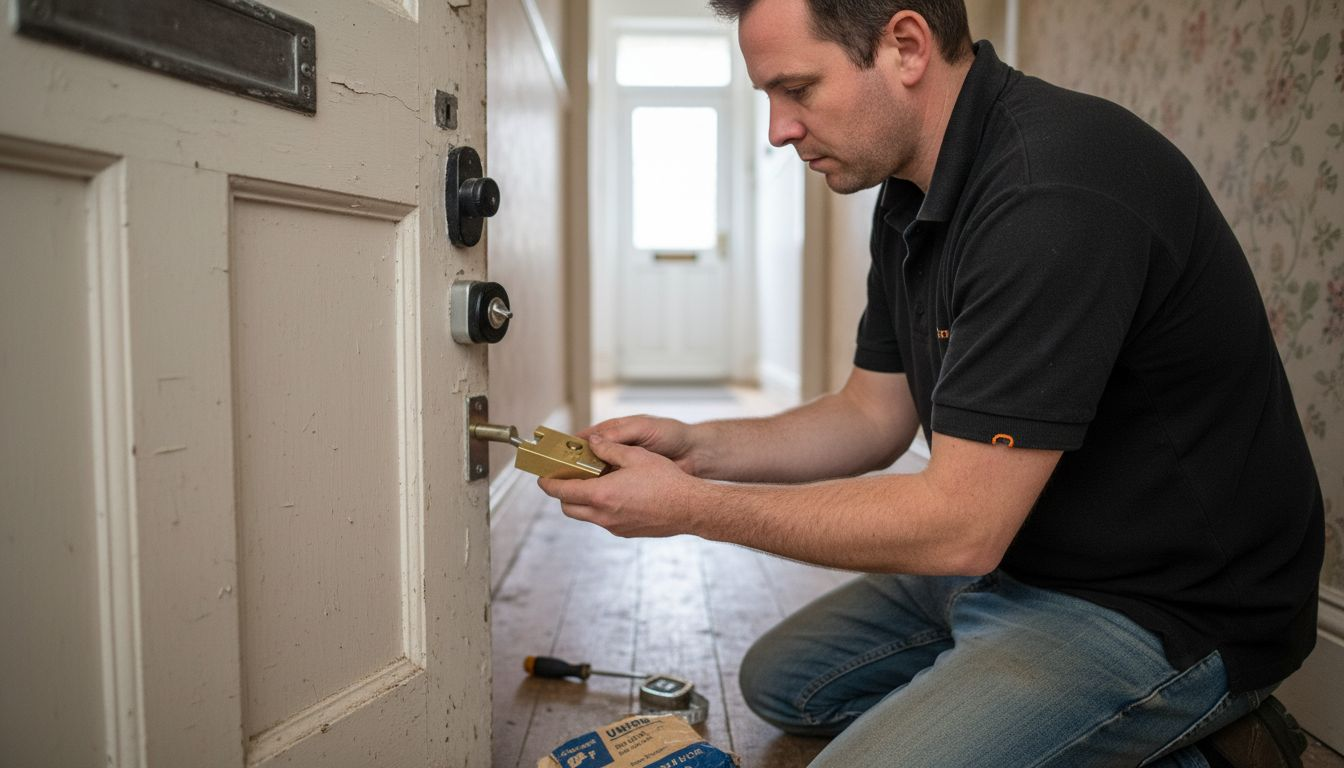
Multi-point locking systems represent the pinnacle of modern lock technology for UK properties. These sophisticated mechanisms secure the door at multiple points along the frame, significantly reducing the risk of forced entry. Such systems typically engage locks at the top, middle, and bottom of the door, distributing pressure and making the door substantially more resistant to breaking. Electronic and smart lock technologies are also gaining popularity, offering features like remote access, digital key management, and integration with home security systems.
Pro tip: Always ensure your chosen lock meets British Standard BS3621 for insurance-approved home security, providing both protection and potential insurance benefits.
How Key Features Affect Security
Home security depends critically on understanding the nuanced features that distinguish high-quality locks from potentially vulnerable mechanisms. Euro-cylinder lock standards reveal that not all locks offer equivalent protection, with security ratings playing a crucial role in determining a lock’s effectiveness against potential intrusions. Homeowners must consider multiple factors beyond simple mechanical design when evaluating lock security.
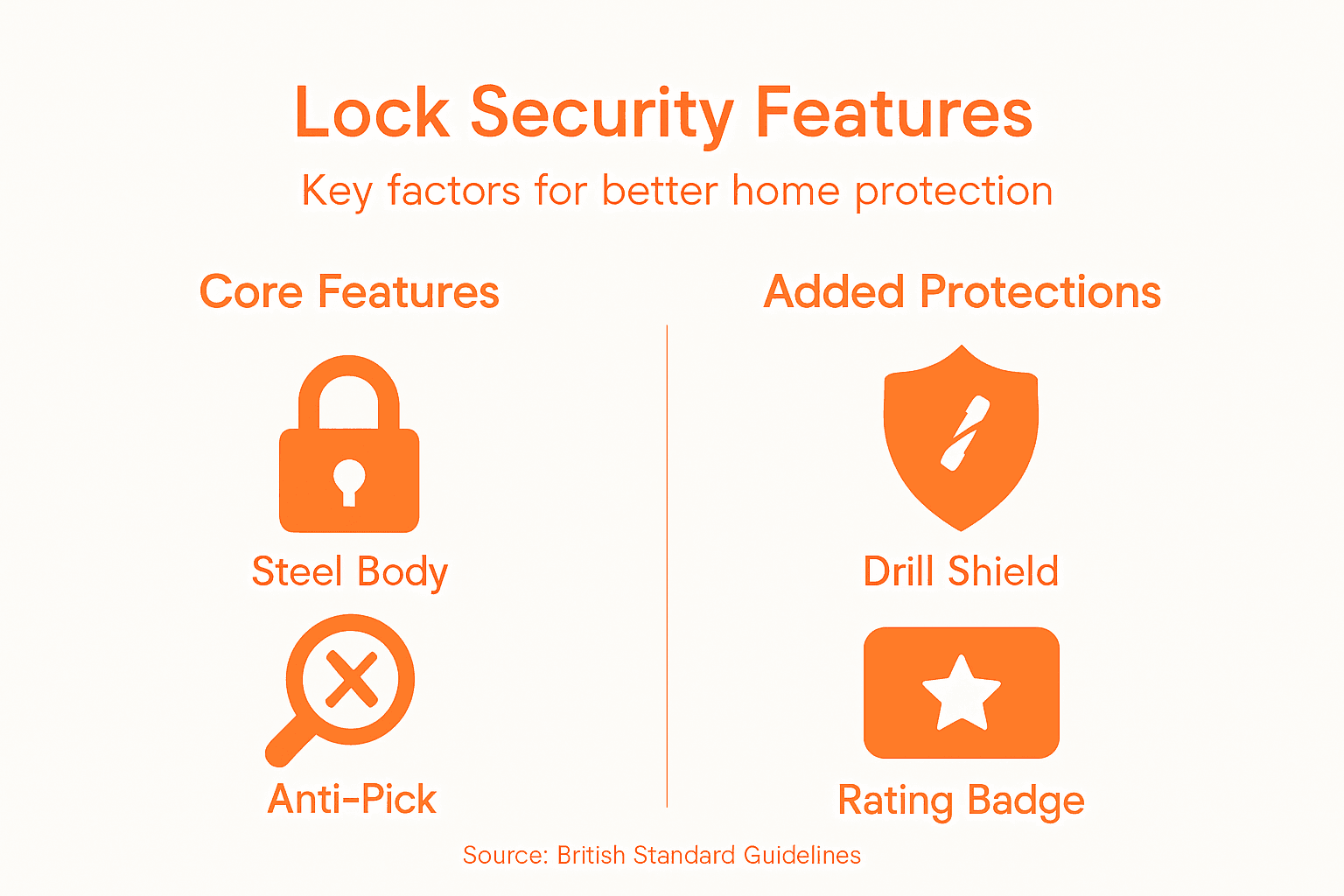
Key security features include material composition, complexity of internal mechanisms, resistance to picking, and protection against specialised breaking techniques. Hardened steel components and anti-drill plates significantly enhance a lock’s resilience, while sophisticated pin tumbler arrangements can dramatically reduce the likelihood of successful lock manipulation. Some advanced locks incorporate additional defensive technologies such as ball bearings, sidebar mechanisms, and spring-loaded anti-pick pins that create multiple barriers against unauthorised entry.
The positioning and installation of locks are equally important as their internal design. A high-security lock can be compromised by improper fitting, with vulnerable points around the cylinder and mounting areas potentially creating structural weaknesses. Professional locksmiths recommend selecting locks with reinforced strike plates, minimal cylinder protrusion, and comprehensive frame integration. Electronic and smart lock technologies are introducing additional layers of security, offering features like tamper alerts, remote monitoring, and adaptive authentication methods that go beyond traditional mechanical protection.
Pro tip: Invest in locks with independently certified security ratings like TS007 or Sold Secure Diamond Standard, which provide measurable assurance of quality and resistance to common attack methods.
British Standard and Insurance Compliance
Homeowners face critical security and insurance implications when selecting locks for their properties. Insurance-approved locks play a pivotal role in maintaining comprehensive home protection and ensuring policy validity. British Standard certifications represent the gold standard for lock security, providing a standardised framework that insurers use to assess risk and determine coverage eligibility.
The British Standard BS3621 represents the primary benchmark for residential lock security, establishing rigorous criteria that locks must meet to be considered insurance-compliant. This standard evaluates multiple security parameters, including resistance to picking, drilling, and forced entry attempts. Locks achieving this certification demonstrate a minimum level of mechanical sophistication and structural integrity that insurers view as essential for protecting residential properties. Key requirements include specific key characteristics, robust construction materials, and tested performance under simulated attack conditions.
Compliance goes beyond simply purchasing a certified lock. Proper installation, maintenance, and documentation are equally crucial in meeting insurance requirements. Insurers typically mandate that locks are professionally installed, with visible evidence of British Standard compliance. Many policies include specific clauses requiring homeowners to maintain locks in good working condition, with potential policy invalidation if security standards are not consistently upheld. Electronic and smart lock technologies are increasingly being incorporated into these standards, reflecting the evolving landscape of home security mechanisms.
Pro tip: Always retain installation certificates and professional documentation for your locks, as these can be crucial evidence of compliance during insurance assessments.
Here’s a quick reference comparing security certifications relevant to UK locks:
| Certification Standard | Coverage Areas | Security Assurance | Insurance Impact |
|---|---|---|---|
| BS3621 | Residential mechanical locks | Prevents picking, drilling | Required for home insurance |
| TS007 | Euro cylinder locks | Enhanced anti-snap protection | Favourable for claims |
| Sold Secure Diamond | High-security locks | Advanced intrusion resistance | Recognised by some insurers |
Typical Mistakes When Choosing Locks
Homeowners frequently make critical errors when selecting locks that can compromise their property’s security. Common lock selection mistakes often stem from a lack of understanding about the complex requirements of effective home protection. These oversights can leave properties vulnerable to potential break-ins and may even invalidate home insurance policies.
One of the most significant mistakes is prioritising cost over quality. Budget locks typically lack the structural integrity and advanced security features necessary to deter professional intruders. Many homeowners fail to consider the specific security requirements for different areas of their property, selecting identical locks for front doors, interior doors, and less frequently used entrances. This approach ignores the varying levels of protection needed for different access points. Professional locksmiths recommend selecting locks that match the specific security profile of each door, taking into account factors such as visibility, frequency of use, and potential vulnerability to forced entry.
Insurance compliance represents another critical area where homeowners frequently make mistakes. Many are unaware that insurers have strict requirements about lock types and installation standards. Choosing non-British Standard locks or failing to have them professionally installed can potentially invalidate home insurance policies. Electronic and smart lock technologies add another layer of complexity, with many homeowners underestimating the importance of proper configuration and ongoing maintenance. Some mistakenly believe that expensive technology alone guarantees security, overlooking the fundamental importance of correct installation and regular professional assessment.
Pro tip: Always consult a professional locksmith to assess your specific security needs and ensure your locks meet both British Standard requirements and insurance compliance standards.
Secure Your Home with Expert Lock Solutions Tailored to Your Needs
Understanding the difference between lock types is essential for every homeowner aiming to protect their property effectively. Whether you face challenges selecting the right British Standard-approved lock or need advice on upgrading to anti-snap or multi-point locking systems, AHLP Locksmiths are here to guide you. We address common pain points such as ensuring insurance compliance, improving resistance to lock picking and drilling, and matching locks to specific door types to avoid costly security mistakes.
Don’t leave your home’s security to chance. Benefit from professional locksmith services across Bristol, South Gloucestershire and Gloucester that guarantee the use of quality, insurance-approved hardware installed with precision. Act now to enhance your property’s protection by contacting AHLP Locksmiths for a personalised security consultation or fast emergency callout. Secure peace of mind today by unlocking the full potential of your door security with expert help immediately.
Frequently Asked Questions About Different Lock Types
What are the main differences between cylinder locks and mortice locks?
Cylinder locks use a pin tumbler system and are commonly found in residential front doors, while mortice locks employ a lever-based mechanism typically used in older properties. Cylinder locks provide moderate security, whereas mortice locks offer medium to high protection.
How does the security level of multi-point locking systems compare to traditional locks?
Multi-point locking systems engage at multiple points across the door frame, significantly increasing resistance to forced entry compared to traditional locks like rim or cylinder locks, which only secure at a single point.
What features should I look for in a high-security lock?
Key features for a high-security lock include hardened steel components, anti-drill plates, complex internal mechanisms resistant to picking, and certifications such as TS007 or Sold Secure Diamond Standard, which indicate superior protection against common attack methods.
Why is it important to choose locks that meet British Standard requirements?
Locks that meet British Standard requirements, such as BS3621, are essential for ensuring adequate security and compliance with insurance policies. Insurers often mandate these standards to assess risk and validate coverage, making them crucial for homeowners to prevent policy invalidation.