

Home break-in rates have shown that nearly one third of burglaries in British homes involve forced entry at a vulnerable door or lock. For Bristol and South Gloucestershire homeowners, understanding how residential lock mechanisms actually work is not just technical trivia but crucial for daily safety and peace of mind. This guide unpacks key lock features and practical measures, giving you the know-how to keep your property secure and your insurance cover compliant.
Table of Contents
- What Are Lock Mechanisms And Why They Matter
- Types Of Residential Locks In The UK
- Key Features And Function Of Each Lock
- British Insurance Standards And Compliance
- Common Risks And Security Weaknesses
- Maintenance Tips And When To Upgrade
Key Takeaways
| Point | Details |
|---|---|
| Importance of Lock Mechanisms | Lock mechanisms serve as the primary defence against unauthorised access, making understanding their operation crucial for home security. |
| Variety of Lock Types | Different residential lock types offer varying levels of security, with modern electronic locks providing advanced features like remote access and monitoring. |
| British Standard Compliance | Adhering to British Standard locks is necessary for insurance coverage, ensuring they meet rigorous security testing and performance criteria. |
| Regular Maintenance is Essential | Annual inspections and timely upgrades of locks are vital to maintaining security and functionality, preventing vulnerabilities from developing over time. |
What Are Lock Mechanisms And Why They Matter
Lock mechanisms are sophisticated security devices designed to control and restrict access, serving as the first line of defence for homes, businesses, and personal property. Just like canal lock systems control water flow, mechanical locks regulate entry by creating a precise barrier that only opens with an authorised key or mechanism.
At their core, lock mechanisms operate on a fundamental principle of specificity similar to the biochemical lock and key analogy, where only one exact configuration can successfully open the mechanism. This means each lock is engineered with intricate internal components – typically pins, springs, and tumblers – that must align perfectly to permit movement. When an incorrect key is inserted, these internal components block rotation, preventing unauthorised access and maintaining security.
Home security depends critically on understanding these intricate systems. Modern lock mechanisms have evolved from simple wooden bolt designs to complex cylindrical and mortice configurations that offer multiple layers of protection. Different lock types – from pin tumbler mechanisms to electronic smart locks – provide homeowners with increasingly sophisticated options for protecting their most valuable assets.
Pro tip: Inspect your home’s lock mechanisms annually, checking for signs of wear, rust, or potential compromise that could weaken your security system.
Types Of Residential Locks In The UK
Residential locks in the United Kingdom encompass a diverse range of security mechanisms, each designed to protect homes from potential intrusions. Much like various canal lock types serve different waterway needs, residential locks are engineered to provide specific levels of protection tailored to different entry points and security requirements.
The most common types of residential locks in the UK include mortice locks, cylinder locks, and rim locks. Mortice locks are typically embedded within wooden doors and offer robust security by extending a metal bolt into the door frame when engaged. Cylinder locks, often found in UPVC doors, use a pin tumbler mechanism where a specially cut key lifts internal pins to allow rotation. Rim locks, which mount onto the door surface, provide additional security and are frequently used as supplementary protection alongside primary locking mechanisms.
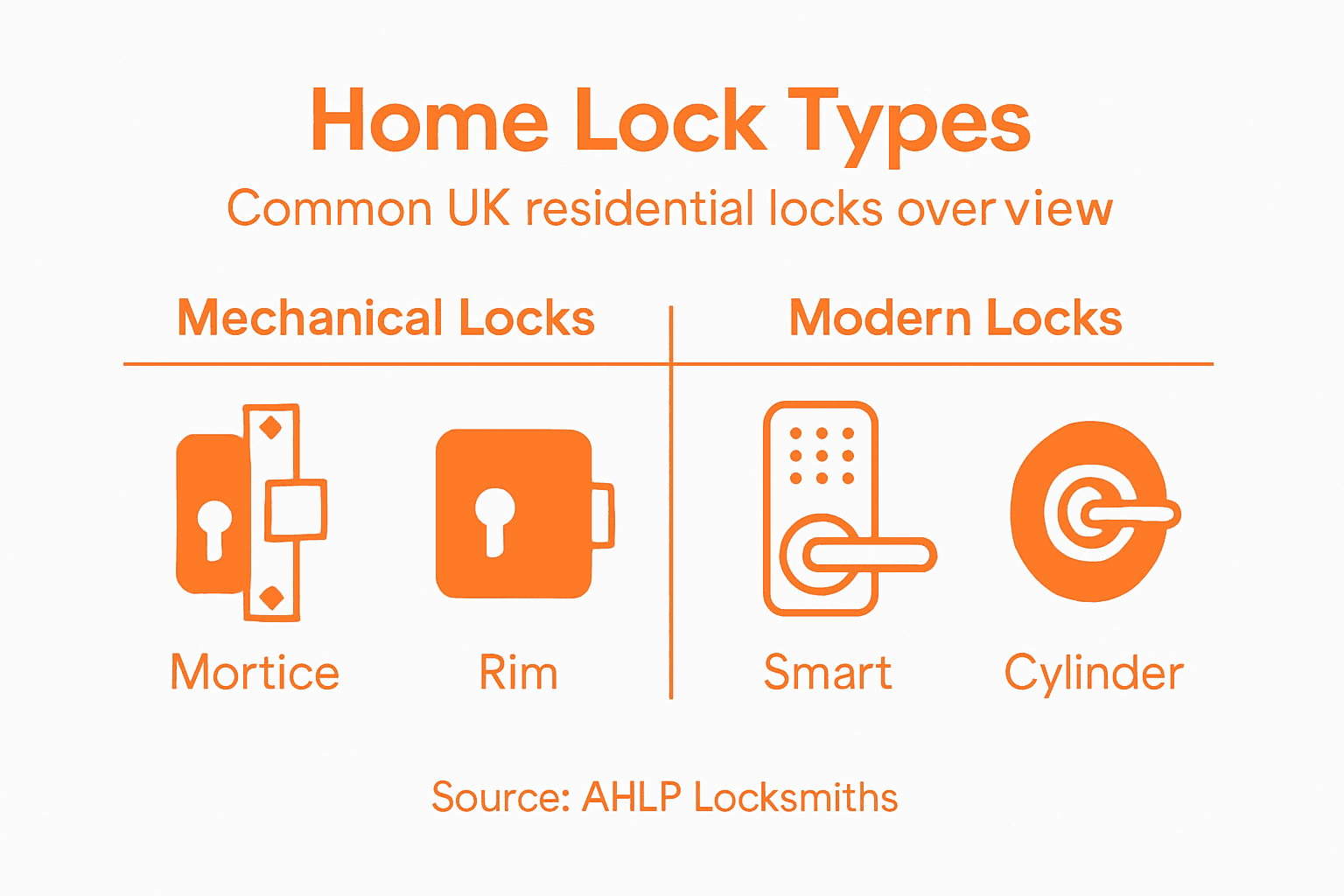
Beyond traditional mechanical locks, modern UK residential security has embraced electronic and smart lock technologies. These advanced systems integrate digital authentication methods like keypad entry, biometric scanning, and smartphone-controlled access. Such innovations offer homeowners unprecedented flexibility, allowing remote monitoring, temporary access codes for guests, and immediate notification of potential security breaches.
Pro tip: When selecting residential locks, prioritise British Standard approved mechanisms that meet insurance requirements and provide independently tested security ratings.
Here’s a comparison of the main types of residential locks commonly used in the UK:
| Lock Type | Common Location | Security Features | Typical Vulnerabilities |
|---|---|---|---|
| Mortice Lock | Wooden doors | Metal bolt, complex tumblers | Susceptible to drilling attacks |
| Cylinder Lock | UPVC door systems | Pin tumbler, anti-snap tech | Cylinder snapping, poor fitting |
| Rim Lock | Surface-mounted doors | Auxiliary locking, simple use | Easy bypass if used alone |
| Electronic/Smart | Doors, gates | Digital codes, biometrics | Hacking, signal interception |
Key Features And Function Of Each Lock
Lock mechanisms are intricate systems with unique features that determine their effectiveness and security level. Similar to how canal lock gates are meticulously crafted for precise water control, residential locks are engineered with specific components to prevent unauthorised access.
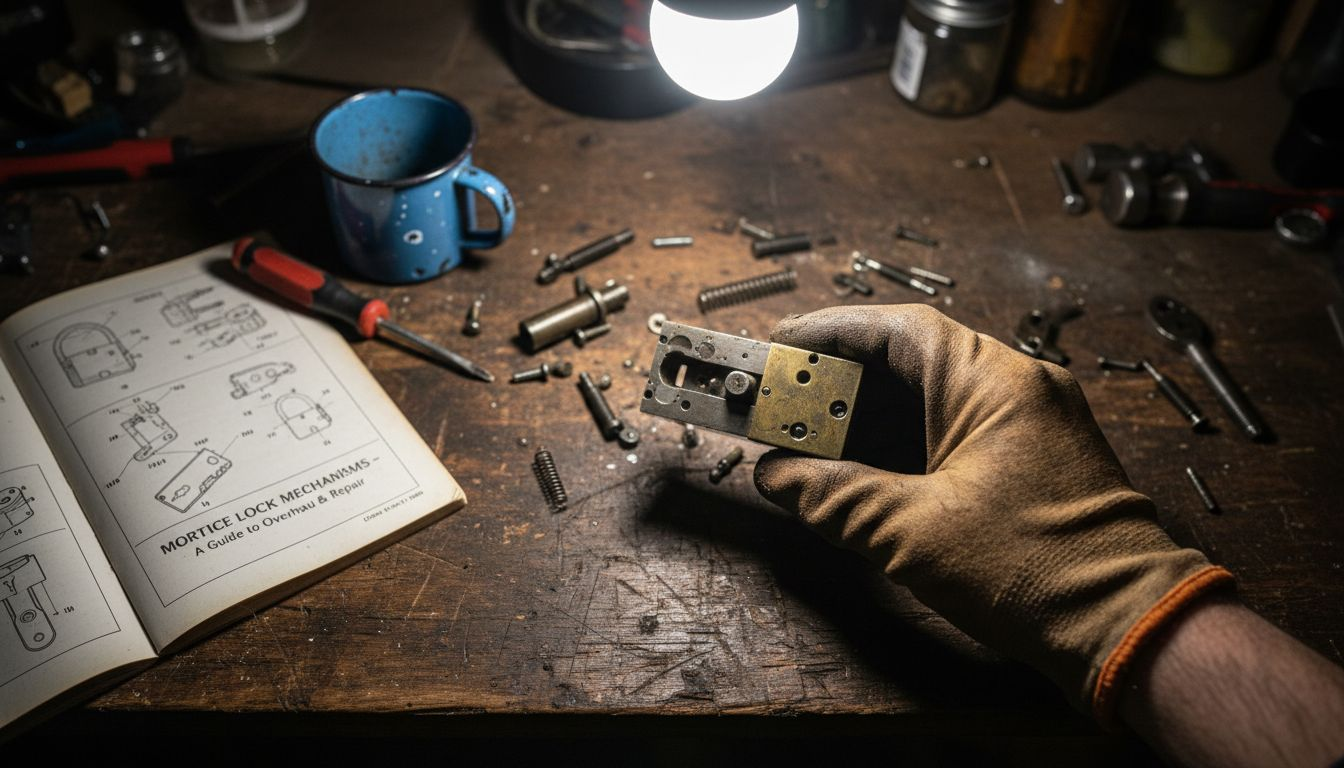
Mortice locks feature a complex internal mechanism comprising a metal bolt that extends into the door frame, creating a robust barrier. The key components include a spring-loaded tumbler, which prevents the bolt from moving unless the correct key aligns the internal pins perfectly. Cylinder locks, commonly used in modern UPVC doors, utilise a pin tumbler system where a precisely cut key must lift multiple pins to a specific height, allowing rotation and unlocking.
Electronic and smart locks represent the cutting edge of residential security technology. These sophisticated mechanisms replace traditional physical keys with digital authentication methods such as fingerprint recognition, numeric keypads, and smartphone connectivity. Some advanced models incorporate multiple security layers, including biometric scanning, temporary access codes, and real-time security breach notifications, providing homeowners with unprecedented control and monitoring capabilities.
Pro tip: Regularly inspect your lock’s internal mechanisms for signs of wear, ensuring smooth operation and maintaining optimal security performance.
British Insurance Standards And Compliance
UK home insurance policies have stringent requirements for lock security, with comprehensive standards designed to protect homeowners and insurers alike. British Standards Online provides authoritative documentation that outlines precise specifications for residential lock mechanisms, ensuring robust protection against potential breaches.
The British Standard BS 3621 represents the gold standard for domestic lock security, specifying detailed requirements for lock performance and resistance to tampering. Insurance providers typically mandate that external doors feature locks meeting this standard, which involves rigorous testing for pick resistance, drill resistance, and forced entry protection. Locks must demonstrate the ability to withstand sophisticated manipulation techniques, with approved mechanisms featuring hardened steel bolts, anti-pick pins, and reinforced strike plates that significantly reduce vulnerability.
Compliance involves more than simply installing an approved lock. Insurers expect homeowners to maintain their security systems, with potential policy invalidation if locks are damaged, poorly maintained, or do not meet current security standards. This means regular professional inspections, immediate replacement of worn mechanisms, and ensuring that all external entry points, including windows and secondary door,s meet the required security benchmarks. Electronic and smart lock systems are increasingly accepted, provided they meet specific certification criteria that demonstrate equivalent or superior protection to traditional mechanical locks.
Pro tip: Keep documentation of your lock’s British Standard certification and installation, as this can be crucial when making insurance claims or proving security compliance.
Below is a summary of key British lock standards and what insurers look for:
| Standard/Requirement | Core Feature | Insurance Impact | Maintenance Expectation |
|---|---|---|---|
| BS 3621 | Anti-pick, drill resistance | Required for most UK insurance | Yearly inspections advised |
| Documentation Retention | Proof of compliance | Needed for claims processing | Safeguarded for audit purposes |
| Regular Servicing | Professional inspection | Ensures policy remains valid | Immediate replacement if faulty |
| Electronic Lock Criteria | Equivalent robust security | Increasingly recognised by insurers | Certification must be presented |
Common Risks And Security Weaknesses
Home security vulnerabilities are complex challenges that require systematic evaluation, much like effective risk assessment in safeguarding contexts. Cylinder snapping remains one of the most prevalent security weaknesses in residential locks, where intruders can quickly break the lock cylinder using specialised tools, gaining entry within seconds.
Key security vulnerabilities include weak entry points beyond the primary door lock. UPVC doors with standard cylinder mechanisms are particularly susceptible, with many older installations featuring easily manipulated locking systems. Burglars often exploit predictable weaknesses such as single-point locking mechanisms, thin door frames, and inadequate strike plate installations. Mortice locks without anti-drill protection can be compromised using basic power tools, while cheaper locks with minimal pin complexity can be picked by experienced criminals using rudimentary lock-picking techniques.
Technology introduces both solutions and new vulnerabilities. Smart locks, while offering advanced authentication methods, can be compromised through digital hacking techniques or Bluetooth signal interception. Wireless communication protocols may create unexpected security gaps, and battery-operated electronic locks risk complete failure during power outages. Additionally, homeowners frequently underestimate the importance of regular maintenance, allowing mechanical wear and environmental degradation to progressively weaken lock effectiveness over time.
Pro tip: Conduct an annual professional security audit to identify and address potential lock vulnerabilities before they become critical security risks.
Maintenance Tips And When To Upgrade
Lock maintenance requires a systematic approach, guided by careful preservation techniques that prevent deterioration and extend mechanism’s lifespan. Regular inspection involves checking for signs of wear, rust, misalignment, and mechanical stiffness that could compromise security performance.
Key maintenance practices include lubricating lock mechanisms annually with graphite-based lubricants, which prevent internal corrosion without attracting dirt. Homeowners should clean external lock surfaces, checking for subtle damage like hairline fractures, worn key edges, or slight misalignments that might indicate impending failure. Cylinder mechanisms require particular attention, with professional servicing recommended every 2-3 years to ensure smooth operation and detect potential vulnerabilities before they become critical security risks.
Upgrading becomes essential when locks demonstrate consistent performance issues, fail to meet current British Standard security requirements, or are older than ten years. Modern lock technologies offer significant improvements, including anti-snap cylinders, multi-point locking systems, and smart lock integrations that provide enhanced security monitoring. Electronic and biometric lock systems now offer features like remote access control, activity logging, and instant breach notifications, transforming traditional security mechanisms into intelligent home protection systems.
Pro tip: Schedule a professional lock assessment during your annual home security review to identify potential upgrade opportunities and prevent unexpected mechanical failures.
Strengthen Your Home Security with Expert Locksmith Solutions
Understanding how lock mechanisms work is crucial to protecting your home from opportunistic intruders and common vulnerabilities such as cylinder snapping or worn components. If you are concerned about the intricate lock types discussed, like mortice, cylinder or smart locks and want to ensure your security meets British Standard requirements, professional help is just a step away.
Our team at AHLP Locksmiths specialises in comprehensive domestic lock services designed to safeguard your property effectively. From upgrading to anti-snap cylinders and insurance-approved locks to emergency callouts and precise UPVC mechanism repairs, we bring peace of mind through expert knowledge and quality craftsmanship. Explore our full range of trusted solutions on our locksmith services page and benefit from fast, local support with a personal touch from our local locksmith.
Don’t wait until a security weakness becomes a risk. Contact us now on 07700 100146 to arrange a consultation or emergency visit. Protect your home today with proven lock mechanisms and professional care you can rely on.
Frequently Asked Questions
How do lock mechanisms enhance home security?
Lock mechanisms enhance home security by controlling access and creating barriers that only open with the appropriate key or mechanism, thus preventing unauthorised entry. They feature intricate components such as pins and tumblers that align correctly with the correct key, adding layers of protection.
What are the main types of residential locks available?
The main types of residential locks include mortice locks, cylinder locks, and rim locks. Mortice locks are embedded within doors, cylinder locks are commonly used in UPVC doors with a pin tumbler mechanism, and rim locks are surface-mounted for added security.
How often should I inspect and maintain my locks?
It is advisable to inspect and maintain your locks at least once a year. During your inspection, look for signs of wear, rust, or misalignment and consider lubricating the mechanisms to ensure they operate smoothly.
What should I look for when upgrading my security locks?
When upgrading your security locks, look for features such as British Standard approvals, anti-snap technology, and smart lock capabilities that offer advanced authentication methods. Ensure that locks are suitable for your specific security needs and comply with insurance requirements.