

Surprisingly, failing to meet british insurance-approved lock standards can push home insurance premiums up by over 15 percent for many Bristol homeowners. With security myths still circulating, even in South Gloucestershire, knowing which locks actually comply can prevent costly mistakes. Whether you are confused by old advice or overwhelmed by technical jargon, this guide makes sense of British lock standards and reveals how you can safeguard your property and maintain valid insurance.
Table of Contents
- Insurance-Approved Locks And Common Myths
- Key Lock Standards: BS3621, TS007, PAS24
- Types Of Insurance-Approved Locks For UK Homes
- How Insurers Assess Lock Compliance
- Risks Of Non-Compliance And Typical Costs
Key Takeaways
| Point | Details |
|---|---|
| Understanding Insurance Requirements | Homeowners should familiarise themselves with specific insurance-approved locks to ensure compliance and protection. |
| Importance of Certification | Locks must meet British Standard specifications, such as BS3621, to be considered secure and compliant. |
| Risks of Non-Compliance | Using non-compliant locks can result in increased premiums or denial of coverage for burglary claims. |
| Regular Security Assessments | Homeowners are advised to schedule annual reviews of their locks to maintain compliance and minimise insurance risks. |
Insurance-approved locks and common myths
Navigating the world of insurance-approved locks involves separating fact from fiction. Homeowners often encounter numerous misconceptions about what makes a lock truly secure and compliant with insurance requirements. Many believe that any lock will suffice, but insurers have specific standards that protect both the property owner and the insurance provider.
Contrary to popular belief, not all locks are created equal. Modern security technologies challenge outdated assumptions about home security. Smart locks, for instance, frequently suffer from myths about vulnerability, when in reality, they often employ sophisticated encryption methods comparable to banking-level security. Insurers typically focus on whether a lock meets British Standard requirements rather than its technological complexity.
Common myths persist about insurance lock requirements. Some homeowners mistakenly think that expensive locks automatically qualify for insurance approval, while others believe older locks will be automatically accepted. In truth, insurance companies assess locks based on specific security standards, including resistance to picking, drilling, and forced entry. Mortice locks with 5-lever mechanisms and British Standard BS3621 certification are often preferred by insurers as they demonstrate a robust approach to home security.
Expert tip: Always consult your specific insurance policy and request a professional security assessment to ensure your locks meet precise compliance standards.
Key lock standards: BS3621, TS007, PAS24
Understanding the key lock standards in the United Kingdom is crucial for homeowners seeking comprehensive property protection and insurance compliance. British Standard locks represent a sophisticated framework designed to ensure robust security across residential and commercial properties. These standards are not merely recommendations but critical benchmarks that insurers use to evaluate the security of a property.
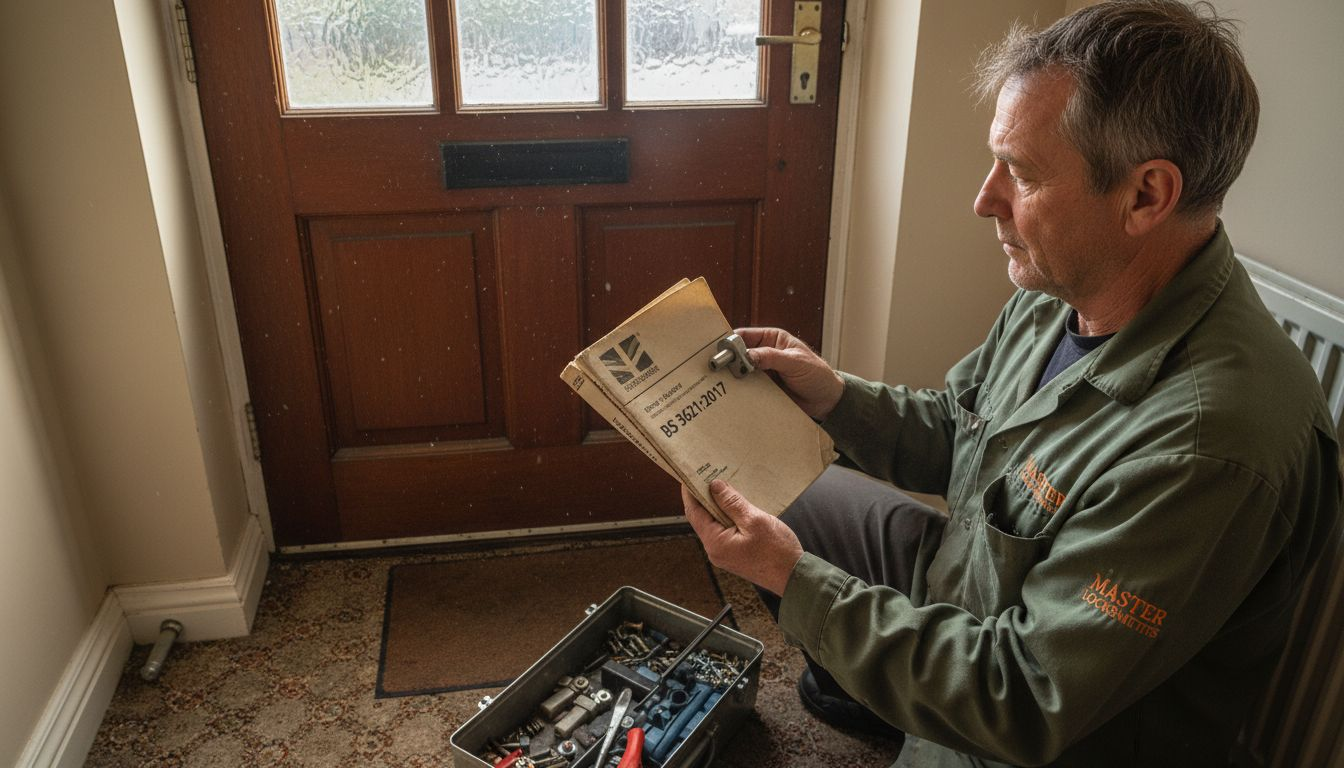
The BS3621 standard represents the most recognised lock specification in the UK. Comprehensive lock mechanisms must meet stringent requirements, including resistance to picking, drilling, and forced entry. This standard specifically applies to thief-resistant locks for external doors, mandating specific performance criteria that protect against sophisticated burglary techniques. Locks carrying this certification demonstrate a high level of mechanical security that insurers consider essential for comprehensive property protection.
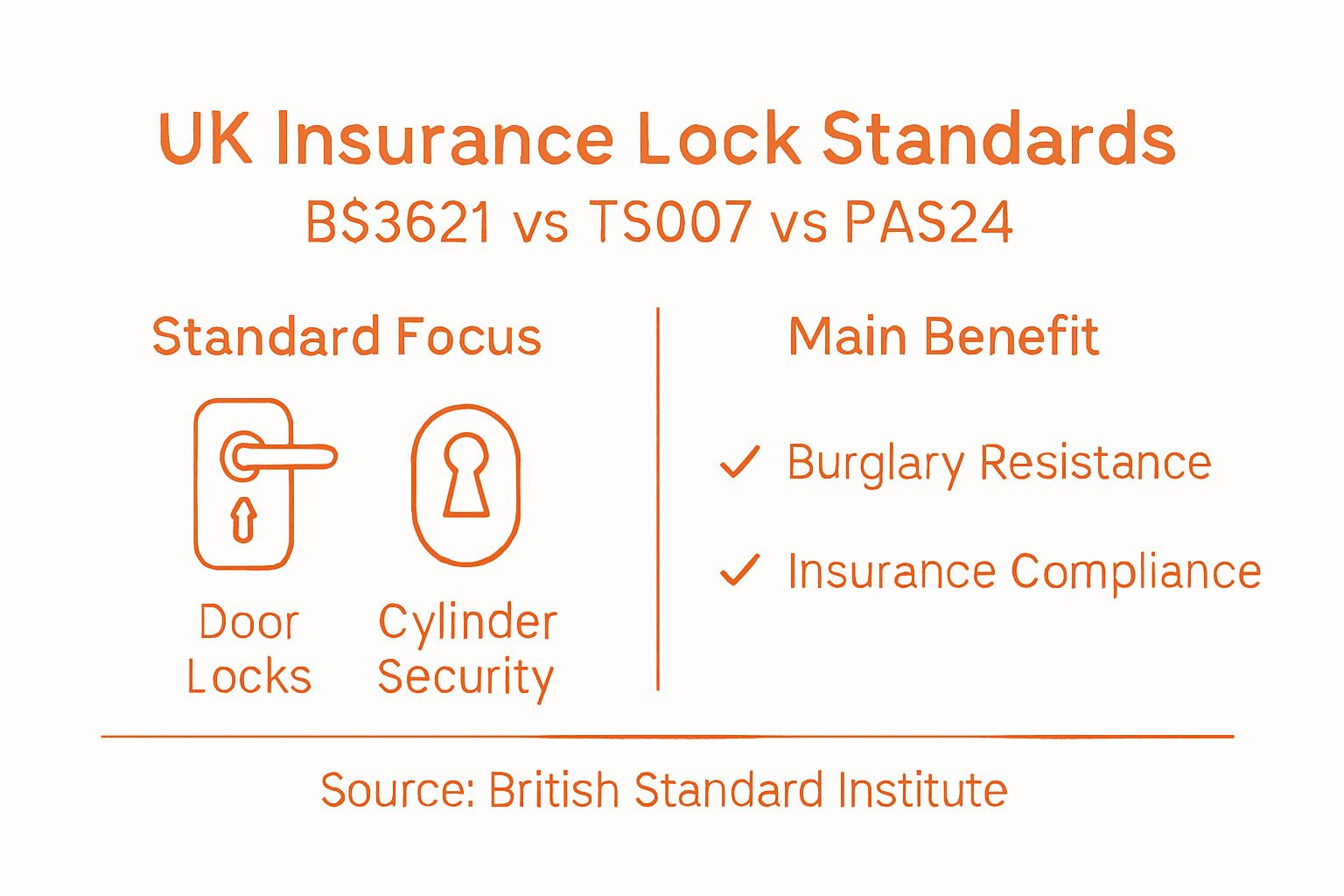
Additional standards like TS007 and PAS24 provide complementary security specifications. The TS007 standard focuses on cylinder security, introducing a grading system that rates locks based on their resistance to advanced manipulation techniques such as lock snapping. PAS24 takes a broader approach, evaluating the entire door and window assembly, ensuring that security extends beyond just the locking mechanism. These standards collectively create a comprehensive security framework that insurers rely on when assessing property risk and determining policy terms.
Pro tip: When upgrading your locks, always request certification documentation to demonstrate compliance with British Standards directly to your insurance provider.
Here’s a consolidated overview of major UK lock standards and what distinguishes them:
| Lock Standard | Focus Area | Main Advantage | Typical Application |
|---|---|---|---|
| BS3621 | External door locks | High resistance to burglary methods | Timber front and back doors |
| TS007 | Cylinder mechanisms | Protection against lock snapping | UPVC and composite doors |
| PAS24 | Whole door/window system | Enhanced security for the entire unit | Modern doors and windows |
Types of insurance-approved locks for UK homes
UK homeowners face a complex landscape of lock requirements that directly impact their insurance coverage. Home lock insurance standards are meticulously designed to provide comprehensive security protection while ensuring policies remain valid. Understanding these requirements is crucial for maintaining both property safety and insurance compliance.
The primary types of insurance-approved locks include five-lever mortice deadlocks, multi-point locking systems, and British Standard cylinder locks. Five-lever mortice deadlocks represent the gold standard for external door security, offering robust protection against sophisticated intrusion techniques. These locks must meet specific British Standard BS3621 specifications, which include resistance to picking, drilling, and forced entry. Multi-point locking systems, typically found on UPVC doors, provide additional security by engaging multiple locking points around the door frame, creating a more comprehensive barrier against potential break-ins.
Insurers typically require specific lock configurations for different entry points. Night latches are commonly used as supplementary locks on front doors, while window locks must meet equally stringent security standards. The key consideration is not just the lock type, but its ability to demonstrate measurable resistance to potential security breaches. Insurance providers often recommend professional installation and regular security assessments to ensure ongoing compliance and optimal protection.
Pro tip: Consult with your insurance provider annually to confirm your current locks meet their latest security requirements and potentially reduce your premium.
For UK homeowners, here’s how insurance-approved lock types and their practical benefits compare:
| Lock Type | Key Security Benefit | Insurance Impact | Best For |
|---|---|---|---|
| Five-lever mortice deadlock | Robust against picking/drilling | Preferred, lowers premium risk | Wooden exterior doors |
| Multi-point locking system | Multiple secure points | Satisfies higher standards | UPVC and composite doors |
| BS cylinder lock | Advanced cylinder security | Meets strict insurer criteria | Modern entry points |
| Night latch (plus main lock) | Added entry delay | Supports policy compliance | Front doors, as supplement |
How insurers assess lock compliance
Insurance providers employ a rigorous and systematic approach to evaluating home security lock compliance. Lock maintenance strategies play a crucial role in determining whether a property meets the necessary security standards for comprehensive insurance coverage. Insurers do not merely glance at locks but conduct detailed assessments that examine multiple aspects of security infrastructure.
The primary criteria for lock assessment include certification standards, installation quality, and overall security performance. British Standard BS3621 certification remains the fundamental benchmark, requiring locks to demonstrate resistance against picking, drilling, and forced entry techniques. Insurers typically mandate specific lock types for different entry points, with external doors requiring the most stringent security measures. Multi-point locking systems, five-lever mortice deadlocks, and high-security cylinder locks are frequently recommended to meet these rigorous requirements.
Beyond initial installation, insurers also evaluate ongoing maintenance and potential vulnerabilities. They often require professional installation documentation, periodic security assessments, and evidence of proactive lock maintenance. Some insurance providers may conduct physical inspections or request detailed security reports to verify that locks continue to meet their evolving security standards. The complexity of these assessments reflects the insurance industry’s commitment to minimising potential risks and protecting both homeowners and their properties.
Pro tip: Schedule an annual lock security review with a professional locksmith to ensure continuous compliance and potential insurance premium reductions.
Risks of non-compliance and typical costs
Understanding the potential financial and security consequences of non-compliant locks is crucial for UK homeowners. Home insurance lock requirements reveal significant risks that extend far beyond simple inconvenience. Non-standard or inadequate locks can create substantial vulnerabilities that insurers view as unacceptable, potentially leading to devastating financial and legal implications.
The immediate financial impact of lock non-compliance can be substantial. Premium increases are often the first consequence, with insurers typically charging significantly higher rates for properties perceived as high-risk. In extreme cases, some insurance providers may completely refuse coverage or decline claims related to burglary if locks do not meet the required British Standard specifications. Homeowners might face additional expenses ranging from £200 to £500 for lock replacements, coupled with potential claim rejections that could leave them financially exposed in the event of a security breach.
Beyond direct financial costs, non-compliant locks create serious security vulnerabilities. Insurers evaluate locks not just as mechanical devices, but as critical components of a property’s overall security infrastructure. A single weak point can compromise the entire home security, potentially invalidating insurance protection and leaving homeowners vulnerable to significant financial losses. Professional locksmiths recommend comprehensive security assessments to identify and rectify potential compliance issues before they become costly problems.
Pro tip: Request a professional security audit annually to ensure your locks meet current insurance standards and prevent unexpected coverage gaps.
Secure Your Home with Insurance-Approved Locks and Expert Locksmith Services
Understanding insurance-approved locks and their strict standards like BS3621, TS007, and PAS24 is essential to protecting your home and policy. Many homeowners worry about complying with insurance requirements while safeguarding against burglary threats such as lock snapping, picking, or forced entry. Don’t let outdated or insufficient locks put your insurance cover at risk or expose your property to unnecessary vulnerabilities.
At AHLP Locksmiths, we specialise in all aspects of insurance-compliant security solutions across Bristol, South Gloucestershire, and Gloucester. Whether you need a high-grade five-lever mortice deadlock, an advanced multi-point locking system, or anti-snap cylinder upgrades, our professional locksmiths use British Standard and insurance-approved hardware to keep you fully protected. Explore our comprehensive Locksmith Services – Auto Home Lock Pro to upgrade your security with confidence.
Don’t wait until a security breach affects your insurance claim. Act now and enjoy peace of mind knowing your locks meet the highest standards. Contact our trusted Local Locksmith – Auto Home Lock Pro team today for a thorough security assessment and expert installation. Visit AHLP Locksmiths Contact to arrange your appointment and secure your home with the protection it deserves.
Frequently Asked Questions
What are insurance-approved locks?
Insurance-approved locks are locks that meet specific security standards set by insurance providers to ensure comprehensive property protection. They are designed to resist methods of forced entry and manipulation, typically requiring compliance with British Standard specifications such as BS3621.
Why is it important for my locks to be insurance-approved?
Having insurance-approved locks is crucial because insurers often stipulate these requirements to minimise risks. If your locks do not meet these standards, you may face higher premiums or even have claims denied in the event of a burglary.
What types of locks are considered insurance-approved?
Common types of insurance-approved locks include five-lever mortice deadlocks, multi-point locking systems, and British Standard cylinder locks. These locks are designed to provide robust security against various intrusion techniques.
How can I ensure my locks comply with insurance standards?
To ensure compliance, check for certification documentation from your lock installer to confirm that your locks meet British Standards. It’s also advisable to conduct regular security assessments with a professional locksmith to maintain compliance with the latest insurance requirements.