

Misplacing your keys or finding them worn and unreliable can leave any homeowner in Bristol or South Gloucestershire feeling anxious about home security. When access to your property is compromised, quick and professional action becomes vital for restoring peace of mind. Seeking out trusted locksmith services for key replacement not only addresses immediate security risks but also gives you a clear path to safeguarding both your property and insurance coverage.
Table of Contents
- What Key Replacement Means For Homeowners
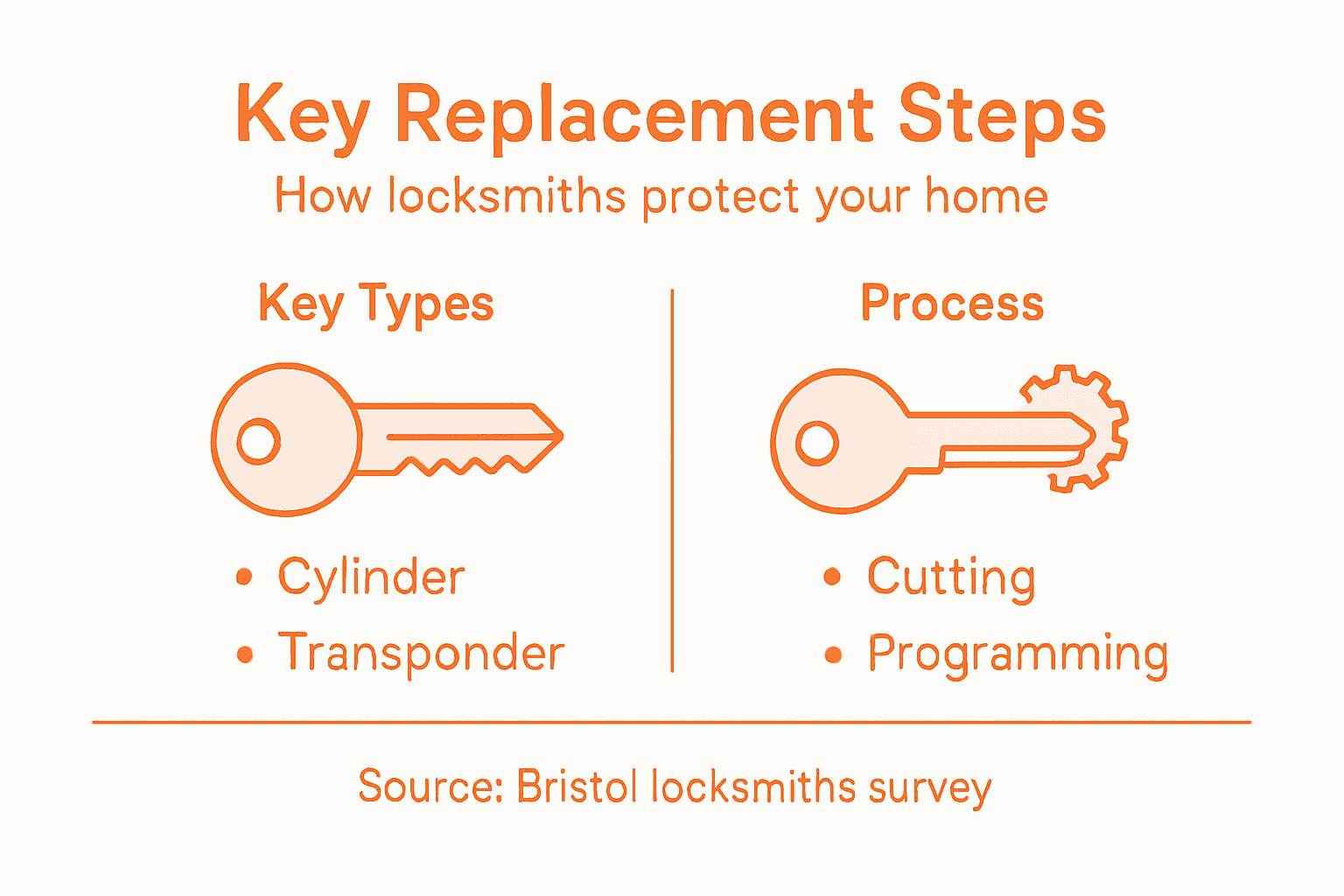
- Types Of Keys And Replacement Methods
- Step-By-Step Locksmith Key Replacement Process
- Legal And Insurance Issues In Key Replacement
- Costs, Security Risks, And Common Mistakes
Key Takeaways
| Point | Details |
|---|---|
| Importance of Key Replacement | Key replacement enhances home security by restoring control over property access and mitigating potential intrusions. |
| Types of Keys and Methods | Understanding various key types and their replacement methods is essential for maintaining optimal security. |
| Step-by-Step Process | The key replacement process should be systematic and involve thorough verification and assessment to ensure security remains uncompromised. |
| Legal and Insurance Considerations | Homeowners must comply with legal obligations and insurance requirements related to key replacement to protect their home and insurance coverage. |
What Key Replacement Means For Homeowners
Key replacement is a critical security measure for protecting your Bristol home from potential intrusions and maintaining complete control over property access. Key replacement represents more than simply obtaining a new physical key. It involves restoring your home’s security infrastructure and personal peace of mind.
For homeowners, key replacement typically encompasses several important aspects:
- Replacing lost or stolen keys
- Upgrading outdated locking mechanisms
- Ensuring restricted access after potential security breaches
- Preventing unauthorised entry to your property
When keys are lost or compromised, professional locksmiths can swiftly recreate precise replacements that match your existing lock configurations. This process involves carefully crafting a new key that perfectly interfaces with your current lock cylinder, ensuring seamless functionality and maintaining your home’s security integrity.
The key replacement process also provides an opportunity to evaluate your overall home security. Experienced locksmiths can assess whether your current locks meet modern safety standards, recommend potential upgrades, and help you implement more robust protection strategies.
Pro tip: Always keep a spare key in a secure, alternative location and consider professional key cutting services for creating backup access points.
Types Of Keys And Replacement Methods
Homeowners in Bristol encounter various types of keys, each requiring specific replacement approaches to maintain optimal home security. Understanding these key replacement techniques helps prevent potential vulnerabilities and ensures continuous protection for your property.
The most common types of keys found in residential properties include:
- Mortice keys: Traditional keys used in wooden doors with lever or cylinder mechanisms
- Yale/Pin tumbler keys: Standard for modern UPVC and composite doors
- Cylinder keys: Used in high-security euro profile lock systems
- Dimple keys: Precision-cut keys with unique side-drilled patterns
- Transponder keys: Electronic keys with embedded microchips for advanced security systems
Replacement methods vary depending on the key type and lock mechanism. Professional locksmiths typically employ non-destructive techniques to create precise key duplicates, which involve carefully measuring existing lock configurations and crafting replacement keys that perfectly match the original mechanism.

For complex key systems like electronic or transponder keys, specialised equipment is required to programme and synchronise the new key with your specific locking system. This ensures that the replacement key provides exactly the same level of security as the original, maintaining the integrity of your home’s access control.
Here’s how key replacement methods compare in terms of complexity and technology:
| Key Type | Replacement Complexity | Required Equipment | Security Level |
|---|---|---|---|
| Mortice | Straightforward | Standard key cutting | Basic to moderate |
| Yale/Pin tumbler | Moderate | Precision duplicator | Moderate to high |
| Cylinder | Moderate | Advanced cutting tools | High |
| Dimple | High | Specialised machines | Enhanced |
| Transponder | Very high | Electronic programmer | Maximum |
Professional key replacement goes beyond simply cutting a new metal object – it’s about restoring and potentially enhancing your property’s security infrastructure.
Pro tip: Always retain your original key registration documents and consider keeping a professional key-cutting record to simplify future replacements.
Step-By-Step Locksmith Key Replacement Process
Navigating the key replacement process requires careful planning and professional expertise. Key replacement involves a systematic approach to ensuring your home’s security remains uncompromised during the entire procedure.
The comprehensive key replacement process typically follows these critical steps:
- Initial Property Verification
- Confirm property ownership through official documentation
- Verify identity with multiple forms of identification
- Establish legal right to request key replacement
- Lock and Key Assessment
- Conduct a thorough examination of the existing lock mechanism
- Determine exact key type and lock configuration
- Identify potential vulnerabilities in the current security system
- Key Cutting and Preparation
- Use precision measuring equipment for exact key replication
- Select the appropriate blank key matching the original specifications
- Carefully cut and file a new key to match the original lock profile
- Lock Compatibility Testing
- Test the replacement key in the existing lock mechanism
- Verify smooth insertion and rotation
- Make minor adjustments to ensure perfect functionality
Professional locksmiths understand that key replacement is more than a technical task – it’s about restoring your sense of security and peace of mind.
For complex lock systems like electronic or high-security mechanisms, additional specialised programming may be required to ensure complete system integration and maintain the property’s security integrity.
Pro tip: Always request a professional key-cutting certificate and keep detailed records of your lock replacement service for future reference and insurance purposes.
Legal And Insurance Issues In Key Replacement
Homeowners must navigate complex legal and insurance requirements when replacing keys to ensure their property remains fully protected. Tenant key replacement obligations create specific legal frameworks that impact both property owners and occupants.
Key legal considerations for key replacement include:
- Property Ownership Verification
- Proving legal right to request key replacement
- Presenting valid identification and documentation
- Maintaining clear records of property access rights
- Insurance Policy Compliance
- Selecting insurance-approved lock mechanisms
- Documenting key replacement procedures
- Maintaining comprehensive security records
- Ensuring replacement meets insurers’ security standards
Insurance providers typically require specific documentation and evidence when processing key replacement claims. Most home insurance policies mandate that homeowners demonstrate reasonable security precautions, which include using professionally installed locks and maintaining accurate key management records.
Proper key replacement is not just a security measure, but a critical compliance requirement that protects your property and insurance coverage.
For rented properties, tenancy agreements often include specific clauses detailing key return and replacement responsibilities. Landlords may deduct replacement costs from security deposits if keys are not returned in acceptable condition, emphasising the importance of understanding contractual obligations.
Pro tip: Retain all professional key replacement documentation, including locksmith certificates and service records, to support potential insurance claims and demonstrate due diligence.
Costs, Security Risks, And Common Mistakes
Key replacement involves complex financial and security considerations that Bristol homeowners must carefully navigate. Key replacement expenses can escalate quickly without proper planning and understanding of potential risks and mitigation strategies.
Typical cost components for key replacement include:
- Locksmith callout fees
- Professional key cutting services
- Potential lock mechanism replacement
- Emergency after-hours service charges
- Advanced security system reprogramming
Common security risks associated with key loss encompass:
- Potential unauthorised property access
- Compromised home security infrastructure
- Risk of targeted burglary attempts
- Personal safety vulnerabilities
- Insurance policy invalidation
Homeowners frequently make critical mistakes that increase their financial and security exposure. Delaying key replacement, failing to notify insurance providers, and neglecting comprehensive security assessments can transform a simple key loss into a significant vulnerability.
The following table summarises common homeowner mistakes and their long-term impact:
| Mistake | Impact on Security | Potential Financial Loss |
|---|---|---|
| Delayed key replacement | Increased burglary risk | Costly lock upgrades |
| Lack of insurance notification | Claim denial risk | Uncovered expenses |
| Incomplete documentation | Proof of service issues | Insurance payout delays |
| Using uncertified locksmiths | Faulty key duplication | Further security breaches |
Security is not an expense, but an investment in protecting what matters most – your home and family.
Insurance policies often provide partial coverage for key replacement, but require homeowners to demonstrate proactive security measures. This means documenting professional locksmith interventions, maintaining updated lock mechanisms, and implementing comprehensive key management protocols.
Pro tip: Immediately contact your insurance provider and a professional locksmith upon key loss, and always maintain a secure, alternative key storage method to minimise potential security risks.
Secure Your Bristol Home Today With Professional Key Replacement
Losing your keys or facing a security breach can leave you vulnerable and anxious about your home’s safety. The expert key replacement methods discussed in the article highlight the importance of swift, precise, and secure solutions to restore your protection. If you are concerned about delayed replacement, use of uncertified locksmiths, or complicated lock systems, AHLP Locksmiths understands these challenges and offers reliable, insurance-approved services tailored for Bristol homeowners.
With AHLP Locksmiths, you benefit from:
- Professional key cutting and replacement for all key types, including mortice, cylinder, and transponder keys
- Fast emergency response to minimise your property’s exposure to risk
- Non-destructive repair and upgrade techniques that maintain or enhance your security
- Transparent pricing with no hidden fees for complete peace of mind
Do not let lost or compromised keys turn into long-term security risks. Act now and secure your home with expert help. Contact AHLP Locksmiths today on 07700 100146 to book your key replacement service or security consultation. Protect what matters most by choosing trusted professionals who prioritise your safety and comply with insurance requirements.
Frequently Asked Questions
What are the main reasons for key replacement?
Key replacement is essential for various reasons, including replacing lost or stolen keys, upgrading outdated locking mechanisms, ensuring restricted access after security breaches, and preventing unauthorised entry to your home.
How does a locksmith ensure the new key works with my existing locks?
Professional locksmiths measure your current lock configurations meticulously and craft a new key that matches precisely, ensuring it functions seamlessly with your existing lock mechanism.
What types of keys may require different replacement methods?
Common key types include mortice keys, Yale/pin tumbler keys, cylinder keys, dimple keys, and transponder keys. Each type has specific replacement methods based on its complexity and security features.
What should I do if I lose my keys?
Immediately contact a professional locksmith for key replacement and notify your insurance provider about the loss. Maintaining a secure alternative key storage method is also crucial to minimise potential security risks.