
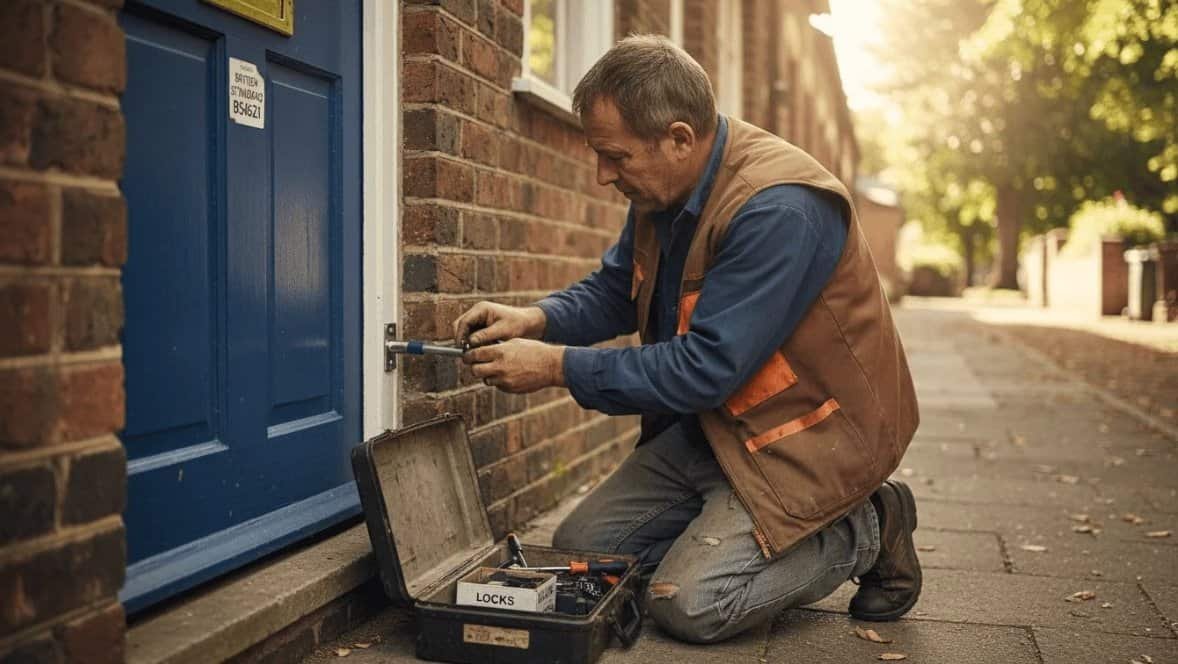
Finding the right lock can feel confusing when regulations and insurance requirements come into play. For property owners in Bristol and South Gloucestershire, knowing which lock grades comply with British Standards is vital to avoid costly mistakes. This guide breaks down key distinctions such as British Standard BS3621 and TS007 ratings so you can make confident security choices that meet your insurer’s expectations and keep your property protected.
Table of Contents
- Lock Grades And Standards In The UK
- Types And Distinctions Of British Standard Locks
- TS007 And European Lock Ratings Clarified
- Insurance Requirements And Compliance Risks
- Common Mistakes And How To Check Your Locks
Key Takeaways
| Point | Details |
|---|---|
| Understanding Lock Grades | Homeowners should select locks that adhere to British Standards, particularly BS3621, to meet minimum security requirements and potentially lower insurance premiums. |
| TS007 Ratings Importance | Prioritising locks with a three-star TS007 rating can significantly enhance protection against sophisticated intrusion techniques. |
| Insurance Compliance | Ensuring that locks comply with insurance guidelines is crucial to avoid claim rejections and maintain coverage. |
| Regular Maintenance Checks | Conducting routine inspections and timely upgrades of locking mechanisms can prevent vulnerabilities and reinforce property security. |
Lock grades and standards in the UK
Understanding lock grades and standards is essential for homeowners seeking robust property security in the United Kingdom. The British Standards Institute (BSI) provides comprehensive guidelines that define precise technical specifications for lock performance and security levels.
The primary lock grading system in the UK focuses on several key assessment criteria:
- Resistance to physical attacks
- Duration of security under forced entry attempts
- Material quality and construction
- Complexity of locking mechanism
- Compliance with insurance requirements
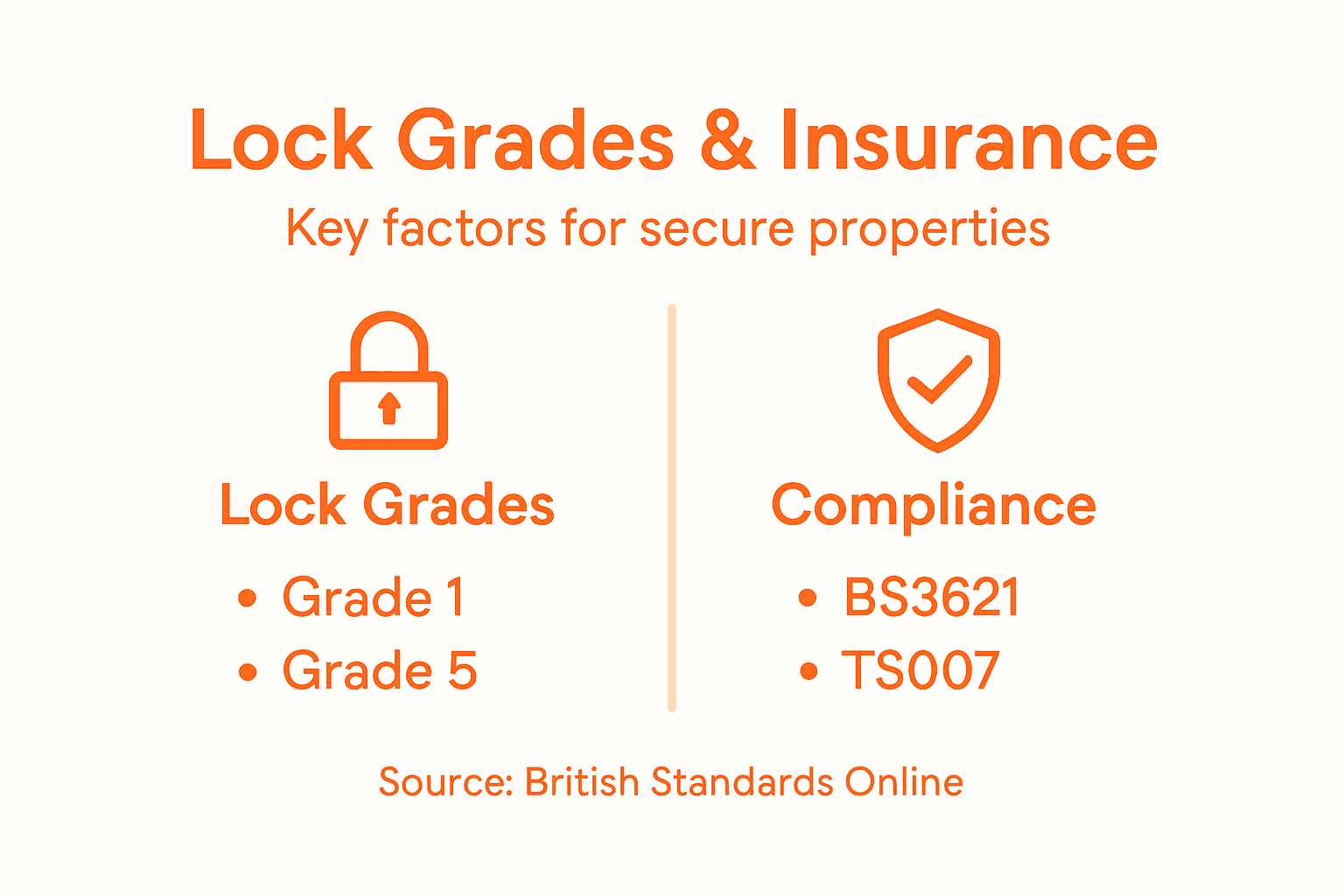
British Standard locks are categorised into different grades, with detailed technical specifications for each category. The most common lock grades range from 1 to 5, with Grade 5 representing the highest level of security and complexity.
For residential properties, insurance providers typically recommend British Standard BS3621 locks, which represent a minimum security requirement. These locks must demonstrate specific performance characteristics, including resistance to picking, drilling, and forced entry techniques. Homeowners installing these locks often receive discounts on their insurance premiums due to the enhanced security profile.
Lock grade characteristics typically include:
- Cylinder resistance to manipulation
- Hardened steel components
- Complex key mechanisms
- Robust internal engineering
Pro tip: Always verify that your lock’s British Standard certification matches your insurance provider’s specific requirements to ensure full coverage and optimal security protection.
Types and distinctions of British Standard locks
British Standard locks encompass a diverse range of security mechanisms designed to protect residential and commercial properties across the United Kingdom. Imperial College architectural standards highlight the critical importance of selecting the appropriate lock type based on specific security requirements.
The primary categories of British Standard locks include:
- Mortice locks: Installed within the door’s body, providing comprehensive internal security
- Rim locks: Mounted on the door’s surface, typically used for additional supplementary protection
- Multipoint locking systems: Engaging multiple locking points along the door’s edge for enhanced security
Each lock type serves distinct security purposes and is graded according to stringent British Standards. BS3621 represents the minimum recommended standard for insurance-approved residential locks, requiring specific performance characteristics such as resistance to picking, drilling, and forced entry.

To better understand the differences between common British Standard lock types, consider this comparison:
| Lock Type | Security Level | Typical Usage | Key Feature |
|---|---|---|---|
| Mortice Lock | High | Main entrance, external doors | Embedded within the door |
| Rim Lock | Moderate | Internal or secondary doors | Surface-mounted installation |
| Multipoint Locking System | Very high | uPVC/Composite external doors | Multiple locking points |
Lock mechanism distinctions typically involve:
- Cylinder complexity
- Number of locking points
- Material durability
- Resistance to manipulation techniques
For optimal security, homeowners should prioritise locks that meet or exceed British Standard BS3621 requirements, ensuring comprehensive protection against potential intrusion attempts.
Pro tip: Always consult a professional locksmith to determine the most appropriate lock type for your specific property configuration and security needs.
TS007 and European lock ratings clarified
The TS007 security standard represents a significant advancement in protecting homeowners against sophisticated cylinder attack techniques. Door & Hardware Federation guidelines outline a comprehensive three-star rating system designed to combat modern security threats like lock snapping and bumping.
The TS007 rating system evaluates lock cylinders across multiple security dimensions:
- One-star rating: Basic resistance to simple manipulation techniques
- Two-star rating: Enhanced protection against more advanced forced entry methods
- Three-star rating: Highest level of security, providing comprehensive protection against professional intrusion attempts
European lock ratings complement the British TS007 standard, offering additional layers of security assessment. These ratings consider factors such as:
Here is a summary of British and European lock security ratings:
| Standard/Ratings | Maximum Rating | Focus Area | Security Benefit |
|---|---|---|---|
| BS3621 | N/A | General attack resistance | Meets insurance requirements |
| TS007 | 3 stars | Cylinder attack protection | Advanced anti-snapping design |
| European EN Ratings | Class 7 | Mechanical strength & durability | Comprehensive durability |
- Cylinder durability
- Resistance to drilling
- Protection against picking
- Mechanical strength of locking mechanisms
European security standards emphasise a holistic approach to lock protection, considering both the mechanical integrity and innovative design of locking systems.
Pro tip: When selecting a lock, prioritise those with three-star TS007 ratings and additional European security certifications to maximise your property’s protection.
Insurance requirements and compliance risks
Insurance providers in the United Kingdom place significant emphasis on lock compliance as a critical factor in property protection and risk assessment. UK government safety regulations underscore the importance of meeting specific security standards to mitigate potential risks and maintain insurance coverage.
Key insurance compliance requirements typically involve:
- Minimum lock grade standards
- Certification from recognised security bodies
- Installation by qualified professional locksmiths
- Regular security maintenance and updates
- Documented proof of lock quality and installation
Failure to meet these compliance standards can result in severe consequences for homeowners, including:
- Potential claim rejection
- Reduced insurance coverage
- Increased premium rates
- Potential policy cancellation
Insurance compliance is not merely a bureaucratic requirement, but a critical mechanism for protecting both property owners and insurance providers from potential financial losses.
Specific documentation requirements often include:
- BS3621 lock certification
- Professional installation certificates
- Security risk assessment reports
- Evidence of periodic lock maintenance
Pro tip: Always consult your insurance provider about their specific lock compliance requirements and maintain comprehensive documentation to ensure uninterrupted coverage.
Common mistakes and how to check your locks
Maintaining secure locks requires vigilance and regular inspection. UK fire safety regulations emphasise the critical importance of checking door hardware to prevent potential security vulnerabilities and ensure comprehensive property protection.
Common lock maintenance mistakes homeowners frequently make include:
- Ignoring signs of wear and tear
- Using damaged or outdated locking mechanisms
- Failing to lubricate lock components
- Postponing professional lock assessments
- Neglecting to update locks after moving into a new property
Lock inspection checklist for homeowners involves:
- Check for visible physical damage
- Test key smoothness and cylinder rotation
- Examine door alignment and mechanism fit
- Verify lock responsiveness under different conditions
- Listen for unusual sounds during lock operation
Even minor lock defects can compromise your entire home security system, potentially invalidating insurance coverage and exposing your property to unnecessary risks.
Critical warning signs that indicate immediate lock replacement:
- Rust or corrosion on metal components
- Difficulty inserting or turning keys
- Loose or wobbling lock mechanism
- Visible mechanical deformation
- Signs of previous tampering or forced entry
Pro tip: Conduct a comprehensive lock assessment every six months and always hire a professional locksmith for detailed evaluations and potential upgrades.
Secure Your Property with the Right Lock Grade and Expert Locksmith Services
Understanding lock grades and insurance standards is critical to protecting your home or business from potential intrusions and ensuring your insurance remains valid. Many homeowners face challenges choosing the correct British Standard locks such as BS3621 or TS007 rated cylinders that resist picking, snapping, and forced entry. Without professional guidance, it is easy to fall victim to costly security gaps or insurance non-compliance.
At AHLP Locksmiths, we specialise in helping you meet these security challenges head-on. Our locksmith services include fitting insurance-approved locks and providing expert advice on lock upgrades tailored to your property and insurance requirements. Whether you need a full security overhaul or emergency lock repairs, our local team ensures your locks meet the strict British Standards necessary for peace of mind and financial protection. Do not risk using outdated or non-certified locks that could invalidate your insurance.
Take action today and secure your property with trusted professionals who understand the importance of lock grades and standards. Contact us today on 07700 100146 to book a consultation. Safeguard your home or business now with AHLP Locksmiths; the key to your security and compliance.
Frequently Asked Questions
What are the different lock grades in the UK?
The lock grading system in the UK ranges from Grade 1 to Grade 5, with Grade 5 representing the highest level of security. British Standard locks are often classified by their resistance to physical attacks and the complexity of their mechanisms.
What is the significance of BS3621 certification?
BS3621 certification represents a minimum security standard for locks used in residential properties. Insurance providers typically recommend these locks as they meet specific performance characteristics, thereby often leading to discounts on insurance premiums.
How can I determine if my lock meets insurance requirements?
To verify if your lock meets insurance requirements, check for British Standard certification, specifically BS3621, and consult your insurance provider for their specific lock compliance expectations and installation standards.
What should I look for when inspecting my locks?
Regularly inspect your locks for visible damage, test key smoothness, check door alignment, and listen for any unusual sounds during operation. Signs such as rust, difficulty turning keys, or mechanical deformation may indicate that it’s time for a replacement.