

Almost half of British homeowners in Bristol face preventable security risks because of outdated lock mechanisms. Protecting your property in a busy city means understanding how modern locks work and why professional standards matter. This guide demystifies the principles behind British lock mechanisms, helping you spot weaknesses, choose the right upgrades, and ensure your home meets insurance and legal requirements for lasting peace of mind.
Table of Contents
- What Is a Lock Mechanism? Core Principles
- Main Types of Lock Mechanisms in the UK
- How Lock Mechanisms Function and Protect
- Security Ratings, Insurance, and Legal Standards
- Common Failures, Upgrades, and Expert Solutions
Key Takeaways
| Point | Details |
|---|---|
| Understanding Lock Mechanisms | Lock mechanisms use precise physical components to control access, with the correct key aligning internal pins to allow entry. |
| Types of Lock Mechanisms | The UK features diverse lock types, including Mortise, Rim, and modern electronic locks, each suited for different security needs. |
| Legal Compliance and Insurance | Adhering to British Standards, such as BS 3621, is crucial for securing insurance benefits and ensuring reliable protection. |
| Regular Maintenance and Upgrades | Regular professional inspections and modernising with electronic solutions can enhance security and address vulnerabilities over time. |
What Is a Lock Mechanism? Core Principles
A lock mechanism is a sophisticated security device designed to control and restrict access to a specific space or object. At its fundamental level, locks operate by using precise physical components that prevent unauthorized entry through a strategic arrangement of pins, tumblers, and cylinders. These intricate devices have been protecting human property for thousands of years, evolving from simple wooden contraptions to complex modern security systems.
Traditional mechanical locks function on a core principle of precise alignment. When an incorrect key is inserted, the internal pins or wafers remain misaligned, preventing rotation and keeping the lock sealed. The correct key, with its unique pattern of ridges and grooves, lifts these pins to an exact height, creating what locksmiths call the shear line – the precise point where the lock cylinder can rotate freely. This alignment mechanism ensures that only authorised individuals with the matching key can gain entry.
Modern lock mechanisms have significantly expanded beyond traditional metal designs. Contemporary options include electronic smart locks, biometric systems, and hybrid technologies that combine mechanical precision with digital authentication. These advanced mechanisms provide multiple layers of security, ranging from physical key restrictions to digital access codes and fingerprint recognition. By understanding the fundamental principles of lock design, homeowners can make informed decisions about protecting their property and selecting the most appropriate security solutions.
Pro tip: Always consult a professional locksmith when considering lock upgrades or replacements to ensure you select the most suitable mechanism for your specific security needs.
Main Types of Lock Mechanisms in the UK
The United Kingdom has a rich heritage of lock mechanism designs, with several distinctive types that have evolved to meet varying security requirements. Traditional lock mechanisms in the UK range from historical lever tumbler designs to modern electronic systems, offering homeowners and businesses multiple options for protecting their premises. The diversity of lock types reflects both technological advancement and the specific security needs of different property types.
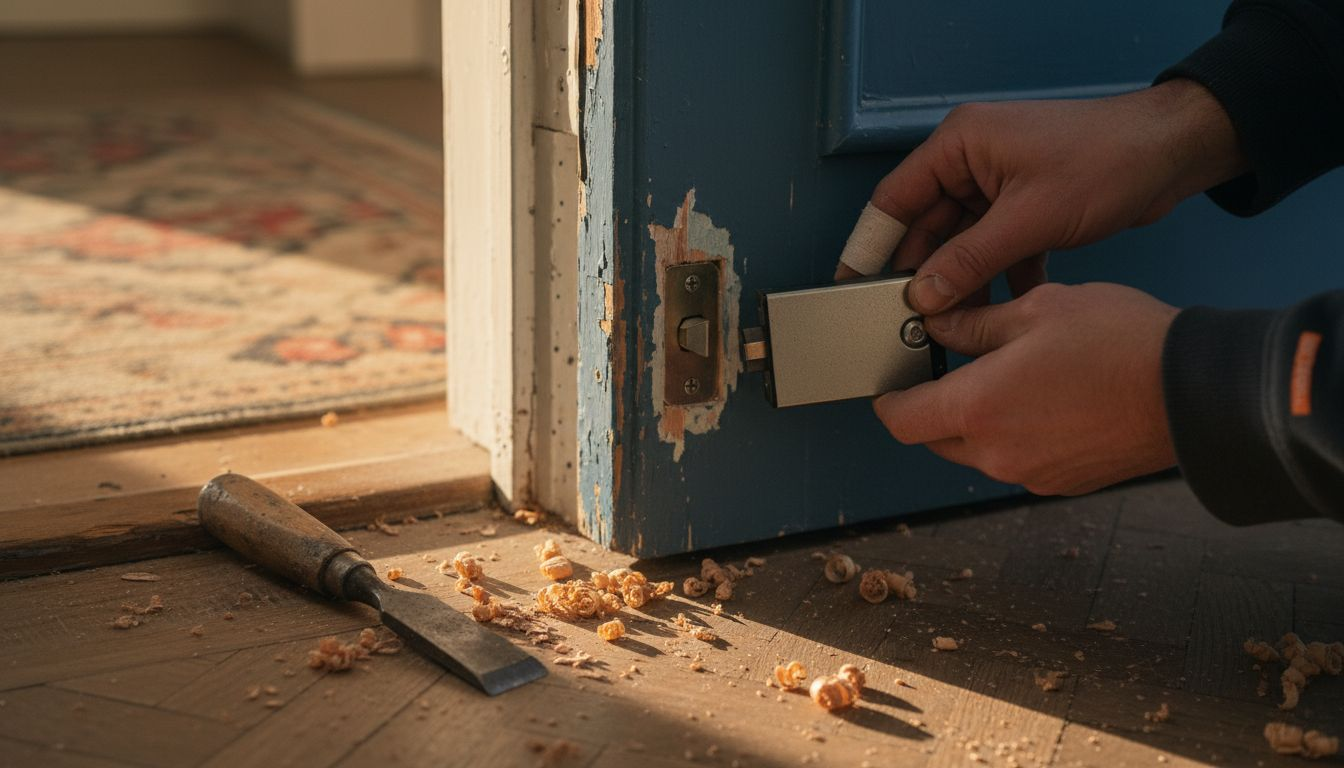
Mortise locks represent one of the most prevalent lock mechanisms in British properties. These locks are fitted by cutting a precise pocket into the door edge, typically using lever lock technology internally. Their robust design makes them particularly popular in residential and commercial settings. Alongside mortise locks, rim locks offer an alternative mounting method, attaching directly to the door’s surface and providing a simpler installation process.
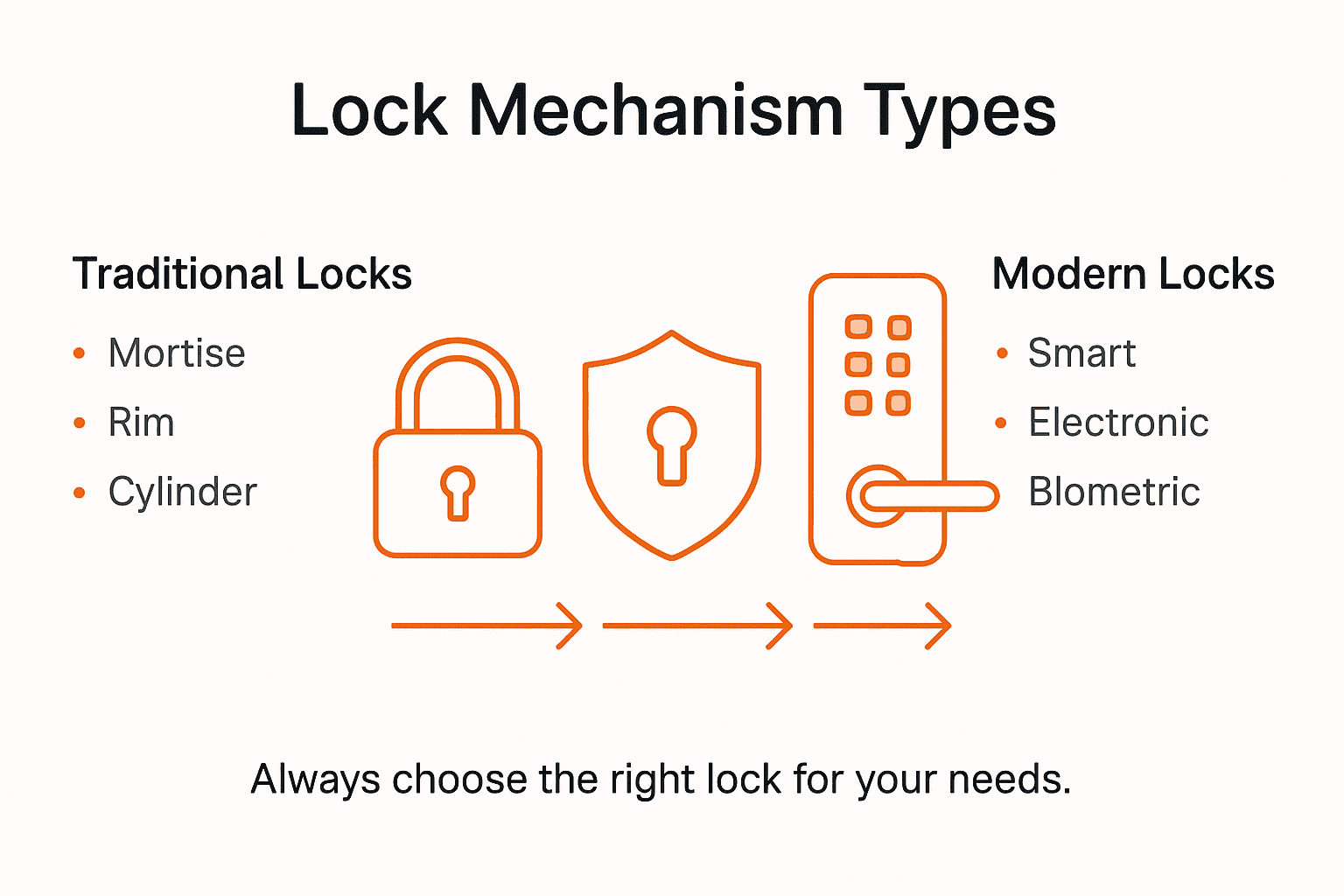
Modern British lock mechanisms have expanded to include sophisticated electronic and smart lock technologies. These contemporary systems integrate digital authentication with traditional mechanical principles, offering enhanced security features. Options now include biometric locks with fingerprint recognition, digital keypad entry systems, and hybrid mechanisms that combine multiple security layers. The evolution of lock technologies reflects a growing demand for more intelligent, adaptable security solutions that can be seamlessly integrated into modern properties.
Pro tip: Always consult a professional locksmith to determine the most appropriate lock mechanism for your specific property type and security requirements.
Below is a comparison of common British lock mechanisms and their typical applications:
| Lock Type | Typical Location | Security Level | Key Benefit |
|---|---|---|---|
| Mortise Lock | Residential, commercial | High | Robust against forced entry |
| Rim Lock | Internal doors, sheds | Moderate | Simple installation |
| Electronic Lock | Offices, smart homes | Very high | Remote access control |
| Biometric Lock | High-security areas | Maximum | Unique identity access |
How Lock Mechanisms Function and Protect
Lock mechanisms operate through a sophisticated process of physical barrier prevention, strategically blocking access until authorised entry is confirmed. At their core, these security devices work by preventing the movement of bolts or latches through precise internal alignment of mechanical components. When an incorrect key or code is presented, the intricate internal pins, levers, or tumblers remain misaligned, effectively maintaining the lock’s secured state.
The functional design of locks varies depending on specific security requirements. Storeroom locks, for instance, maintain external levers locked at all times, requiring a key for external access, while classroom locks enable internal locking to protect occupants. Each lock type is engineered with a critical balance between security and safety, ensuring that while unauthorised entry is prevented, occupants can always exit quickly in emergency situations.
Modern lock mechanisms have evolved to incorporate multiple layers of protection. Electronic and smart lock technologies now integrate digital authentication with traditional mechanical principles, offering enhanced security features. Biometric recognition, digital keypad systems, and hybrid mechanisms combine mechanical precision with advanced technological safeguards. These sophisticated designs provide property owners with increasingly intelligent and adaptable security solutions that can be customised to meet specific protection needs.
Pro tip: Regularly inspect and maintain your lock mechanisms to ensure optimal performance and identify potential vulnerabilities before they become security risks.
Security Ratings, Insurance, and Legal Standards
In the United Kingdom, lock security is governed by a comprehensive framework of standards and regulations designed to protect property owners and ensure reliable protection. British Standard (BS) ratings provide a critical benchmark for lock quality, with BS 3621 representing the gold standard for insurance-approved locks. These rigorous standards specify precise technical requirements for lock strength, durability, and resistance to manipulation.
Insurance companies play a significant role in defining security expectations for residential and commercial properties. Most home insurance policies mandate specific lock standards as a condition of coverage. High-security locks that meet or exceed BS 3621 standards typically offer reduced insurance premiums, creating a direct financial incentive for property owners to invest in quality security mechanisms. Professional locksmiths can provide expert guidance on selecting locks that simultaneously meet legal requirements and insurance company specifications.
Legal standards extend beyond mere physical security, encompassing broader considerations of safety and accessibility. Regulations require that security mechanisms allow quick emergency egress, ensuring occupants can exit buildings rapidly during critical situations. This delicate balance between security and safety is particularly important in public spaces, commercial buildings, and residential complexes. Modern lock technologies must navigate complex legal frameworks that protect both property rights and individual safety, requiring sophisticated design and implementation.
Pro tip: Always request certification documentation when installing new locks to ensure compliance with British Standards and maintain your insurance coverage.
The table below summarises essential British standards and their impact on security and insurance:
| Standard | Applies To | Insurance Effect | Legal Importance |
|---|---|---|---|
| BS 3621 | Mortise/cylinder locks | Lower premiums, approved | Required for compliance |
| BS EN 1303 | Cylinder locks | Reliable, varied coverage | Ensures resistance quality |
| BS 8513 | Electronic access | Not guaranteed, evolving | Modern safety regulations |
Common Failures, Upgrades, and Expert Solutions
Lock mechanisms inevitably experience wear, damage, and potential security vulnerabilities over time, requiring strategic interventions to maintain optimal protection. Common failures include worn internal components, damaged key mechanisms, and cylinder misalignment that can compromise the entire locking system. These issues often develop gradually, making regular professional inspection crucial for early detection and prevention.
Rekeying represents a sophisticated expert solution for addressing potential security breaches, allowing property owners to modify lock functionality without complete replacement. This process involves replacing the internal pins within the lock cylinder, effectively creating a new key configuration that renders previous keys obsolete. Rekeying is particularly valuable in scenarios such as personnel changes, lost keys, or when transitioning between property ownership, providing a cost-effective alternative to full lock replacement.
Modern security upgrades extend beyond traditional mechanical interventions. Advanced solutions now incorporate smart technologies, offering multi-layered protection through digital authentication, remote monitoring, and integrated security systems. Electronic locks with biometric access, digital keypad entry, and smartphone-controlled mechanisms provide unprecedented flexibility and control. These technologies not only enhance security but also offer convenient management options for residential and commercial properties, allowing owners to track access, grant temporary permissions, and monitor entry points remotely.
Pro tip: Schedule annual professional lock assessments to identify potential vulnerabilities and ensure your security mechanisms remain robust and compliant with current standards.
Enhance Your Property Security with Expert Locksmith Solutions
Understanding the complexities of lock mechanisms is crucial for safeguarding your home or business. Whether you are dealing with worn components, need an upgrade to British Standard-approved locks, or want to explore smart lock options for maximum protection, securing your property starts with professional advice and quality installation. Many properties face risks like outdated mortise or rim locks that may no longer meet insurance or legal standards, making expert intervention essential.
At AHLP Locksmiths, we specialise in addressing these challenges with tailored solutions. Our skilled locksmiths offer a full range of services, including lock repairs, anti-snap lock upgrades, and security consultations designed to enhance your property’s defence against unauthorised access. Do not wait until a failure or security breach occurs. Act now to benefit from:
- Fast and reliable emergency callouts
- Non-destructive methods to protect your doors
- Use of insurance-approved British Standard lock hardware
Discover how to protect your property with confidence by reaching out to our trusted team. Visit our contact page to arrange your consultation or emergency service today. Your security and peace of mind deserve nothing less than the expertise of AHLP Locksmiths.
Frequently Asked Questions
What are the main types of lock mechanisms used for securing property?
The main types of lock mechanisms include mortise locks, rim locks, electronic locks, and biometric locks. Mortise locks are often used in residential and commercial settings for their robustness, while rim locks are easier to install. Electronic and biometric locks provide advanced features such as digital access control and fingerprint recognition.
How do lock mechanisms protect against unauthorised entry?
Lock mechanisms protect against unauthorized entry by using precise internal components like pins, tumblers, and cylinders that only align correctly with the corresponding key or access method. When an incorrect key or code is presented, the internal components remain misaligned, preventing the lock from opening and securing the entry point.
What are the benefits of upgrading to electronic or smart locks?
Upgrading to electronic or smart locks offers benefits such as enhanced security through digital authentication, remote access control, and the convenience of monitoring entry points. These locks often include features like temporary access codes and logging of entry activity, making them ideal for both residential and commercial applications.
How can I maintain my lock mechanisms for optimal performance?
To maintain your lock mechanisms, it is recommended to schedule regular inspections with a professional locksmith, regularly lubricate moving parts, and assess for wear or damage. Early detection of potential issues, such as misalignment or worn components, can prevent security vulnerabilities and ensure optimal lock functionality.