

Every British homeowner faces a confusing array of terms when it comes to home security. With over 60 percent of break-ins exploiting weak or outdated locks, understanding locksmith terminology is far more than a technical detail. Gaining clarity on key words equips you to communicate with professionals and choose the right protection for your property, helping you make smart choices that keep your family and investment safe.
Table of Contents
- Locksmith Terminology: Core Words Defined
- Common Lock Types and Mechanisms Explained
- British Standards and Security Classifications
- Key Security Terms for Doors and Windows
- Avoiding Misunderstandings and Hidden Costs
Key Takeaways
| Point | Details |
|---|---|
| Understanding Lock Terminology | Recognising key locksmith terms like Cylinder, Mortice Lock, and Anti-snap Locks can empower homeowners to communicate effectively and improve security choices. |
| Importance of British Standards | Familiarity with British Standards such as BS3621 helps ensure selected locks provide adequate security and comply with insurance requirements. |
| Non-destructive Entry Techniques | Prioritising non-destructive entry methods minimises damage during lock services, preserving original hardware and potentially reducing costs. |
| Proactive Communication | Engaging in thorough discussions with locksmiths about security needs and obtaining detailed quotes helps avoid unexpected expenses. |
Locksmith Terminology: Core Words Defined
Understanding the language of locksmithing helps homeowners communicate more effectively and make informed security decisions. While locksmith services can seem complex, breaking down key terminology makes the entire process more approachable.
At the core of locksmith vocabulary are several fundamental terms every homeowner should recognise. Cylinder refers to the internal mechanism where keys are inserted, typically found in most modern door locks. A mortice lock is a type of lock installed within the door’s thickness, providing enhanced security compared to surface-mounted alternatives. Anti-snap locks represent a critical innovation designed to prevent criminals from breaking cylinder mechanisms during attempted forced entry.
The European Certification Body highlights the importance of understanding lock classifications, noting that professional locksmiths distinguish between mechanical and electronic lock systems. Keyed alike locks allow multiple doors to be opened using a single key, while master key systems provide hierarchical access control for businesses or complex residential settings. Non-destructive entry represents a sophisticated technique where professional locksmiths gain access without damaging existing lock mechanisms, preserving both property integrity and the original security infrastructure.
Navigating locksmith terminology transforms what might seem like technical jargon into practical knowledge. By understanding these core definitions, homeowners can make more informed decisions about their property’s security, communicate more effectively with professionals, and ultimately protect what matters most.
Common Lock Types and Mechanisms Explained
Locksmiths work with a diverse range of lock mechanisms, each designed to provide specific levels of security and functionality for different environments. Types of door locks vary significantly, requiring homeowners to understand their unique characteristics and potential applications.
British Standards play a crucial role in defining lock quality and performance. Mortice locks, which are installed within the door’s thickness, represent a fundamental security mechanism. According to UNION’s knowledge centre, these locks comply with specific British Standards like BS3621, ensuring a baseline of security for residential properties. Cylinder rim locks offer an alternative mechanism, typically mounted on the door’s surface and providing a different approach to securing entryways.

Mechanical lock systems encompass several sophisticated designs. Deadlocks provide robust security by requiring a key to operate the bolt mechanism, preventing easy manipulation. Sash locks combine a deadlock with a spring-loaded catch, allowing partial door opening while maintaining security. Professional locksmiths distinguish between various mechanical lock classifications, with standards like BS EN 12209:2016 providing comprehensive guidelines for understanding lock performance and reliability.
Understanding these lock types empowers homeowners to make informed decisions about their property’s security. From traditional mortice designs to modern cylinder mechanisms, each lock type offers unique benefits tailored to specific security requirements. Consulting with a professional locksmith can help determine the most appropriate lock system for your specific needs, ensuring comprehensive protection for your home or business.
British Standards and Security Classifications
Security standards are the backbone of reliable lock mechanisms, providing homeowners with a structured approach to understanding protection levels. Lock maintenance plays a crucial role in ensuring these standards remain effective over time.
The British Standards Institution (BSI) has developed comprehensive guidelines that define lock security classifications. Security grades represent a critical framework for evaluating lock performance, with standards like BS3621 establishing minimum requirements for insurance-approved locks. The Door & Hardware Federation recently highlighted significant developments in lock standards, including the publication of BS EN 12209:2024 and BS EN 15685:2024, which provide updated specifications for mechanical lock mechanisms.
Security ratings typically range from Grade 1 to Grade 6, with higher grades indicating more robust protection. Grade 1 represents basic security suitable for low-risk environments, while Grade 6 provides maximum resistance against sophisticated intrusion attempts. Professional locksmiths assess factors such as bolt strength, key complexity, and resistance to picking when determining these classifications. The standards consider multiple aspects of lock performance, including mechanical durability, corrosion resistance, and ability to withstand various tampering techniques.
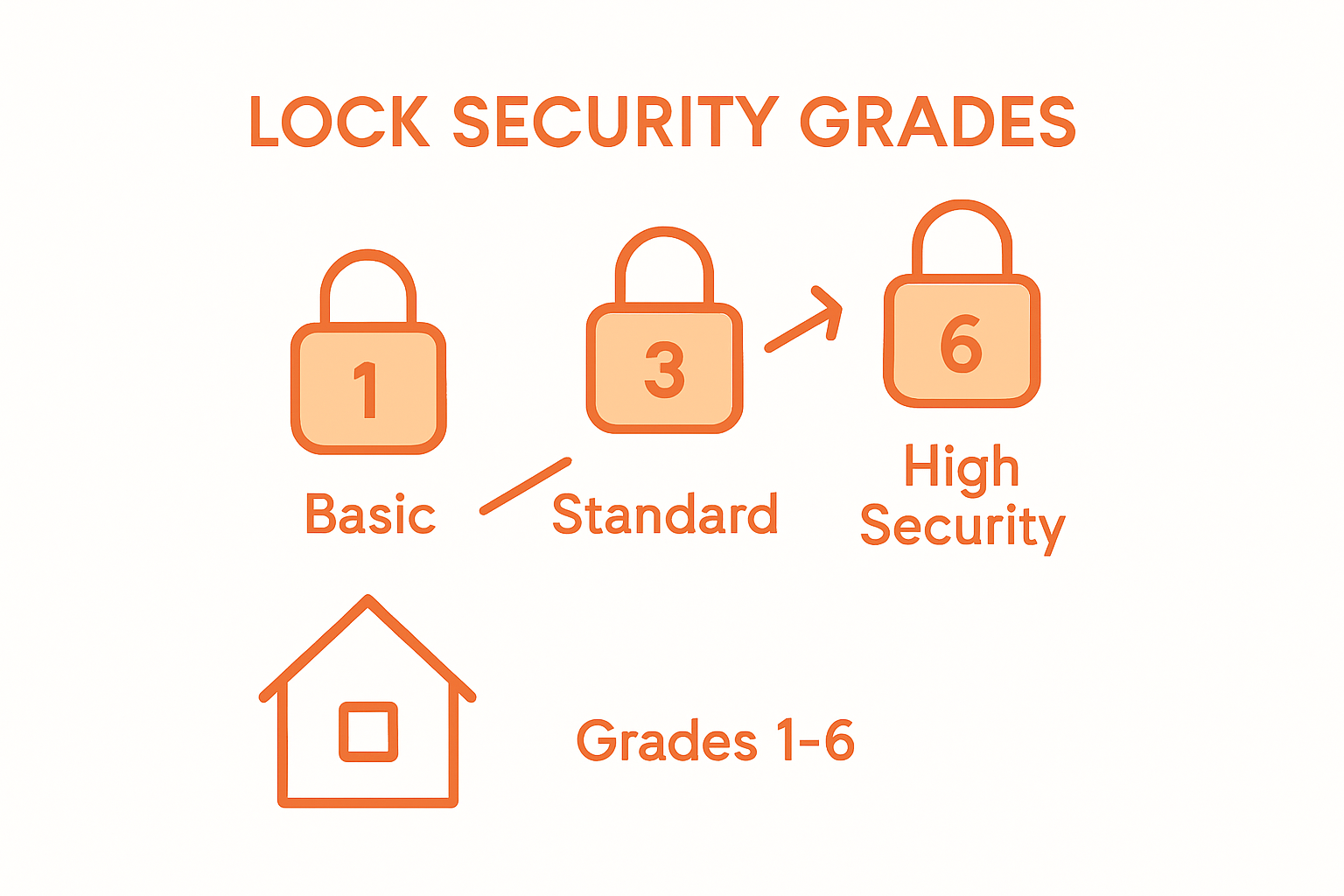
Understanding these security classifications empowers homeowners to make informed decisions about their property’s protection. By selecting locks that meet or exceed British Standards, residents can significantly enhance their home’s security, potentially reducing insurance premiums and providing peace of mind. Each lock classification represents a carefully engineered solution designed to protect what matters most.
Key Security Terms for Doors and Windows
Securing doors and windows requires understanding a complex vocabulary of technical terms that define protection strategies. Key replacement becomes crucial when existing security mechanisms are compromised or lost.
The security specification guidelines highlight several critical terms homeowners should understand. Non-destructive entry refers to professional locksmith techniques that access a property without damaging locks or surrounding hardware. Anti-pick mechanisms are specialised design features that prevent criminals from manipulating lock cylinders using traditional tampering methods. Key control represents a comprehensive approach to managing who can duplicate keys, typically involving restricted keyways and documented key distribution.
Locking points describe the number of locations where a door or window secures against its frame, with multiple locking points providing enhanced security. Professional security assessments evaluate aspects like strike plate reinforcement, which strengthens the point where the lock bolt meets the door frame. Oxford University’s crime prevention guidelines emphasise the importance of understanding these technical terms, noting that comprehensive security goes beyond simple mechanical barriers.
Comprehensive security requires more than just understanding terminology. By familiarising themselves with these key terms, homeowners can make informed decisions about their property’s protection, communicate effectively with security professionals, and implement more robust defence strategies against potential intrusions.
Avoiding Misunderstandings and Hidden Costs
Navigating locksmith services requires understanding potential pitfalls that could lead to unexpected expenses. How to change door locks safely can help homeowners prevent costly mistakes during security upgrades.
Insurance compliance represents a critical consideration many homeowners overlook. BS3621 certified locks are specifically designed to meet stringent insurance requirements, potentially preventing claim rejections. Common misunderstandings include assuming all locks provide equal protection or that cheaper alternatives offer comparable security. Call-out charges can quickly escalate if homeowners fail to provide clear information about their existing lock mechanisms, leading to unnecessary diagnostic work and increased expenses.
Professional locksmiths recommend several strategies to mitigate hidden costs. Non-destructive entry techniques should be prioritised to minimise property damage during lock replacements or repairs. Homeowners should request transparent pricing, detailed quotes, and comprehensive explanations of proposed work before authorising any interventions. Understanding the difference between emergency and planned services can also help manage expectations and control expenditure.
Ultimately, proactive communication and thorough research are the best defences against unexpected locksmith expenses. By asking detailed questions, understanding specific security requirements, and obtaining multiple professional assessments, homeowners can make informed decisions that balance security needs with budgetary constraints.
Secure Your Home with Confidence by Understanding Locksmith Terminology
The article highlights how crucial it is for homeowners to grasp locksmith terminology such as “cylinder”, “mortice lock”, and “anti-snap locks” to make better security choices. Understanding terms like “security grades” and “non-destructive entry” helps you avoid misunderstandings and hidden costs when upgrading or repairing your home’s locks. If you want to protect your property with quality British Standard locks and insurance-approved hardware, knowing the right terms is just the first step.
For tailored advice and professional service, rely on AHLP Locksmiths, your trusted Local Locksmith in Bristol, South Gloucestershire, and Gloucester. Whether you need emergency lockout assistance or a full security upgrade, our experts use non-destructive techniques to save you time and money. Don’t wait until a security issue becomes an emergency – visit Locksmith Services to explore the full range of solutions we offer. Take control of your home’s security now by contacting us directly at https://ahlp.co.uk/contact/ and experience peace of mind with your locksmith needs handled expertly and transparently.
Frequently Asked Questions
What is a mortice lock?
A mortice lock is a type of lock installed within the thickness of a door, providing enhanced security compared to surface-mounted locks.
What does it mean for locks to be ‘keyed alike’?
Keyed alike locks allow multiple doors to be opened using a single key, simplifying key management for homeowners.
How do I know if my lock meets British Standards?
You can check if your lock meets British Standards by looking for markings on the lock that indicate compliance with standards like BS3621, which signifies insurance approval for residential properties.
Why is non-destructive entry important?
Non-destructive entry techniques allow locksmiths to access a property without damaging the existing lock mechanism, preserving the integrity of the lock and the door while maintaining security.