

You’ve likely seen master key systems in action without realising their clever design. 60% of commercial buildings in urban UK areas rely on these hierarchical key structures to manage complex access needs efficiently. Whether you manage a Bristol business or own a South Gloucestershire home, understanding how master key systems work transforms the way you think about property security and everyday convenience.
Table of Contents
- Introduction To Master Key Systems
- How Master Key Systems Work Mechanically
- Hierarchy And Customisation In Master Key Systems
- Security Benefits And Common Misconceptions
- Implementing A Master Key System: A Step By Step Guide
- Secure Your Property With Professional Master Key Services
- FAQ
Key takeaways
| Point | Details |
|---|---|
| Tailored access control | Master key systems reduce the number of keys needed whilst granting specific access levels to different users based on roles and responsibilities. |
| Hierarchical structure | Systems use grand master, master, sub-master, and change keys to create flexible, organised access management across properties. |
| Enhanced security and convenience | They improve emergency response times, simplify key management, and meet insurance standards whilst reducing operational complexity. |
| Scalable solutions | Master key systems work equally well for small homes and large commercial properties, adapting to unique security requirements. |
| Professional implementation | Proper planning, quality British Standard locks, and expert locksmith installation ensure long-term reliability and protection. |
Introduction to master key systems
A master key system is a sophisticated access control solution that allows one key to open multiple locks whilst each lock retains its own unique change key. This hierarchical structure eliminates the frustration of juggling numerous keys whilst maintaining tight security control over who accesses which areas.
The system works through carefully designed pin configurations inside each lock. At the top sits the grand master key, which opens every lock in the system. Below that, master keys access specific groups of locks. Sub-master keys control smaller zones, and change keys open only individual locks.
In Bristol and South Gloucestershire, property owners use master key systems to solve practical challenges:
- Landlords managing multiple rental properties can access all units with one key whilst tenants have keys only for their own spaces
- Business owners grant managers access to all areas whilst restricting staff keys to specific departments or rooms
- Homeowners with large properties control access to garages, sheds, and storage areas without carrying separate keys
- Schools and medical facilities balance security with quick emergency access across complex buildings
Locksmith tips for homeowners often highlight master key systems as the most efficient way to manage access when you need different people to have varying levels of entry rights. The beauty lies in simplicity combined with precise control.
How master key systems work mechanically
Understanding the mechanical genius behind master key systems helps you appreciate their reliability. Standard pin tumbler locks contain spring-loaded pins of different heights that must align perfectly at the shear line for the lock to turn. Each pin stack has two parts: a key pin touching your key and a driver pin above it.

Master key systems add extra components called master wafers between these pins. These thin spacers create additional shear lines within each pin stack. When you insert a change key, pins align at one shear line. When you insert a master key with different cuts, the master wafers align at a different shear line. Both configurations allow the lock cylinder to rotate.
This clever design means:
- Multiple keys can operate the same lock without compromising security
- Each lock responds to its unique change key plus any higher-level keys in the hierarchy
- The system maintains mechanical simplicity whilst offering sophisticated access control
- Master key systems integrate with modern digital security for hybrid solutions combining mechanical reliability with electronic convenience
Pro Tip: When selecting locks for a master key system, choose high-quality cylinders from reputable manufacturers that meet British Standard specifications. Cheap locks with loose tolerances create security vulnerabilities and wear out faster, defeating the system’s purpose. Locksmith tips for business owners stress the importance of quality hardware as the foundation of any effective access control strategy.
Hierarchy and customisation in master key systems
The power of master key systems lies in their structured flexibility. You design the hierarchy around your property’s specific needs, creating precisely the access levels required.
Here’s how the hierarchy typically works:
-
Grand Master Key: Opens every lock in the entire system, suitable for property owners or senior management with universal access requirements.
-
Master Key: Controls all locks within a specific building or major section, perfect for department heads or facility managers overseeing distinct areas.
-
Sub-Master Key: Opens locks within a smaller zone like a floor or department, giving supervisors access to their designated spaces without broader entry rights.
-
Change Key: Operates only one specific lock, issued to individual users who need access to particular rooms or units.
Customisation adapts the system to your situation. A Bristol landlord with five properties might have a grand master for all buildings, individual master keys for each property, and change keys for each flat. A South Gloucestershire business could structure access by department, with managers holding sub-masters for their areas.
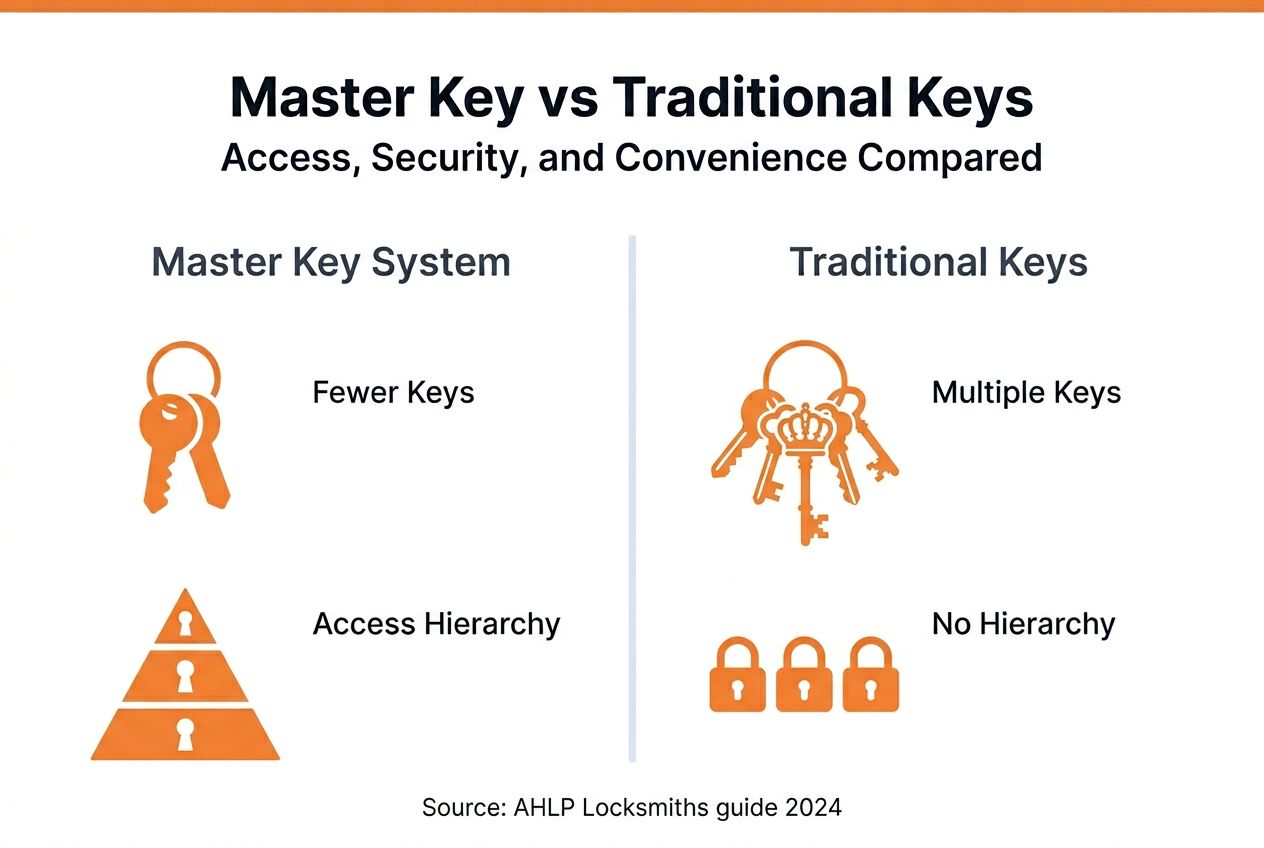
| Feature | Master Key System | Traditional Key Management |
|---|---|---|
| Number of keys carried | One master opens multiple locks | Separate key needed for each lock |
| Flexibility | Easy to add/remove access rights | Must rekey or replace locks |
| Emergency access | Single key provides quick entry | Time wasted searching for correct keys |
| Cost efficiency | Reduces rekeying expenses when roles change | Higher costs for lock replacement |
| Security control | Hierarchical access by role | All-or-nothing approach |
Pro Tip: Sketch your property layout and list who needs access to which areas before designing your hierarchy. This planning prevents expensive restructuring later. Consider future growth too, because well-designed systems scale easily when you expand or reorganise. Both homeowner locksmith tips and business locksmith tips emphasise thoughtful upfront planning as the key to long-term success.
Security benefits and common misconceptions
Many people wrongly assume master key systems create security weaknesses. The opposite is true when properly implemented. Controlled access actually enhances protection by eliminating the chaos of untracked keys floating around.
The security advantages are substantial:
- Reduced key proliferation: Fewer keys in circulation means lower risk of lost or stolen keys compromising your property
- Clear accountability: You know exactly who holds which keys and what areas they can access
- Quick response to breaches: If someone loses a key, you rekey only the affected level rather than replacing every lock
- Insurance compliance: Systems using British Standard locks meet insurer requirements whilst providing documented access control
- Improved emergency access: Emergency responders gain entry faster with properly distributed master keys compared to searching through dozens of individual keys
Master key systems improve emergency response times by allowing quick access to all areas with a single master key, compared to managing many keys.
Common misconceptions versus reality:
- Myth: Master key systems are less secure than individual locks. Fact: Properly designed systems with quality British Standard locks provide equal or better security through controlled access and accountability.
- Myth: If someone copies a master key, the entire system is compromised. Fact: Restricted keyways and patented key profiles prevent unauthorised duplication, and you can rekey the system if needed.
- Myth: Master key systems only suit large commercial properties. Fact: Systems scale perfectly for homes, small businesses, and properties of any size.
- Myth: They’re too expensive for average property owners. Fact: Long-term savings on rekeying and key replacement typically offset initial costs within two years.
Security upgrades in Bristol increasingly include master key systems as part of comprehensive protection strategies. The combination of mechanical reliability, hierarchical control, and British Standard compliance creates robust defence against unauthorised access.
Implementing a master key system: a step by step guide
Installing a master key system requires careful planning and professional execution. Follow these steps to ensure successful implementation:
-
Assess your property and access needs: Walk through your property identifying all areas requiring locks. List who needs access to each space and their role. Consider future changes like new hires, tenants, or building expansions.
-
Design your key hierarchy: Map out the levels you need based on your assessment. Decide who gets grand master, master, sub-master, and change keys. Create a written access control policy documenting who holds which keys and their responsibilities.
-
Choose compatible locks meeting British Standards: Select pin tumbler locks from the same manufacturer with matching keyways. Verify they meet BS 3621 or other relevant British Standards for insurance compliance. Prioritise quality over cost because your system is only as strong as its weakest lock.
-
Engage professional locksmith services: Contact experienced locksmiths who specialise in master key systems. They’ll verify your design, recommend improvements, and ensure proper installation. Homeowner locksmith tips and business locksmith tips both stress that professional installation prevents costly mistakes.
-
Install locks and cut keys: Your locksmith pins each cylinder to respond to its designated keys within the hierarchy. They cut and test all keys to verify the system functions correctly before handover.
-
Implement key control policies: Track who receives each key with signed receipts. Store spare keys securely. Establish clear procedures for lost keys, employee departures, and system updates. Schedule regular reviews to ensure the system still matches your needs.
Pro Tip: Request restricted keyways that prevent high street key cutting shops from duplicating your keys without authorisation. This simple measure dramatically improves security by ensuring you control who can make copies. Review your system annually as roles change and your property evolves, because maintenance prevents small issues from becoming expensive problems.
Secure your property with professional master key services
Transforming your property’s security with a master key system starts with expert guidance. AHLP Locksmiths brings professional experience to Bristol and South Gloucestershire homes and businesses, designing custom systems that match your specific access control requirements.
Our trusted locksmith services include complete master key system planning, installation of British Standard locks, and ongoing maintenance to keep your security operating flawlessly. We assess your property, recommend the optimal hierarchy, and implement solutions using quality hardware that meets insurance standards.
Whether you’re managing multiple properties, running a business with varying access needs, or simply want convenient home security, our team creates tailored systems that enhance protection whilst simplifying daily operations. The ultimate guide to locksmith services explains how professional implementation ensures long-term reliability and peace of mind. Contact AHLP Locksmiths at 07700 100146 to discuss your master key system requirements and schedule a consultation.
Frequently Asked Questions
What is a master key system?
A master key system is a hierarchical lock arrangement where one master key opens multiple locks whilst each lock retains its own unique change key. This structure provides tailored access based on roles, allowing property owners to grant different people varying levels of entry rights without carrying numerous separate keys.
Can master key systems be used in small homes or businesses?
Yes, master key systems scale perfectly for properties of any size. Whether you have a modest home with a few outbuildings or a small shop, the system adapts to your specific needs. The flexibility and customisation make them equally practical for small residential properties and large commercial facilities.
How do I maintain a master key system properly?
Regularly inspect locks and keys for wear, checking that all keys operate smoothly without forcing. Maintain a key control policy tracking who holds each key with signed receipts. Engage professional locksmith maintenance services for periodic inspections, rekeying when staff leave, and addressing any mechanical issues before they compromise security.
What are the main security advantages over traditional keys?
Master key systems dramatically reduce the number of keys in circulation, lowering the risk of loss or theft. They provide controlled, hierarchical access ensuring people only enter authorised areas. Emergency responders gain faster access with properly distributed master keys, and you can quickly rekey specific levels if someone loses a key without replacing every lock in your property.