
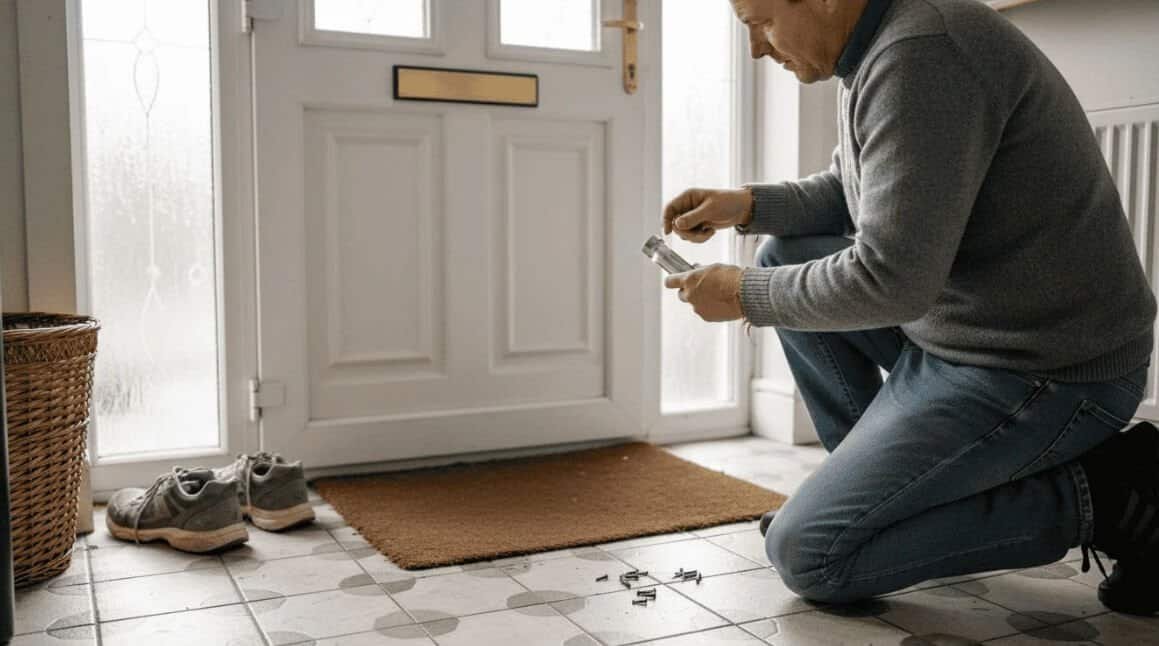
Struggling with a UPVC door lock that keeps sticking or refusing to turn is a common frustration for many Bristol and South Gloucestershire homeowners. Problems like worn hinges, misaligned frames, or faulty cylinders can leave your property vulnerable and daily routines disrupted. This guide explains how a systematic inspection and the right tools can restore your peace of mind, highlighting the importance of addressing potential security risks before they escalate.
Table of Contents
- Step 1: Assess UPVC Door Lock Faults Carefully
- Step 2: Gather Appropriate Tools and Replacement Parts
- Step 3: Remove Damaged UPVC Door Lock Mechanism Safely
- Step 4: Fit New or Repaired Lock Components Securely
- Step 5: Test UPVC Door Lock Function and Security
Quick Summary
| Key Point | Explanation |
|---|---|
| 1. Inspect Lock for Misalignment | Check for gaps and resistance when operating the handle, as misalignment compromises security and function. |
| 2. Gather Specific Tools and Parts | Assemble essential tools like screwdrivers and pliers, plus compatible replacement parts for an effective repair process. |
| 3. Remove Lock Mechanism Carefully | Disassemble the lock methodically to avoid damaging surrounding areas; keep screws organised for easy reassembly. |
| 4. Install Components Precisely | Align the new lock properly during installation to ensure smooth operation and heightened security for your door. |
| 5. Test Lock Functionality Thoroughly | Conduct multiple tests on the lock to confirm its performance and immediately address any anomalies for safety. |
Step 1: Assess UPVC Door Lock Faults Carefully
Carefully inspecting your UPVC door lock involves understanding the common mechanical issues that could compromise your home’s security. UPVC lock mechanism problems typically stem from several potential sources, requiring a systematic and thorough examination.
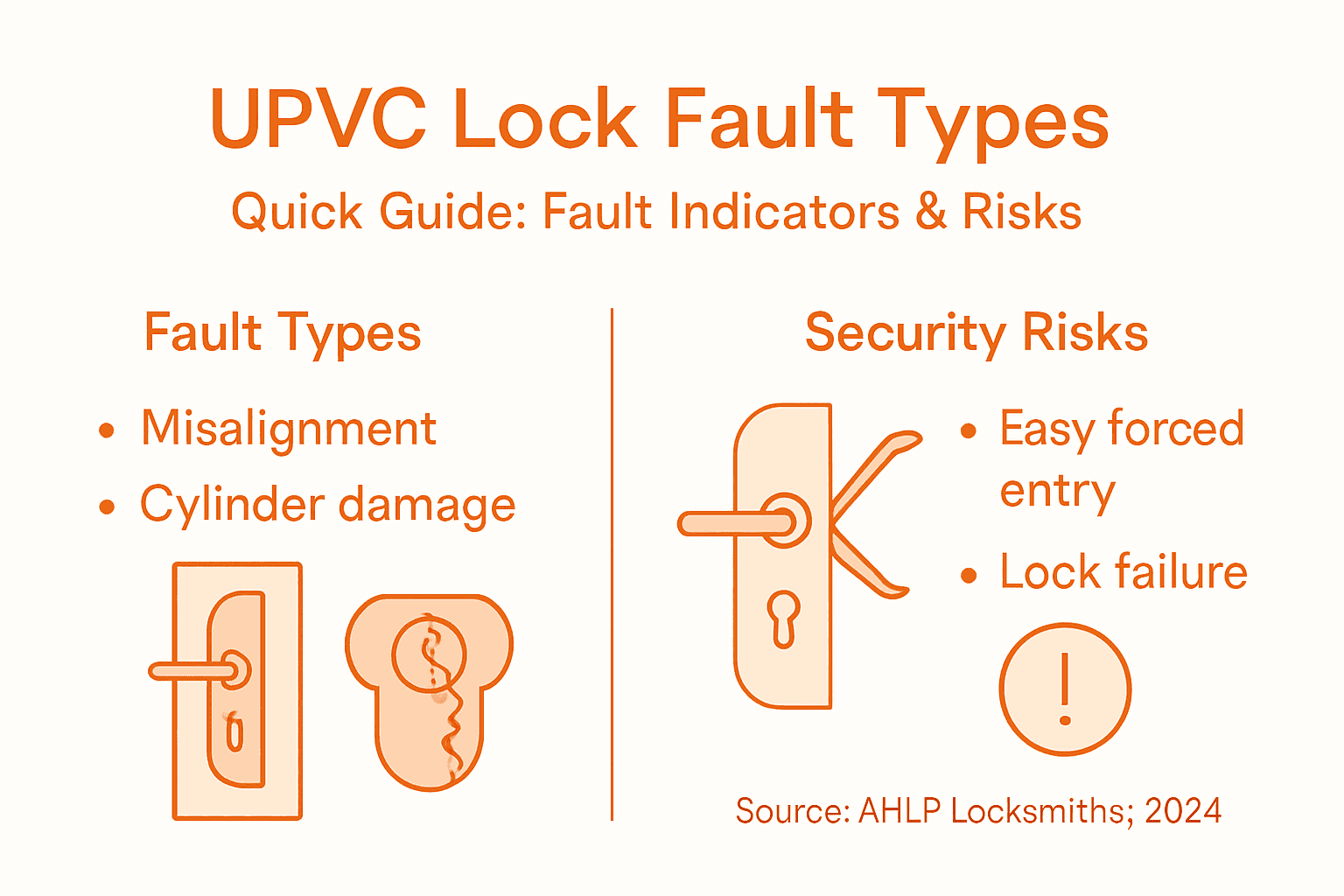
Start by checking the overall door alignment and movement. Look for signs of misalignment, such as difficulty lifting the handle, resistance when turning the key, or visible gaps between the door and frame. These symptoms often indicate worn hinges, incorrectly installed door panels, or internal lock mechanism wear. Pay close attention to how the handle responds when you attempt to lock or unlock the door. Stiffness, grinding sensations, or complete inability to turn the key are red flags signalling potential lock failure.
Examine the lock cylinder and multipoint locking system comprehensively. Check for physical damage like bent components, signs of attempted forced entry, or visible wear on the locking mechanism. Look for rust, corrosion, or debris that might impede smooth operation. If the key feels loose or does not turn smoothly, this could indicate internal cylinder damage requiring professional assessment.
Key mechanical faults in UPVC door locks and their potential impacts are outlined below:
| Fault Type | Typical Indicators | Security Risk |
|---|---|---|
| Misalignment | Handle difficult to lift, gaps | Reduced lock strength |
| Worn Hinges | Door sagging, resistance | Vulnerable to forced entry |
| Damaged Cylinder | Loose key, rough turning | Lock pick risk |
| Rust or Corrosion | Grinding noise, stiff mechanism | Easy forced failure |
| Internal Wear | Inconsistent locking, loose handle | Progressive lock failure |
Expert Tip: Always photograph any visible lock damage before attempting repairs to help professional locksmiths understand the exact nature of the problem.
Step 2: Gather Appropriate Tools and Replacement Parts
Preparing for a successful UPVC door lock repair requires assembling the right tools and replacement components to ensure a smooth and efficient process. Comprehensive repair preparation involves careful selection of equipment and compatible parts that match your specific door mechanism.
Start by collecting essential tools, including a precision screwdriver set with multiple head types, adjustable pliers, an Allen key set, and lock mechanism disassembly tools. For UPVC door locks, you will typically need flathead and Phillips screwdrivers of varying sizes, needle-nose pliers, and potentially specialised lock removal tools. Ensure you have replacement parts matching your existing lock mechanism precisely, including replacement cylinders, cam mechanisms, locking spindles, and handle components if necessary.
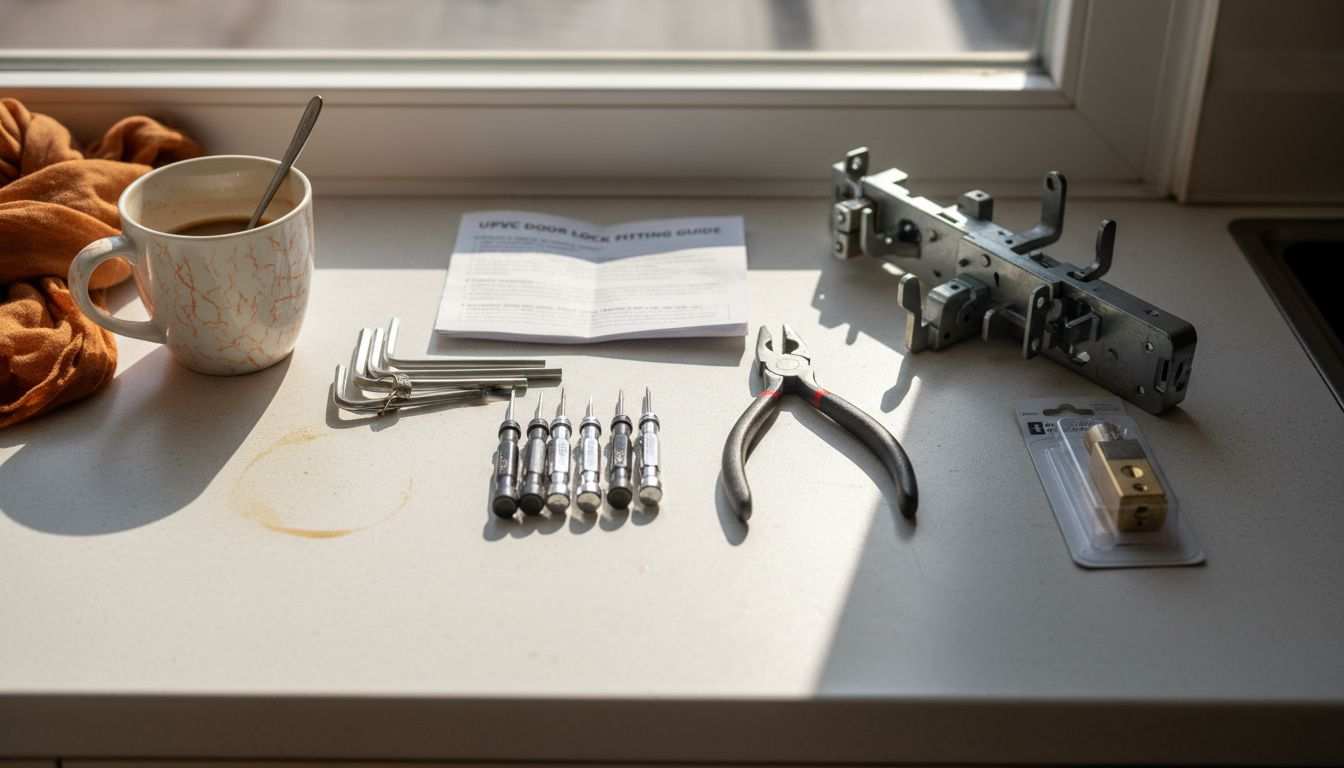
Carefully inspect the replacement parts before beginning your repair. Check that the new components are identical to your existing lock system in terms of measurements, fixing points, and design specifications. If you are uncertain about compatibility or lack the specific replacement parts, it is recommended to consult a professional locksmith who can provide expert guidance and ensure proper fitting.
Expert Tip: Photograph your existing lock mechanism before disassembly to create a reference point for reassembly and help identify exact part specifications.
Here is a reference table summarising essential tools, parts, and their uses in UPVC door lock repairs:
| Item | Main Purpose | When Required |
|---|---|---|
| Precision Screwdrivers | Removing screws safely | Disassembly and fitting |
| Lock Cylinder Replacement | Restoring key function | Old cylinder damage |
| Adjustable Pliers | Holding small components | Mechanism removal |
| Allen Key Set | Adjusting internal fittings | Alignment corrections |
| Photographs of Mechanism | Visual reference | Before and after repairs |
Step 3: Remove the Damaged UPVC Door Lock Mechanism Safely
Removing a damaged UPVC door lock mechanism requires precision and careful technique to prevent additional damage to your door or surrounding components. UPVC Door Lock Mechanisms demand a methodical approach to ensure safe and successful removal.
Begin by completely opening the door and securing it in position to provide maximum workspace. Use your precision screwdriver set to carefully remove the internal screws securing the lock mechanism. These are typically located around the door handle and within the lock plate area. Work systematically and keep screws organised in a small container to prevent losing any critical components. Pay close attention to the orientation of each screw and the mechanism itself as you disassemble to ensure accurate reassembly or replacement later.
Once all securing screws are removed, gently extract the lock mechanism from the door. If the mechanism appears stuck, avoid using excessive force. Instead, carefully wiggle the component while applying gentle, even pressure to release it from its housing. If resistance persists, double check that all securing screws have been completely removed and that no hidden fasteners are still in place. Should you encounter significant difficulty, this might indicate more complex underlying issues that require professional intervention.
Expert Tip: Place a soft cloth or towel beneath your work area to catch any small parts and protect your door surface during the removal process.
Step 4: Fit New or Repaired Lock Components Securely
Installing new or repaired UPVC door lock components requires precision and attention to detail to ensure optimal security and functionality. Door Lock Replacement Guide offers critical insights into proper installation techniques.
Begin by carefully aligning the replacement lock mechanism within the door housing. Ensure the component sits flush and level, with all mounting points precisely matching the original lock’s position. Use your previously organised screws and insert them gradually, alternating between sides to maintain even pressure and prevent misalignment. Tighten screws systematically using your precision screwdriver, applying consistent but gentle pressure to avoid stripping the threads or damaging the mechanism.
Once the lock is secured, test the mechanism thoroughly before completing the installation. Verify that the handle moves smoothly, the key turns without resistance, and all locking points engage correctly. Check the door opens and closes seamlessly with the new lock in place. If you notice any stiffness, misalignment, or unusual movement, make minor adjustments or consider seeking professional assistance to ensure complete functionality and security.
Expert Tip: Always keep the manufacturer’s installation instructions nearby and refer to them throughout the fitting process to guarantee precise installation.
Step 5: Test UPVC Door Lock Function and Security
Evaluating the performance of your newly installed or repaired UPVC door lock is crucial to ensure complete home security. Lock Mechanisms for Home Security provide essential insights into proper functionality testing.
Begin by systematically checking each aspect of the lock mechanism. Open and close the door multiple times, paying close attention to how smoothly the handle lifts and the locking points engage. Test the key thoroughly by inserting and turning it in the cylinder from both sides of the door. Verify that all multipoint locking mechanisms extend fully into the door frame without resistance. Listen for any unusual sounds and feel for any stiffness or inconsistent movement that might indicate misalignment or improper installation.
Conduct a comprehensive security assessment by testing the lock under different scenarios. Attempt to wiggle the handle to check for any unexpected movement that could indicate a loose fitting. Ensure the door sits flush against the frame when locked and that no visible gaps exist, which could compromise security. If you notice any slight imperfections or areas of concern, make minor adjustments or consult a professional locksmith to guarantee optimal performance and protection.
Expert Tip: Make a practice of testing your door lock weekly to catch any potential issues before they become serious security risks.
Secure Your Home with Expert UPVC Door Lock Repairs
Repairing UPVC door locks can be a complex and delicate task. This article highlights common issues such as misalignment, worn hinges, and damaged cylinders that can affect your door’s security and functionality. If you are struggling with stiff handles, loose keys or faulty multipoint locking, you need a reliable and professional locksmith who understands the specific challenges involved in UPVC mechanism repair.
At AHLP Locksmiths, we provide expert locksmith services tailored to your needs across Bristol, South Gloucestershire and Gloucester. Whether it is a simple lock repair or a full replacement, our team uses British Standard and insurance-approved hardware. We guarantee careful, non-destructive work that restores your door’s security and peace of mind.
Do not wait for a security risk to grow worse. Contact our emergency locksmith team for urgent repairs or schedule a visit today through our contact page. Your home deserves the highest level of protection now.
Frequently Asked Questions
How do I assess faults in my UPVC door lock?
To assess faults in your UPVC door lock, start by checking for misalignment, such as difficulty lifting the handle or gaps between the door and frame. Ensure to inspect the lock cylinder and multipoint locking system for any visible damage or wear, noting any concerns for professional repair if needed.
What tools do I need for repairing a UPVC door lock?
You will need a precision screwdriver set, adjustable pliers, an Allen key set, and lock mechanism disassembly tools. Gather all these tools before starting the repair to ensure a smooth process without unnecessary interruptions.
How can I safely remove a damaged UPVC door lock mechanism?
To safely remove a damaged UPVC door lock mechanism, open the door fully and secure it. Use your precision screwdriver to carefully remove all screws holding the lock, then gently wiggle the mechanism from its housing, applying even pressure instead of force to prevent damage.
What steps should I follow to install new UPVC door lock components?
When installing new UPVC door lock components, align the mechanism within the door housing and insert the screws gradually while alternating sides to maintain even alignment. Ensure the lock is secure before testing its functionality with the key and handle, adjusting as necessary for smooth operation.
How can I test my UPVC door lock for proper function and security?
Test your UPVC door lock by opening and closing the door several times to check smooth operation and verify that the key turns freely. Conduct a thorough security assessment by checking for any unexpected movement of the handle and ensuring the door fits tightly against the frame when locked.
What should I do if my UPVC door lock shows signs of wear?
If your UPVC door lock shows signs of wear, such as difficulty turning the key or visible damage, consider repairing or replacing the affected components promptly. Taking action within a week can help prevent further security risks and ensure your home remains protected.