
TL;DR:
- The choice of lock depends on door material, age, and security needs.
- Proper installation and maintenance are crucial for actual door security and longevity.
- Upgrading locks to certified high-standard models enhances protection against forced entry methods.
When it comes to securing your home in Bristol or South Gloucestershire, the type of lock on your door matters far more than most people realise. Many homeowners assume that any decent lock will do the job, but the door material and lock compatibility can make a significant difference to your property’s safety, maintenance costs, and insurance compliance. Whether you manage a rental property or own your home, understanding how UPVC and wooden door locks differ gives you a real advantage. This guide breaks down the key differences, highlights common vulnerabilities, and offers practical advice to help you make the right choice.
Table of Contents
- Understanding lock types: UPVC vs wooden doors
- Security strengths and vulnerabilities
- Life span, upkeep, and reliability factors
- Choosing the right lock for your property
- The expert view: what most guides miss about lock choices
- Get expert help with your next lock upgrade
- Frequently asked questions
Key Takeaways
| Point | Details |
|---|---|
| Lock compatibility matters | The most effective lock depends heavily on the specific door material and frame. |
| Security is not one-size-fits-all | Both UPVC and wooden locks have unique strengths and vulnerabilities. |
| Maintenance impacts reliability | Regular servicing extends lock life and boosts your home’s long-term security. |
| Local expert advice pays off | Choosing and fitting the right lock is best done with specialist local support. |
Understanding Lock Types: UPVC vs Wooden Doors
With the security stakes clear, it helps to start with the fundamentals. What exactly sets UPVC and wooden door locks apart, and why does it matter for your home?
UPVC lock basics are quite different from what you find on a traditional timber door. As a rule, UPVC doors use multipoint locking systems, whilst wooden doors allow a range of mortice and cylinder locks. This distinction shapes everything from how the lock is fitted to how it is serviced.
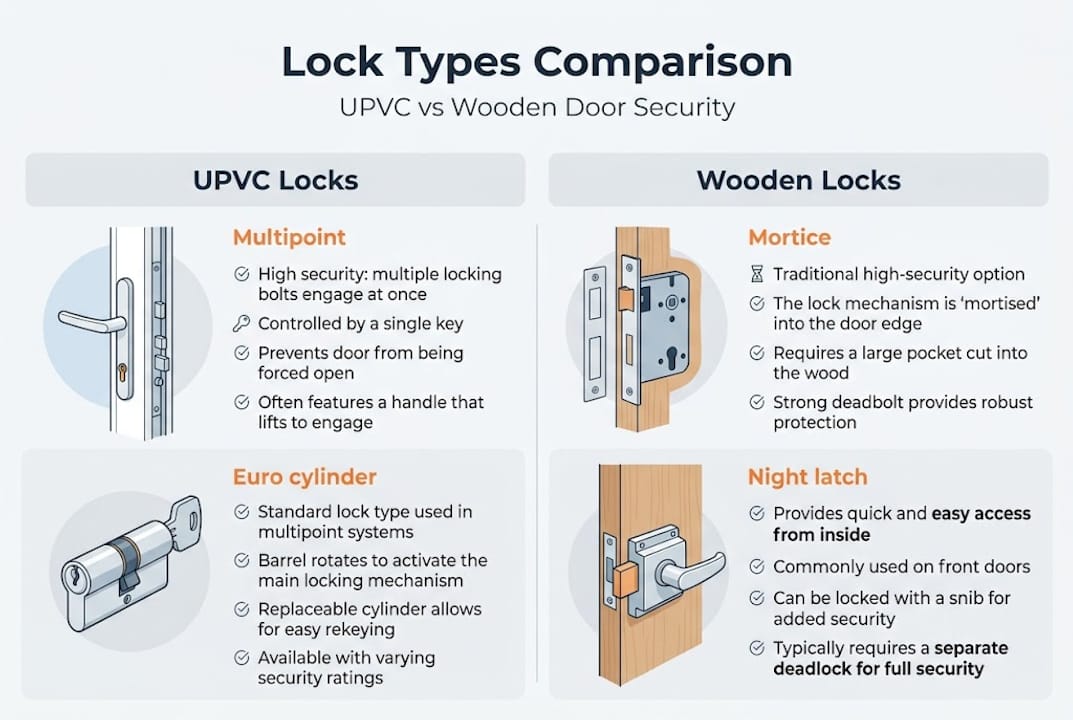
Multipoint locking systems on UPVC doors engage at several points along the door frame simultaneously, typically at the top, middle, and bottom. This spreads the load and makes it considerably harder to force the door open. On wooden doors, you are more likely to find a five-lever mortice lock, a Euro cylinder lock, or a rim lock, each with its own strengths and installation requirements.
Here is a summary of the most common lock types for each door material:
| Lock type | Door material | Mechanism | Security level | Maintenance needs |
|---|---|---|---|---|
| Multipoint lock | UPVC | Engages multiple points | High | Low to moderate |
| Five-lever mortice | Wooden | Single bolt, five levers | High (BS3621) | Moderate |
| Euro cylinder | UPVC or wooden | Pin tumbler, key-operated | Moderate to high | Low |
| Rim lock | Wooden | Surface-mounted latch | Low to moderate | Low |
| Night latch | Wooden | Spring latch | Low | Low |
For those considering upgrading UPVC door locks, the multipoint system is already built into the door frame, which limits your options but also simplifies the process. With wooden doors, you have considerably more flexibility.
Key points to bear in mind for Bristol and South Gloucestershire properties:
- UPVC doors are common in post-1990s builds and most modern rental properties across the region.
- Wooden doors are prevalent in older Victorian and Edwardian terraces, particularly in areas like Clifton, Redland, and Thornbury.
- A poorly fitted lock on either door type reduces security regardless of the lock’s quality rating.
- Checking your lock maintenance checklist regularly helps catch problems before they become costly.
Understanding which lock type suits your door is the first step. From there, it is about assessing how well each one actually performs under pressure.
Security Strengths and Vulnerabilities
After defining the main lock types, it is time to assess which keeps your property safer in real-world scenarios.
UPVC and wooden locks each have genuine strengths, but composite and wooden-core doors can sometimes offer superior overall strength when paired with the right hardware. The door itself matters as much as the lock.
Burglars rarely pick locks. They force, snap, or kick. Knowing which entry methods apply to your door type helps you make smarter choices.
| Forced entry method | UPVC multipoint lock | Wooden mortice lock |
|---|---|---|
| Lock snapping | Vulnerable without anti-snap cylinder | Not applicable |
| Kicking in | Resistant due to multi-point engagement | Depends on frame strength |
| Drilling | Moderate resistance | Moderate resistance |
| Picking | Low risk with quality cylinders | Low risk with five-lever BS3621 |
| Jemmying | Resistant at multiple points | Vulnerable if single bolt |
“The security of any door depends not just on the lock, but on the quality of the frame, the fitting, and the hardware chosen. A high-grade lock on a weak frame offers little real protection.” This is a principle we apply on every job we attend.
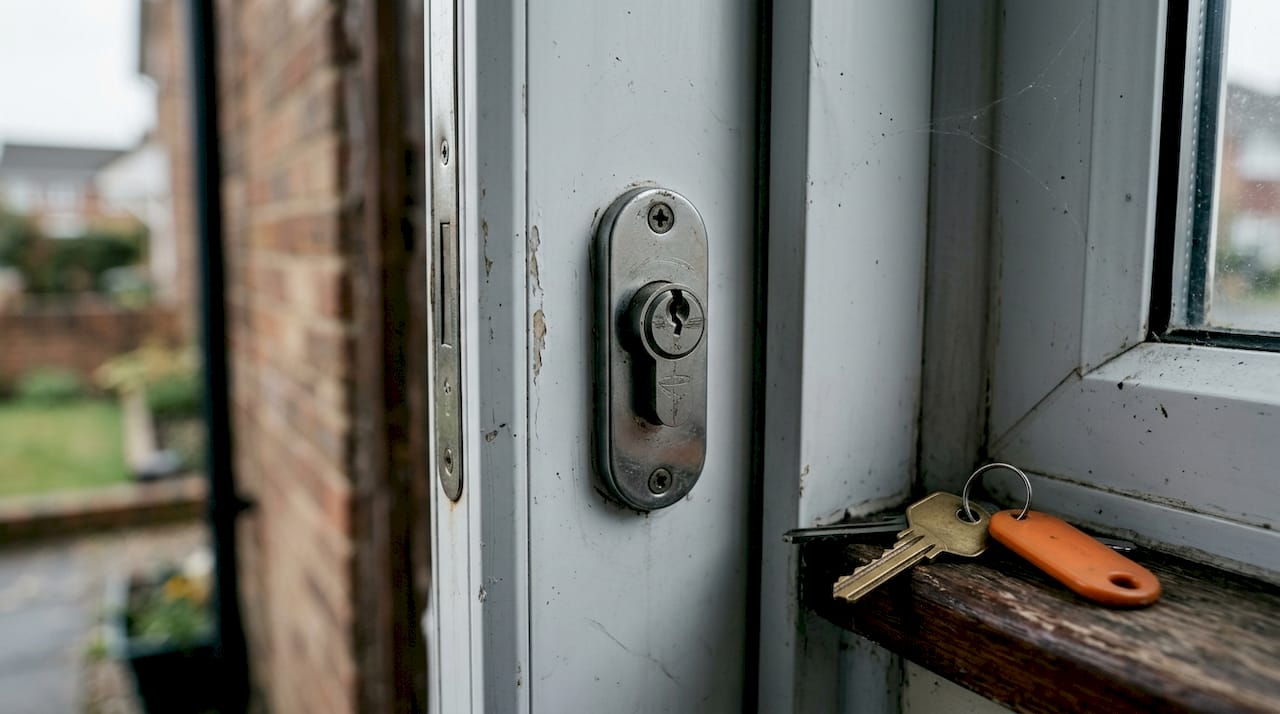
For UPVC doors, the biggest known vulnerability is lock snapping. Standard Euro cylinders can be snapped with basic tools in seconds. Upgrading to certified UPVC locks with anti-snap, anti-pick, and anti-drill ratings addresses this directly and is strongly recommended for any property in Bristol or South Gloucestershire.
Wooden doors with a quality five-lever mortice lock rated to BS3621 are recognised by most UK insurers as meeting minimum security standards. However, a single-point lock is far easier to force than a multipoint system. Reviewing lock upgrade examples can show you what a meaningful improvement looks like in practice.
Pro Tip: Walk around your property and look at each external door from the outside. If you can see a standard Euro cylinder with no visible anti-snap markings, or a wooden door with only a nightlatch, those are your weakest points. Address them first.
Life Span, Upkeep, and Reliability Factors
Once security is understood, maintenance and reliability become the next concern. These factors can make or break your long-term peace of mind.
Misaligned UPVC multipoint locks can fail prematurely, whilst wooden doors allow varied lock upgrades but need regular maintenance to stay effective. Both lock types have predictable failure modes once you know what to look for.
For UPVC multipoint systems, the most common issues include:
- Misalignment: The door drops slightly over time, causing the lock to engage poorly or not at all.
- Gearbox wear: The internal mechanism wears out, particularly if the door is used heavily.
- Spindle failure: The handle-to-lock connection breaks, leaving the door unable to latch.
- Weather seal degradation: Causes the door to stick or drag, putting strain on the mechanism.
For wooden door locks, the main concerns are different:
- Timber swelling and shrinking: Bristol’s damp winters cause wood to expand, making locks stiff or misaligned.
- Rust and corrosion: Older mortice locks can corrode internally, reducing reliability.
- Frame wear: Repeated use loosens the keep (the metal plate the bolt enters), reducing security.
- Lack of lubrication: Dry mechanisms wear faster and become harder to operate.
In terms of lifespan, a well-fitted UPVC multipoint lock typically lasts 10 to 15 years with minimal intervention. A quality mortice lock on a wooden door can last considerably longer, but only with consistent care. Reviewing the UPVC lock repair steps process can help you understand when a repair is viable and when replacement is the better option.
Pro Tip: Apply a graphite-based lubricant to wooden door lock mechanisms twice a year, especially before winter. For UPVC doors, use a silicone spray on the multipoint mechanism and the door seals. Avoid oil-based products, as they attract dirt and cause faster wear. Following a proper door lock maintenance routine takes less than 20 minutes but can add years to your lock’s service life.
Bristol’s climate, with its wet winters and variable temperatures, is harder on both lock types than many homeowners expect. Factoring in seasonal checks is a practical habit worth building.
Choosing the Right Lock For Your Property
Armed with comparison details and pitfalls, the next step is deciding which lock suits your property and how to avoid common mistakes.
Composite or wooden-core doors can sometimes offer superior strength with the right lock, which means the decision is rarely as straightforward as simply choosing UPVC or timber. Your property type, location, and usage all play a role.
Follow these steps when picking or upgrading your lock:
- Identify your door material and frame condition. A lock upgrade is only as good as the door and frame it sits in. Check for rot, warping, or damage before spending money on new hardware.
- Check your insurance requirements. Many UK home insurance policies require a minimum of a five-lever BS3621 mortice lock on wooden doors, or a multipoint system with an anti-snap cylinder on UPVC doors.
- Consider your local risk profile. Check crime statistics for your postcode in Bristol or South Gloucestershire. Higher-risk areas warrant higher-rated locks.
- Ask about British Standard ratings. Look for locks rated to BS3621 for wooden doors or TS007 three-star ratings for UPVC cylinders. These are the benchmarks insurers and police recommend.
- Consult a qualified locksmith before buying. A professional can assess your door, frame, and existing hardware and recommend the most cost-effective upgrade path. Reviewing the UPVC lock replacement process gives you a clear picture of what to expect.
- Plan for ongoing maintenance. Factor in the cost and effort of upkeep when making your choice, especially for rental properties where tenant use can accelerate wear.
When UPVC suits best: Modern builds, rental properties, doors with existing multipoint frames, and situations where low maintenance is a priority.
When wooden is ideal: Period properties, heritage areas with planning restrictions, situations where lock flexibility and upgradeability are important.
The right choice is rarely about one being universally better. It is about matching the lock to the door, the door to the property, and both to your security needs.
The Expert View: What Most Guides Miss About Lock Choices
Most articles on this topic focus on product specifications and security ratings. Those things matter, but in our experience working across Bristol and South Gloucestershire, the bigger issues are rarely about which brand of lock you choose.
What we see most often is poor installation. A top-rated lock fitted badly offers less real-world protection than a mid-range lock fitted correctly. Door alignment, frame condition, and the skill of the installer make more difference than the lock’s star rating in most cases.
We also see homeowners invest in a quality lock and then neglect it entirely. Locks are mechanical devices. They wear, they shift, and they fail. The properties we attend for emergency lockouts are often ones where a small maintenance issue went unnoticed for too long.
Our honest advice: focus on practical lock upgrades that suit your actual door and commit to checking them seasonally. A well-maintained standard lock will outlast and outperform a premium lock that has been ignored.
Get Expert Help with Your Next Lock Upgrade
For those looking to secure their property with confidence, expert guidance is a call or click away. At AHLP Locksmiths, we work with homeowners and property managers across Bristol and South Gloucestershire every day, fitting, repairing, and upgrading locks on every type of door. Whether you need a straightforward lock swap or a full security review, our 24/7 locksmith services are here when you need them. Browse our lock replacement examples to see the kind of work we do, or read our lock replacement guide for detailed advice. Call us on 07700 100146 or visit ahlp.co.uk to arrange a visit.
Frequently Asked Questions
Do UPVC multipoint locks provide better security than standard wooden locks?
UPVC multipoint systems are praised for consistent, low-maintenance security, but proper fitting and regular checks are essential. A wooden door with a quality five-lever BS3621 mortice lock can be equally effective when well maintained.
How often should wooden door locks be maintained?
Wooden door locks should be checked and lubricated at least once a year, ideally before winter. Without regular maintenance, wooden door mechanisms degrade and lose effectiveness over time.
Are wooden doors easier to upgrade for higher security?
Yes, wooden doors offer more flexibility for lock upgrades, including mortice locks, Euro cylinders, and additional bolts. However, composite or wooden-core doors still need expert installation and careful ongoing care to deliver their full potential.
What is the lifespan of a UPVC multipoint lock compared to a mortice lock?
A well-fitted UPVC multipoint lock can last over a decade with minimal servicing. A mortice lock on a wooden door can last longer still, but misaligned or unmaintained locks fail prematurely regardless of type.