

Over 60 percent of British homeowners admit they overlook window security when safeguarding their property. With break-ins often targeting the weakest access points, reliable window locks are no longer optional—they are a necessity for ensuring peace of mind. Understanding how the right window lock can deter intrusions and keep your insurance valid empowers you to make smarter choices about home protection in the United Kingdom.
Table of Contents
- Window Lock Security – What It Means
- Types of Window Locks and Their Differences
- How Window Locks Impact Insurance Compliance
- Risks of Old, Damaged, or Non-Standard Locks
- Choosing Professional Window Lock Replacement
Key Takeaways
| Point | Details |
|---|---|
| Importance of Window Locks | Window locks are essential for home security, designed specifically to prevent forced entry through windows. Regular inspection ensures functionality and security compliance. |
| Types of Window Locks | Various lock types like pin locks, key-operated locks, and espagnolette systems offer different levels of security tailored to window designs. Consult a professional for appropriate selection. |
| Insurance Compliance | Robust window locking mechanisms are often mandated by insurance policies; failing to meet standards can lead to claim rejections. Regularly verify compliance with your insurer. |
| Risks of Neglected Maintenance | Old or damaged window locks significantly increase burglary risk and can make homes more vulnerable to break-ins. Conduct annual inspections and maintenance to uphold security. |
Window Lock Security – What It Means
Window lock security represents a critical line of defence for protecting your home against potential intrusions. Unlike standard door locks, window locks are specifically engineered to prevent forced entry through vulnerable glass entry points. These specialised mechanisms work by restricting window movement and preventing criminals from easily manipulating or forcing windows open.
Modern window locks come in multiple designs tailored to different window types. Typically, they include pin locks, key-operated locks, and integrated locking mechanisms built directly into window frames. Each type offers unique protection levels, with some featuring additional anti-lift and anti-tamper technologies. Homeowners can select locks matching their specific window construction – whether uPVC, wooden, or aluminium frames.
Understanding window lock security goes beyond just installing a mechanism. Why Replace Old Locks – Protecting Your Home’s Security highlights how outdated or damaged locks significantly compromise home safety. Professional locksmiths recommend regular inspections to ensure locks remain functional, checking for signs of wear, rust, or mechanical degradation that could create potential security vulnerabilities.
Pro Tip – Lock Maintenance: Regularly clean and lubricate your window locks using specialist silicone spray every six months to prevent mechanical failure and ensure smooth operation, extending their protective lifespan and maintaining optimal home security.
Types of Window Locks and Their Differences
Window locks are far more complex than many homeowners realise, with each type offering unique security characteristics designed to protect against potential break-ins. 7 Key Examples of Lock Mechanisms Every Homeowner Should Know highlights the nuanced world of window security mechanisms that go beyond simple mechanical barriers.
Traditional window lock designs include several critical variations. Pin locks provide basic security by preventing window opening, while key-operated locks offer a more sophisticated deterrent. Modern window security has evolved to include advanced mechanisms like dual-screw bolts, which resist vertical movement, and espagnolette systems that integrate multiple locking points across the window frame. These sophisticated designs ensure multiple layers of protection against potential intruders.
The sash window lock comparison reveals fascinating insights into specialised lock mechanisms. Keyed locks remain particularly popular for insurance purposes, offering a discreet yet effective security solution. Ventilation restrictors represent another intelligent design, allowing partial window opening while maintaining robust security barriers. Different window materials – such as uPVC, wooden, and aluminium frames – require specific lock designs, making professional consultation crucial when selecting the most appropriate security mechanism.
Pro Tip – Lock Selection: Consult a professional locksmith to assess your specific window types and recommend tailored lock mechanisms that provide optimal security without compromising functionality.
Here’s a concise overview of common window lock types and their key characteristics:
| Lock Type | Main Security Feature | Typical Application |
|---|---|---|
| Pin lock | Prevents window opening | Sash and sliding windows |
| Key-operated lock | Requires key to unlock | Casement and sash windows |
| Espagnolette system | Multi-point frame locking | Modern uPVC/metal windows |
| Dual-screw bolt | Resists vertical movement | Wooden sash windows |
| Ventilation restrictor | Allows partial, secure opening | Child safety, upper windows |
How Window Locks Impact Insurance Compliance
Insurance compliance represents a critical aspect of home security that many homeowners overlook, with window locks playing a pivotal role in meeting stringent policy requirements. Why Regular Lock Maintenance Matters for Security highlights the intricate relationship between proper lock maintenance and insurance validation.
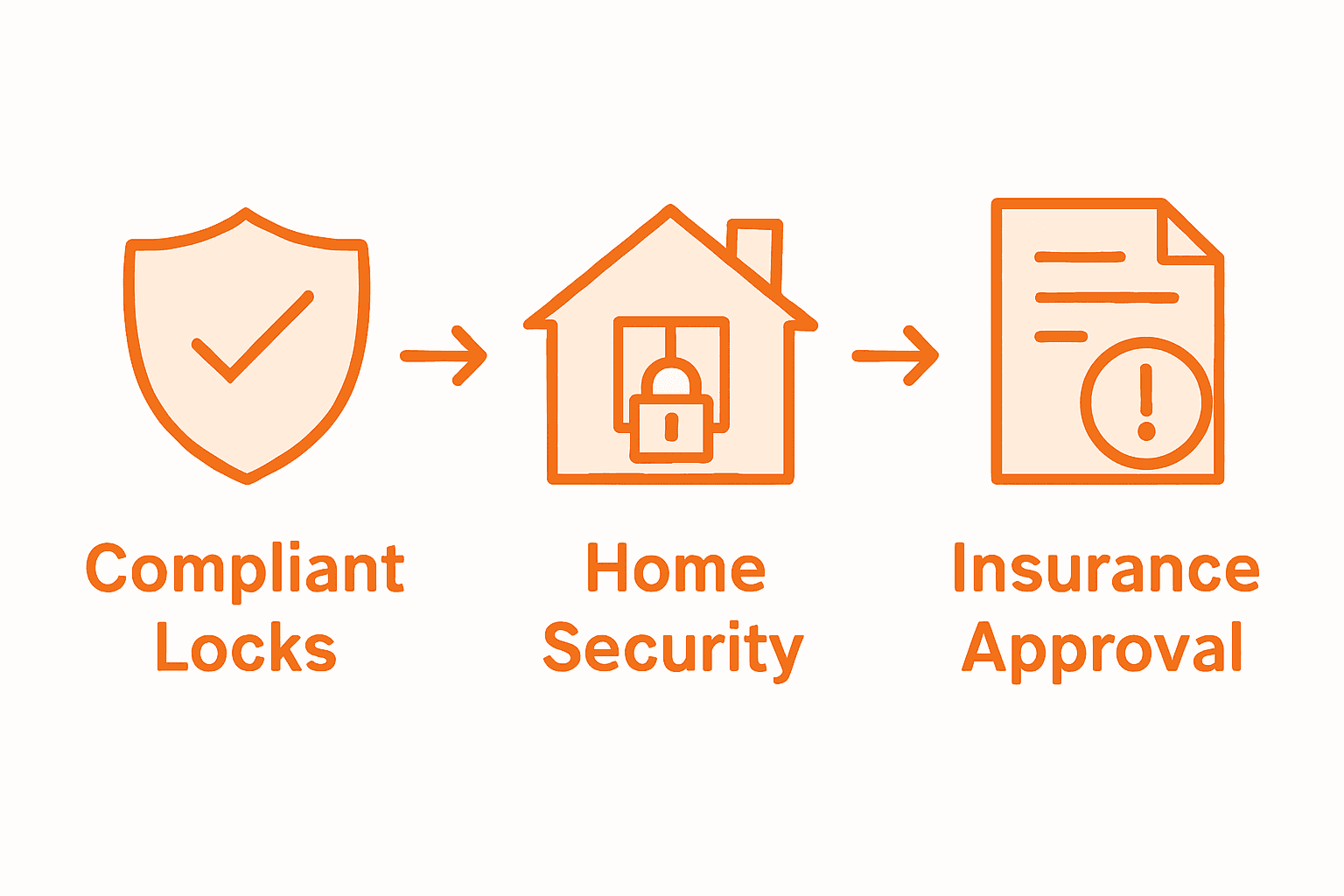
Insurance providers typically mandate specific security standards for residential properties, with window locks being a key evaluation criterion. Most insurance policies require windows to have robust locking mechanisms that meet British Standard BS7950 for window security. Failure to maintain appropriate window locks can result in potential claim rejections, leaving homeowners financially vulnerable in the event of a break-in. Insurers often conduct detailed assessments of a property’s security infrastructure, paying close attention to the quality, condition, and installation of window locking systems.
The implications of non-compliant window locks extend beyond potential claim denials. Inadequate locks can significantly increase a property’s risk profile, leading to higher insurance premiums or even complete coverage refusal. Many insurance companies now require photographic evidence of window lock installations and may conduct periodic security reviews. Modern multi-point locking systems and British Standard approved locks provide the most reliable method of meeting these stringent insurance requirements, offering both enhanced security and peace of mind for homeowners.
Pro Tip – Insurance Verification: Consult your insurance provider annually to confirm your current window lock specifications and ensure they meet the latest security compliance standards.
Risks of Old, Damaged, or Non-Standard Locks
Window locks deteriorate over time, presenting significant security vulnerabilities that many homeowners underestimate. 7-Step Lock Maintenance Checklist for Home and Business Owners emphasises the critical importance of regular lock assessment and maintenance to prevent potential security breaches.
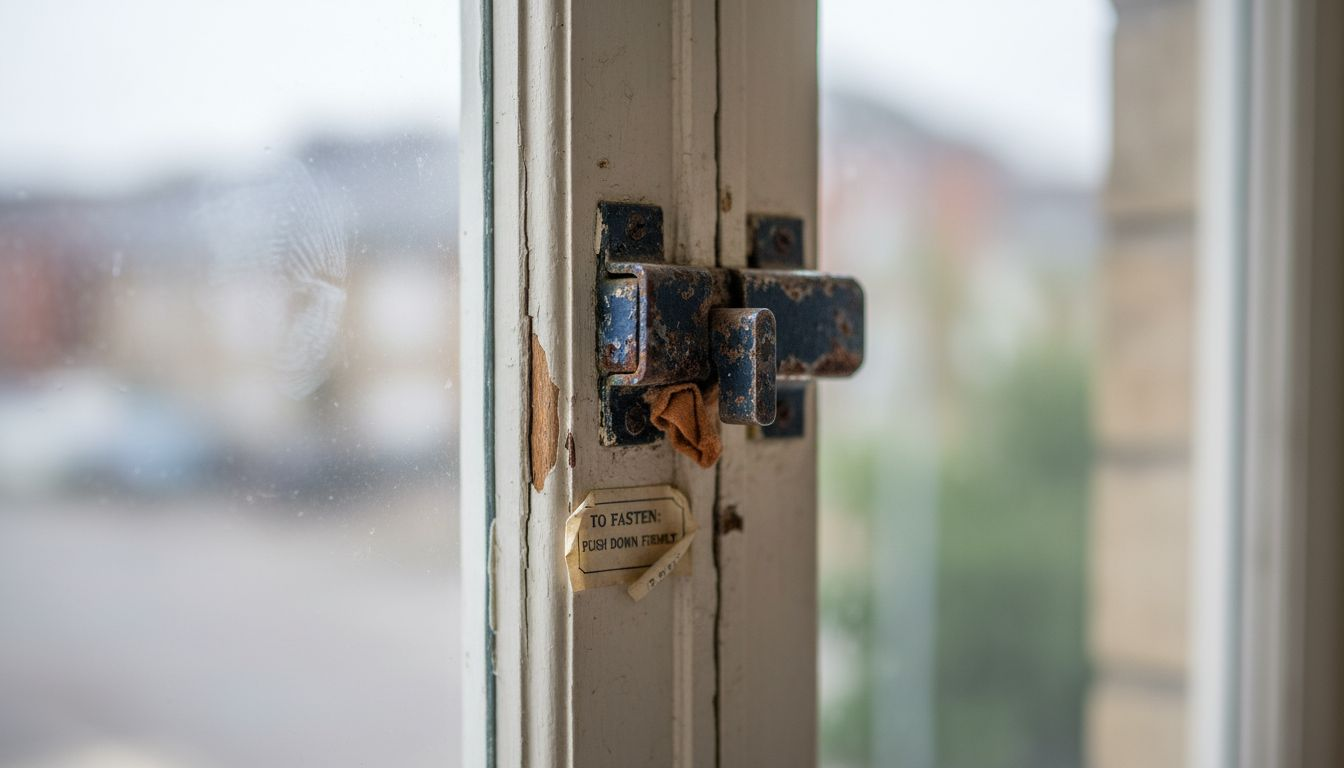
Old and damaged locks create multiple security risks that extend far beyond simple mechanical failure. Worn mechanism components can easily be manipulated by experienced criminals, providing multiple entry points for potential intruders. Corrosion, rust, and mechanical wear compromise the lock’s structural integrity, making it significantly easier to force open. Non-standard locks that do not meet British security standards represent an even more dangerous scenario, potentially rendering home insurance policies invalid and leaving properties exposed to substantial risk.
The consequences of neglecting window lock maintenance can be profound. Burglars specifically target properties with outdated or weak locking systems, understanding that these represent the path of least resistance. Compromised locks can reduce property values, increase insurance premiums, and create substantial personal safety risks. Modern window locks incorporate advanced security features like multi-point locking mechanisms, anti-lift pins, and reinforced strike plates, offering comprehensive protection that older, damaged locks simply cannot match.
Pro Tip – Lock Inspection: Conduct a thorough visual and functional inspection of all window locks annually, checking for signs of wear, rust, or mechanical weakness that could compromise your home’s security.
To help you understand the importance of maintaining window locks, here is a summary of risks associated with poor upkeep:
| Risk Due to Poor Lock Maintenance | Impact on Home Security | Insurance Consequence |
|---|---|---|
| Corrosion or rust | Easy target for break-ins | Policy invalidation risk |
| Worn mechanisms | Locks can be easily bypassed | Claim rejection |
| Non-standard locks | May not meet security standards | Higher premiums or no coverage |
| Lack of regular inspection | Unnoticed weakening of defences | Increased risk profile |
Choosing Professional Window Lock Replacement
Professional window lock replacement requires expertise that goes far beyond simple mechanical installation. Role of Locksmiths in Burglary Prevention Explained highlights the intricate skills professional locksmiths bring to ensuring comprehensive home security.
Choosing a professional involves careful consideration of several critical factors. Qualified locksmiths should possess specific credentials, including British Standard certifications and insurance-approved training. They must demonstrate comprehensive knowledge of different window frame materials – uPVC, wooden, and aluminium – and understand the nuanced security requirements for each. Experienced professionals conduct thorough assessments, measuring existing frames, evaluating structural integrity, and recommending lock systems that provide maximum protection without compromising window functionality.
The replacement process involves multiple sophisticated steps that untrained individuals cannot safely execute. Professionals use specialised tools to remove old locks without damaging window frames, precisely measure replacement mechanisms, and ensure perfect alignment. They select locks meeting British security standards, which often include multi-point locking systems, anti-snap cylinders, and reinforced strike plates. Beyond installation, professional locksmiths provide crucial advice about ongoing maintenance, potential vulnerabilities, and additional security enhancements specific to your property’s unique characteristics.
Pro Tip – Professional Selection: Always verify a locksmith’s credentials, request references, and confirm they carry professional indemnity insurance before allowing them to replace your window locks.
Secure Your Bristol Home with Expert Window Lock Replacement
Protecting your home from break-ins starts with reliable window lock security. The risks of old, damaged, or non-standard locks can leave your property vulnerable and jeopardise your insurance cover. If you have concerns about worn mechanisms, corrosion, or locks that do not comply with British Standard security requirements, it is vital to act promptly. Our professional locksmith services specialise in upgrading and replacing window locks tailored to your specific frame type, ensuring robust defence against forced entry.
Do not wait until a security breach happens. Trust our Local Locksmith – Auto Home Lock Pro team to assess your window locking systems and recommend the best British Standard approved solutions. We use careful, non-destructive methods to upgrade your locks with multi-point and key-operated mechanisms that align with insurance standards. For peace of mind and enhanced home security, explore our full range of Locksmith Services – Auto Home Lock Pro and arrange a visit by contacting us directly at https://ahlp.co.uk/contact/. Your Bristol home deserves the protection only expert locksmiths can provide.
Frequently Asked Questions
Why should I replace old window locks?
Replacing old window locks is crucial for maintaining home security, as outdated or damaged locks can be easily bypassed by intruders, compromising your safety.
What are the different types of window locks available?
Common types of window locks include pin locks, key-operated locks, espagnolette systems, dual-screw bolts, and ventilation restrictors, each offering unique security features suitable for various window styles.
How can I tell if my window locks need to be replaced?
Signs that your window locks need replacement include visible rust or corrosion, difficulty in locking or unlocking, worn components, and non-compliance with current security standards, which can all compromise security.
What should I consider when choosing new window locks?
When selecting new window locks, consider the type of window frame (uPVC, wooden, or aluminium), the specific locking mechanism’s security features, and ensure compliance with British security standards for optimal protection.