

Most British homeowners underestimate just how quickly a burglar can enter through an unsecured window. In Bristol and South Gloucestershire, protecting your family from break-ins starts with more than just strong doors. Choosing and fitting the right window locks not only boosts security but can also reduce insurance costs. This practical guide covers the exact steps, tools, and expert tips you need to tackle a window lock installation with confidence and peace of mind.
Table of Contents
- Step 1: Gather Necessary Tools And Safety Equipment
- Step 2: Choose Suitable Lock For Your Window Type
- Step 3: Mark And Prepare Fixing Points Accurately
- Step 4: Fit And Secure The Window Lock Firmly
- Step 5: Test Lock Operation And Finalise Adjustments
Quick Summary
| Key Point | Explanation |
|---|---|
| 1. Gather all necessary tools | Assemble tools such as drills, screwdrivers, and safety gear before starting the installation process. |
| 2. Choose the right lock type | Select a window lock based on the frame material for optimal security; timber and UPVC require different locks. |
| 3. Measure and mark fixing points | Use accurate measurements and a spirit level to ensure the correct position for lock installation to avoid operational issues. |
| 4. Secure the lock properly | Position and tighten the lock carefully to maintain security; avoid over-tightening screws for different frame materials. |
| 5. Test and adjust after installation | Conduct operational tests after fitting to ensure smooth functionality and make necessary adjustments for optimal performance. |
Step 1: Gather necessary tools and safety equipment
Before diving into window lock installation, you’ll want to assemble all the right tools and protective gear to ensure a smooth and safe process. Window lock installations require precision and careful preparation using specific equipment that protects both you and your window frame.
Your essential toolkit should include several key items: a power drill with multiple drill bits, a set of flathead and Phillips screwdrivers, measuring tape, pencil, safety glasses, work gloves, and a spirit level to guarantee straight lock placement. You’ll also need the specific window lock mechanism appropriate for your window type—whether timber or UPVC frame. Some recommended tools from professional locksmith suppliers like Lockstation include tension tools and specialised drilling equipment that can make your installation more precise.
Carefully lay out all your tools before beginning, ensuring everything is within easy reach and that you understand how each will be used during the installation process. This preparation prevents unnecessary interruptions and helps maintain focus on achieving a secure, professional lock fitting.
Expert Tip: Always check your window lock kit’s specific requirements before starting, as different frames might need unique installation approaches.
Step 2: Choose a suitable lock for your window type
Selecting the right window lock is crucial for ensuring your home’s security and protecting your property from potential intruders. Different window types require specific lock mechanisms to guarantee optimal protection and functionality.
Your choice of window lock will depend primarily on your window frame material and style. For timber windows, traditional mortice locks or integrated espagnolette locks work exceptionally well. UPVC windows typically require dedicated multipoint locking systems that secure the window at multiple points along the frame. These lock mechanisms vary significantly based on your specific home requirements and can include options like key operated locks, non key operated turn handles, or integrated security mechanisms.
Consider factors such as your window’s age, material composition, and current security status when making your selection. Older timber frames might need more robust locking solutions compared to newer UPVC installations. Pay close attention to compatibility between the lock mechanism and your existing window frame to prevent potential fitting issues or security vulnerabilities.
Expert Tip: Always measure your window frame precisely and consult with a professional locksmith if you are uncertain about the most appropriate lock mechanism for your specific window type.
Here’s a quick comparison of popular window lock types and their best-suited frame materials:
| Lock Type | Suitable Frame Material | Security Level | Common Usage Scenario |
|---|---|---|---|
| Mortice Lock | Timber | High | Traditional wooden windows |
| Espagnolette Lock | Timber | Moderate to High | Modern casement windows |
| Multipoint Locking | UPVC | Very High | Newer plastic double glazing |
| Key Operated Lock | Timber, UPVC | Moderate | Basic home security upgrade |
| Turn Handle Lock | UPVC | Standard | Children safe restriction |
Step 3: Mark and prepare fixing points accurately
Accurately marking and preparing your fixing points is a critical stage in window lock installation that will determine the overall security and functionality of your new lock mechanism. Getting this step right prevents future operational issues and ensures a stable, professional fitting.

Precise positioning of mounting plates requires careful measurement and alignment to guarantee your window lock operates smoothly. Start by using a spirit level to ensure your marking points are perfectly horizontal and vertical. Measure twice and mark your drilling locations using a pencil, taking extra care to account for the specific dimensions of your chosen lock mechanism. This approach helps prevent misalignment that could compromise the lock’s security or cause difficulties during installation.
Pay special attention to the material of your window frame when preparing fixing points. Timber frames will require different drilling techniques compared to UPVC surfaces. For wooden frames, consider pre drilling pilot holes to prevent wood splitting. With UPVC frames, use specialist drill bits designed to penetrate the material without causing structural damage. Always ensure your markings are symmetrical and precisely positioned to support the lock’s mounting plate.
Expert Tip: Create a paper template of your lock mechanism to help you visualise and mark fixing points more accurately before making any permanent marks.
Step 4: Fit and secure the window lock firmly
Securing your window lock correctly is crucial for ensuring optimal home security and preventing potential intrusion points. This stage requires precision and careful attention to detail to guarantee a professional installation.
The process of fitting the lock involves carefully positioning the lock body and aligning it with pre marked fixing points to create a robust security mechanism. Begin by placing the lock body against the frame and checking its alignment multiple times before inserting any screws. Loosely secure the initial screws to allow for minor adjustments and ensure the lock sits perfectly flat against the window frame.
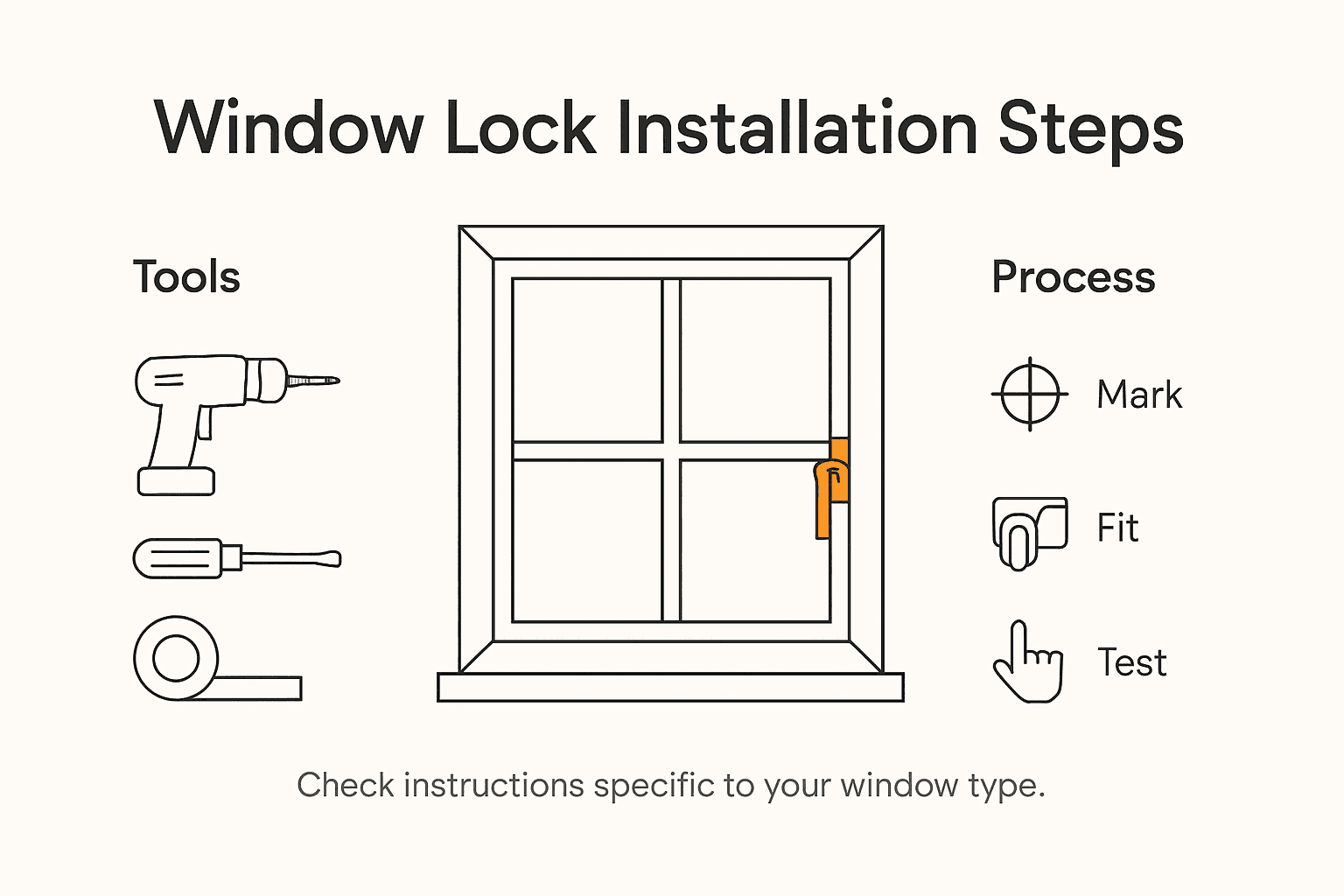
When tightening the lock, apply consistent pressure without over-tightening. Different window materials require slightly different approaches; timber frames need gentler handling compared to UPVC surfaces. Check the lock mechanism operates smoothly by testing the handle and bolt movement before fully securing all fixing points. Ensure each screw is inserted straight and sits flush with the mounting plate to prevent potential structural weaknesses that could compromise the lock’s integrity.
Expert Tip: Always keep a spare set of screws and use a magnetic screwdriver to prevent accidentally dropping small fixings during installation.
Step 5: Test lock operation and finalise adjustments
With your window lock now installed, the final stage involves carefully testing its functionality and making any necessary fine tuning adjustments to guarantee optimal security and smooth operation. This critical step ensures your new lock performs exactly as intended.
Professional locksmiths recommend conducting a comprehensive operational test that involves multiple interaction cycles. Open and close the window repeatedly while engaging and disengaging the lock mechanism. Check for any resistance or stiffness in the handle movement and ensure the lock bolt slides smoothly into its designated position without excessive force. Pay close attention to how the lock aligns with the window frame ensuring a tight seal that prevents potential drafts or security vulnerabilities.
If you notice any slight misalignments or operational issues during testing, do not hesitate to make minor adjustments. Sometimes this might involve slightly loosening mounting screws and repositioning the lock body or carefully adjusting the strike plate to achieve perfect alignment. The goal is to create a lock mechanism that operates seamlessly while providing maximum security for your home.
Expert Tip: Perform your final lock test under different temperature conditions to ensure consistent performance throughout seasonal changes.
Below is a summary of crucial factors to check after installing a window lock:
| Checkpoint | Purpose | What to Look For |
|---|---|---|
| Lock Alignment | Ensures smooth operation | Bolt enters the strike plate cleanly |
| Handle Movement | Confirms mechanism reliability | No stiffness or sticking |
| Frame Seal | Prevents draughts | Tight closure with no gaps |
| Seasonal Performance | Maintains security year-round | Works in hot and cold conditions |
Secure Your Home with Expert Window Lock Installation from AHLP Locksmiths
Installing a window lock correctly is essential for protecting your home against unwanted access and drafts. This article highlighted the importance of precise preparation, choosing the right lock type for timber or UPVC frames, and testing for smooth operation. We understand how daunting it can be to handle everything yourself, especially when it involves measuring and fixing points accurately and fitting locks firmly to ensure maximum security.
Don’t leave your home’s safety to chance. AHLP Locksmiths delivers professional locksmith services tailored to your window security needs, whether it is fitting multipoint locking systems or key-operated window locks. As your trusted local locksmith, we offer reliable, non-destructive installations using British Standard and insurance-approved hardware to give you complete peace of mind.
Ready to upgrade your home security with expertly installed window locks? Contact AHLP Locksmiths today https://ahlp.co.uk/contact/ for fast, friendly service across Bristol, South Gloucestershire and Gloucester. Secure your windows the right way before it’s too late.
Frequently Asked Questions
What tools do I need for window lock installation?
You will need a power drill with various bits, flathead and Phillips screwdrivers, measuring tape, a pencil, safety glasses, work gloves, and a spirit level. Collect these tools beforehand to ensure a smooth installation process without interruptions.
How do I choose the right window lock for my frame?
Select a lock based on your window material; timber windows often use mortice or espagnolette locks, while UPVC windows require multipoint locking systems. Carefully evaluate your window’s age and features to ensure compatibility with the lock mechanism you choose.
What is the best way to mark fixing points for window lock installation?
Use a spirit level to mark horizontal and vertical lines accurately on your window frame. Measure twice and mark drilling locations with a pencil, ensuring alignment with the lock mechanism for a secure fit.
How should I fit and secure the window lock?
Position the lock body against the frame and align it with your pre-marked fixing points. Start by loosely securing the screws before tightening them, ensuring the lock is flush and operates smoothly without over-tightening.
How can I test the window lock after installation?
Open and close the window while engaging and disengaging the lock mechanism to check for smooth operation. Make adjustments as needed to ensure the lock aligns perfectly with the frame and operates without resistance.
What maintenance should I perform on my window lock?
Regularly inspect the lock for signs of wear and ensure that it operates smoothly. Tighten any loose screws and lubricate the lock mechanism as necessary to maintain its functionality and security.