

Break-ins through windows account for nearly 30 percent of residential burglaries in British homes, making window security a genuine priority for Bristol and South Gloucestershire homeowners. With insurance companies demanding strict compliance and police guidelines putting window locks on equal footing with door locks, choosing the right lock can directly impact your safety and insurance coverage. This guide reveals the strengths and weaknesses of each window lock type, helping you protect your property and meet British security standards.
Table of Contents
- What Are Window Locks And Why They Matter
- Key Types Of Window Locks In UK Homes
- Insurance Standards And Legal Requirements For Window Locks
- Comparing Window Lock Security And Functionality
- Cost, Maintenance, And Common Mistakes To Avoid
Key Takeaways
| Point | Details |
|---|---|
| Importance of Window Locks | Window locks are essential for home security, acting as a primary defence against break-ins and unauthorised access. |
| Variety of Lock Types | Homeowners should choose lock types based on their window style and security needs, considering options like locking handles and multi-point systems. |
| Compliance and Insurance | Meeting British security standards is crucial, as failure to comply can jeopardise home insurance coverage. |
| Maintenance Best Practices | Regular maintenance, including lubrication and inspections, is vital for ensuring window locks function effectively over time. |
What Are Window Locks and Why They Matter
Window locks are small but powerful guardians of home security, providing a critical defence against potential break-ins. These specialised mechanisms serve as the first line of protection for one of the most vulnerable entry points in any residential property. Police crime prevention guidelines emphasise that securing windows is just as important as locking doors when it comes to preventing unauthorised access.
At their core, window locks work by preventing the window from being opened from the outside, even if an intruder manages to break the glass. They come in several design types, including key-operated, sliding, and push-button mechanisms, each offering unique security features. Some locks completely immobilise the window, while others allow partial opening for ventilation while maintaining a secure barrier against entry.
Choosing the right window lock depends on several factors, including the window type, material, and specific security requirements of your home. Casement windows, sash windows, and sliding windows each demand different locking approaches. Modern locks often incorporate additional safety features like multi-point locking systems, which secure the window at multiple points around its frame, making forced entry significantly more challenging.
Pro tip: Always replace window locks if you notice any signs of wear, damage, or difficulty in operation, as compromised locks can provide an easy entry point for potential intruders.
Key Types of Window Locks in UK Homes
The United Kingdom hosts a diverse range of window lock types designed to address specific security needs across different home styles and architectural configurations. Metropolitan Police crime prevention guidelines highlight several standard lock mechanisms that homeowners can deploy to enhance residential protection.
Key window lock types found in British homes include locking handles, staylocks, sash stops, and window restrictors. Locking handles provide comprehensive security by integrating a key-operated mechanism directly into the window handle, preventing external manipulation. Staylocks offer a subtle security enhancement by preventing windows from being opened beyond a specific point, maintaining the aesthetic integrity of the window while adding a layer of protection.
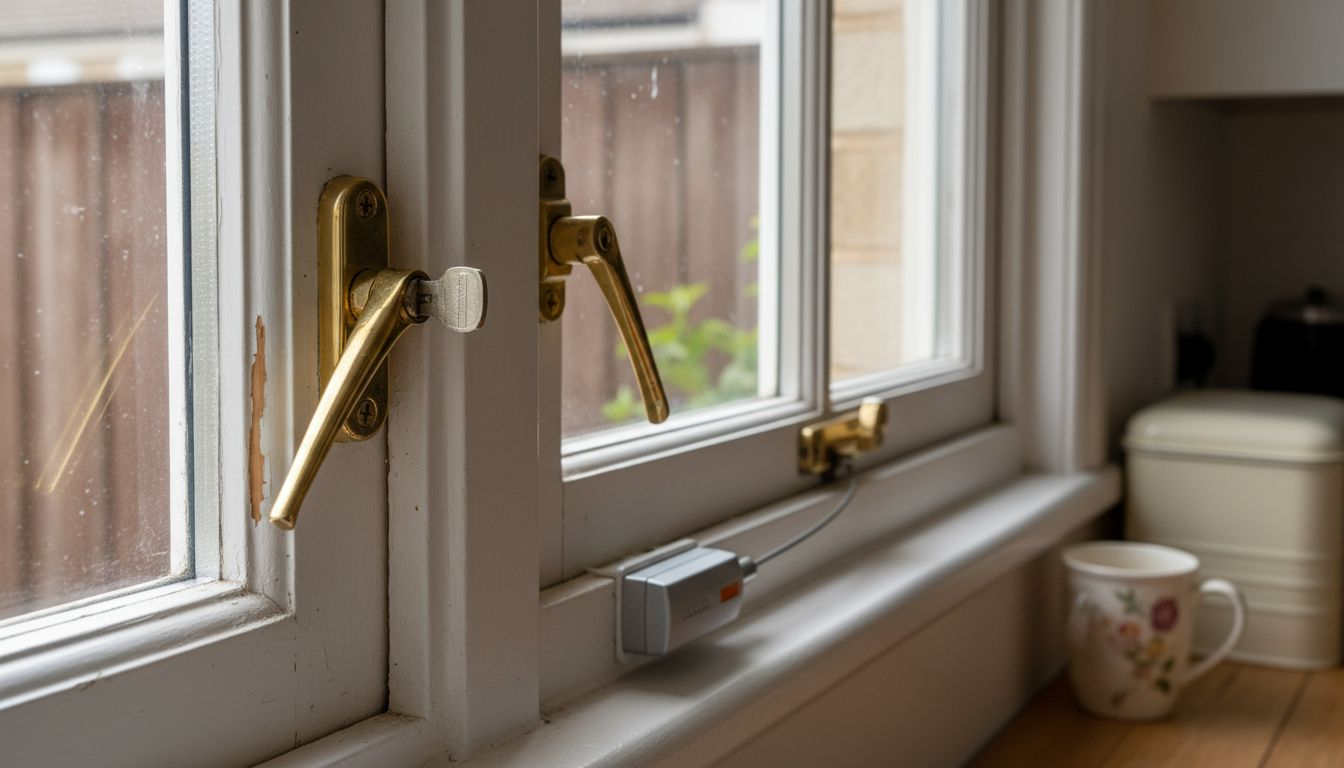
Window restrictors represent another crucial security feature, particularly for households with children or those seeking controlled ventilation. These devices allow windows to open only partially, preventing full access while still enabling air circulation. Snaplocks provide a simple, cost-effective solution for homeowners seeking basic security upgrades, offering a straightforward mechanism that can be retrofitted to existing window frames without significant structural modifications.
Pro tip: Consult a professional locksmith to assess your specific window types and recommend the most appropriate lock mechanisms tailored to your home’s unique security requirements.
Here is a summary comparing key types of window locks commonly used in UK homes:
| Lock Type | Primary Benefit | Ideal For |
|---|---|---|
| Locking Handle | Strong security, integrated key | Casement/uPVC windows |
| Staylock | Discreet, keeps the window ajar | Traditional timber windows |
| Sash Stop | Prevents sliding, extra barrier | Sash windows |
| Window Restrictor | Child safety, controlled airflow | Multi-storey properties |
| Snaplock | Quick fit, budget-friendly | Retrofit and rented properties |
Insurance Standards and Legal Requirements for Window Locks
Homeowners in the United Kingdom must navigate a complex landscape of security regulations when selecting window locks. Government building regulations specifically outline stringent requirements designed to protect residential properties from unauthorised access, with Approved Document Q serving as the primary legal framework for window security standards.
Insurance companies have established precise specifications for window lock mechanisms, typically requiring locks that meet British Standard (BS) 3621 or PAS 24 accreditation. These standards mandate robust locking systems, particularly for ground-floor and easily accessible windows. Key requirements include key-operated locks, multi-point locking mechanisms, and hardware that can effectively resist forced entry attempts. Failure to comply with these standards can potentially invalidate home insurance policies in the event of a break-in.
The legal landscape surrounding window security is not just about preventing theft, but also about creating a comprehensive approach to home protection. New residential constructions must integrate windows with security features that can resist physical attacks, with specific testing protocols measuring resistance to various intrusion methods. This holistic approach ensures that window locks are not merely decorative additions, but critical components of a home’s overall security infrastructure.
Pro tip: Regularly consult with your insurance provider to confirm that your current window locks meet their specific security requirements and maintain your policy’s validity.
Comparing Window Lock Security and Functionality
Window lock security involves a complex interplay of design, materials, and mechanical engineering that goes far beyond simple access prevention. National Physical Security Assessment guidelines reveal that effective window protection depends on multiple interconnected factors, including the intricate relationship between locking mechanisms, window materials, and overall structural integrity.
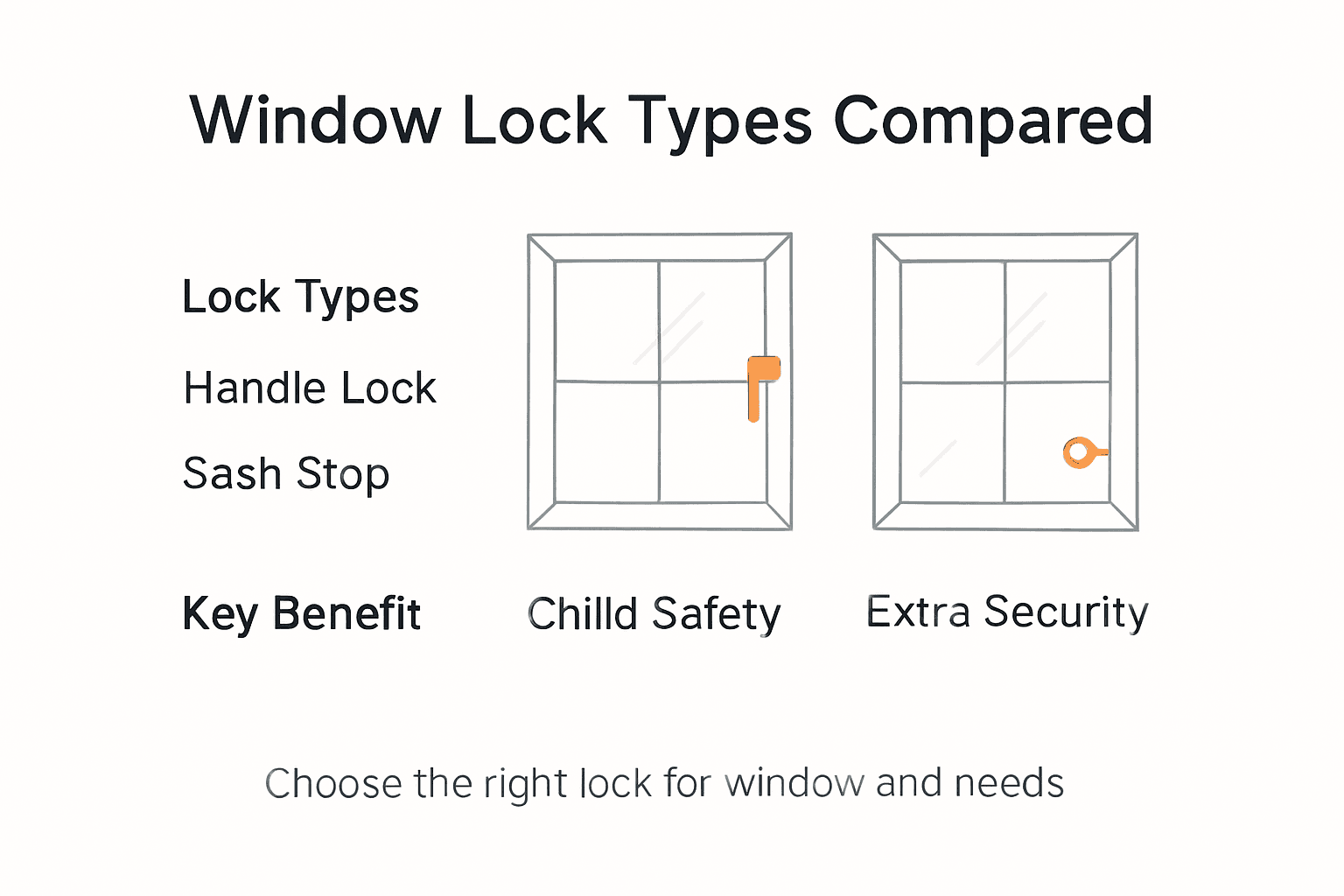
The functionality of window locks varies significantly across different designs, with multi-point locking systems representing the gold standard for residential security. These advanced mechanisms distribute force resistance across multiple points, making them substantially more difficult to compromise compared to traditional single-point locks. Locking systems can range from basic push-button mechanisms to sophisticated key-operated designs that integrate seamlessly with laminated glazing and reinforced window frames, creating a comprehensive security solution.
Material selection plays a crucial role in determining a window lock’s overall performance and durability. Aluminium and uPVC window frames offer different security characteristics, with modern designs incorporating hardened steel locking points and anti-lift mechanisms. The most effective window locks combine robust mechanical design with smart engineering principles, ensuring that they not only prevent unauthorised entry but also withstand significant physical stress without compromising the window’s structural integrity.
Pro tip: Invest in window locks that provide multiple locking points and are professionally installed, as this approach offers the most comprehensive protection against potential intrusions.
Cost, Maintenance, and Common Mistakes to Avoid
Locksmith service costs for window lock maintenance and replacement can vary significantly across the United Kingdom, typically ranging from £40 to £120 depending on the complexity of the lock mechanism and specific service required. Understanding these potential expenses helps homeowners budget effectively for essential security upgrades and routine maintenance, ensuring their window locks remain functional and reliable.
Routine maintenance is crucial for preserving window lock performance and longevity. Proper lubrication using graphite powder prevents mechanical jamming and reduces wear, while regular inspection helps identify potential vulnerabilities before they become serious security risks. Homeowners should avoid common mistakes such as using inappropriate lubricants like WD-40, which can attract dirt and potentially damage intricate lock mechanisms, or attempting complex repairs without professional expertise.
The financial investment in quality window locks extends beyond initial purchase, encompassing long-term security and potential insurance benefits. Professional locksmiths recommend annual maintenance checks to ensure locks meet current security standards, potentially preventing costly break-ins and maintaining home insurance validity. Strategic investments in high-quality locks with robust multi-point mechanisms can offer superior protection compared to cheaper alternatives, ultimately providing better value for money.
Pro tip: Schedule an annual professional window lock inspection to catch potential issues early and maintain optimal home security performance.
The following table outlines common maintenance actions, their purposes, and tips for optimal window lock performance:
| Task | Purpose | Maintenance Tip |
|---|---|---|
| Lubrication | Ensures smooth operation | Use graphite powder, not oil sprays |
| Annual Inspection | Detects wear or damage early | Hire a professional locksmith |
| Cleaning | Prevents dirt build-up | Wipe with a dry, lint-free cloth |
| Replacement | Maintains security standards | Change locks showing any faults |
Secure Your Home with Expert Window Lock Solutions from AHLP Locksmiths
Understanding the different types of window locks and their role in home security is essential to protect your property from unauthorised entry. The challenges highlighted in the article, such as selecting the right locks for casement, sash, or sliding windows and meeting insurance standards, can be overwhelming. If you want to avoid common mistakes like using inadequate locks or neglecting regular maintenance, professional advice and installation are key to ensuring your peace of mind.
At AHLP Locksmiths, we specialise in high-quality window lock installations that comply with British Standards and insurance requirements. Our trusted Locksmith Services cover everything from secure locking handles and multi-point mechanisms to burglary repairs and upgrades. As a local, family-run business, we prioritise your home’s safety with careful non-destructive methods and transparent pricing.
Don’t leave your home vulnerable to break-ins or insurance issues. Take control of your window security today with help from our experienced team. Contact Local Locksmith professionals now for tailored solutions to keep your windows protected. Visit https://ahlp.co.uk/contact/ to book your consultation or emergency service and secure your home with confidence.
Frequently Asked Questions
What types of window locks are commonly used in the UK?
In the UK, common window lock types include locking handles, staylocks, sash stops, window restrictors, and snaplocks, each offering unique benefits tailored to different window styles and security needs.
How do I know which window lock is best for my home?
Choosing the right window lock depends on your specific window type (casement, sash, sliding), material (uPVC, timber), and security requirements. Consulting with a professional locksmith can help you identify the most suitable locking mechanisms for your property.
What are the British Standard requirements for window locks?
British Standards typically require window locks to meet specifications such as BS 3621 or PAS 24 accreditation, ensuring robust protection against forced entry, particularly for ground-floor and accessible windows.
How can I maintain my window locks effectively?
To maintain your window locks, perform routine inspections for wear and damage, use graphite powder for lubrication instead of oil sprays, and schedule annual professional check-ups to ensure they meet safety standards.