

Many homeowners in Bristol and South Gloucestershire only realise the real cost of insecurity after facing an insurance issue or a break-in. Modern property regulations across the United Kingdom make lock compliance a legal necessity for both safety and reliable insurance coverage. This guide reveals how understanding the right British Standards, selecting certified hardware, and keeping up with current requirements can protect your property and secure your investment.
Table of Contents
- What Lock Compliance Means In The UK
- Key Standards And Insurance Requirements
- Types Of Locks And Compliance Levels
- Common Mistakes And Risk Of Non-Compliance
- Practical Steps For Meeting Compliance
Key Takeaways
| Point | Details |
|---|---|
| Lock Compliance is Mandatory | New residential properties in the UK must meet strict security regulations to prevent unauthorised entry. |
| British Standard Certification is Key | Locks must comply with British Standards, particularly BS3621, to ensure insurance validity and protection. |
| Avoid Common Compliance Mistakes | Homeowners should regularly check locks for certification to prevent insurance claim issues. |
| Proactive Maintenance is Essential | Regular audits and updates of locking mechanisms help maintain compliance and enhance security. |
What Lock Compliance Means in the UK
Lock compliance in the United Kingdom represents a critical legal framework designed to protect homeowners and residents from potential security breaches. Under building regulations for security, new residential properties must meet stringent standards that ensure doors, windows, and associated hardware can effectively resist unauthorised entry.
The core objective of lock compliance involves implementing security measures that go beyond basic installation. These regulations mandate specific requirements for residential properties, including:
- Installation of locks tested to British Standard BS3621
- Use of multi-point locking mechanisms on external doors
- Ensuring window locks meet specific security ratings
- Implementing hardware that provides demonstrable resistance against forced entry
Compliance is not merely a recommendation but a legal obligation for new constructions and significant property renovations. Insurance providers often require homeowners to have compliant security systems, which means installing locks that meet official security standards. Failure to do so can result in invalidated insurance claims and potential legal complications.
British Standard certification plays a pivotal role in lock compliance. These standards specify precise technical requirements for locks, ensuring they can withstand various tampering attempts and provide genuine security protection.
Pro tip: Always consult a certified locksmith who understands current UK building regulations when upgrading or replacing your home’s locks.
Key Standards and Insurance Requirements
In the realm of home security, insurance-approved locks represent a critical intersection between safety and financial protection. British Standard lock certification plays a pivotal role in determining whether a homeowner’s security measures will be recognised by insurance providers.
The most prominent standards that insurers rely on include:
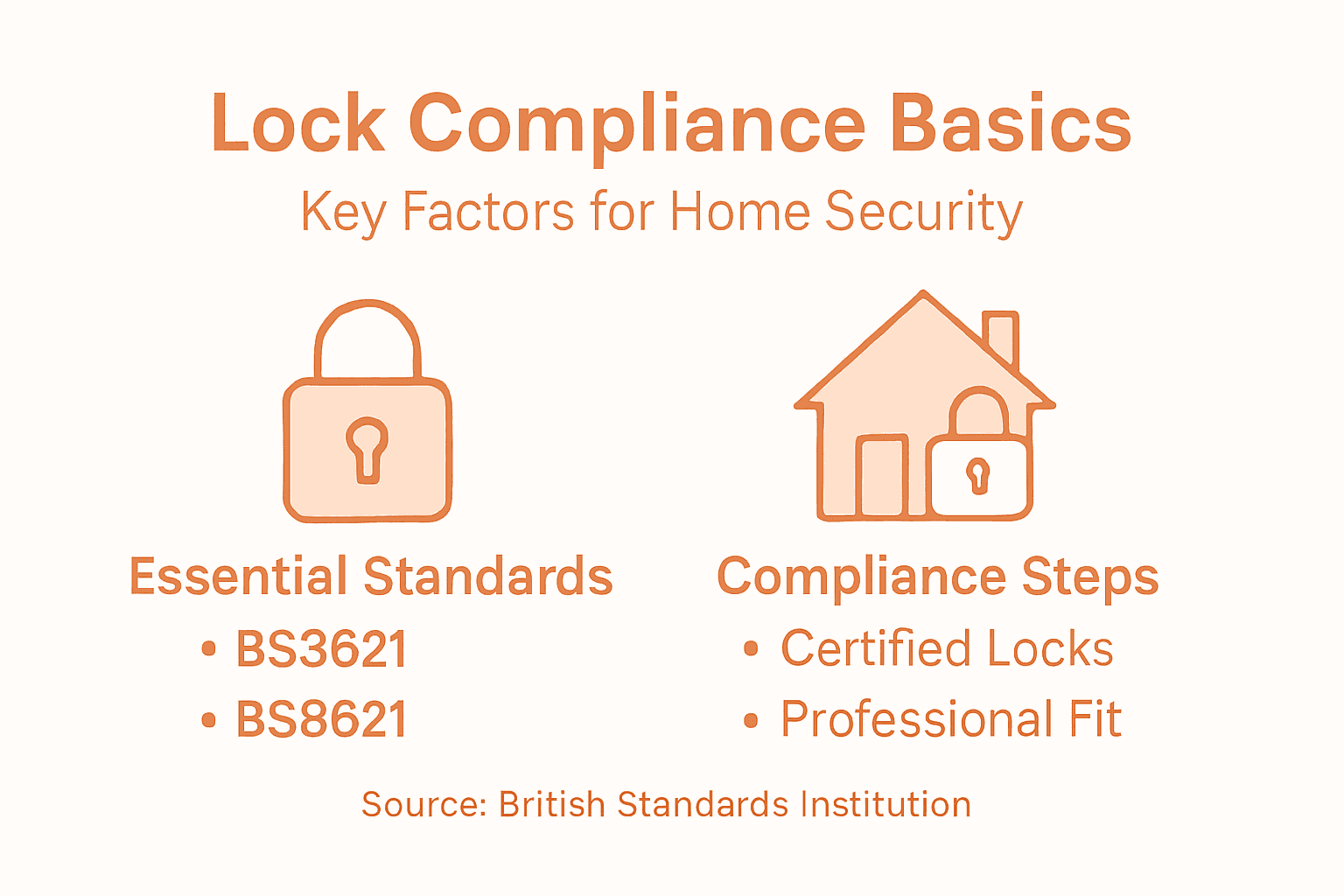
- BS3621: The gold standard for residential lock security
- BS8621: Covers escape locks for emergency situations
- BS10621: Addresses specialised lock requirements
Under these standards, insurance companies typically mandate specific lock characteristics to validate home insurance policies. Five-lever mortice deadlocks meeting BS3621 are frequently required, with multipoint locking systems strongly recommended for external doors.
Insurance compliance goes beyond mere installation. Locks must demonstrate robust resistance against common forced-entry techniques, including picking, drilling, and physical manipulation. Providers scrutinise these security measures carefully, and non-compliant properties may face challenges in claim settlements or potentially higher premium rates.
Investing in British Standard certified locks is not just about security – it’s about protecting your financial interests and ensuring comprehensive insurance coverage.
Homeowners should understand that lock standards provide comprehensive testing which evaluates multiple dimensions of security, from material durability to mechanical resistance. These rigorous assessments ensure that certified locks offer genuine protection against sophisticated burglary attempts.
Here’s a summary of the main British lock standards relevant to insurance and their unique features:
| Standard | Main Purpose | Typical Use Case |
|---|---|---|
| BS3621 | High-security for external doors | Front and rear doors in homes |
| BS8621 | Emergency exit capability | Flats, emergency escape routes |
| BS10621 | Controlled access, night security | Multi-occupancy buildings |
Pro tip: Request a professional security assessment to confirm your locks meet current British Standard requirements and insurance guidelines.
Types of Locks and Compliance Levels
Navigating the complex world of lock compliance requires understanding the various types of locks and their specific security ratings. Different lock types offer unique security features that impact both insurance eligibility and overall home protection.
The primary lock types relevant to compliance include:
- Mortice Deadlocks: Five-lever locks meeting BS3621 standard
- Cylinder Locks: Commonly used in UPVC doors with multipoint mechanisms
- Rim Locks: Typically used for additional security on external doors
- Smart Locks: Emerging technology with varying compliance requirements
Compliance levels are determined by several critical factors, including the lock’s resistance to picking, drilling, and forced entry. Insurance providers typically categorise locks into three primary compliance tiers:
- Basic Compliance: Meets minimum security standards
- Enhanced Compliance: Provides additional security features
- Premium Compliance: Offers advanced protection mechanisms
Not all locks are created equal – your choice of lock directly impacts your home’s security rating and insurance coverage.
Homeowners must carefully consider the specific requirements for different entry points. External doors require more robust locking mechanisms compared to internal doors, with insurance providers placing particular emphasis on front and rear entrance security.
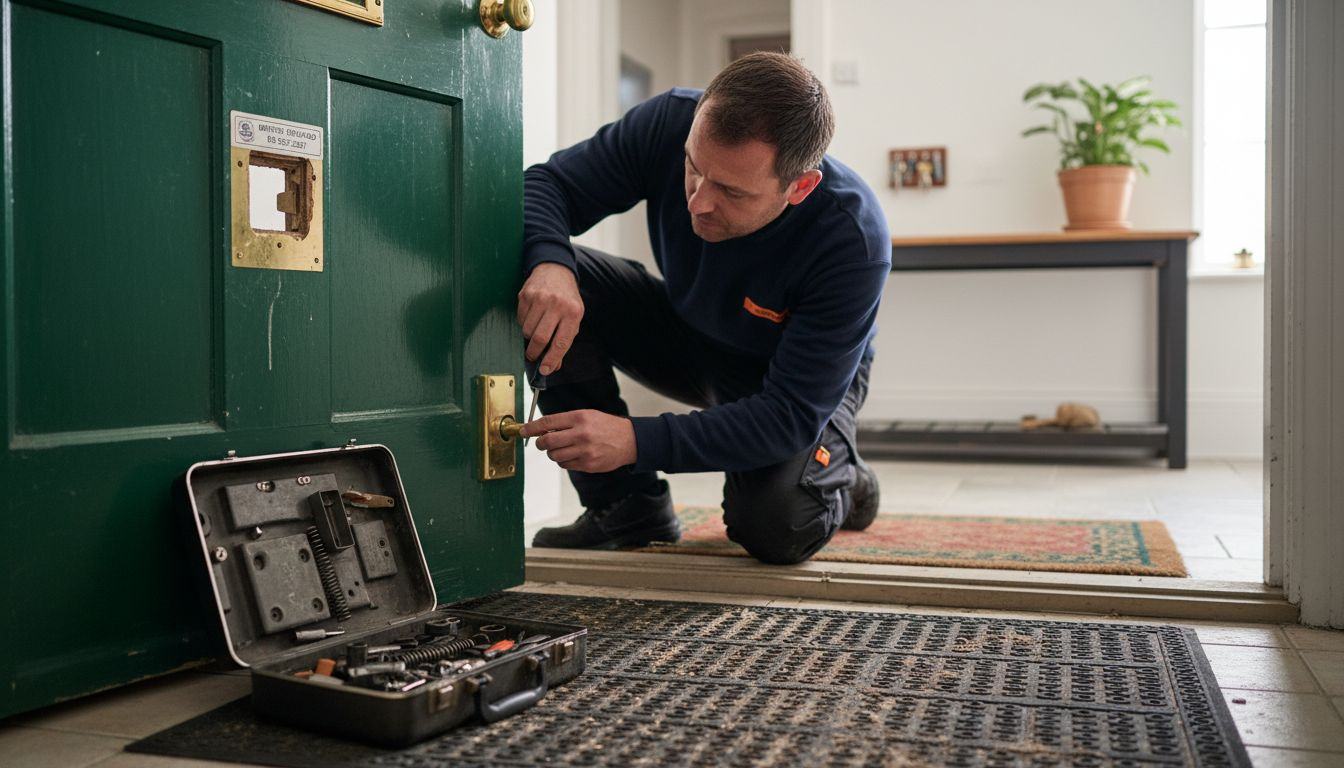
Pro tip: Consult a professional locksmith to assess your current locks and identify any compliance gaps that could affect your insurance coverage.
Common Mistakes and Risk of Non-Compliance
Homeowners often underestimate the potential consequences of lock non-compliance, unaware that seemingly minor oversights can lead to significant financial and security risks. Critical security management mistakes can compromise both insurance coverage and property protection.
Common lock compliance mistakes include:
- Installing uncertified or non-standard locks
- Failing to update locks on older properties
- Neglecting manufacturer-recommended maintenance
- Using damaged or worn locking mechanisms
- Ignoring specific insurance provider requirements
The risks associated with non-compliance extend far beyond simple security concerns. Insurance providers may completely invalidate claims if locks do not meet the required British Standards, leaving homeowners financially vulnerable in the event of a burglary.
Non-compliance is not just a security risk – it’s a potential financial disaster waiting to happen.
Specific non-compliance risks encompass multiple critical areas:
- Financial Risk: Potential loss of insurance coverage
- Security Vulnerability: Increased likelihood of successful break-ins
- Legal Implications: Potential liability for inadequate property protection
- Replacement Costs: Unexpected expenses for retrofitting compliant locks
Homeowners should regularly review their lock systems, ensuring they meet current security standards and insurance requirements. Professional security assessments can identify potential compliance gaps before they become costly problems.
This table highlights common lock compliance mistakes and the associated risks homeowners should be aware of:
| Mistake | Potential Risk | Impact on Homeowner |
|---|---|---|
| Using outdated or uncertified locks | Insurance claims may be rejected | Financial and legal exposure |
| Skipping regular lock maintenance | Increased chance of lock failure | Greater burglary risk |
| Not matching locks to insurer’s terms | Policy could become void | Lack of financial coverage |
Pro tip: Schedule an annual lock compliance review with a certified locksmith to maintain optimal home security and insurance protection.
Practical Steps for Meeting Compliance
Navigating lock compliance requires a strategic approach that combines professional expertise and proactive management. Building regulation requirements demand careful attention to detail and a comprehensive understanding of security standards.
Key practical steps for achieving lock compliance include:
- Conduct a professional security audit of existing locks
- Verify lock certifications against British Standards (BS3621)
- Replace outdated or non-compliant locking mechanisms
- Document all lock installations and replacements
- Maintain a comprehensive key management system
Implementing these steps systematically ensures homeowners meet the necessary security requirements. Each entry point requires specific consideration, with external doors demanding the most rigorous compliance standards.
Compliance is not a one-time event, but an ongoing commitment to protecting your property and maintaining insurance validity.
Homeowners should prioritise locks that meet multiple compliance criteria:
- Certification: British Standard BS3621 approval
- Installation: Professional fitting by qualified locksmiths
- Maintenance: Regular inspections and updates
- Documentation: Keeping precise records of lock specifications
Understanding the nuanced requirements of different door and window types is crucial. UPVC doors, wooden frames, and modern composite materials each have unique compliance considerations that demand specialised approaches.
Pro tip: Request a comprehensive compliance assessment that provides a detailed report of your current lock security status and recommended upgrades.
Secure Your Home with Fully Compliant Locks from AHLP Locksmiths
Lock compliance is essential to protect your home from security breaches and to ensure your insurance remains valid. If you are concerned about meeting British Standard requirements such as BS3621 or need help upgrading outdated locks, AHLP Locksmiths offers expert solutions tailored to your needs. We understand the importance of installing insurance-approved locks and provide professional assessments to identify any compliance gaps.
Take control of your home security today with our reliable locksmith services. Whether you require a full security upgrade or just want peace of mind that your locks meet current legal and insurance standards, our skilled local team is here to help. Don’t leave your property vulnerable. Contact us now on 07700 100146 to schedule an appointment and learn how our trusted local locksmiths can keep your home safe and fully compliant.
Frequently Asked Questions
What is lock compliance?
Lock compliance refers to the legal standards that residential properties in the UK must meet regarding the installation of locks to ensure adequate security against unauthorised entry.
Why is lock compliance important for home insurance?
Lock compliance is crucial for home insurance because insurance providers often require specific lock certifications, such as British Standard BS3621, to validate policies and claims. Non-compliance may result in claims being rejected.
What types of locks meet compliance standards?
Types of locks that meet compliance standards include five-lever mortice deadlocks (BS3621), multipoint locking mechanisms, and emergency exit locks (BS8621). Each type offers varying levels of security appropriate for different entry points.
What are the risks of not adhering to lock compliance?
Not adhering to lock compliance can lead to significant risks, including invalidated insurance claims, increased vulnerability to break-ins, and potential legal consequences for inadequate property protection.