

Finding the right strategy to secure your Bristol or Gloucester home goes beyond ordinary locks as criminals increasingly use lock snapping to bypass traditional defences. Homeowners risk invalidating insurance and facing break-ins if their euro cylinder locks are vulnerable to destructive attacks. This guide clarifies common myths about anti-snap locks and reveals how choosing certified protection can fortify your property while keeping insurance requirements in check.
Table of Contents
- Anti-snap Locks Explained And Common Myths
- Lock Types And How Snapping Attacks Occur
- Standards, Insurance And UK Requirements
- Comparing Anti-snap Locks Vs Standard Options
- Cost, Installation And Common Mistakes To Avoid
Key Takeaways
| Point | Details |
|---|---|
| Understanding Lock Vulnerabilities | Homeowners should be aware that traditional euro cylinder locks are susceptible to lock snapping, making security upgrades essential. |
| Importance of Anti-snap Locks | Anti-snap locks are specifically designed to resist break-in attempts and should meet British Standard BS 3621 for optimal security. |
| Common Misconceptions | Many believe anti-snap locks are entirely burglar-proof or require extensive door replacements, which are incorrect; they are significantly more secure yet should be chosen carefully. |
| Professional Installation Recommended | To ensure effectiveness, professional installation is advised, as improper fitting can compromise security and void warranties. |
Anti-snap locks explained and common myths
Homeowners in Bristol face increasing risks from burglars who specialise in lock snapping, a sophisticated technique that exploits traditional cylinder lock vulnerabilities. Understanding anti-snap locks becomes crucial in protecting your property from these calculated break-in attempts.
Lock snapping occurs when criminals apply precise force to standard euro cylinder locks, causing them to break and allow immediate entry. Traditional locks often have weak points that make them surprisingly easy to compromise. Trusted security forums discuss these vulnerabilities and highlight the critical need for upgraded security mechanisms.
Anti-snap locks are specifically engineered to resist these breaking techniques through several innovative design features:
- Reinforced internal mechanisms that prevent complete cylinder separation
- Sacrificial segments that break cleanly without allowing full lock manipulation
- Hardened steel pins and precision engineering to resist drilling
- Integrated security features that trigger visual or audible alerts when tampering occurs
Despite their advanced design, several myths persist about anti-snap locks that homeowners should understand. Many believe these locks are completely impenetrable, which is not accurate. While significantly more secure, no lock provides absolute guaranteed protection. Professional criminals with advanced tools might still attempt sophisticated bypass techniques.
Common misconceptions about anti-snap locks include:
- They are 100% burglar-proof (incorrect)
- They are prohibitively expensive (most are reasonably priced)
- Installation requires complete door replacement (many retrofit easily)
- All anti-snap locks offer identical protection levels (quality varies dramatically)
Pro tip: When selecting an anti-snap lock, always verify it meets British Standard BS 3621 certification, which guarantees a minimum level of security testing and performance.
Lock types and how snapping attacks occur
Understanding the various types of locks and their potential vulnerabilities is crucial for Bristol homeowners seeking comprehensive security. Lock mechanisms evolve continuously to counter increasingly sophisticated burglary techniques, with euro cylinder locks being particularly prevalent in residential properties.
Traditional euro cylinder locks typically feature a simple pin tumbler mechanism that can be manipulated through precise external force. These locks are commonly found in UPVC doors, making them a prime target for criminals specialising in lock snapping. The attack process involves applying strategic pressure to the lock’s exposed cylinder, causing it to fracture and allowing direct access to the internal mechanism.
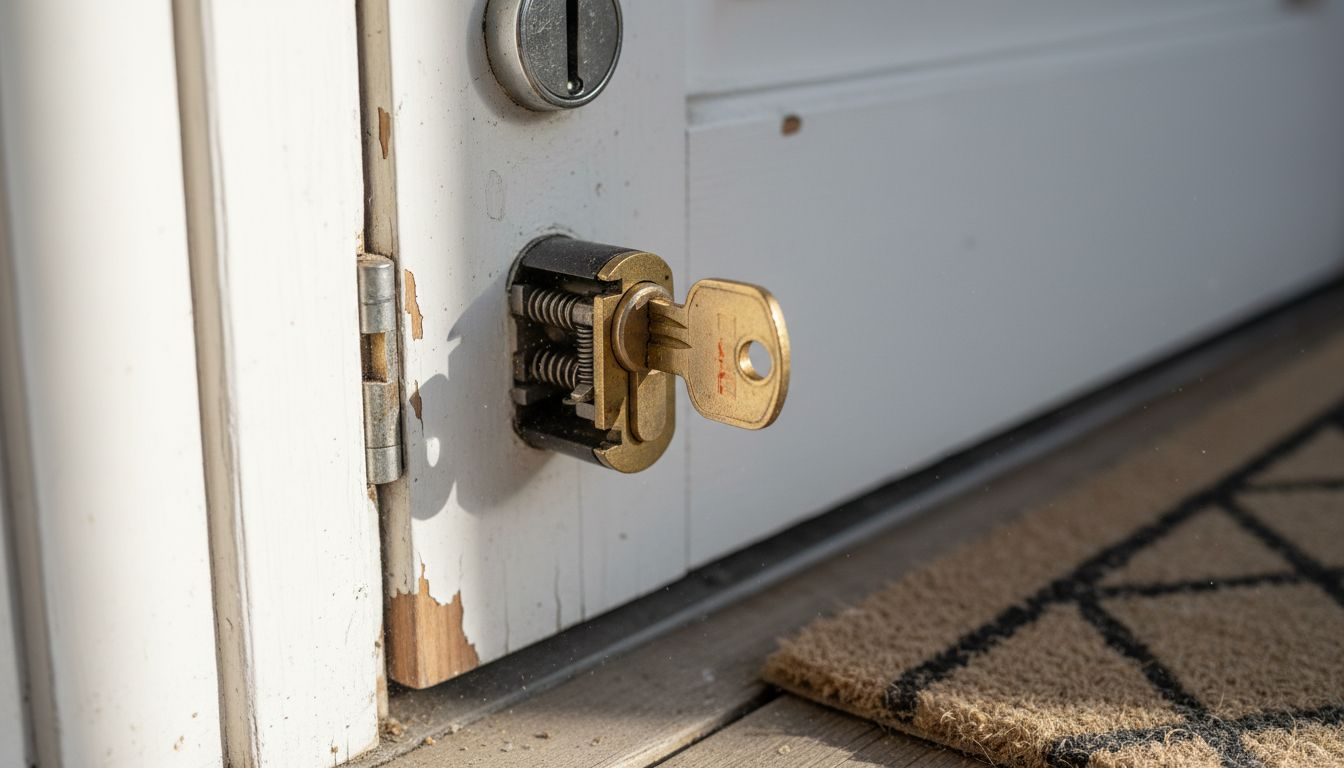
Different lock types present varying levels of vulnerability:
Here’s a concise overview of lock types and their typical security applications:
| Lock Type | Common Location | Typical Security Level |
|---|---|---|
| Pin tumbler | Internal doors | Low protection |
| Euro cylinder | UPVC external doors | Moderate risk |
| Mortice | Wooden front doors | Higher reliability |
| Smart digital | Modern entry points | Advanced functionality |
| Anti-snap cylinder | Security upgrades | Superior resistance |
- Pin tumbler locks: Most basic design, easiest to compromise
- Euro cylinder locks: Widely used, moderate vulnerability
- Mortice locks: More complex internal mechanisms
- Smart digital locks: Advanced electronic protection
- Anti-snap cylinder locks: Specifically engineered to resist breaking attempts
Criminals employ multiple techniques to execute successful lock snapping attacks, including:
- Applying precise rotational force to weaken the cylinder
- Using specialist tools to create controlled fracture points
- Exploiting manufacturing weaknesses in standard lock designs
- Targeting specific points of mechanical stress
Key vulnerabilities in traditional locks include:
- Exposed cylinder extending beyond the door handle
- Weak metallurgy in lock construction
- Predictable internal mechanism designs
- Limited resistance to targeted mechanical stress
Lock snapping can compromise a property’s security in less than 60 seconds, making prevention critical for homeowners.
Pro tip: Invest in British Standard BS 3621 certified locks, which undergo rigorous testing to demonstrate superior resistance against manipulation techniques.
Standards, insurance and UK requirements
Homeowners in Bristol and across the UK face increasingly stringent security requirements that directly impact their property insurance and overall home protection. Lock compliance plays a critical role in meeting these essential standards, with specific guidelines governing residential security mechanisms.
The British Standard BS 3621 represents the cornerstone of lock security requirements for most home insurance policies. This comprehensive standard specifies precise technical specifications that locks must meet to be considered insurance-approved. Insurers typically mandate that external doors feature locks conforming to these rigorous standards, effectively reducing the risk of potential break-ins and subsequent claims.
Key insurance and security standards include:
- Minimum 5-lever mortice deadlock requirements
- Mandatory use of British Standard approved locks
- Specific testing protocols for lock resistance
- Comprehensive performance evaluation criteria
- Compliance with home insurance policy stipulations
Insurance implications of lock standards involve:
- Potential policy invalidation if non-compliant locks are installed
- Higher insurance premiums for properties with substandard security
- Reduced likelihood of successful insurance claims after burglary
- Mandatory security upgrades to maintain coverage
Approximately 70% of home insurance providers require British Standard compliant locks as a fundamental condition of their policies.
The Sold Secure and Master Locksmith Association (MLA) certifications further complement these standards, providing additional layers of verification for lock quality and performance. These independent assessment frameworks help homeowners and insurers establish clear benchmarks for residential security.
Below is a quick reference highlighting key UK lock certifications and their role:
| Certification | Purpose | Common Benefit |
|---|---|---|
| BS 3621 | British lock security standard | Insurance approval |
| Sold Secure | Independent lock quality testing | Enhanced burglary resistance |
| MLA | Master Locksmith certification | Trusted professional fitting |
Pro tip: Always request a security certificate from your locksmith when installing new locks, as this documentation can be crucial for proving compliance with insurance requirements.
Comparing anti-snap locks vs standard options
Homeowners seeking enhanced security must understand the fundamental differences between standard and anti-snap lock technologies. Traditional locks represent a basic approach to home security, while anti-snap locks incorporate sophisticated engineering specifically designed to counter modern burglary techniques.
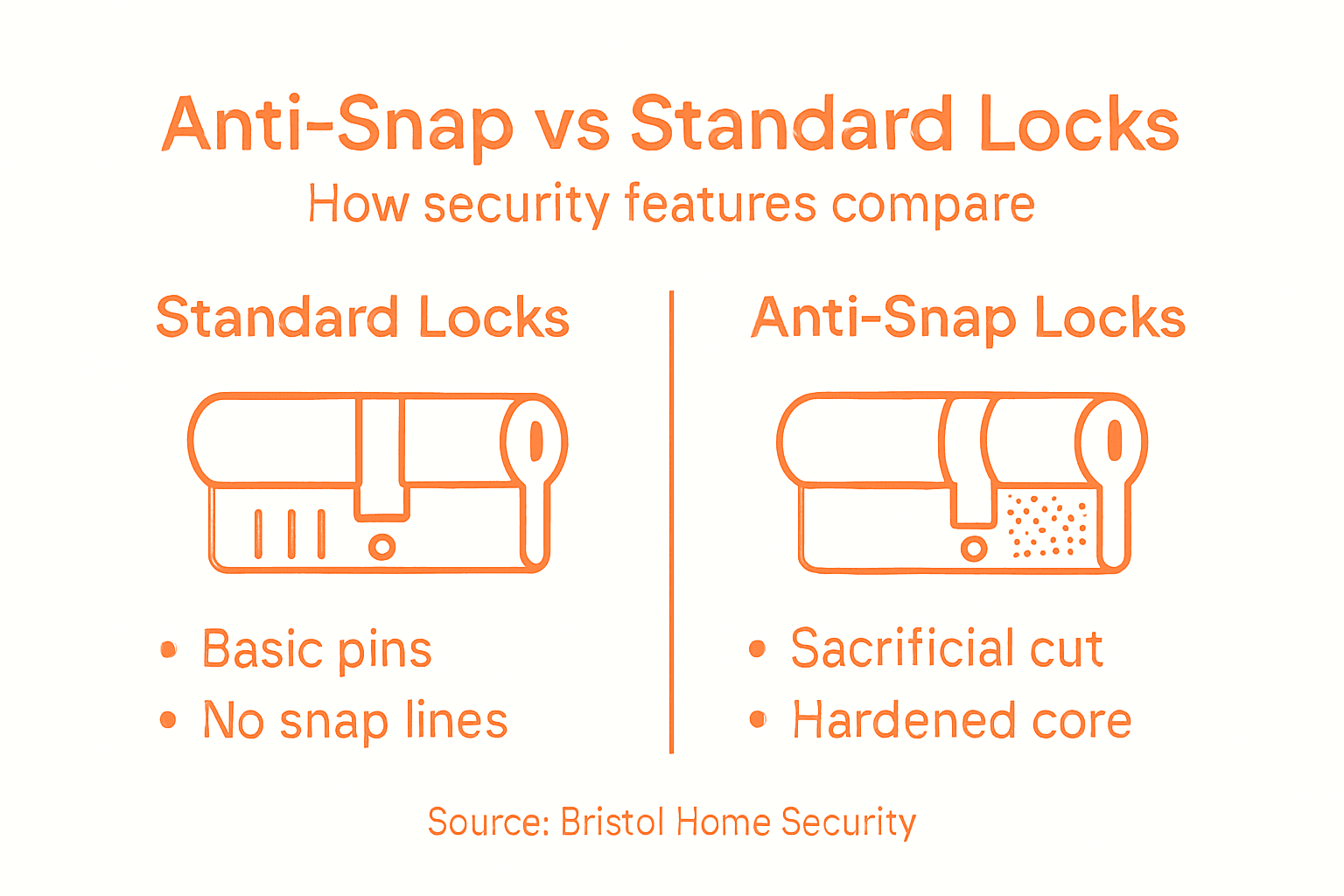
Standard euro cylinder locks typically feature simple pin tumbler mechanisms with predictable vulnerabilities. These traditional locks can be compromised within seconds by skilled criminals using precise mechanical techniques. Anti-snap locks, conversely, are engineered with multiple defensive features that actively resist manipulation and breaking attempts.
Key differences between standard and anti-snap locks include:
Mechanical Resistance:
- Standard locks: Easily fractured
- Anti-snap locks: Reinforced breaking points
Security Rating:
- Standard locks: Limited protection
- Anti-snap locks: High-security certification
Vulnerability to Attacks:
- Standard locks: Multiple entry points
- Anti-snap locks: Designed to prevent complete cylinder removal
Performance comparison highlights:
- Break resistance: Anti-snap locks can withstand significantly more mechanical stress
- Insurance compliance: Anti-snap locks often meet stricter security standards
- Complexity of bypass: Much harder to manipulate or snap
- Overall security rating: Substantially higher protection level
Anti-snap locks can reduce successful break-in attempts by up to 80% compared to standard cylinder mechanisms.
Modern anti-snap locks incorporate additional protective features such as sacrificial segments, hardened steel pins, and integrated security mechanisms that actively resist sophisticated attack methods. These advanced design elements transform lock security from a passive to an active defensive strategy.
Pro tip: When upgrading locks, always request independent certification documentation to verify the true security rating of your chosen lock mechanism.
Cost, installation and common mistakes to avoid
Investing in anti-snap locks requires careful consideration of both financial investment and proper installation techniques. Lock upgrade strategies can significantly impact the overall effectiveness of your home security approach, making informed decisions crucial for Bristol homeowners.
The cost of anti-snap locks varies depending on quality, brand, and specific security features. Typical pricing ranges from £50 to £250 for residential-grade locks, with professional-grade options reaching up to £350. While this might seem expensive, the investment represents a fraction of potential loss from a successful burglary.
Installation cost breakdown:
- Budget lock options: £50 – £100
- Mid-range security locks: £100 – £200
- High-end security locks: £200 – £350
- Professional installation: £75 – £150 additional
Common installation mistakes homeowners frequently make:
- Attempting DIY installation without proper knowledge
- Purchasing incompatible locks for existing door mechanisms
- Ignoring manufacturer’s specific fitting instructions
- Failing to check lock compatibility with door material
- Overlooking precise measurement requirements
Incorrect installation can void lock warranties and compromise overall security effectiveness.
Professional locksmiths recommend a systematic approach to lock replacement, which involves:
- Comprehensive door mechanism assessment
- Precise measurements of existing lock housing
- Selection of compatible anti-snap lock
- Professional, non-destructive installation
- Thorough testing and adjustment
Additional considerations include ensuring the new lock meets British Standard BS 3621 requirements and matches your specific insurance policy guidelines. Some insurers offer premium reductions for professionally installed, high-security locks.
Pro tip: Always request a written installation certificate from your locksmith, which can serve as proof of professional installation for insurance purposes.
Secure Your Bristol Home with Expert Anti-Snap Lock Upgrades
The increasing threat of lock snapping means Bristol homeowners must prioritise advanced security solutions to protect their properties and meet insurance requirements. If you are concerned about the vulnerabilities of traditional euro cylinder locks and want durable, British Standard BS 3621 certified protection, AHLP Locksmiths offers professional anti-snap lock installations tailored to your door type and security needs. Our trusted team understands how proper fitting and compatible high-security locks can dramatically reduce break-in risks.
Ready to upgrade your home security with reliable, insurance-approved locks? Discover how our Local Locksmith – Auto Home Lock Pro services deliver careful and efficient installation with transparent pricing and no call-out fees. Protect your loved ones and belongings now by contacting us to schedule a security consultation or emergency lock upgrade. Don’t wait until it’s too late. Call us now on 07700 100146 to secure your property with specialists who put your safety first.
Frequently Asked Questions
What are anti-snap locks and how do they work?
Anti-snap locks are specially designed locking mechanisms that resist lock snapping, a technique burglars use to break into homes. They are engineered with reinforced internal mechanisms, sacrificial segments, and hardened materials to prevent the lock from being compromised easily.
How do I know if my lock is anti-snap?
Check for markings indicating compliance with British Standard BS 3621, which certifies the lock’s security features. Additionally, anti-snap locks usually have visible hardware characteristics, such as reinforced segments that can withstand snapping attempts.
Are anti-snap locks completely secure?
While anti-snap locks provide significantly improved security compared to standard locks, no lock is 100% secure. Criminals may still attempt sophisticated methods to bypass even the best locks, but anti-snap cylinders greatly reduce the likelihood of successful break-ins.
What are the common installation mistakes to avoid when fitting anti-snap locks?
Homeowners often make mistakes such as attempting DIY installations without proper knowledge, purchasing incompatible locks, ignoring the manufacturer’s fitting instructions, and failing to take accurate measurements. It’s recommended to engage a professional locksmith for optimal installation to ensure security and compliance.