
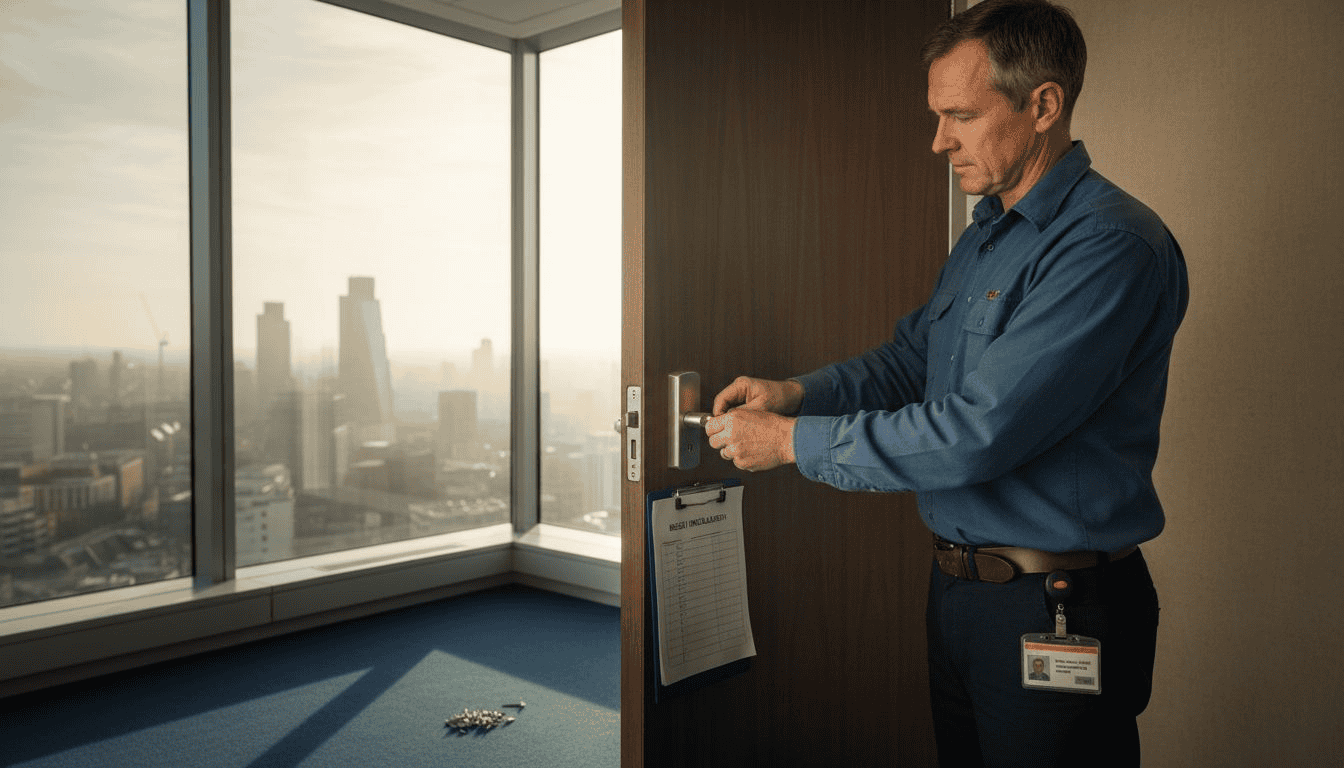
Many offices across Bristol and South Gloucestershire struggle with inadequate door security, leaving them vulnerable to break-ins and failing to meet insurance requirements. Without the right locks and proper installation, your premises remain at risk regardless of other security measures. This guide walks you through selecting British Standard approved locks, reinforcing door frames, and implementing professional installation methods that dramatically reduce forced entry attempts while ensuring full insurance compliance.
Table of Contents
- Prerequisites: What You Need Before Securing Office Doors
- Choosing The Right Locks For Office Doors
- Step-By-Step Process To Secure Your Office Doors
- Common Mistakes And Troubleshooting In Office Door Security
- Expected Results And Outcomes After Securing Office Doors
- Upgrade Your Office Door Security With AHLP Locksmiths
- FAQ
Key Takeaways
| Point | Details |
|---|---|
| BS3621 locks reduce forced entry risk | These certified locks resist lock snapping and picking attacks for minimum 3 minutes during testing. |
| Professional installation prevents failures | Expert fitting ensures proper alignment and operational integrity that DIY installations frequently miss. |
| Frame reinforcement stops 30-40% of break-ins | Strengthening door frames and strike plates complements lock security against forced entry. |
| Insurance compliance requires BS approval | Most commercial policies mandate British Standard locks to validate break-in claims. |
| Step-by-step upgrades improve security outcomes | Following systematic assessment and installation processes ensures comprehensive protection. |
Prerequisites: What You Need Before Securing Office Doors
Before selecting locks or scheduling installation, you need to understand your current setup and gather essential information. Rushing into lock purchases without proper assessment often leads to incompatible hardware and wasted investment.
First, identify your office door material accurately. UPVC, composite, and wooden doors each require different lock types and installation approaches. The wrong lock for your door material compromises security regardless of certification level.
Second, familiarise yourself with British Standard BS3621 requirements for commercial premises. Insurance companies scrutinise these specifications when processing break-in claims, making compliance non-negotiable.
Third, prepare for professional installation by researching qualified locksmiths who work with British Standard hardware. While DIY seems cost-effective initially, improper fitting leads to lock failures and insurance complications.
Fourth, inspect your door frame thoroughly before purchasing new locks. Cracks, rot, or loose fixings in frames undermine even the highest quality locks. A secure lock mounted to a weak frame provides false confidence.
Fifth, review your commercial insurance policy to understand specific lock requirements. Some insurers mandate particular certification levels or additional security features beyond basic BS3621 approval.
Essential preparation steps:
- Document current door materials and dimensions for accurate lock selection
- Photograph existing locks and frames to show locksmiths during consultations
- Obtain copies of insurance policy security requirements
- Check building lease agreements for any restrictions on lock modifications
- Budget for both locks and potential frame reinforcement work
- Schedule assessments during business hours to minimise operational disruption
Choosing the Right Locks for Office Doors
Lock selection determines your entire security foundation. The British Standards Institute BS3621:2017 certification represents the minimum acceptable standard for commercial door security in the UK, with locks engineered to resist physical attacks for at least three minutes during rigorous testing.
For UPVC and composite doors, anti-snap cylinder locks provide essential protection against the most common commercial break-in method. Standard euro cylinders snap easily under pressure, giving intruders access within seconds. Upgrading to anti-snap locks reduces this vulnerability by up to 70%.
Wooden doors typically require mortice deadlocks that integrate into the door structure rather than surface-mounted options. These locks offer superior resistance to drilling and forced entry compared to rim locks. The five-lever mechanism inside BS3621 mortice locks prevents picking attempts that compromise cheaper alternatives.
Different lock types serve specific security needs. Mortice locks embed within door thickness, providing hidden security mechanisms. Rim locks mount on door surfaces, offering easier installation but less concealment. Cylinder locks work within multipoint locking systems common in modern UPVC installations.
Insurance validation depends entirely on proper certification. During break-in claims, insurers inspect locks for BS3621 markings and professional installation evidence. Non-approved locks frequently result in claim denials regardless of loss value. Compare business door lock options to understand which certifications your policy requires.
Critical lock selection factors:
- Verify visible BS3621 kitemark stamps on lock bodies and packaging
- Choose anti-snap cylinders rated TS007 3-star for maximum protection
- Select weather-resistant finishes for external doors exposed to elements
- Match lock size precisely to door thickness and existing preparations
- Consider keyed-alike options for simplified key management across multiple doors
Pro tip: Request certification documentation from suppliers before purchasing. Counterfeit locks bearing fake BS3621 markings circulate in some markets, and these forgeries fail during insurance inspections.
Step-by-Step Process to Secure Your Office Doors
Systematic security upgrades require methodical execution across assessment, selection, reinforcement, and installation phases. Skipping steps or rushing installations creates vulnerabilities that dedicated intruders exploit.
Conduct comprehensive security assessment: Examine every access point including main entries, fire exits, and internal office doors. Check frame integrity, hinge condition, and existing lock functionality. Document weaknesses with photographs for locksmith consultations.
Select appropriate BS3621 certified locks: Match lock types to door materials using guidance from the previous section. Verify certification authenticity and confirm insurance policy compliance. Purchase from reputable suppliers who provide proper documentation.
Reinforce door frames and strike plates: Install heavy-duty strike plates with 75mm screws that penetrate wall studs, not just door frames. Replace damaged frame sections and fill gaps with solid materials. Frame strength determines whether locks withstand forced entry attempts.
Arrange professional locksmith installation: Schedule qualified technicians who specialise in commercial security. Professional fitting ensures perfect alignment, proper depth, and smooth operation. Request warranty documentation covering both parts and labor.
Test locks thoroughly post-installation: Verify smooth key operation from both sides. Check bolt extension reaches strike plates completely. Test emergency access procedures and duplicate key functionality. Address any stiffness or misalignment immediately.
Establish maintenance schedules: Plan six-month inspections and annual professional servicing. Regular maintenance identifies wear before failures occur. Keep records of all service dates and findings for insurance purposes.
| Step | Primary Objective | Key Benefit |
|---|---|---|
| Security Assessment | Identify all vulnerabilities | Prevents overlooked weak points |
| Lock Selection | Match hardware to door type | Ensures compatibility and performance |
| Frame Reinforcement | Strengthen entry resistance | Stops 30-40% of forced entry attempts |
| Professional Installation | Guarantee proper fitting | Eliminates premature failures |
| Post-Install Testing | Verify operational integrity | Confirms security effectiveness |
| Maintenance Planning | Sustain long-term performance | Extends lock lifespan 3-5 years |
Pro tip: Document the entire installation process with dated photographs showing before, during, and after conditions. This evidence proves professional installation during insurance claims and provides valuable reference for future upgrades. Review detailed locksmith tips for business owners to optimise your security strategy beyond basic lock installation.
Common Mistakes and Troubleshooting in Office Door Security
Even well-intentioned security upgrades fail when common errors compromise installation quality or lock selection. Understanding these pitfalls helps you avoid expensive mistakes and vulnerability gaps.
Using non-British Standard locks represents the most frequent and costly mistake. Budget hardware lacking proper certification fails insurance requirements and physical security testing. The modest savings on cheaper locks become irrelevant when insurers deny break-in claims worth thousands.
Door frame weakness causes nearly half of all forced entry successes regardless of lock quality. A BS3621 lock mounted to a rotted wooden frame or poorly anchored UPVC frame provides minimal actual security. Intruders bypass strong locks by attacking weak mounting points.
DIY installation attempts create multiple failure points. Misaligned bolt mechanisms, incorrect drilling depths, and loose mountings all stem from inexperienced installation. These errors cause premature lock failures and void manufacturer warranties. The initial cost savings disappear when replacement becomes necessary within months.
Poor master key system management opens security vulnerabilities in multi-office environments. When key control protocols lack rigor, unauthorised duplication and lost key tracking create access risks. Implement strict sign-out procedures and periodic key audits to maintain system integrity.
Neglecting professional security assessments before upgrades results in inappropriate solutions. What works for residential properties often fails commercial security needs. Expert evaluation identifies specific vulnerabilities your situation presents rather than applying generic solutions.
Frequent security mistakes to avoid:
- Installing surface-mounted locks when mortice options provide better concealment
- Overlooking fire safety regulations that mandate certain lock types on emergency exits
- Failing to upgrade all entry points, creating vulnerability through weakest access
- Ignoring internal office doors that protect sensitive areas and valuable equipment
- Delaying lock replacements after employee terminations or lost key incidents
- Using identical keys across all doors, eliminating security zones within premises
Expected Results and Outcomes After Securing Office Doors
Understanding realistic costs, timelines, and security improvements helps you make informed investment decisions and set appropriate expectations for upgrade projects.
Typical professional lock installation in Bristol ranges from £120 to £250 per door depending on lock complexity and door material. UPVC doors with multipoint mechanisms cost more than simple wooden door mortice locks. Installation time averages two to three hours per door including frame reinforcement and testing. These figures represent professional work using quality British Standard hardware.
Security improvements show measurable impact immediately. Anti-snap cylinder locks reduce successful break-in attempts by approximately 70% compared to standard euro cylinders. This dramatic reduction stems from eliminating the most common commercial entry method. Burglars typically abandon attempts on properly secured doors within minutes, moving to easier targets.
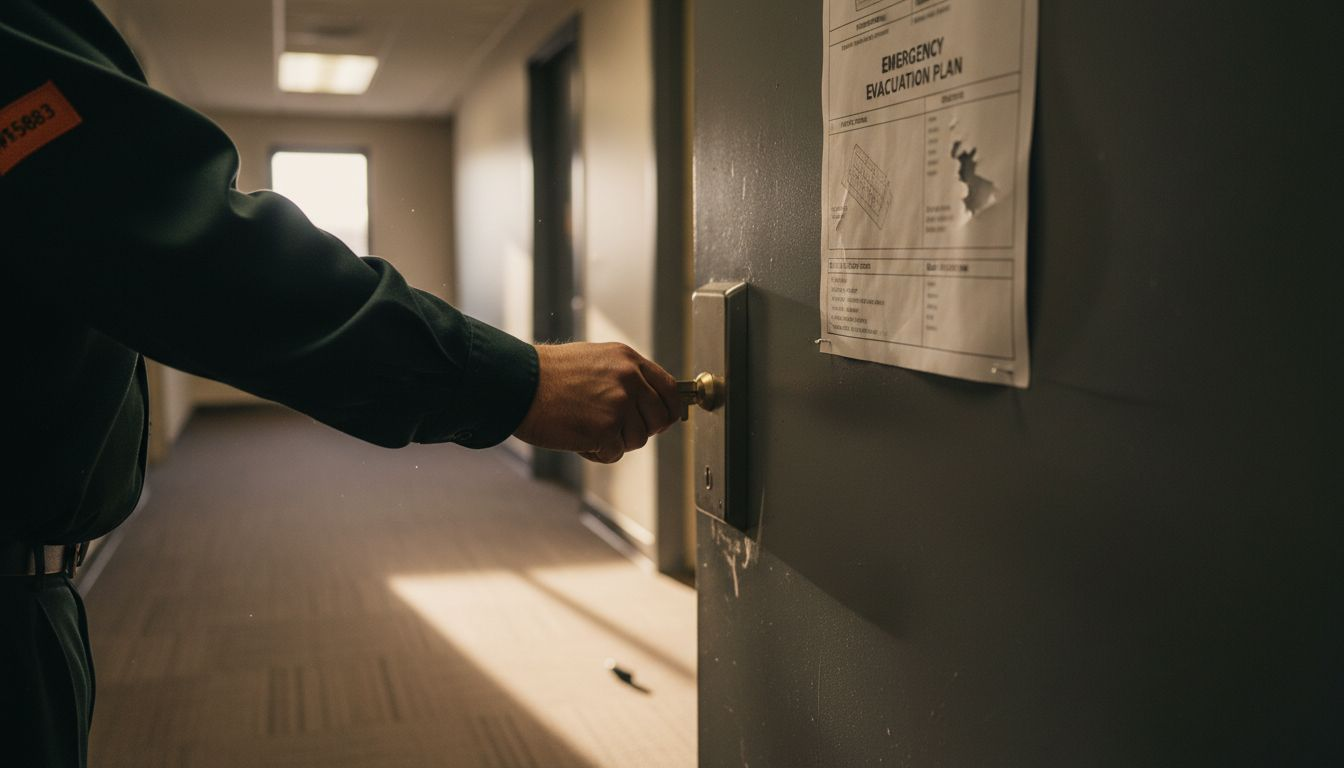
Insurance compliance improves substantially with BS3621 upgrades. Policies covering commercial premises increasingly mandate these standards as baseline requirements. Demonstrating compliance through professional installation documentation and certification evidence streamlines claims processing after incidents. Some insurers offer premium reductions for verified security upgrades, though specifics vary by provider and coverage level.
Reinforced frames and heavy-duty strike plates add layers of physical resistance against forced entry. Standard strike plates fail under sustained kicking or prying attempts. Upgraded components withstand significantly more force, often deterring attacks before lock mechanisms face testing.
Long-term maintenance extends both security effectiveness and hardware lifespan. Properly maintained BS3621 locks function reliably for 10 to 15 years under typical commercial use. Regular lubrication, alignment checks, and prompt repairs prevent the gradual degradation that compromises security over time. Explore the full benefits of upgrading door locks to understand both immediate and long-term value.
| Outcome Category | Expected Result | Timeline |
|---|---|---|
| Installation Cost | £120-£250 per door | One-time expense |
| Labor Duration | 2-3 hours per door | Same-day completion |
| Break-in Reduction | Up to 70% fewer attempts | Immediate effect |
| Insurance Compliance | Full policy requirement satisfaction | Immediate certification |
| Lock Lifespan | 10-15 years with maintenance | Long-term protection |
| Frame Durability | 30-40% improved entry resistance | Permanent enhancement |
Upgrade Your Office Door Security with AHLP Locksmiths
Implementing the security measures outlined requires expertise, quality hardware, and reliable service. AHLP Locksmiths specialises in commercial locksmith services across Bristol and South Gloucestershire, providing British Standard lock installation, frame reinforcement, and comprehensive security assessments tailored to office environments.
Our team handles emergency callouts 24/7 with no call-out charges, ensuring prompt response when security issues arise. We install insurance-approved locks, reinforce vulnerable frames, and provide professional advice specific to your premises and insurance requirements. Every installation includes thorough testing and documentation for your records.
Whether upgrading a single office door or securing an entire business premises, AHLP delivers transparent pricing, expert fitting, and quality hardware that protects your investment. Contact our 24/7 locksmith services team or review our complete locksmith services guide to discuss your office security needs.
Frequently Asked Questions
What is the lifespan of a BS3621 lock?
BS3621 locks typically last 10 to 15 years with proper maintenance and regular servicing. High-traffic environments or exposure to harsh weather conditions may reduce lifespan slightly. Annual professional inspections and lubrication every six months extend performance and maintain security assurance throughout the lock’s operational life.
Can I install BS3621 locks myself or should I hire a locksmith?
Professional installation is strongly recommended as DIY attempts frequently cause misalignment, improper depth drilling, and loose mountings. These errors lead to premature lock failure and void manufacturer warranties. Expert locksmiths ensure correct fitting, compliance with British Standards, and provide installation documentation necessary for insurance validation.
How often should I check or maintain my office door locks?
Inspect office door locks every six months for signs of wear, stiffness, or misalignment. Lubricate mechanisms with appropriate lock oil during these inspections. Schedule professional servicing annually to identify potential issues before failures occur. High-use doors or those exposed to weather may require more frequent attention.
Will upgrading to BS3621 locks affect my insurance premiums?
Upgrading to BS3621 locks typically improves insurance validation and may facilitate easier claims processing after break-ins. Some insurers offer premium reductions for verified security improvements, though policies vary significantly. Contact your insurance provider with certification documentation to confirm specific impacts on your premiums and coverage terms.
What if my office door frame is damaged? Should it be replaced before installing new locks?
Damaged door frames must be repaired or replaced before installing new locks to ensure maximum security effectiveness. Even the highest quality BS3621 locks provide minimal protection when mounted to compromised frames. Professional assessment determines whether repair suffices or complete replacement becomes necessary for proper security.