
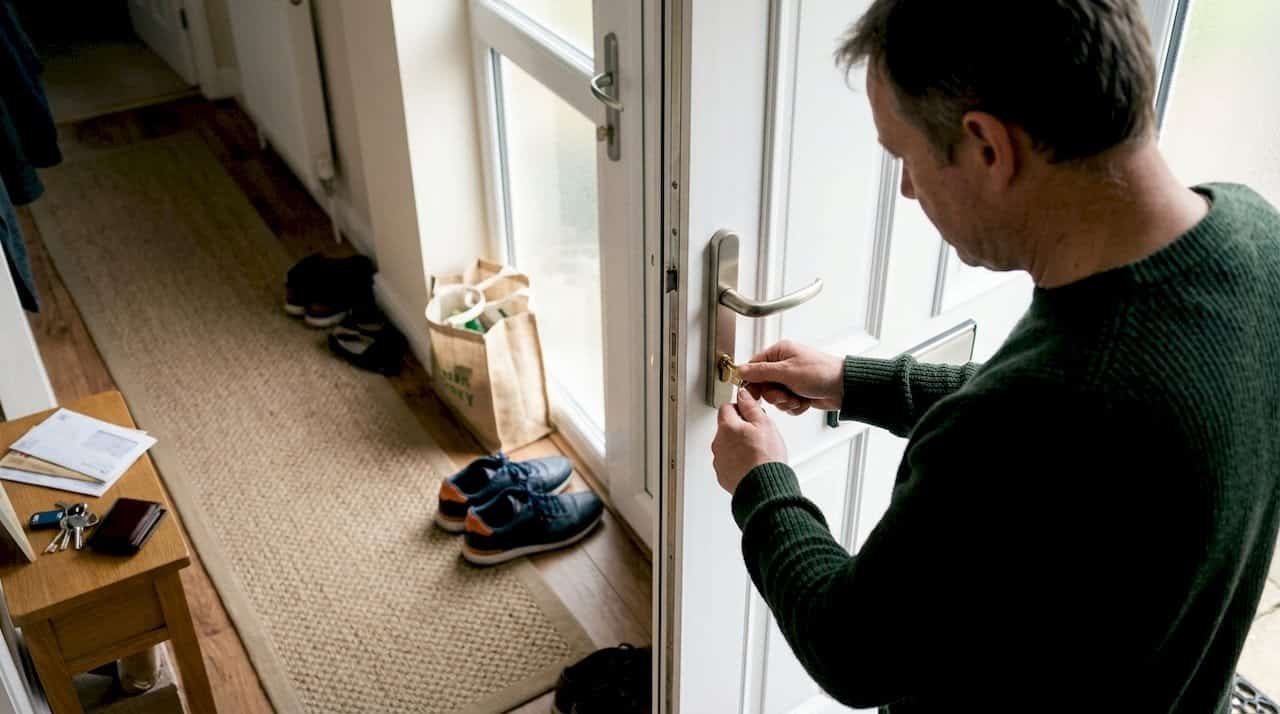
Many Bristol homeowners assume their UPVC door locks work like traditional locks, but they operate quite differently. A UPVC lock uses a sophisticated multi-point locking mechanism that secures your door at several points simultaneously, offering far superior protection than single-point systems. Understanding how your UPVC lock functions, recognising when it needs attention, and knowing your upgrade options can transform your home security. This guide explains everything you need to know about UPVC locks, from basic mechanics to maintenance and modern security enhancements available in 2026.
Table of Contents
- Key takeaways
- What is a UPVC lock and how does it work?
- Types of UPVC locks and their features
- Common issues with UPVC locks and maintenance tips
- Upgrading your UPVC locks for better home security in Bristol
- Enhance your home security with expert locksmith services
- Frequently asked questions
Key Takeaways
| Point | Details |
|---|---|
| Multi point locking | A UPVC lock engages three to seven points along the frame to provide superior resistance to forced entry. |
| Euro cylinder role | The euro cylinder houses the key mechanism and controls the locking sequence within the system. |
| Maintenance matters | Regular maintenance keeps moving parts free of wear and helps maintain alignment and weatherproofing. |
| Upgrade for safety | Upgrading to higher security cylinders or enhanced locking configurations can greatly improve home safety and meet insurer requirements. |
What is a UPVC Lock and How Does it Work?
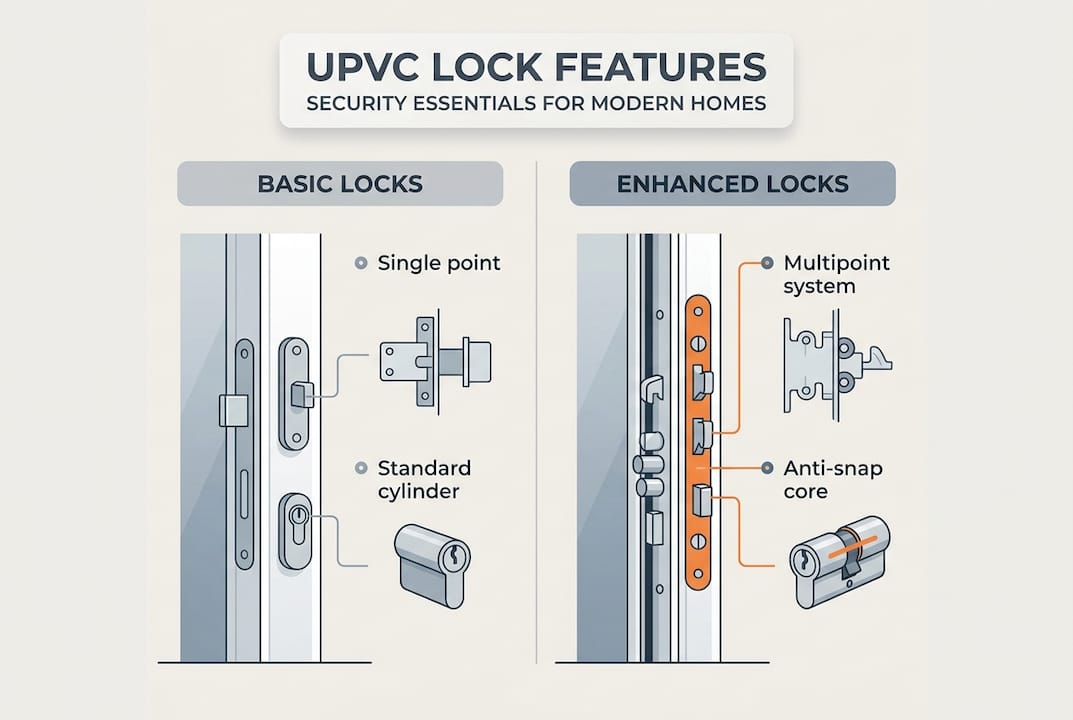
A UPVC lock is a specialised locking mechanism designed specifically for unplasticised polyvinyl chloride doors, commonly found in modern homes across Bristol and the UK. Unlike traditional wooden door locks that typically secure at one point, UPVC locks employ a multi-point locking system that engages at three, five, or even seven locations along the door frame.
When you turn your key in a UPVC door lock mechanism, you activate a series of hooks, bolts, and rollers that simultaneously extend into reinforced keeps fitted into the door frame. This coordinated action distributes force across multiple points, making it exponentially harder for intruders to force entry. The central component is usually a euro cylinder, which houses the key mechanism and controls the entire locking sequence.
The multi-point system offers several distinct advantages:
- Superior resistance to forced entry compared to single-point locks
- Even distribution of pressure prevents warping and maintains door alignment
- Enhanced weatherproofing through tighter seal compression
- Compliance with most home insurance security requirements
The materials used in UPVC locks complement the door’s construction. Metal components within the mechanism resist corrosion whilst maintaining strength, and the design accounts for the slight flexibility inherent in UPVC frames. This compatibility ensures smooth operation over years of daily use.
Pro Tip: Always lift your UPVC door handle before turning the key. This action engages all locking points properly and prevents unnecessary strain on the mechanism that can lead to premature wear.
The cylinder itself contains a series of pins that align only when the correct key is inserted. Modern cylinders incorporate additional security features like anti-drill pins, sacrificial cuts, and hardened inserts that resist common attack methods. When everything aligns correctly, the cam at the cylinder’s rear rotates to drive the locking mechanism, extending all securing points outward.
Understanding this coordinated system helps you appreciate why UPVC locks require different maintenance than traditional locks. Each component must move freely for the entire mechanism to function smoothly. A problem at any single point can affect the whole system’s performance.
Types of UPVC Locks and Their Features
Two primary categories dominate the UPVC lock market, each offering distinct characteristics suited to different security needs and budgets. Euro cylinder locks and multi-point locks represent the most prevalent types, with variations in quality, security ratings, and price points.
Euro cylinder locks serve as the key-operated component within the larger multi-point system. Standard euro cylinders provide basic security, whilst upgraded versions incorporate anti-snap, anti-bump, and anti-pick features. The cylinder’s length must match your door thickness precisely, with measurements taken from the fixing screw to each end. A cylinder protruding too far becomes vulnerable to snapping attacks, whilst one too short won’t engage properly.
Multi-point locks describe the complete locking assembly that secures the door at multiple locations. These systems vary in configuration:
- Hook bolt systems that latch into keeps for maximum resistance to forced entry
- Roller cam mechanisms offering smoother operation and reduced friction
- Deadbolt combinations providing rigid security without moving parts
- Automatic locking variants that secure immediately when the door closes
Security features distinguish premium locks from basic models. Anti-snap cylinders include a deliberate weak point that breaks away if attacked, leaving the locking mechanism intact and functional. Anti-bump technology uses special pin configurations that resist bump key manipulation. Anti-pick cylinders incorporate additional security pins that make picking attempts significantly more difficult.
| Lock type | Security level | Typical cost | Maintenance needs |
|---|---|---|---|
| Standard euro cylinder | Basic | £15-30 | Annual lubrication |
| Anti-snap cylinder | High | £30-60 | Annual lubrication |
| Multi-point hook system | Very high | £80-150 | Bi-annual service |
| Smart UPVC lock | Premium | £150-300 | Quarterly checks |
When considering UPVC door lock upgrades, certification matters enormously. Look for locks meeting British Standard BS3621 or achieving Sold Secure Diamond rating. These certifications guarantee the lock has undergone rigorous testing against common attack methods. Insurance companies often require these standards, and their absence can invalidate claims following a break-in.
Pro Tip: Measure your existing cylinder before purchasing a replacement. You need the distance from the central screw hole to each end, ensuring no more than 3mm protrudes beyond the door handle on either side to prevent snapping vulnerabilities.
The choice between lock types depends on your specific circumstances. Homes in higher-risk areas benefit from maximum security features, whilst properties with lower crime rates might prioritise convenience and cost. Certified UPVC locks provide documented security levels that satisfy both insurance requirements and personal peace of mind.
Common Issues with UPVC Locks and Maintenance Tips
UPVC locks develop predictable problems over time, most stemming from wear, environmental exposure, or inadequate maintenance. Recognising early warning signs prevents complete failures that leave you locked out or compromise security. Regular maintenance and timely repair prevent failures that can compromise home security.
Lock jamming represents the most frequent complaint. The mechanism becomes stiff, requiring excessive force to turn the key or lift the handle. This usually indicates dirt accumulation, dried lubricant, or misalignment between door and frame. Seasonal temperature changes cause UPVC frames to expand and contract slightly, sometimes throwing the lock out of perfect alignment.
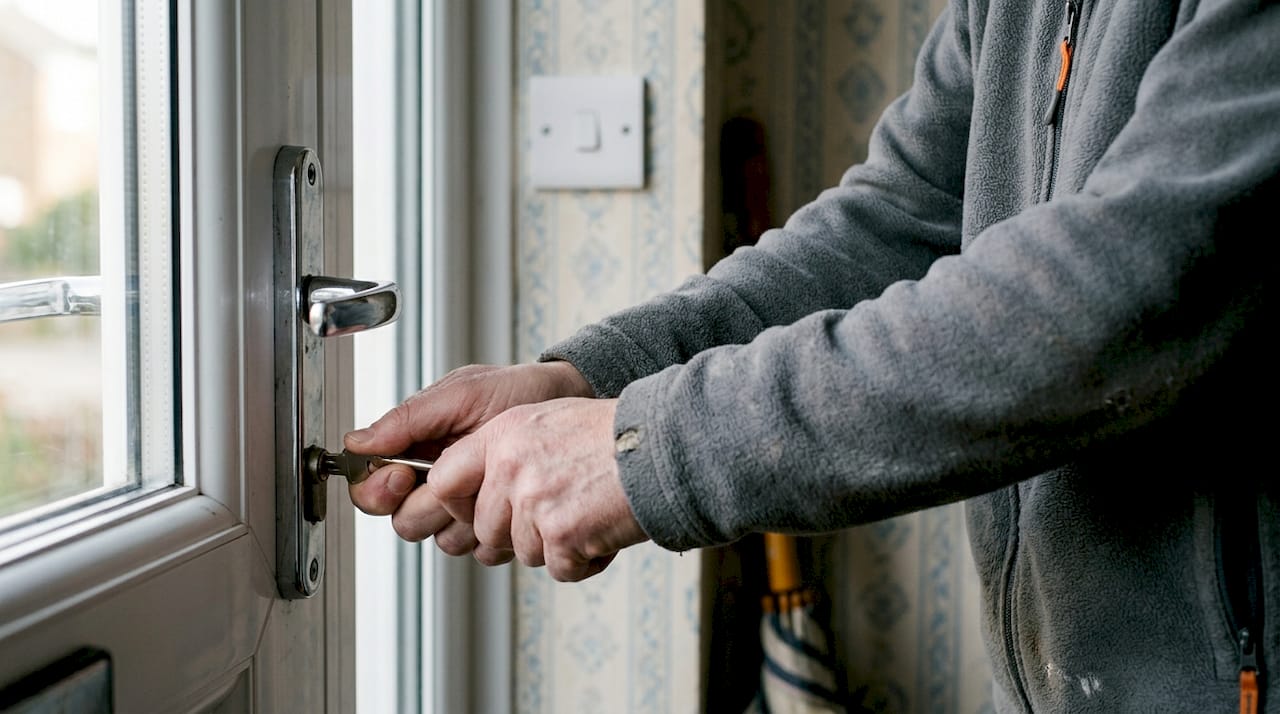
Key breakage often results from forcing a sticky lock rather than addressing the underlying stiffness. Metal fatigue in older keys creates weak points that snap under pressure, leaving part of the key lodged in the cylinder. This situation requires professional extraction to avoid damaging the cylinder mechanism.
Cylinder wear manifests as difficulty inserting or turning the key smoothly. Internal pins become worn, springs lose tension, or the keyway develops burrs that catch on the key. Worn cylinders also become easier to pick or bump, degrading your security without obvious external signs.
Follow this maintenance checklist to extend your lock’s lifespan:
- Clean the cylinder keyway quarterly using compressed air to remove debris
- Apply graphite powder lubricant twice yearly, never oil-based products that attract dirt
- Check door alignment seasonally, adjusting hinges if the door has dropped
- Inspect rubber seals around the frame for deterioration affecting door fit
- Test all locking points engage smoothly without forcing the handle
- Examine the cylinder for any looseness in its housing
Lubrication technique matters significantly. Oil-based lubricants initially improve operation but quickly attract dust and grime that accelerates wear. Graphite powder or PTFE-based dry lubricants provide lasting smoothness without residue buildup. Apply sparingly directly into the keyway and work the key in and out several times to distribute evenly.
Pro Tip: If your key becomes difficult to turn suddenly rather than gradually, check for ice formation in winter or examine whether someone has attempted to force the lock. Sudden changes often indicate external interference rather than normal wear.
Recognise when professional intervention becomes necessary. Attempting complex repairs without proper tools often causes additional damage. Contact a qualified locksmith if you experience persistent stiffness despite lubrication, visible cylinder damage, keys that no longer turn smoothly, or any locking points that fail to engage. The UPVC lock repair process typically involves diagnosing the specific failure point and replacing worn components before they cause complete system failure.
Preventing problems proves far more economical than emergency repairs. A structured repair workflow identifies issues early, when simple adjustments suffice rather than complete replacement.
Upgrading Your UPVC Locks for Better Home Security in Bristol
Upgrading your UPVC locks delivers measurable security improvements that reduce burglary risk substantially. Research demonstrates that modern UPVC locks with advanced features significantly reduce burglary risks in Bristol homes, with properly secured properties experiencing far fewer successful break-in attempts.
Modern locking technology has evolved dramatically since many homes were built. If your locks are over ten years old, they likely lack current security features that have become standard. Burglars constantly refine their techniques, and older locks present well-known vulnerabilities that experienced intruders exploit within seconds.
Advanced locking systems incorporate multiple defensive features:
- Anti-snap cylinders with deliberate break points that protect the locking mechanism
- Anti-bump technology preventing manipulation with specially cut bump keys
- Anti-drill hardened inserts that destroy drill bits attempting to breach the cylinder
- Reinforced strike plates distributing force across larger frame areas
The security difference between old and new locks is stark. Standard cylinders installed before 2010 typically offer minimal resistance to snapping, the most common forced entry method in the UK. A determined burglar can snap a basic cylinder in under 30 seconds using simple tools. Anti-snap cylinders either resist the attack entirely or break safely, leaving the door secured even after the attack.
| Feature | Old locks (pre-2015) | New locks (2026 standard) |
|---|---|---|
| Snap resistance | Minimal | Certified anti-snap zones |
| Pick resistance | Basic pin tumbler | Security pins, sidebars |
| Drill resistance | None | Hardened steel inserts |
| Certification | Often uncertified | BS3621, Sold Secure rated |
| Insurance validity | May not meet requirements | Meets all standard policies |
Home insurance implications make upgrades particularly worthwhile. Many insurers require locks meeting specific British Standards, and failing to maintain adequate security can void your policy. Conversely, installing certified high-security locks often qualifies you for premium reductions. Insurers recognise that homes with quality locks present lower risk, translating to tangible savings on your annual premiums.
Beyond financial considerations, upgraded locks provide genuine peace of mind. Knowing your home features the same security technology that protects commercial premises and high-security facilities lets you sleep better. Modern locks also operate more smoothly, requiring less force and offering improved weather resistance.
When planning UPVC lock upgrades in Bristol, consider your entire security ecosystem. Upgrading front door locks whilst leaving back doors with basic cylinders creates an obvious weak point. Comprehensive security addresses all entry points systematically. Professional locksmiths assess your complete property, identifying vulnerabilities you might overlook.
The investment proves modest compared to potential losses from burglary. Quality anti-snap cylinders cost between £30-60, whilst complete multi-point mechanism replacement ranges from £80-200 depending on complexity. Professional installation ensures correct fitting, proper alignment, and full functionality. A comprehensive lock replacement guide helps you understand the process and make informed decisions about your home security.
Enhance Your Home Security with Expert Locksmith Services
Professional locksmith expertise ensures your UPVC locks function optimally and provide maximum security for your Bristol home. AHLP Locksmiths specialises in all aspects of UPVC lock service, from emergency repairs to planned security upgrades across Bristol, South Gloucestershire, and Gloucester.
Our trusted locksmith services cover every UPVC lock scenario you might encounter. Whether you’re locked out, experiencing stiff operation, or planning comprehensive security improvements, our qualified technicians respond quickly with the right tools and replacement parts. We stock British Standard and insurance-approved hardware, ensuring every installation meets rigorous security requirements.
The ultimate guide to locksmith services explains how professional assistance saves time and prevents damage that DIY attempts often cause. Our efficient UPVC lock replacement workflow minimises disruption whilst delivering enhanced protection. With transparent pricing, no call-out fees, and fast response times throughout the Bristol area, AHLP Locksmiths keeps your property secure and your mind at ease. Call 07700 100146 to arrange a security consultation or emergency assistance.
Frequently Asked Questions
What is the lifespan of a typical UPVC lock?
UPVC locks generally last 10-15 years with proper maintenance, though this varies based on usage frequency and environmental exposure. Coastal properties or homes facing severe weather may experience shorter lifespans due to increased corrosion and wear. Regular lubrication and adjustment can extend operational life significantly, whilst neglect often causes premature failure well before the expected lifespan.
Can I repair a UPVC lock myself?
Minor maintenance like cleaning and lubricating the cylinder can be performed safely at home using graphite powder and compressed air. However, complex problems involving internal mechanism failure, cylinder replacement, or alignment issues require professional locksmith expertise and specialised tools. Attempting repairs beyond basic maintenance often causes additional damage that increases eventual repair costs. The UPVC door lock repair process involves diagnostic steps best left to qualified professionals.
How do upgraded UPVC locks improve home insurance terms?
Certified upgraded locks meeting British Standard BS3621 or Sold Secure ratings often result in better home insurance terms and lower premiums, with some insurers offering discounts up to 10%. They strengthen claims by proving you’ve taken reasonable security precautions, which insurers consider when assessing risk and processing break-in claims. Many policies explicitly require locks meeting specific standards, making upgrades essential for maintaining valid coverage. When upgrading UPVC door locks in Bristol, always request certification documentation for your insurance provider.
What should I do if my key breaks in the lock?
Stop immediately and avoid attempting to remove the broken key fragment yourself, as this often pushes it deeper into the cylinder. Contact a professional locksmith who has extraction tools designed specifically for this situation. Attempting removal with household items like tweezers or superglue typically damages the cylinder mechanism, requiring complete replacement rather than simple extraction and key cutting.
How often should I service my UPVC lock?
Service your UPVC lock at least twice yearly, ideally before winter and summer when temperature changes affect door alignment. Professional servicing every two years identifies wear before it causes failures. High-use doors or locks showing any stiffness benefit from more frequent attention, whilst homes in coastal areas should increase service frequency due to salt air corrosion.