
TL;DR:
- Break-ins are a persistent concern in Bristol and South Gloucestershire, prompting insurers to tighten security requirements.
- Assessing existing locks, doors, windows, and access points helps identify vulnerabilities that need urgent upgrades.
- Choosing products meeting recognised standards such as Secured by Design or PAS 24 ensures compliance and effective protection.
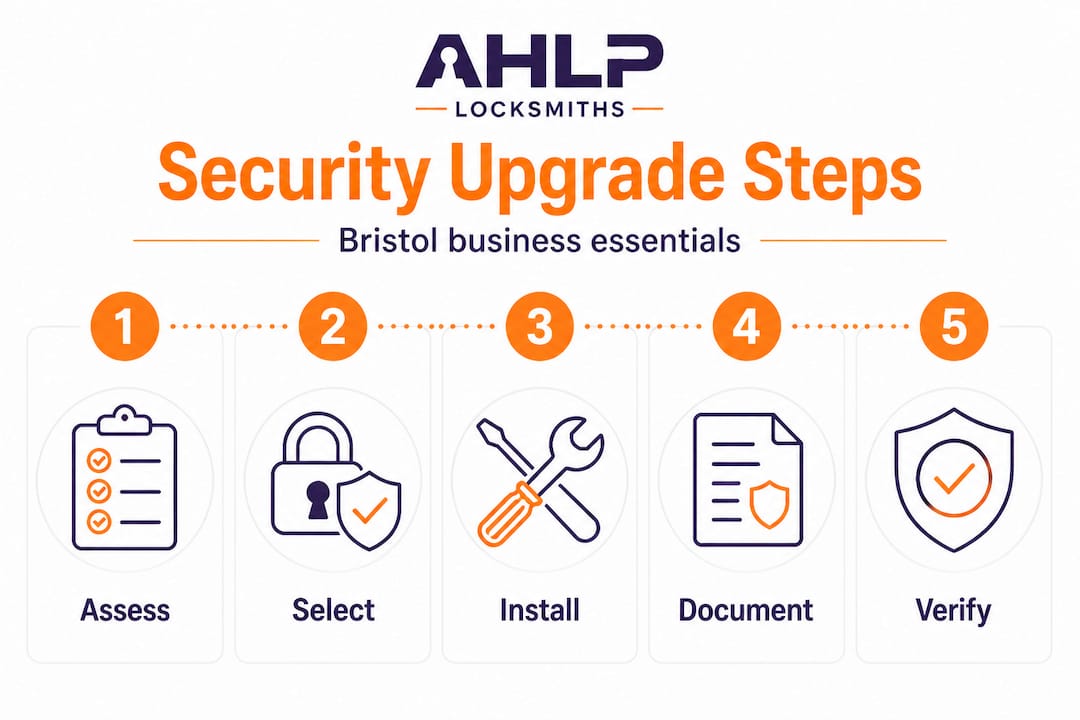
Break-ins across Bristol and South Gloucestershire have been a persistent concern for local business owners and homeowners alike, and insurers are increasingly tightening their requirements around physical security standards. Whether you’ve recently received a letter from your insurer asking for evidence of compliant locks, or you simply want to stop worrying every time you close up for the night, upgrading your security is one of the most practical decisions you can make. This guide walks you through every stage, from assessing what you currently have, to choosing the right upgrades, navigating local grant schemes, and documenting your improvements so they actually count.
Table of Contents
- Assessing your current security and compliance requirements
- Choosing effective security upgrades: doors, locks, and windows
- Funding and permissions: council schemes, grants, and local rules
- Verifying your security upgrade: testing and insurance evidence
- Why most businesses get security upgrades wrong in Bristol & South Gloucestershire
- Expert help for upgrading your business security
- Frequently asked questions
Key Takeaways
| Point | Details |
|---|---|
| Start with a security review | Assess current weaknesses and compliance needs before making upgrades for best results. |
| Use accredited products | Choose locks and windows with recognised standards to effectively resist forced entry. |
| Plan for permissions and funding | Check if you need planning permission and explore local grant options before installation. |
| Always verify and document | After upgrades, verify that all work meets standards and keep documentation for insurance. |
Assessing your current security and compliance requirements
Before spending a penny on new hardware, you need an honest picture of where your weaknesses lie. Many business owners and homeowners in Bristol and South Gloucestershire assume their locks and doors are adequate simply because they came with the building. That assumption can be costly.
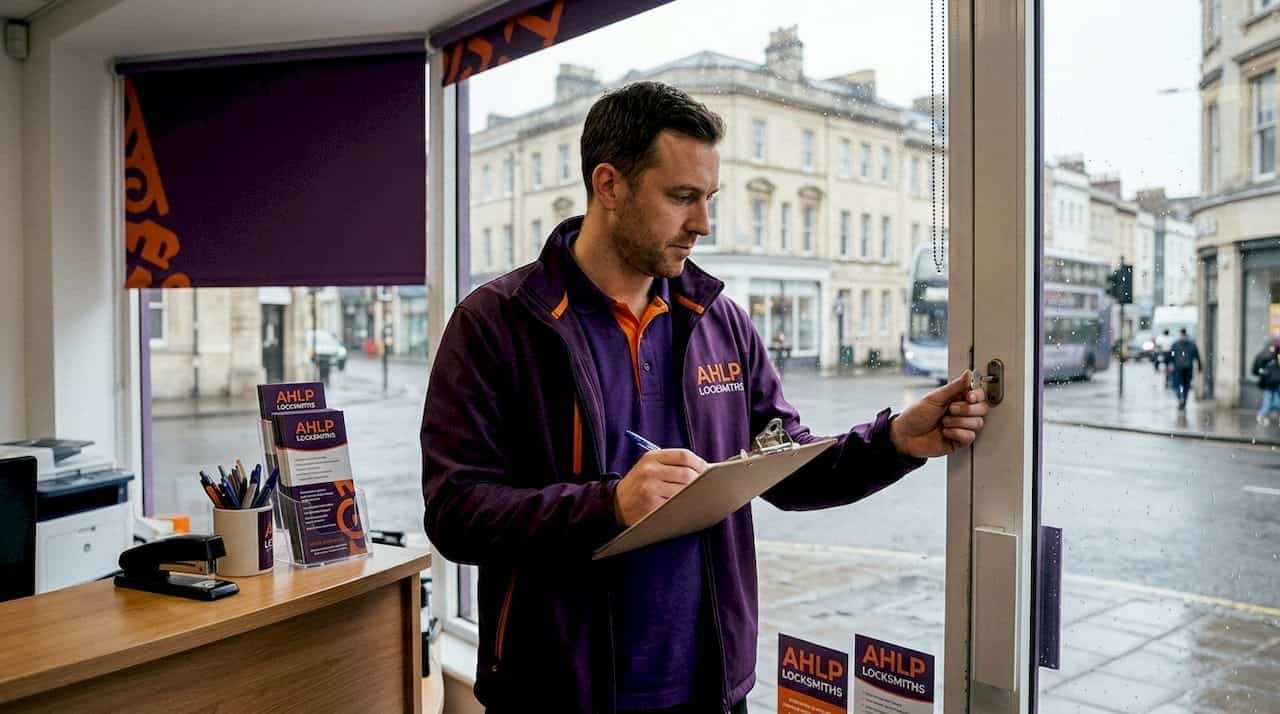
Start by walking around your property as a potential intruder would. Look at every external door, ground-floor window, side gate, and garage access point. Ask yourself: could someone force this open with a screwdriver in under a minute? If the honest answer is yes, that point needs urgent attention.
Here is a simple checklist to guide your initial review:
- External doors: Check the frame condition, not just the lock. A strong lock in a weak frame offers little real protection.
- Cylinder locks: Many older Euro cylinders can be snapped with basic tools. Note any that lack anti-snap protection.
- Window locks: Ground-floor and accessible upper-floor windows should be fitted with key-operated locks or locks that meet recognised standards.
- Access points: Rear gates, cellar hatches, and service doors are frequently neglected and often the preferred entry point for experienced burglars.
- Lighting: Dark entry points invite opportunistic crime. Poor lighting is a security weakness even if your locks are solid.
- Alarm systems: Note whether your current alarm meets the grade required by your insurer, as this varies between policies.
When it comes to insurance compliance, your policy documents are your starting point. Many insurers specify that locks must meet certain British Standards, such as BS 3621 for mortice deadlocks, or that doors must be fitted with hardware meeting a recognised security scheme. Physical hardening that resists forced entry should be selected using recognised UK security standards such as Secured by Design or the Police Preferred Specification, rather than relying on branding alone.
If your property is in a conservation area, or if it is a listed building, you will face additional considerations. Certain visible external changes may require listed building consent or planning permission before you can fit new doors, shutters, or grilles. We cover this in more detail later in this guide, but it is worth flagging early so it doesn’t catch you off guard.
Pro Tip: Take dated photographs of every lock, door, and window before you start any upgrade work. This creates a clear before-and-after record that is genuinely useful when speaking to insurers or applying for grants.
For a broader look at home security steps that apply equally to business premises, and a ready-made security checklist tailored for Bristol properties, those resources are worth reviewing alongside your own walkthrough.
| Assessment area | What to check | Why it matters |
|---|---|---|
| Door frames | Condition of timber or steel, fixing points | Weak frames bypass good locks entirely |
| Cylinder locks | Anti-snap, anti-drill, anti-pick features | Most break-ins target the cylinder |
| Window locks | Key-operated, standard compliance | Often overlooked access points |
| Rear/side access | Gates, fences, cellar hatches | Preferred routes for experienced intruders |
| Alarm grade | Insurer-specified grade | Non-compliance can void a claim |
Choosing effective security upgrades: doors, locks, and windows
Once you understand your current security and compliance needs, you can move on to selecting specific upgrades. The market is full of products that look impressive on paper but offer limited real-world protection. Knowing which standards actually matter will save you money and frustration.
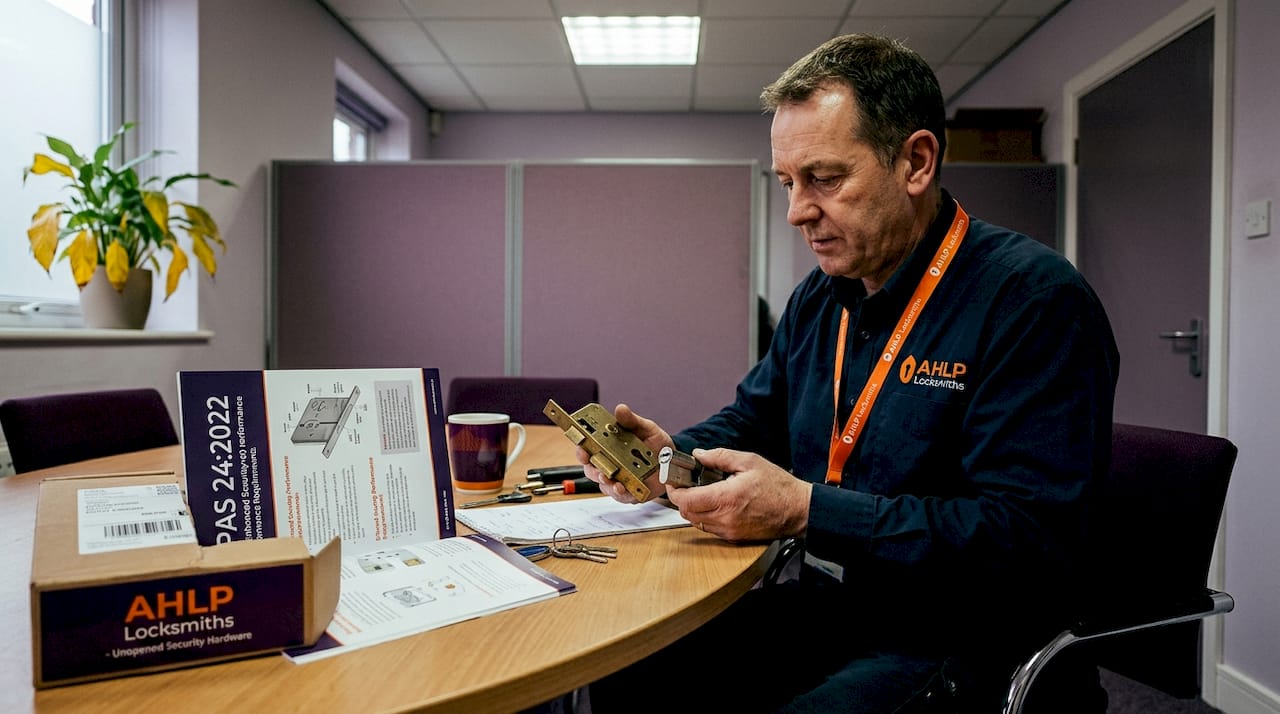
Secured by Design (SBD) is the UK Police-backed initiative that licences products proven to resist attack. When a product carries the SBD mark, it has been independently tested and found to meet specific performance requirements. This is not a marketing badge; it reflects genuine testing under recognised conditions.
PAS 24:2022 (+A1) is the British standard for enhanced security performance requirements for doorsets and windows. Secured by Design guidance explains the requirements and testing for windows and glazing, referencing PAS 24:2022 alongside an applied acceptance window for compliant products. If your insurer or local authority asks for evidence of standards compliance, this is one of the key references they are likely to use.
LPS 1673 is a loss prevention standard used in commercial settings. It is particularly relevant for businesses with higher-value stock or that require additional assurance for insurers beyond standard residential grades.
Here is how to prioritise your upgrades for maximum impact:
- Replace non-compliant Euro cylinders first. Anti-snap cylinders fitted to doors that already have solid frames deliver immediate, measurable improvement. This is typically the most cost-effective single upgrade.
- Address weak door frames. A quality lock fitted to a failing frame is only as strong as its weakest point. Reinforce or replace frames before fitting new hardware.
- Upgrade ground-floor windows. Windows tested to PAS 24 offer significantly better resistance to forced entry than standard double-glazed units.
- Review rear and side access points. Fit robust padlocks or locking bars meeting recognised standards to any secondary access points.
- Install or upgrade alarm systems to the correct grade. Confirm the grade specified in your insurance policy and ensure your installer certifies the system accordingly.
“The most common mistake we see is a business owner fitting an expensive-looking lock on a door that hasn’t been properly assessed as a complete unit. The door, frame, hinges, and lock all need to work together.”
For a deeper read on how all of these elements come together, the home security guide covers the complete picture for both domestic and commercial properties. If you specifically need help selecting commercial door locks for your premises, that resource goes into useful detail on hardware grades and fitting requirements. Our business security guide for Bristol businesses is also worth bookmarking.
Pro Tip: When purchasing locks or windows, ask the supplier directly for the product’s test certificate. Any reputable supplier should be able to provide written evidence that a product meets PAS 24, LPS 1673, or Secured by Design criteria. If they hesitate or offer only a brochure, treat that as a warning sign.
| Standard | Applies to | Key requirement | Relevant for |
|---|---|---|---|
| Secured by Design | Doors, windows, hardware | Police Preferred Specification, independently tested | Both residential and commercial |
| PAS 24:2022 | Doorsets, windows | Enhanced security performance against forced entry | Insurance compliance |
| LPS 1673 | Commercial access hardware | Loss prevention certification | Higher-risk commercial premises |
| BS 3621 | Mortice deadlocks | British Standard for key-operated locks | Domestic and small commercial |
Funding and permissions: council schemes, grants, and local rules
With an upgrade plan in mind, it is wise to consider whether you are eligible for support or need permissions before making physical changes. This step is frequently skipped, and it can result in either missed funding or costly enforcement action.
Local grant schemes do exist for businesses in Bristol and South Gloucestershire. South Gloucestershire Council, for example, has offered accessibility and shop-front improvement grants aimed at helping local businesses improve their premises. The South Gloucestershire Council shop-front grant guidance covers eligible works and how to apply, and security improvements such as improved doors, locks, CCTV, and alarm systems may qualify within this framework.
Eligibility criteria vary, but common requirements include:
- The business must be based in a qualifying area or town centre
- Works must meet design guidelines and, in conservation areas, preserve the character of the building
- Receipted invoices and photographic evidence of completed work are usually required before payment is released
- Grants are often offered as partial reimbursement rather than upfront funding, so you will need to fund the work initially
“Always contact your council’s planning or economic development team before starting work on an external feature. Getting confirmation in writing takes a short time and can protect you against enforcement issues later.”
Planning permissions are a genuine concern for external security measures. Roller shutters, for example, are frequently subject to planning control, particularly on high street premises or in conservation areas. Even security grilles over windows may require consent depending on the local authority’s guidelines. Listed buildings face the strictest controls, and any work affecting the character of the building requires listed building consent in addition to any planning permission.
Common pitfalls in permission applications include:
- Submitting applications without elevation drawings or photographs of the existing frontage
- Underestimating the processing time, which can be eight weeks or longer for standard applications
- Assuming that because a neighbour has a similar installation, yours will be automatically approved
- Failing to consult conservation officers early, particularly for listed buildings
- Not checking whether permitted development rights apply to your specific property type
For a practical overview of what upgrading home security in Bristol involves, including what to expect from a professional assessment, that resource is a helpful next step.
| Measure | Planning permission likely needed? | Notes |
|---|---|---|
| Replacing like-for-like locks | No | Standard maintenance, no consent required |
| Fitting new roller shutters | Yes, in most cases | Conservation areas require special attention |
| Installing CCTV externally | Sometimes | Depends on height, positioning, and local policy |
| Replacing external doors | Possibly | Listed buildings always require consent |
| Fitting window locks internally | No | Internal works generally exempt |
Verifying your security upgrade: testing and insurance evidence
Completing the physical work is only part of the process. Making sure your investments are effective, compliant, and recognised is essential for both insurance purposes and for any grant claims.
Immediately after installation, you should carry out a series of checks:
- Open and close every door and window that has been worked on to confirm smooth, correct operation.
- Test every lock with its key, checking for smooth engagement without excessive force.
- Check that door frames are firmly fixed and that hinges are secure on both sides.
- Confirm that any alarm system upgrades have been tested and certified in writing by the installer.
- Photograph all completed work, showing clearly the brand, model, and installation quality of new hardware.
Documenting your new security is not optional if you want full insurance protection. Many insurers will ask for evidence of compliant locks as a condition of paying out on a claim. Without it, you may find your claim is reduced or denied.
Research indicates that security upgrades reduce burglary risk significantly for Bristol properties, with properties fitted with accredited hardware being demonstrably less likely to be successfully forced.
Secured by Design’s commercial guidance material emphasises life-cycle security management alongside product standards, meaning security is not a one-off purchase but an ongoing responsibility. This includes scheduling periodic checks, replacing worn components promptly, and revisiting your security plan whenever the use of the premises changes.
Pro Tip: Ask your locksmith or installer for a written confirmation that the hardware fitted meets the specific standard required by your insurer. A brief letter on headed paper, referencing the product certification and installation date, can save significant difficulty at claim time.
For long-term compliance, maintain a simple folder containing product certificates, installer receipts, photographs, and any official documentation from your local authority or insurer. Review it annually and update it whenever new work is carried out.
Why most businesses get security upgrades wrong in Bristol & South Gloucestershire
Having walked through the full process, we want to offer some honest perspective based on what we see on the ground every day. The mistakes are remarkably consistent, and most of them are avoidable.
The first and most common error is confusing attractive branding with genuine security performance. A lock with a prestigious name on the barrel is not automatically compliant. Commercial security basics start with understanding that product standards, independently verified, are what matter to insurers and to forced-entry resistance. Branding is not the same as certification.
The second error is skipping permissions. We have seen businesses invest thousands in roller shutters, only to receive an enforcement notice requiring removal. The cost of planning advice in advance is trivial compared to the cost of reinstating a shopfront at short notice.
The third, and perhaps most damaging error, is treating a security upgrade as a completed event rather than the start of an ongoing process. Locks wear. Frames settle. Hinges corrode. A high-quality installation that is never reviewed will gradually lose the performance it was fitted to deliver. Security is a life-cycle commitment, not a one-time purchase.
Finally, documentation is consistently undervalued until the moment it is urgently needed. An insurer’s requirement for evidence of a compliant lock is not bureaucracy for its own sake. It is the mechanism by which your investment is actually recognised. Without it, you may be fully protected in practice and completely unprotected on paper.
Expert help for upgrading your business security
If the steps in this guide feel manageable but you would prefer a qualified professional to handle the assessment and installation, our team at AHLP Locksmiths is ready to help. We work with businesses and homeowners across Bristol, South Gloucestershire, and Gloucester, fitting insurance-approved hardware, upgrading to anti-snap cylinders, replacing weak door mechanisms, and providing the documentation your insurer needs. Our locksmith services cover everything from emergency callouts to planned security upgrades, and every job is completed with care and professionalism. Understanding the security upgrade benefits available to local properties is a great starting point. Call us on 07700 100146 or visit ahlp.co.uk to arrange a personalised security assessment.
Frequently asked questions
What security standard should I look for when upgrading my locks?
Look for locks and windows certified under Secured by Design or tested to PAS 24:2022 for best forced entry resistance, as these are the standards most widely recognised by UK insurers.
Do I need planning permission for security shutters on my shop?
Yes, external shutters often require planning permission, especially in conservation areas or on listed buildings, so always check with your local authority before fitting them. The South Gloucestershire grant guidance includes useful context on this.
Can I get a grant for security upgrades in South Gloucestershire?
Some council-funded grant schemes may help with shop-front upgrades including alarms, CCTV, and improved doors or locks, subject to eligibility requirements.
How do I document my security upgrade for insurance?
Keep product certificates, contractor receipts, dated photographs of the installation, and any official standards documents, then store them in a dedicated folder that you can produce quickly if a claim arises.
What is the most effective single upgrade for a small business?
Upgrading to doors and locks accredited to PAS 24 or Secured by Design offers significant improvement in forced entry resistance and is typically the single change most likely to satisfy insurer requirements.
Recommended
- The Ultimate Guide to Securing Your Bristol Business: Everything You Need to Succeed
- Upgrade your home security: a step-by-step guide for Bristol homes
- Bristol Commercial Security 101: A Beginner’s Guide to Mastering Office Safety with Locksmiths Bristol
- Security Upgrades: 50% Less Burglary Risk in Bristol
- Why Upgrade Business Locks for Asset Security – A To Z Locksmith Inc