TL;DR:
- The average cost of lock replacement in the UK ranges from £100 to £250 for planned jobs. Emergency work or out-of-hours services can increase the price to £120–£300, depending on urgency and lock type. Homeowners should compare quotes carefully, consider rekeying, and ensure lock compliance to manage costs effectively.
The average cost of lock replacement in a UK home falls between £100 and £250, covering both parts and labour for a standard planned job. That range shifts considerably once you factor in lock type, time of day, and whether the cylinder is damaged. Homeowners and renters who understand the full breakdown avoid nasty surprises when the invoice arrives. This guide covers every major cost driver, compares rekeying against full replacement, and explains how to keep your lock replacement expenses under control.
What Factors Most Impact The Cost of Replacing a Lock?
Lock replacement price is not a single fixed number. It is the sum of several moving parts, and each one can push the total up or down.
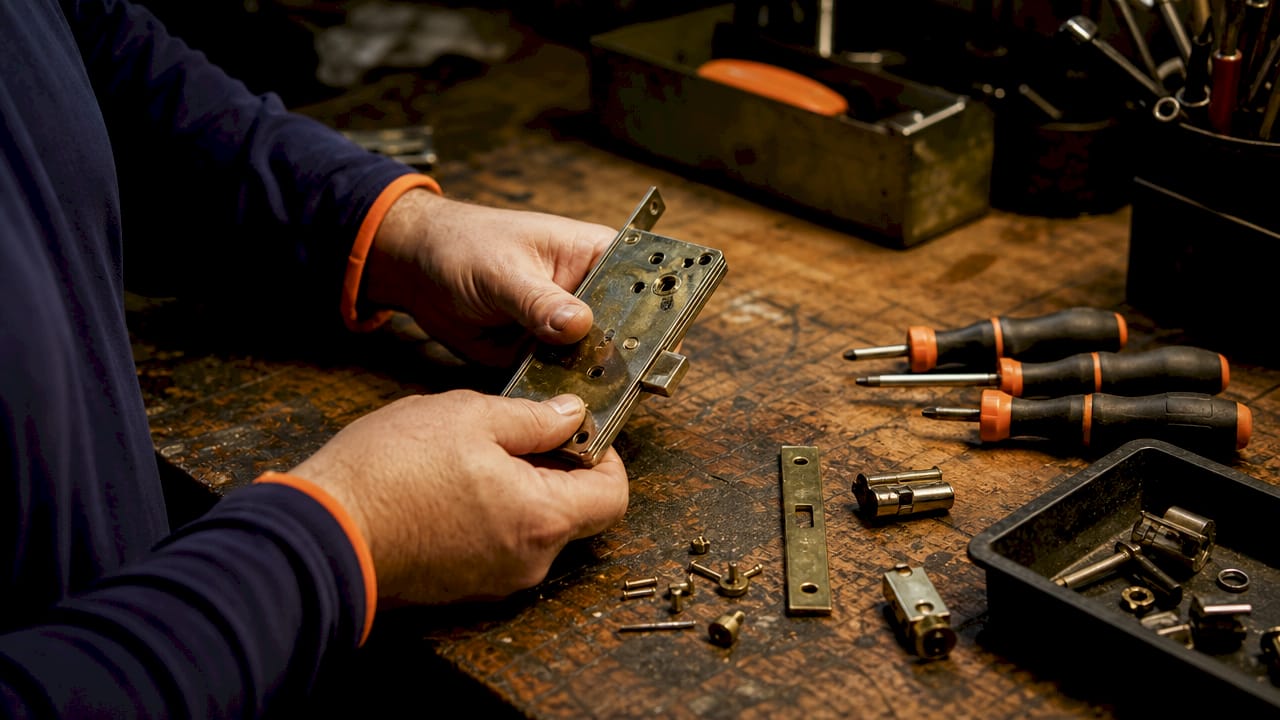
Lock type is the biggest variable. A basic euro cylinder costs far less to replace than a multipoint uPVC system. Multipoint system parts alone run £120–£250, while a BS3621 mortice deadlock sits at £45–£90 for the hardware, and a nightlatch set ranges from £60–£140. The more complex the mechanism, the longer the job takes, and labour charges accumulate accordingly.
Labour and call-out fees often exceed the hardware cost. Typical daytime hourly rates run £60–£90, with call-out charges of £30–£60 on top. Labour and rapid response needs regularly inflate the total, making the hardware price just one part of what you actually pay.
Emergency and out-of-hours work carries a significant premium. Emergency gain-entry charges typically reach £120–£220, and late-night or bank holiday callouts can push the total to £300. If forced entry damages the cylinder, the job scope expands from a simple swap to full extraction and replacement, adding both parts and time.
The key cost drivers at a glance:
- Lock type: Euro cylinder, mortice deadlock, nightlatch, or multipoint system each carry different parts costs.
- Security rating: British Standard BS3621 and anti-snap cylinders cost more than standard hardware but are often required by insurers.
- Labour rate: Daytime rates are lowest; evenings, weekends, and bank holidays attract surcharges.
- Call-out fee: Charged per visit, regardless of job size, unless the locksmith offers a no-call-out-fee service.
- Damage at entry: Forced entry or snapped cylinders turn a simple replacement into a more involved job.
Pro Tip: Always ask whether the quoted price includes parts, labour, and call-out in a single figure. A low headline rate with separate call-out and parts charges can end up costing more than a higher all-in quote.
Rekeying vs Full Lock Replacement: Which Costs Less?
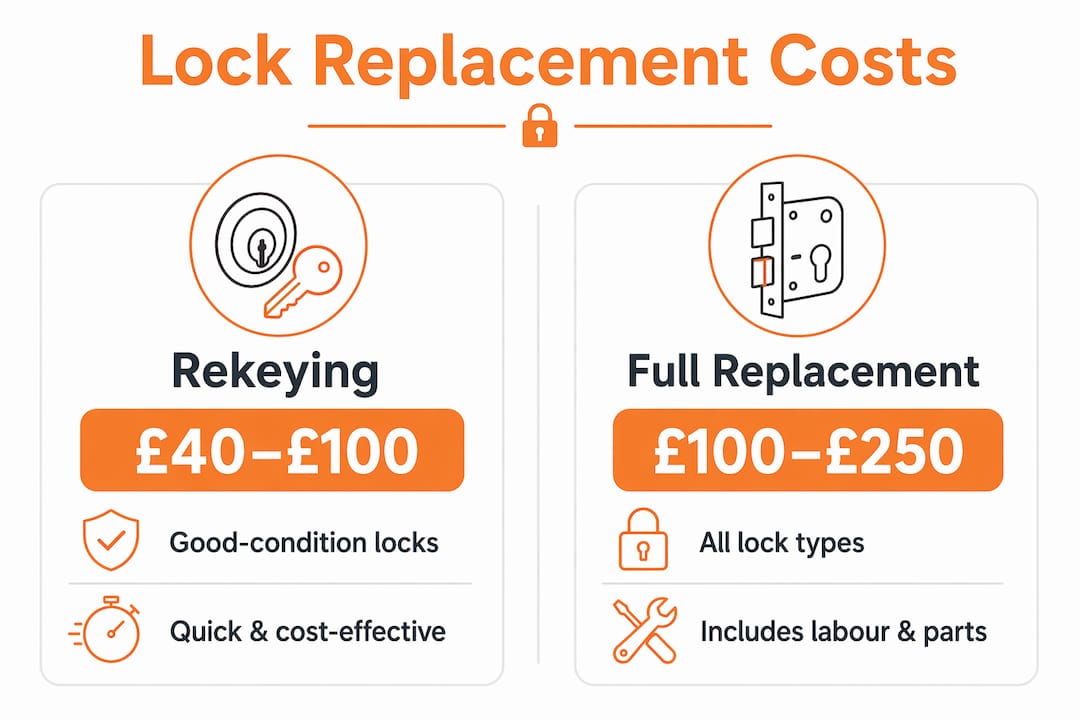
Rekeying is the process of changing the internal pins of an existing lock so that old keys no longer work. Full lock replacement means removing the existing hardware entirely and fitting new components.
Rekeying is cost-effective when the existing lock is in good condition. It removes the hardware cost from the equation, so you pay mainly for the locksmith’s time. Full replacement, by contrast, requires new parts on top of labour, which is why it typically costs more overall.
| Option | Typical UK cost | Best suited for |
|---|---|---|
| Rekeying | £40–£100 per lock | Good-condition locks, lost keys, new tenancy |
| Full cylinder replacement | £80–£150 per lock | Worn, damaged, or low-security cylinders |
| Full lock replacement (mortice) | £100–£200 per lock | Old or non-standard mechanisms |
| Multipoint system replacement | £200–£400 per door | Faulty uPVC mechanisms or security upgrades |
The choice also has insurance implications. If your policy requires BS3621-rated locks or anti-snap cylinders, rekeying an existing non-compliant lock will not satisfy that requirement. In that case, full replacement is the only route to maintaining valid cover.
Pro Tip: If you have moved into a new rental or recently lost your keys, rekeying is almost always the faster and cheaper option, provided the existing hardware meets your insurer’s standards.
What Does It Cost to Replace Locks Across Different Door Types?
The total lock installation cost for a whole property depends on how many access points you have and what type of lock each door requires. Front doors, back doors, patio doors, and garage doors all carry different price expectations.
| Door type | Typical parts cost | Typical total (parts + labour) |
|---|---|---|
| Front door (euro cylinder) | £30–£80 | £100–£180 |
| Front door (BS3621 mortice) | £45–£90 | £120–£200 |
| Back door (nightlatch or cylinder) | £30–£70 | £90–£160 |
| uPVC patio or composite door (multipoint) | £120–£250 | £220–£400 |
| Garage door lock | £25–£60 | £80–£150 |
| Full house change (3–4 doors) | £150–£400 | £200–£600 |
A single lock change averages around £80, while a full house lock change averages £350. That gap reflects the accumulation of labour time and, in many cases, multiple call-out or minimum-charge fees. Homeowners often overlook that multiple doors mean multiple minimum charges unless a locksmith offers bundled pricing for the whole visit.
Booking all your lock changes in a single visit is the most effective way to reduce the per-door cost. A locksmith who charges a single call-out fee for the whole job will always work out cheaper than separate visits for each door. Ask specifically whether the quote covers all doors in one attendance.
Reviewing your lock replacement options before booking helps you understand which hardware suits each door type, so you are not paying for a premium cylinder on a low-risk internal door.
How Can Homeowners and Renters Manage Lock Replacement Costs Effectively?
Keeping lock replacement expenses reasonable comes down to planning, asking the right questions, and knowing when professional help is worth every penny.
Get at least two or three written quotes. Ask each locksmith to itemise parts, labour, call-out, and any after-hours surcharges separately. A quote that bundles everything into one figure is easier to compare than one that lists components differently.
Plan replacements rather than waiting for emergencies. Emergency locksmith costs reach £120–£300, compared to £100–£250 for planned daytime work. Replacing an ageing lock before it fails saves you the emergency premium.
Check your insurer’s requirements before buying hardware. Many home insurance policies require BS3621 mortice deadlocks on final exit doors. Fitting a non-compliant lock means paying twice: once for the wrong lock and again for the correct one.
Ask about bundled pricing for multiple locks. If you need three or four locks changed, negotiate a single call-out fee covering the whole job. Homeowners frequently underestimate total costs because they price each door in isolation rather than as a single visit.
Use a qualified locksmith rather than attempting DIY on complex locks. Multipoint uPVC systems and BS3621 mortice locks require specific tools and knowledge. A DIY error on a multipoint mechanism can result in a door that will not close properly, turning a £150 job into a £400 repair. The case for professional installation is particularly strong for composite and uPVC doors.
Clarify whether the quote covers rekeying or full supply-and-fit. Accurately comparing quotes requires knowing whether a locksmith is offering pin changes or complete hardware replacement, as both carry different cost and scope implications.
What Are The Current Price Trends Affecting Locksmith Costs in 2026?
Regional location is one of the strongest predictors of what you will pay. London and South East England prices run 20–40% above the national average, reflecting higher overheads and demand. Bristol, Gloucester, and South Gloucestershire sit closer to the national midpoint, though prices have risen across all regions over the past two years.
“The shift towards multipoint locking systems and anti-snap cylinders has pushed average parts costs upward. Homeowners upgrading from a basic nightlatch to a full multipoint system should budget for both the hardware premium and the additional installation time.”
Supply chain pressures have raised the cost of quality British Standard hardware. Anti-snap cylinders, in particular, have seen price increases as demand has grown following wider awareness of snap attacks on euro cylinders. Smart lock systems add another layer of cost, with connected deadbolts and keypad entry units typically starting at £150 for the hardware alone, before any installation charge.
The trend towards security upgrades is also driven by insurer requirements. More policies now specify anti-snap or anti-pick cylinders as a condition of cover, which means the cheapest cylinder on the shelf is often not a compliant option. Paying slightly more for the right hardware upfront avoids a claim rejection later.
Key Takeaways
The total cost of lock replacement in the UK depends on lock type, urgency, number of doors, and whether you choose rekeying or full hardware replacement.
| Point | Details |
|---|---|
| Average cost range | Planned residential lock replacement typically costs £100–£250 including parts and labour. |
| Emergency premium | Out-of-hours and emergency callouts add £120–£300 to the standard job cost. |
| Rekeying saves money | Rekeying costs less than full replacement when existing hardware is in good condition and meets insurance standards. |
| Multiple doors add up | A full house lock change averages £350; bundling all doors into one visit reduces per-door cost. |
| Regional variation matters | London and South East prices run 20–40% above the national average for the same job. |
Martyn’s View: What Most People Get Wrong About Lock Costs
Most homeowners I speak to have one number in their head when they ask about lock replacement. They have seen a cylinder in a hardware shop for £25 and assumed the total job will cost not much more. That assumption is almost always wrong, and it leads to frustration when the invoice arrives.
The hardware is rarely the expensive part. What costs money is the locksmith’s time, the call-out, and the fact that most jobs involve at least one complication: a damaged cylinder, a door that has dropped on its hinges, or a multipoint mechanism that needs adjusting before the new lock will sit correctly. These are not unusual problems. They are the norm on any door that is more than five years old.
The other thing people miss is the insurance angle. Fitting a non-BS3621 lock on a final exit door to save £30 on hardware is a false economy. If you make a claim and the assessor finds a non-compliant lock, the insurer has grounds to reduce or refuse the payout. The cost of getting it wrong is far higher than the cost of getting it right the first time.
My honest advice: treat lock replacement as a security investment, not a maintenance cost. Get a clear written quote that covers everything, ask specifically about compliance, and book during daytime hours unless the situation is genuinely urgent.
— Martyn
AHLP Locksmiths: Transparent Pricing, No Call-Out Fees
At Ahlp, we cover Bristol, South Gloucestershire, and Gloucester with fast response times and no call-out fees. Whether you need a single cylinder swapped, a full multipoint uPVC system replaced, or an emergency lockout resolved at short notice, we give you a clear price before we start work. Every job uses British Standard and insurance-approved hardware, fitted by DBS-checked locksmiths using non-destructive methods wherever possible. For planned replacements or urgent callouts, visit our locksmith services page or call us on 07700 100146 to get a straightforward quote tailored to your property.
FAQ
What is the average cost of lock replacement in the UK?
A typical residential lock replacement costs between £100 and £250, covering parts and labour for a planned daytime job. Emergency or out-of-hours work pushes that figure to £120–£300.
Is rekeying cheaper than replacing a lock?
Rekeying generally costs less because it removes the hardware expense, making it the better choice when the existing lock is undamaged and meets your insurer’s requirements.
Why do emergency locksmith costs cost so much more?
Emergency callouts carry higher labour rates and urgency surcharges, with late-night and bank holiday jobs reaching £150–£300 compared to standard daytime rates of £60–£90 per hour.
How much does it cost to change all locks in a house?
A full house lock change covering three to four doors typically ranges from £200 to £600, depending on lock types and whether all doors are done in a single visit.
Do I need a BS3621 lock to make a valid insurance claim?
Many home insurance policies require BS3621-rated locks on final exit doors. Fitting a non-compliant lock can give an insurer grounds to reduce or refuse a claim, so always check your policy before purchasing hardware.