TL;DR:
- Lock replacement cost in the UK typically ranges from £100 to £250 for a planned job, rising significantly when emergency services are needed. Straightforward cylinder changes may sometimes fall below this range, while more involved replacements or security upgrades can cost £200–£600 or more. The final price depends on the type of lock, the condition of your door, and whether you call a locksmith during business hours or at 2am on a bank holiday. The door material and whether an existing cylinder has snapped can also make what would normally be a simple replacement considerably more involved. Homeowners and business owners are often surprised by how much these variables shift the total. Understanding the full picture before you get a quote means fewer surprises and better decisions.
What Factors Affect The Cost To Replace a Lock?
The cost to replace a lock is driven by several distinct factors, and knowing them helps you assess whether a quote is fair.
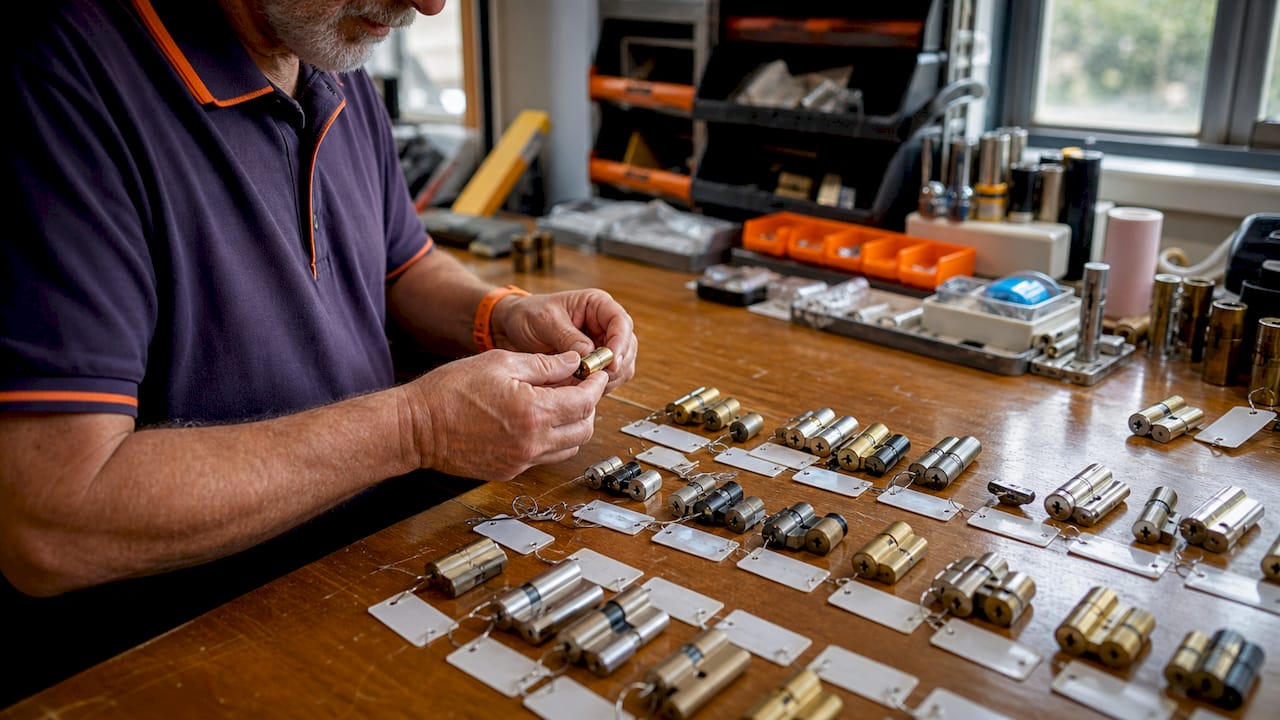
Lock type and security rating sit at the top of the list. A basic nightlatch costs far less to replace than a multipoint uPVC locking system. BS3621 mortice deadlocks cost between £45 and £90 in parts alone, nightlatch sets run from £60 to £140, and multipoint uPVC systems can reach £120 to £250 just for the hardware. Labour is charged on top of those figures.
For straightforward lock or cylinder changes, some jobs may come in at around £75–£110, particularly where access is simple and no additional door or mechanism work is required. A more useful overall budget for a standard planned lock replacement is around £100–£250. More complex replacements, multiple security upgrades or jobs involving substantial multipoint locking hardware can move into the £200–£600+ range. These figures overlap because the final cost depends on what is actually being replaced rather than there being one fixed price for every lock change.
Labour pricing models vary between locksmiths. Daytime, non-emergency work typically costs £60–£90 for the first hour and £30–£60 per additional half hour. Many locksmiths offer fixed-price quotes for straightforward jobs, which removes the risk of costs climbing if the job takes longer than expected. Master Locksmith Andrew Dunn notes that fixed pricing reduces uncertainty, whereas hourly rates can escalate quickly if complications arise.
Call-out fees are a separate charge that many homeowners overlook. Call-out fees range from £30 to £60 and are sometimes bundled into the total quote, sometimes not. Always ask before you agree to anything.
The following factors also push locksmith replacement costs upward:
- Lock type: A straightforward Euro cylinder is generally quicker and less expensive to change than a mortice lock or complete multipoint locking mechanism. Higher-security and insurance-approved locks can also cost more than basic alternatives.
- Door material. The construction of the door affects both the lock required and the work involved. Timber doors commonly use mortice locks or nightlatches, while uPVC and composite doors often use Euro cylinders with multipoint mechanisms. Aluminium and specialist commercial doors can require different hardware again.
- Time of day. A planned daytime appointment will normally cost less than an emergency visit at night, during a weekend or on a bank holiday. Out-of-hours labour and emergency attendance can therefore increase the overall cost even when the replacement lock itself is the same.
- Whether the old cylinder is snapped. If a Euro cylinder has snapped through wear, attempted forced entry or another fault, removing the remaining section can require additional work before the new cylinder can be installed. Damage to the surrounding mechanism or door can increase the cost further.
- Door condition. Warped frames, damaged strike plates, or stripped screws require additional labour beyond a simple supply-and-fit job. Door condition issues often account for more price variation than the lock hardware itself.
- Emergency and out-of-hours premiums. Night-time or weekend call-outs attract higher rates.
- VAT. Confirm whether your quote includes VAT. A £150 quote excluding VAT becomes £180 once it is added.
- Regional pricing. Locksmith rates vary across the UK, particularly between major cities and less densely populated areas.
Lock Replacement vs Rekeying: Which Costs Less?
Rekeying and full lock replacement solve different problems, and the price gap between them is meaningful.
Rekeying adjusts the internal pins of an existing lock so that old keys no longer work. It typically costs £50–£120, making it the cheaper option when the lock itself is in good condition. The limitation is that rekeying does not address worn mechanisms, outdated security ratings, or locks that fail insurance requirements.
Full lock replacement costs more upfront but delivers a new mechanism, a new security rating, and in many cases a warranty on parts and labour.
For budgeting purposes, the figures can be simplified as follows:
| Method | Typical cost | Best suited for |
|---|---|---|
| Rekeying | £50–£120 | Working lock, key control concern |
| Straightforward cylinder change | Around £75–£150 | Standard Euro cylinder or similar uncomplicated replacement |
| Standard planned lock replacement | Around £100–£250 | Damaged, outdated or non-compliant lock |
| Complex replacement/security upgrade | Around £200–£600+ | Multipoint mechanisms, substantial upgrades or more involved work |
| DIY replacement | Parts cost only | Internal doors, low-security applications |
These ranges should be treated as guides rather than fixed tariffs. A cylinder that can be removed normally may be inexpensive to change, whereas a snapped cylinder, damaged mechanism or unsuitable door hardware can turn the same basic job into a more time-consuming repair.
What are Typical Costs for Different Lock Types and Scenarios?
Real-world pricing varies by lock type and the circumstances of the job. The figures below reflect typical UK ranges for 2026.
Standard lock types
| Lock type | Parts cost | Typical total (parts and labour) |
| Yale-style nightlatch | £60–£140 | £120–£220 |
| BS3621 mortice deadlock | £45–£90 | £110–£200 |
| Euro cylinder (standard) | £20–£60 | Around £75–£150 for a straightforward replacement |
| Multipoint uPVC lock | £120–£250 | £200–£350+ |
| More complex lock/security upgrade | Varies by hardware | £200–£600+ depending on the work required |
The multipoint uPVC system is the most common lock on modern composite and uPVC doors in the UK. It is also one of the more labour-intensive systems to replace, which explains why the total cost sits at the higher end of the average lock replacement price range. If only the Euro cylinder needs changing rather than the complete multipoint mechanism, the cost can be considerably lower.
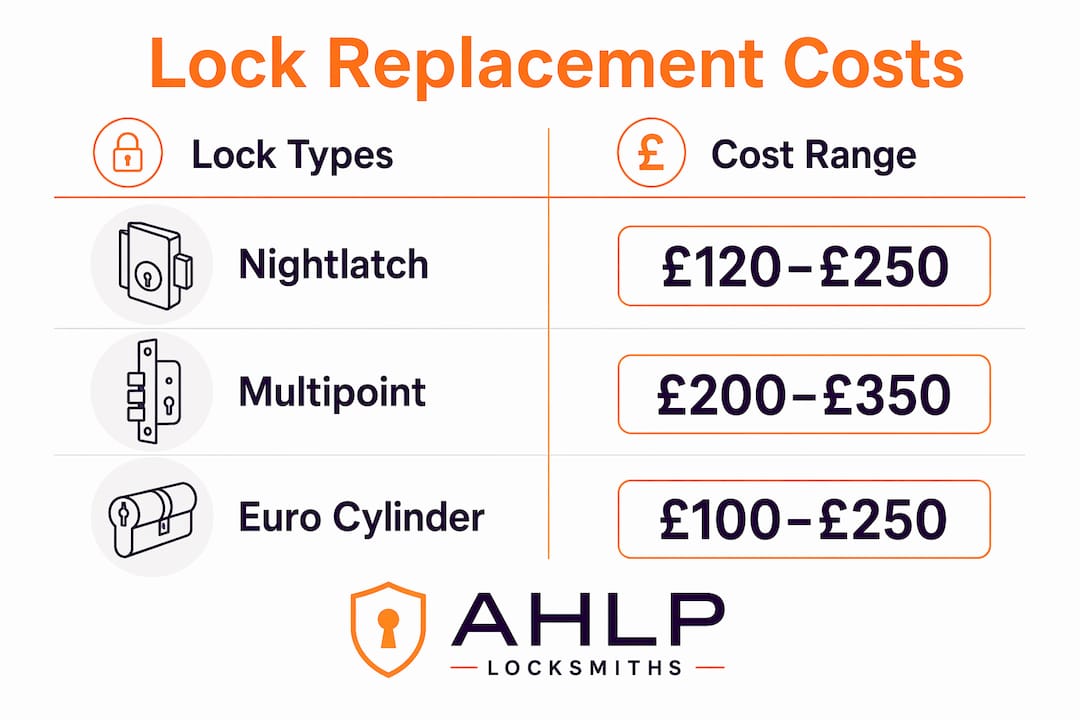
The multipoint uPVC system is the most common lock on modern composite and uPVC doors in the UK. It is also the most labour-intensive to replace, which explains why the total cost sits at the higher end of the average lock replacement price range.
Emergency and out-of-hours scenarios
Emergency lockout and gain-entry services carry their own pricing structure. Emergency services at night or peak times can cost from £120 to £300, and that figure covers gain-entry only. If the lock also needs replacing after entry is gained, the lock installation expenses are added on top.
The key cost drivers in an emergency are:
- Time of day (nights, weekends, and bank holidays attract the highest premiums)
- Whether the door or lock is damaged during entry
- Distance from the locksmith’s base
Business vs residential pricing
Commercial properties often face higher lock replacement costs due to heavier-duty hardware, master key system requirements, and the need to minimise downtime. A business replacing a single Euro cylinder on an office door sits at the lower end of the scale. A retail unit requiring a multipoint system with a master key arrangement sits considerably higher.
How to Budget and Plan For Lock Replacement Without Surprises
Planning ahead removes most of the cost uncertainty around lock replacement. Follow these steps before agreeing to any work.
Confirm what is included in the quote. Ask specifically whether the price covers parts, labour, call-out fees, and VAT. Call-out fees of £30–£60 are easy to miss if they appear as a separate line item after the fact.
Ask whether the price is fixed or hourly. A fixed price protects you if the job takes longer than expected. An hourly rate is reasonable for simple jobs but can increase quickly if door repairs are needed.
Clarify exactly what is being replaced. There is a significant difference between replacing only the cylinder, swapping the internal mechanism, and fitting an entirely new lockset. Each has different cost and security implications.
Assess your door at the same time. Damaged strike plates, warped frames, or stripped screws can add labour costs that were not in the original estimate. A good locksmith will flag these before starting work, not after.
Check for a warranty. Reputable locksmiths offer a warranty on both parts and labour. This protects you if the lock develops a fault shortly after fitting.
Consider your insurance requirements. Many home insurance policies require locks to meet British Standard BS3621. Fitting a non-compliant lock to save money can invalidate your cover, which costs far more in the long run.
Pro Tip: If you are a landlord or business owner replacing multiple locks, ask about a combined price for the full job. Volume work often attracts a better rate than individual call-outs.
Key Takeaways
For most planned jobs, a sensible UK lock replacement cost guide is around £100–£250. Straightforward cylinder changes can sometimes cost around £75–£150, while complex replacements and substantial security upgrades can reach £200–£600 or more.
| Point | Details |
| Planned vs emergency pricing | Planned jobs commonly cost around £100–£250; emergency and out-of-hours work can cost considerably more. |
| Simple cylinder changes | Straightforward replacements may cost around £75–£150 where no additional mechanism or door repairs are needed. |
| Lock type drives parts cost | Multipoint uPVC systems cost £120–£250 in parts alone, far more than a standard cylinder. |
| Complex replacements | More involved lock changes or security upgrades can reach £200–£600+ depending on hardware and labour. |
| Door condition adds labour | Warped frames and damaged strike plates raise costs beyond the basic supply-and-fit price. |
| Door material matters | Timber, uPVC, composite and aluminium doors use different locking systems and can require different amounts of labour. |
| A snapped cylinder can increase the bill | Extra labour may be required to extract the remaining cylinder and check whether the mechanism or door has also been damaged. |
| Rekeying is cheaper but limited | Rekeying costs £50–£120 but does not address worn mechanisms or insurance compliance. |
| Always clarify call-out fees | Call-out fees of £30–£60 may be separate; confirm before agreeing to any quote. |
My Honest View on Lock Replacement Costs and Security
I have seen the same pattern repeat itself over many years of locksmith work. A homeowner calls after a break-in, or after losing their keys, and their first question is always about price. That is completely understandable. But the second question, the one that matters more, is rarely asked: what does my door actually need?
The lock is only part of the picture. A brand-new British Standard mortice deadlock fitted to a door with a damaged frame or a weak strike plate offers far less protection than it should. The lock does its job. The door does not. Paying £200 for a quality lock and skipping a £30 strike plate repair is a false economy.
The other thing I see regularly is people choosing the cheapest quote without checking what it covers. A quote of £80 that excludes parts, VAT, and a call-out fee can easily become £180 by the time the job is done. Transparent pricing is not just a courtesy. It is the only way to make a fair comparison.
My advice is straightforward. Treat lock replacement as a security decision first and a cost decision second. Choose a locksmith who assesses the full door, not just the lock. And always get the quote in writing before any work begins. The lock replacement options available for UK homes in 2026 are genuinely good. The right choice, fitted correctly, gives you years of reliable security and genuine peace of mind.
— Martyn
How AHLP Can Help With Lock Replacement Across Bristol and Beyond
Ahlp provides professional lock replacement and emergency locksmith services across Bristol, South Gloucestershire, and Gloucester. We charge no call-out fee, offer transparent fixed pricing, and use British Standard and insurance-approved hardware on every job. Whether you need a straightforward Euro cylinder swap or a full multipoint uPVC replacement, our DBS-checked locksmiths assess the whole door, not just the lock, so you get the right solution at a fair price. For trusted locksmith services available 24 hours a day, call us on 07700 100146 or visit ahlp.co.uk to arrange a visit.
FAQ
How much does lock replacement cost in the UK?
Lock replacement cost in the UK typically ranges from £100 to £250 for a planned job. A straightforward cylinder change may cost around £75–£150, while complex replacements or substantial security upgrades can reach £200–£600 or more. Emergency or out-of-hours replacements can cost significantly more.
What affects the cost to change locks in the UK?
The main factors are the type of lock being changed, the material and condition of the door, the time of day and whether the existing cylinder or mechanism is damaged. A straightforward daytime cylinder replacement will normally cost less than an emergency multipoint lock replacement, particularly if a snapped cylinder first needs to be extracted.
What is the average lock replacement price for a uPVC door?
Multipoint uPVC lock systems cost £120–£250 in parts alone, with total fitted prices often reaching £200–£350 depending on labour and door condition.
Is rekeying cheaper than full lock replacement?
Rekeying typically costs £50–£120, making it cheaper than full replacement. However, it does not address worn mechanisms, outdated security ratings, or insurance compliance requirements.
Are call-out fees included in locksmith quotes?
Not always. Call-out fees of £30–£60 are sometimes charged separately. Always confirm whether your quote is fully inclusive before agreeing to the work.
When should I replace a lock rather than repair it?
Replace a lock when it is damaged, fails to meet British Standard BS3621, or when key control has been compromised, such as after a tenancy change or a lost key.