
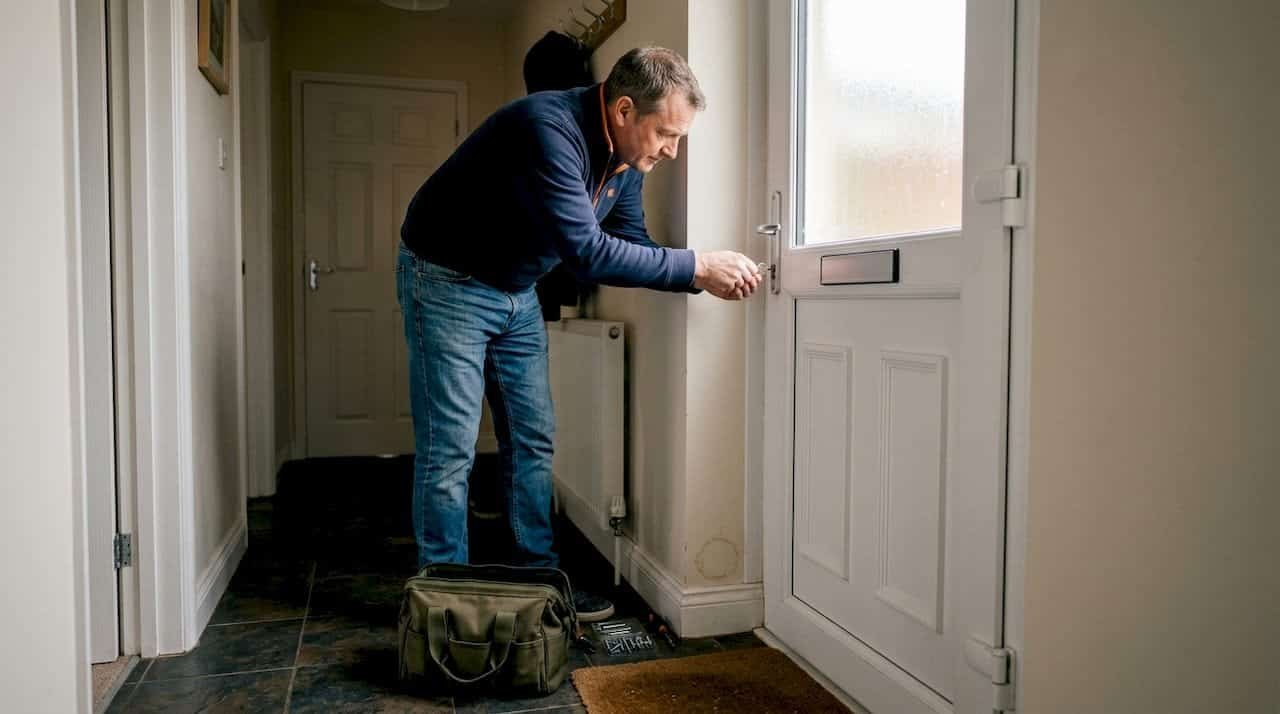
A stiff handle, a key that turns but does nothing, a door that simply refuses to latch properly — these are the moments that turn a quiet evening into a security headache. UPVC door locks are robust by design, but they do fail, and when they do, the consequences range from mild inconvenience to a genuine gap in your home’s defences. The good news is that many of the most common faults are fixable without calling anyone out, provided you know what you’re looking for and how to approach the repair safely. This guide walks you through everything you need, from diagnosis to testing, written specifically for homeowners and property managers across Bristol and South Gloucestershire.
Table of Contents
- Understanding common UPVC door lock issues
- Essential tools and materials for UPVC door lock repair
- Step-by-step guide to repairing your UPVC door lock
- Verifying your UPVC lock repair and enhancing security
- Troubleshooting and common mistakes in UPVC lock repair
- Professional locksmith support for complex UPVC lock repairs
- Frequently asked questions
Key Takeaways
| Point | Details |
|---|---|
| Diagnose before repairing | Testing the lock with the door open helps prevent unnecessary replacements and saves money. |
| Prepare with the right tools | Having the correct kit and safety equipment ready makes repairs safer and simpler. |
| Follow step-by-step instructions | A clear sequence reduces the risk of error and ensures reliable lock function. |
| Verify and maintain security | Always test thoroughly after repairs and consider upgrades for better home protection. |
| Know when to call a professional | Some issues need an expert’s touch—don’t force repairs if problems persist. |
Understanding Common UPVC Door Lock Issues
Before you reach for a screwdriver, you need to know exactly what you’re dealing with. UPVC door locks fail in several distinct ways, and treating the wrong fault wastes time and money. The most frequent problems fall into a handful of categories that are straightforward to identify once you know the signs.
Common warning signs of a faulty UPVC door lock include:
- Stiff or heavy door handle that requires real force to push down
- Key turns freely but nothing engages, suggesting a snapped or worn cam
- Door locks from the inside but not the outside, or vice versa
- Multipoint lock bolts that only partially extend when the handle is lifted
- Grinding or clicking sounds when operating the mechanism
- Door that appears locked but can be pushed open with light pressure
One of the most important distinctions to make early is between a misalignment fault and a full mechanism failure. These look similar from the outside but require very different fixes. Misalignment is often misdiagnosed as a complete mechanism failure, leading to unnecessary and expensive replacements that could have been avoided entirely.
Pro Tip: Test your UPVC door lock with the door held open. If the handle moves freely and the bolts extend without resistance, your mechanism is likely fine and the problem is misalignment between the lock body and the keep (the metal plate on the frame). This single test can save you the cost of a new lock.
For a broader look at what might be going wrong, our UPVC lock troubleshooting tips and guide to common lock problems cover a wide range of scenarios in plain language. Getting the diagnosis right first is the foundation of every successful repair.
Essential Tools and Materials for UPVC Door Lock Repair
Once you’ve identified the likely fault, gathering the right tools before you start makes the whole process significantly smoother. Attempting a repair while hunting for a screwdriver mid-job is how small mistakes happen. Good preparation reduces errors and frustration considerably.
Here’s what you’ll need for the most common UPVC door lock repairs:
| Tool or material | Purpose |
|---|---|
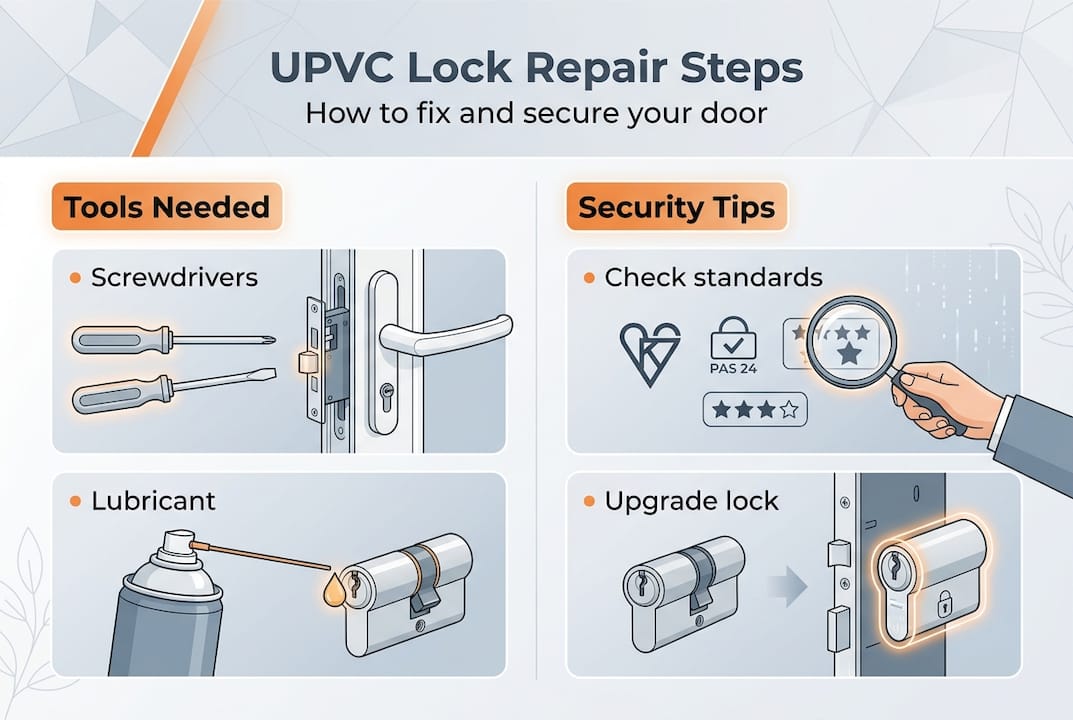
| Pozidrive screwdrivers (PZ1 and PZ2) | Removing lock faceplate and cylinder screws |
| Tape measure | Measuring euro cylinder size (e.g. 35/45mm) |
| PTFE or graphite lubricant spray | Freeing stiff mechanisms and gearboxes |
| Replacement euro cylinder | Swapping a worn or damaged cylinder |
| Replacement multipoint gearbox | Fixing failed locking points |
| Allen keys (hex set) | Adjusting hinge positions |
| Safety gloves | Protecting hands from sharp metal edges |
| Safety glasses | Shielding eyes during any drilling or spraying |
| Small cup or magnetic tray | Keeping screws safe during disassembly |
For Bristol and South Gloucestershire residents, replacement euro cylinders and multipoint gearboxes are available from most local builders’ merchants and online suppliers. Always measure your existing cylinder before ordering. The standard measurement is from the centre of the fixing screw to each end, so a 35/45 cylinder measures 35mm on one side and 45mm on the other.
Understanding the specific type of mechanism in your door is equally important. Our guide to UPVC door lock mechanism types explains the differences between hook bolt, roller cam, and deadbolt systems, which affects which parts you’ll need.
Pro Tip: As soon as you remove any screws or fixings, drop them straight into a small cup or magnetic tray. UPVC door screws are an unusual size and losing even one can delay your repair by days while you wait for a replacement.
Step-By-Step Guide to Repairing Your UPVC Door Lock
With tools ready and fault identified, work through these steps in order. Skipping ahead is tempting but rarely saves time.
-
Check alignment first. Open the door fully and operate the handle. If everything moves smoothly, close the door slowly and watch where the bolts meet the keep. Misaligned keeps are visible as scuff marks or scratches on the metal. Loosen the keep screws slightly and reposition it by 1 to 2mm, then retest.
-
Lubricate the mechanism. With the door open, spray a small amount of PTFE lubricant directly into the lock faceplate slots where the bolts emerge. Work the handle up and down ten times to distribute it. Avoid WD-40 as a long-term solution — it attracts dust and degrades internal components over time.
-
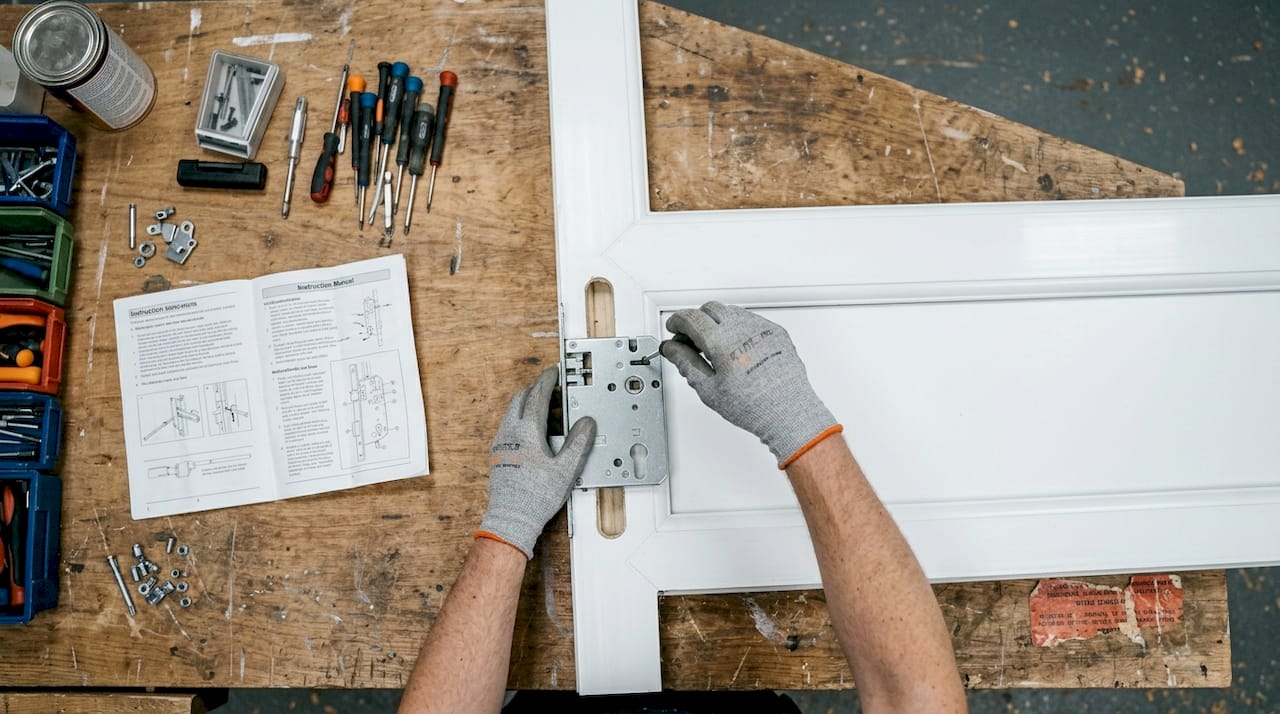
Remove the euro cylinder if needed. Open the door and locate the single retaining screw on the lock faceplate, usually positioned centrally. Remove it fully. Insert your key and turn it slightly (about 10 degrees) to retract the cam, then slide the cylinder straight out. Note the orientation before removing.
-
Fit the replacement cylinder. Slide the new cylinder in with the cam aligned to the slot, insert the key slightly to guide it into position, then reinsert and tighten the retaining screw. Do not overtighten — finger tight plus a quarter turn is sufficient. Overtightening can crack the cylinder housing or distort the door profile.
-
Adjust the hinges if misalignment persists. Most UPVC door hinges have adjustment screws accessible from the hinge face. A 3mm or 4mm Allen key allows you to move the door up, down, in, or out by a few millimetres. Make small adjustments and test after each one.
-
Test with the door open, then closed. Operate the handle and key in both positions. Correct diagnosis avoids unnecessary replacement and confirms whether your repair has resolved the root cause rather than just masking it.
For a more detailed walkthrough of specific scenarios, our repair process details page covers additional fault types, and our guide on how to restore door security explains what to check after any repair. We also have specific advice on protecting Bristol homes from the most common local security risks.
A note on multipoint gearbox replacement: If your bolts extend unevenly or one locking point fails entirely, the gearbox itself may need replacing. This is a more involved repair but follows the same principle — remove the faceplate screws, slide out the old gearbox, and fit the new one in the same orientation.
Verifying Your UPVC Door Lock Repair and Enhancing Security
Completing the repair is only part of the job. Verifying it properly ensures you’re not left with a false sense of security.
Work through this checklist after every repair:
- Handle operates smoothly with no stiffness in both directions
- All multipoint bolts extend fully when the handle is lifted
- Key turns cleanly in both directions without force
- Door locks and unlocks from both inside and outside
- No grinding, clicking, or resistance during normal operation
- Door sits flush in the frame with no visible gaps
Once you’re satisfied the repair is solid, it’s worth comparing your options going forward:
| Option | Approximate cost | Security improvement | Effort |
|---|---|---|---|
| Lubrication and alignment | £0 to £10 | Moderate (restores function) | Low |
| Euro cylinder replacement | £15 to £40 | Good (removes worn cylinder) | Low to medium |
| Full gearbox replacement | £30 to £80 | Good (restores all locking points) | Medium |
| Anti-snap cylinder upgrade | £25 to £60 | Excellent (insurance-approved) | Low to medium |
| Full lock system replacement | £80 to £200+ | Excellent (new hardware throughout) | High or professional |
For Bristol and South Gloucestershire homes, upgrading to an anti-snap euro cylinder at the same time as a repair is a smart move. Standard cylinders are vulnerable to a technique called lock snapping, where the cylinder is physically broken to bypass the lock entirely. Anti-snap cylinders are designed to break at a sacrificial point that leaves the lock mechanism intact.
“Home security is only as strong as your lock’s weakest point.” This is especially relevant for UPVC doors, where the cylinder is often the most exposed component.
Our guides on enhanced UPVC door security and lock upgrade benefits explain which products meet British Standard BS3621 and are accepted by most home insurance policies.
Troubleshooting and Common Mistakes in UPVC Door Lock Repair
Even a careful repair can leave problems behind. Here’s what to look for and what to avoid.
Signs your repair may be incomplete:
- The door locks with the key but the handle still feels stiff
- One or more locking points still don’t engage fully
- The door locks but rattles noticeably in the frame
- The key requires more force than it should
If any of these persist after following the steps above, the gearbox is the most likely culprit. A worn or cracked gearbox cannot be repaired with lubrication alone and will need replacing.
Common mistakes to avoid:
- Forcing a stiff mechanism rather than lubricating it first, which can snap internal components
- Overtightening the cylinder retaining screw, which distorts the cylinder and makes key operation harder
- Skipping the open-door test, which is the fastest way to avoid misdiagnosis and unnecessary parts spending
- Buying the wrong cylinder size because the existing one wasn’t measured before ordering
- Ignoring hinge adjustment when alignment is the actual problem
Pro Tip: Before purchasing any replacement parts, photograph your existing lock and note the brand name printed on the faceplate or cylinder. Many UPVC gearboxes are brand-specific, and fitting an incompatible part is a common and avoidable waste of money.
Knowing when to stop is also important. If the door frame itself is warped, if there’s visible damage to the lock body, or if the door has been forced at some point, the repair may be beyond straightforward DIY. Our lock replacement workflow guide explains the process when a full replacement is the right call.
Professional Locksmith Support for Complex UPVC Door Lock Repairs
Most UPVC door lock faults are manageable at home with the right guidance, but some situations genuinely call for a professional. If your door has been forced, if the frame is damaged, or if you’ve worked through the steps above and the problem persists, attempting further DIY risks making things worse. At AHLP Locksmiths, we cover Bristol, South Gloucestershire, and Gloucester with fast response times, no call-out fees, and transparent pricing from the outset. Our professional locksmith services include UPVC mechanism repair, anti-snap cylinder upgrades, and full security assessments using British Standard and insurance-approved hardware. We use non-destructive methods wherever possible, so your door stays intact. If you’d like to understand exactly what a professional repair involves before booking, our step-by-step locksmith guidance walks you through the process. Call us on 07700 100146 or visit ahlp.co.uk to arrange a visit at a time that suits you.
Frequently Asked Questions
What are the signs I need to repair or replace my UPVC door lock?
Stiff handles, key rotation with no action, and partial locking are the clearest warning signs. If the door fails to latch fully or feels insecure when closed, treat it as urgent.
Is it safe for homeowners to repair a UPVC door lock themselves?
Yes, most basic repairs including cylinder replacement and alignment adjustment are safe with standard tools and this guidance. Complex faults involving a damaged frame or forced entry should always be handled by a qualified locksmith.
What is the most common mistake in UPVC door lock repair?
Misalignment misdiagnosed as mechanism failure is the most frequent and costly error. Always test with the door open before buying any replacement parts.
Should I replace or just repair my UPVC door lock?
If the lock functions correctly after lubrication and alignment adjustment, repair is sufficient. Correct diagnosis avoids unnecessary replacement and saves money, but persistent faults or physical damage to the mechanism warrant a full replacement.