
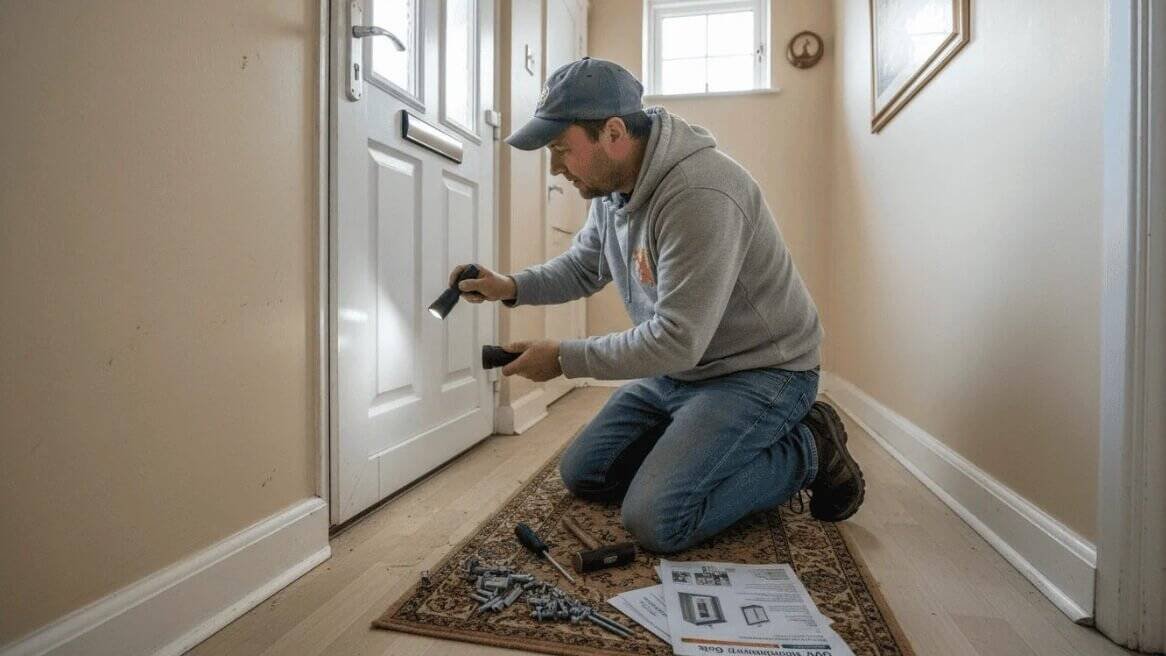
Struggling to lock your UPVC door can turn a simple day at home in Bristol or South Gloucestershire into a real hassle. A faulty lock does more than cause frustration—it leaves your home’s security uncertain. By understanding proper inspection and DIY troubleshooting steps, you can often solve common UPVC door lock issues yourself and avoid an emergency locksmith call. This guide walks you through simple checks, tools, and practical solutions to help restore peace of mind and secure entry for your household.
Table of Contents
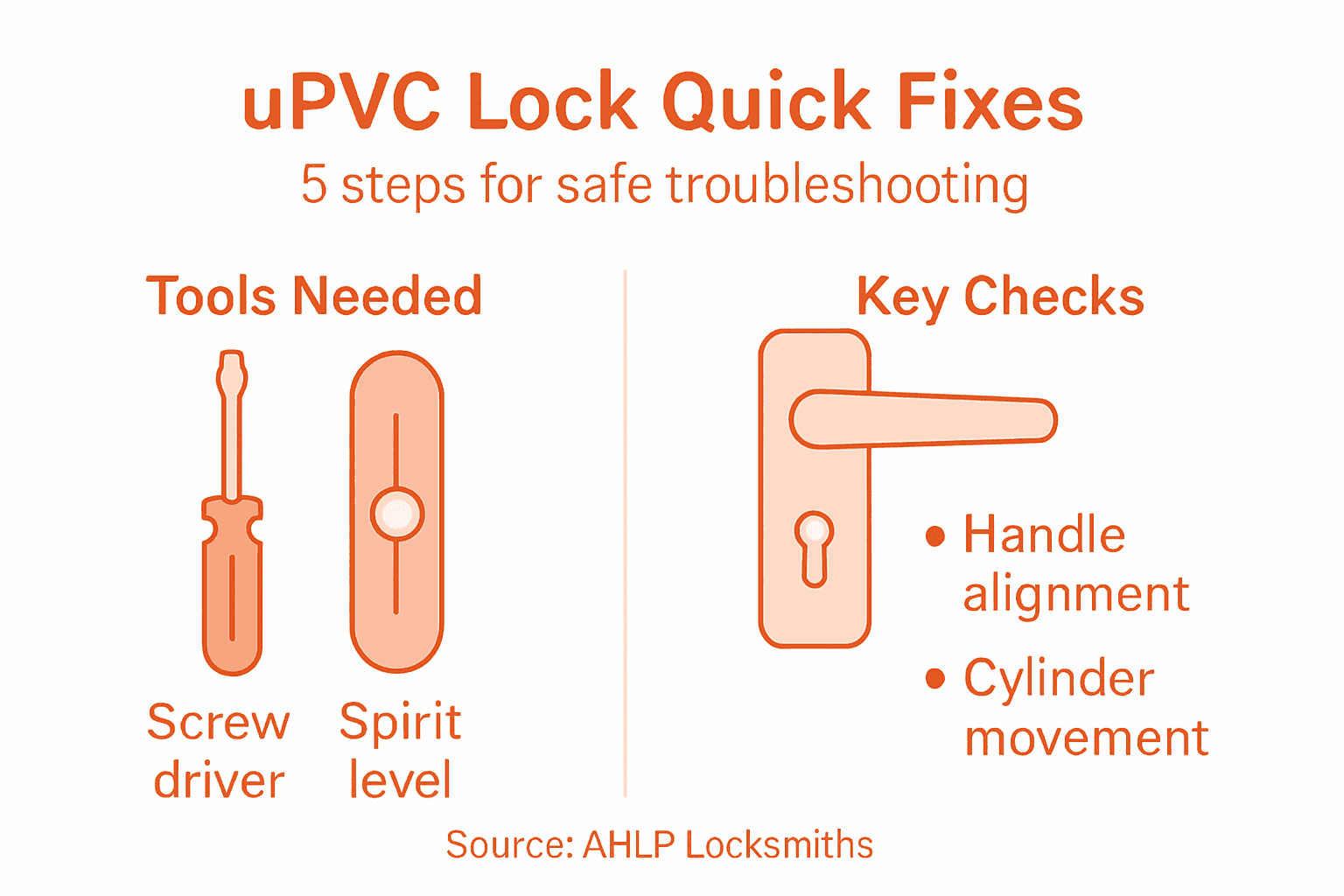
- Step 1: Gather Essential Tools And Safety Gear
- Step 2: Inspect Door Handle And Lock Alignment
- Step 3: Test Key Operation And Cylinder Movement
- Step 4: Examine Locking Mechanism And Components
- Step 5: Apply Simple Solutions And Test Function
Quick Summary
| Essential Insight | Explanation |
|---|---|
| 1. Assemble Proper Tools and Gear | Gather screwdrivers, gloves, and safety glasses to ensure a safe and effective repair process. |
| 2. Inspect Handle and Lock Alignment | Check for gaps and smooth operation to prevent locking issues caused by misalignment. |
| 3. Test Key and Cylinder Operation | Ensure the key inserts smoothly and turns easily to identify possible internal lock problems. |
| 4. Examine Lock Components Carefully | Assess the gearbox, locking points, and overall mechanism for visible wear or misalignment. |
| 5. Apply Simple Maintenance Solutions | Lubricate and adjust components methodically to improve lock functionality and avoid costly repairs. |
Step 1: Gather Essential Tools and Safety Gear
Before diving into uPVC door lock repair, collecting the right tools can make your job significantly smoother and safer. Experienced DIY enthusiasts know that having the proper equipment prevents potential damage and ensures a professional-quality repair.
You’ll want to assemble a comprehensive toolkit that includes:
- Phillips screwdrivers in multiple sizes
- Flat head screwdrivers with varying tip widths
- T20 star key for specialised uPVC mechanisms
- Work gloves to protect your hands
- Safety glasses to shield your eyes
- Clean workspace cloth or drop sheet
Preparing your workspace is equally crucial. Clear a clean, well-lit area where you can lay out your tools and work systematically. Ensure you have adequate lighting and space to manoeuvre around the door mechanism comfortably.
Always keep the door open during repairs to prevent accidental locking and potential entrapment.
Expert Tip: Organise your screws in a magnetic parts tray or small labelled container to prevent losing critical components during your repair.
Step 2: Inspect Door Handle and Lock Alignment
Inspecting your uPVC door’s handle and lock alignment is crucial for preventing potential locking problems. Seasonal temperature changes can cause significant door misalignment, which might prevent smooth operation of your lock mechanism.
To diagnose potential alignment issues, you’ll want to perform a systematic check:
- Visually examine the door frame and door edges
- Check for any visible gaps between the door and frame
- Test the door handle’s movement and stability
- Verify the smoothness of the door’s closing mechanism
- Look for signs of uneven wear or friction points
When checking lock alignment, pay close attention to how the lock engages with the strike plate. Hinge misalignment can significantly impact lock function, making it difficult to secure your door properly.
Precise alignment ensures your uPVC door locks securely and operates smoothly every time.
Expert Tip: Use a spirit level to check horizontal and vertical alignments, which can reveal subtle misalignments not visible to the naked eye.
Step 3: Test Key Operation and Cylinder Movement
Testing your uPVC door key and lock cylinder is a critical diagnostic step that can reveal underlying mechanical issues. Key operation problems often indicate internal lock mechanism complications, which might require careful investigation or professional intervention.
Proceed with a systematic key and cylinder examination:
- Gently insert the key into the cylinder
- Check for smooth, unobstructed key insertion
- Attempt to turn the key with minimal resistance
- Observe any unusual grinding or sticking sensations
- Note the key’s rotational range and smoothness
Persistent key turning difficulties might signal internal lock damage, requiring a more comprehensive assessment. Pay close attention to how the cylinder moves and whether the key operates without excessive force or unusual sounds.
A well-functioning lock cylinder should allow effortless key insertion and rotation without unusual friction or resistance.
Expert Tip: Keep a small container of graphite lubricant nearby to address minor cylinder stiffness, but avoid over-lubricating, which can attract dirt and debris.
Step 4: Examine Locking Mechanism and Components
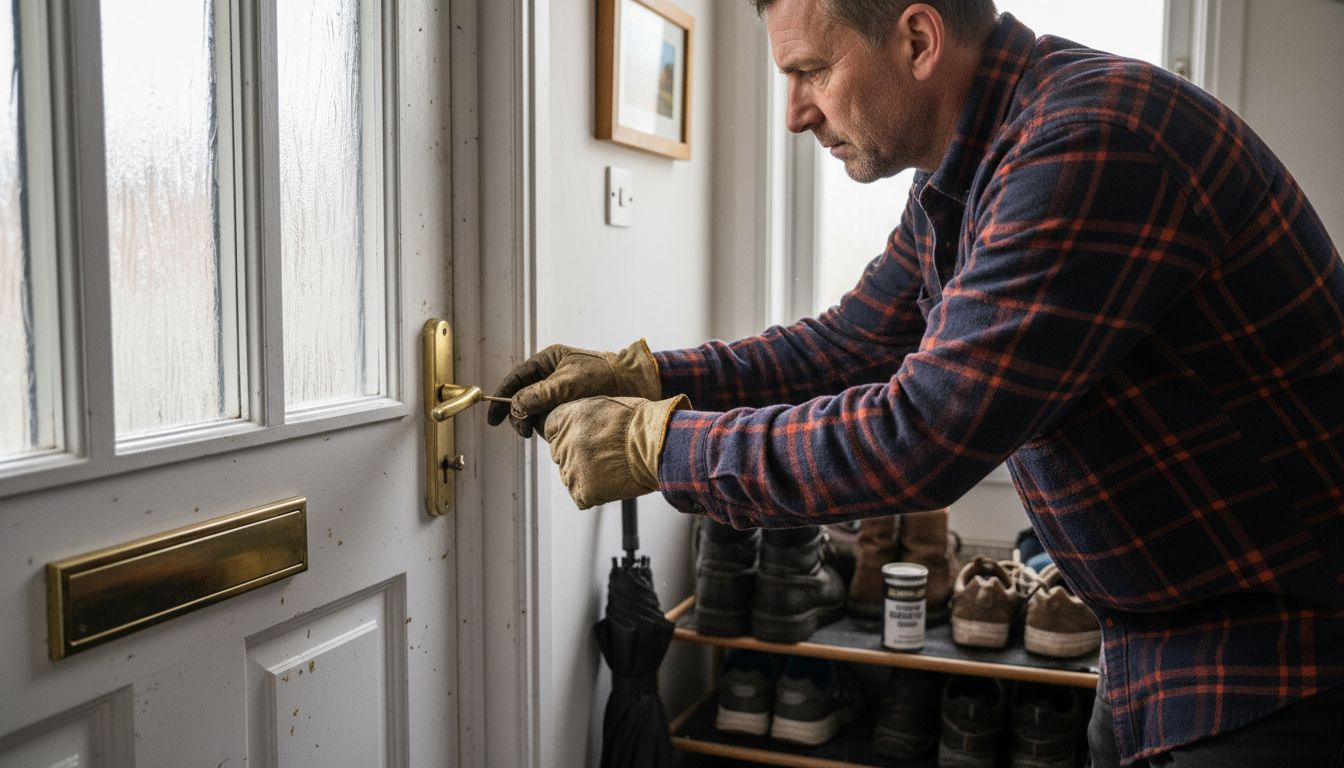
Carefully investigating your uPVC door’s locking mechanism requires a methodical approach to understand potential mechanical issues. Understanding lock mechanism intricacies can help you diagnose problems before they escalate into more serious repairs.
When examining the multipoint locking system, focus on these critical components:
- Inspect the gearbox for visible signs of wear
- Check roller points and their smooth movement
- Examine locking points along the door frame
- Look for any misalignment or rust on metal components
- Verify the integrity of connection points
Multipoint locking systems typically have several engagement points along the door’s edge, each requiring individual assessment. Pay special attention to how these components interact and whether they move freely without obstruction.
For easy reference, here’s a summary of common uPVC door lock issues and their likely causes:
| Issue Detected | Possible Cause | Typical Solution |
|---|---|---|
| Key sticks in the cylinder | Dirty or dry mechanism | Apply graphite lubricant |
| The handle feels loose | Worn screws or fixings | Tighten or replace screws |
| Door misaligned | Seasonal changes or loose hinges | Adjust hinges, realign door |
| Grinding sound in the lock | Internal wear or debris | Clean and inspect the mechanism |
| Multipoint lock not engaging | Gearbox or alignment issue | Check gearbox, realign points |
A well-maintained locking mechanism should operate smoothly with minimal resistance and consistent engagement.
Expert Tip: Use a torch and magnifying glass to inspect hard-to-see mechanism details, which can reveal hairline cracks or subtle mechanical wear not visible to the naked eye.
This table outlines the benefits of maintaining each key uPVC door lock component:
| Component Checked | Why It Matters | Business Impact |
|---|---|---|
| Lock cylinder | Ensures smooth, secure entry | Enhances home security |
| Door handle | Prevents unnecessary force | Prolongs the mechanism’s life |
| Strike plate | Guarantees positive lock engagement | Reduces forced entry risk |
| Roller and locking points | Maintains an even seal and closure | Improves energy efficiency |
Step 5: Apply Simple Solutions and Test Function
After comprehensive diagnostics, it’s time to apply targeted solutions that might resolve your uPVC door lock issues. Practical home repair techniques can often prevent costly professional interventions and restore your door’s functionality.
Try these straightforward remedial actions:
- Lubricate the lock cylinder with graphite-based spray
- Gently clean the mechanism contact points
- Realign locking points if slight misalignment exists
- Tighten any loose screws around the mechanism
- Test the key operation after each minor adjustment
Each intervention requires careful, incremental testing. After applying a solution, systematically check the lock’s performance by inserting the key, turning smoothly, and verifying full engagement across all locking points.
Simple maintenance can often resolve complex-seeming lock mechanism problems without expensive replacements.
Expert Tip: Work slowly and patiently, making one adjustment at a time and testing thoroughly to avoid introducing additional complications.
Secure Your uPVC Door with Trusted Expert Locksmith Services
If you have followed the uPVC Door Lock Troubleshooting Guide for Quick Fixes but still face issues such as misaligned handles, stiff key cylinders, or faulty multipoint locking systems, it is time to consider professional help. These common problems can affect your home security and energy efficiency. AHLP Locksmiths specialises in diagnosing and repairing all types of uPVC door locks with precision and care using quality British Standard components.
Don’t let a troublesome lock compromise your safety or peace of mind. Our expert team provides reliable locksmith services across Bristol, South Gloucestershire and Gloucester with fast response and no call-out fees. For urgent lock repairs or emergency lockouts, you can also rely on our dedicated emergency locksmith support.
Take control of your home’s security today by contacting AHLP Locksmiths for a thorough assessment and trusted repair. Visit our contact page now or call 07700 100146 to arrange a visit from a local family-run business committed to your safety and satisfaction.
Frequently Asked Questions
What should I do if my uPVC door key won’t turn in the lock?
To resolve a key that won’t turn, first check if the key is clean and free of debris. If it still won’t turn, apply a graphite-based lubricant to the lock cylinder and gently insert and turn the key several times. This should improve its operation within a few attempts.
How can I tell if my uPVC door is misaligned?
To determine if your uPVC door is misaligned, visually inspect the gaps between the door and the frame. If you notice uneven gaps or if the door sticks when closing, it may require adjustment. You can use a spirit level to check for alignment and make necessary alterations to the hinges.
Why is my uPVC door handle loose, and how can I fix it?
A loose uPVC door handle may be due to worn screws or fixings. To fix it, simply tighten the screws on the handle using a Phillips screwdriver. Check the snugness regularly to prevent future issues.
What steps can I take if my multipoint locking system won’t engage?
If your multipoint locking system won’t engage, first inspect the locking points for any misalignment or debris. You can clean the mechanisms and realign the locking points by gently adjusting them. Test the lock’s operation afterwards to ensure it functions correctly.
How often should I lubricate my uPVC door lock?
It is recommended to lubricate your uPVC door lock every six months to maintain smooth operation. Apply graphite lubricant to key components, as this can help prevent sticking and other mechanical issues.
What are common signs of wear in a uPVC door lock mechanism?
Common signs of wear include difficulty turning the key, unusual grinding noises when locking or unlocking, and a loose door handle. Inspect these components regularly and address any issues promptly to extend the life of the lock mechanism.