
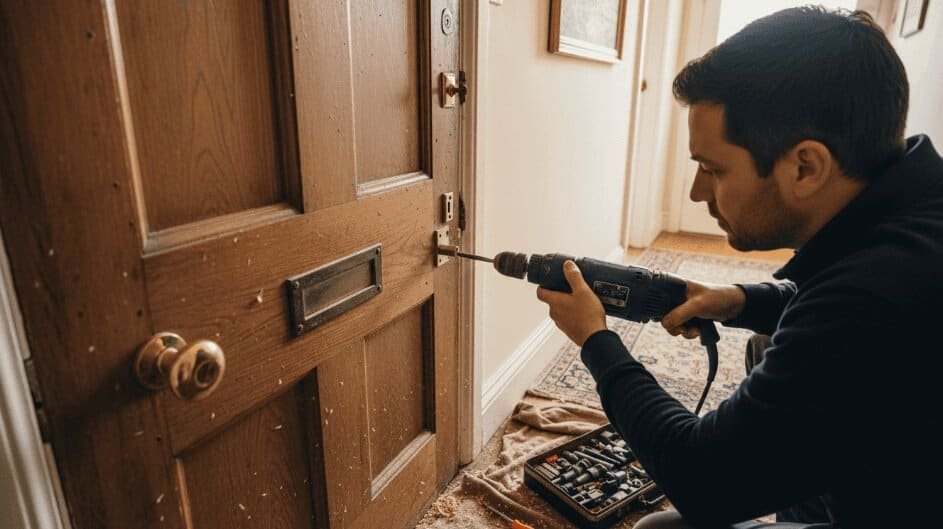
Every Bristol property owner knows the risks that come with inadequate locks, but the threat extends beyond burglary alone. Compliance with lock insurance standards is not just a formality—it directly affects whether your insurer will cover losses if something goes wrong. This guide clears up the benchmarks your locks need to meet, helping you protect your claim, your assets, and your peace of mind.
Table of Contents
- What Are Lock Insurance Standards?
- Types of Insurance-Approved Locks in the UK
- How Standards Impact Claims and Coverage
- Legal Compliance and Homeowner Obligations
- Common Pitfalls and Ensuring Compliance
Key Takeaways
| Point | Details |
|---|---|
| Importance of Lock Standards | Compliant locks are critical for insurance coverage; non-compliance can lead to claim denials. |
| Types of Insurance-Approved Locks | Different locks meet varying security standards; ensure your locks align with insurance requirements. |
| Regular Maintenance | Maintain locks in good condition; regular checks can prevent non-compliance during claims. |
| Informing Insurers | Always notify your insurer of any lock changes to keep your coverage valid and up-to-date. |
What Are Lock Insurance Standards?
Lock insurance standards are the security benchmarks your insurance company expects your locks to meet. They’re not optional suggestions—they’re requirements that directly affect whether your policy covers a break-in or not.
Think of these standards as a contract between you and your insurer. You install approved locks; they agree to protect you financially if something goes wrong. Without compliant locks, insurers can deny claims, leaving you to cover losses out of pocket.
Why Insurance Companies Care About Lock Standards
Insurers want to reduce risk. They’ve analysed thousands of break-ins and discovered that certain locks perform better against common intrusion methods. British Standard locks like BS3621, BS8621, and BS10621 have been rigorously tested for resistance to picking, drilling, and forced entry.
When you install these locks, you’re telling your insurer: “My property is harder to break into.”
That reduced risk translates into lower claims payouts for them, which benefits everyone.
The Main Lock Insurance Standards You’ll Encounter
The UK recognises several key lock standards:
- BS3621 – The most common standard for mortice locks on residential doors
- BS8621 – Upgraded performance for higher-security requirements
- BS10621 – Advanced testing for locks facing increased theft risk
- Anti-snap locks – Specifically designed to resist modern break-in techniques like cylinder snapping
Each standard requires locks to pass specific durability, resilience, and operational reliability tests. International and UK-specific security standards ensure locks provide adequate protection across different property types and risk levels.
Here’s a quick reference comparing the main British lock standards and where they’re commonly used:
| Lock Standard | Typical Use | Key Security Feature |
|---|---|---|
| BS3621 | Residential doors | Defends against picking and drilling |
| BS8621 | High-risk residential doors | Enhanced performance, quick escape |
| BS10621 | Shops, valuables storage | Resists advanced forced entry |
| Anti-snap | uPVC/composite doors | Prevents cylinder snapping attacks |
How Standards Protect Your Coverage
Most home and business insurance policies state that locks must meet certain standards. If you don’t comply, your insurer can refuse to pay claims for break-in damage. This isn’t uncommon—many homeowners discover this after a burglary when it’s too late.
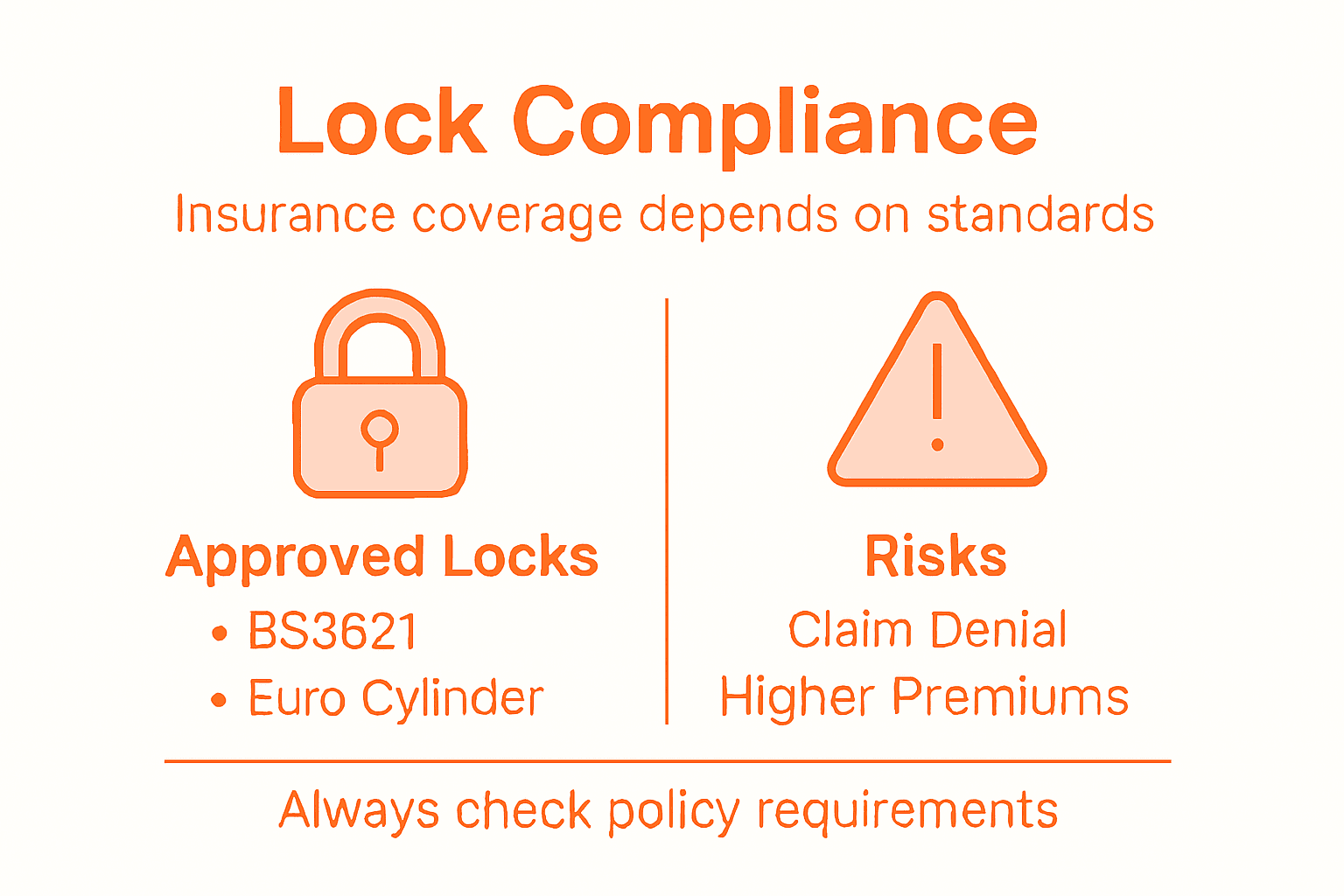
Compliance also demonstrates due diligence. If you’ve taken reasonable steps to secure your property, insurers view you as a lower-risk customer.
What Makes a Lock “Insurance-Approved”
Insurance-approved locks meet one of the British Standards mentioned above. They’ve undergone independent testing and received certification proving they resist:
- Picking attempts
- Drilling attacks
- Bumping techniques
- Physical force and leverage
- Cylinder snapping (for anti-snap variants)
Not all locks are created equal. A basic budget lock might look fine, but it won’t satisfy your insurer’s requirements.
Lock compliance isn’t about passing an invisible test—it’s about protecting your claim when you need it most.
Standards Vary by Property Type
A residential home has different requirements than a commercial shop. Bristol homeowners typically need BS3621 locks on primary entry doors, whilst business premises may require BS8621 or anti-snap upgrades depending on contents value and location risk.
Your insurance policy should specify which standards apply to your property. If it doesn’t, that’s worth clarifying with your insurer before any work is done.
Pro tip: Contact your insurance provider and ask for their specific lock requirements in writing—this prevents costly misunderstandings later and ensures any upgrades you pay for actually meet their standards.
Types of Insurance-Approved Locks in the UK
Not all locks meet insurance standards. The type you choose depends on your door, your property’s risk level, and what your insurer requires. Getting this wrong means you could face rejected claims when you need protection most.
The UK recognises several lock types that satisfy insurance requirements. Each serves a different purpose and performs differently against break-in attempts.
Mortice Locks (BS3621)
Mortice locks are the most common choice for residential doors. They’re fitted inside the door frame, making them stronger than surface-mounted alternatives. These locks typically require BS3621 certification, the standard benchmark for most home insurance policies.
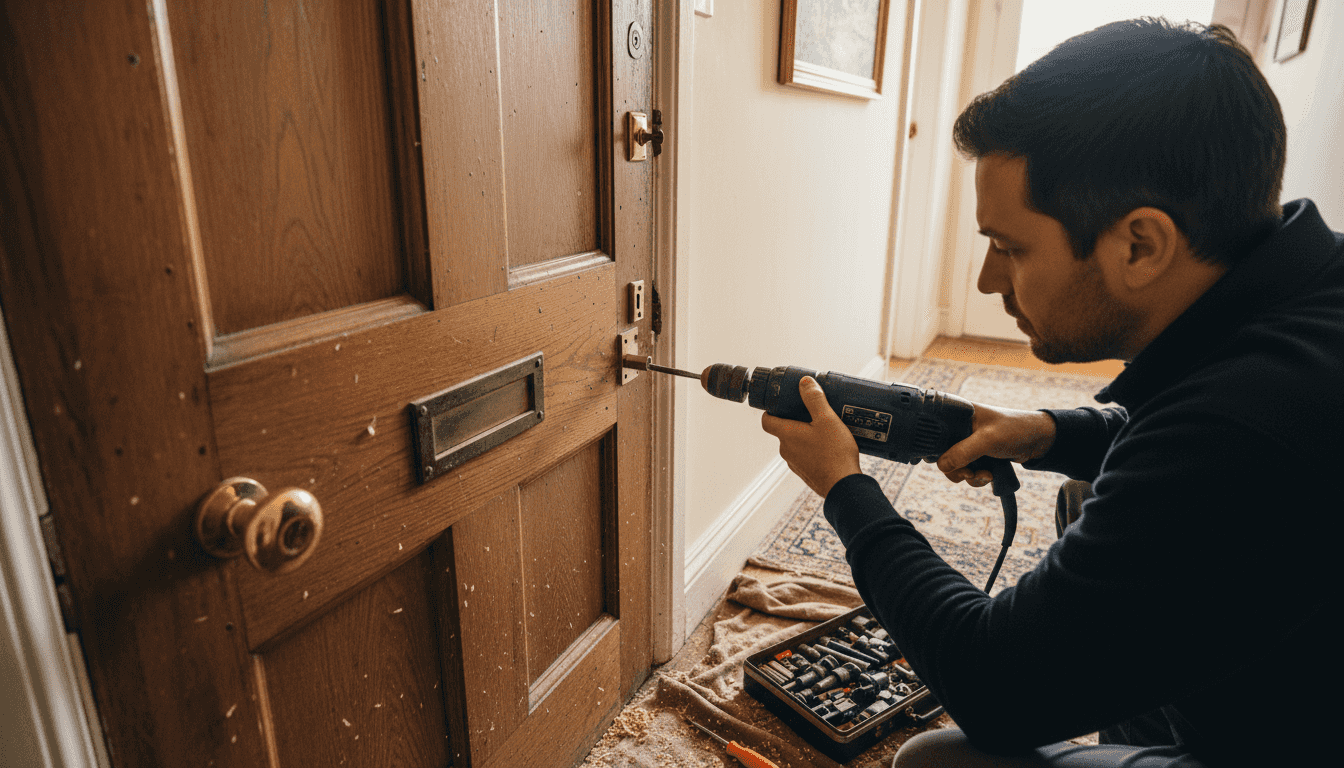
Mortice locks work by embedding a metal box into the door’s thickness. When you turn the key, a bolt extends into the door frame, creating a secure barrier.
Bristol homeowners often use these on front and back doors because insurers expect them as standard. They’re durable, reliable, and have been tested extensively against picking and drilling.
Euro Cylinder Locks
Euro cylinder locks (also called profile cylinders) are the modern standard for uPVC and composite doors. They’re the small cylindrical locks you see on most contemporary doors across the UK.
These locks have become the default on new door installations. However, standard euro cylinders have vulnerabilities—they’re susceptible to a technique called “cylinder snapping” where burglars break the lock and force it open.
For insurance purposes, you’ll need anti-snap euro cylinder locks specifically designed to resist this attack method. The difference is significant and directly affects your coverage.
Anti-Snap Locks
Anti-snap locks are upgraded cylinders engineered to defeat modern break-in techniques. When a burglar attempts to snap the cylinder, it breaks at a safe point inside the lock, rendering forced entry impossible.
These locks are increasingly required by insurers, particularly for:
- Properties in high-risk areas
- Doors with vulnerable frames
- Commercial premises
- Properties with high-value contents
Anti-snap technology has become the industry standard for uPVC and composite doors over the past decade. If your insurer hasn’t mentioned them yet, ask—your property may already require them.
British Standard Locks (BS8621 and BS10621)
BS8621 and BS10621 represent higher security grades. These locks undergo more rigorous testing than BS3621 and resist attacks for longer periods.
BS10621 locks are tested against:
- Extended picking attempts
- Professional drilling techniques
- Sustained physical force
- Combination attacks
Insurers specify these grades for high-risk properties or those with valuable contents. A jeweller’s showroom or cash business would typically require BS10621 certification.
Deadlocks and Rim Locks
Deadlocks add extra security to existing locks. They provide a second locking mechanism independent from your main lock, creating dual protection.
Rim locks mount on the surface of a door rather than being morticed into it. They’re common on older properties and garage doors, though they’re less secure than mortice alternatives.
The right lock type matters as much as the standard it meets. Your insurance depends on both.
Choosing the Right Type for Your Property
Your choice depends on three factors: door type, insurance requirements, and break-in risk in your area.
UPVC and composite doors need euro cylinders or anti-snap upgrades. Wooden doors typically require mortice locks. Older properties may need rim locks supplemented with deadbolts for compliance.
Bristol’s mixed housing stock means different properties need different solutions. A Victorian terrace requires different security than a modern development.
Pro tip: Ask your insurer which lock type satisfies your policy before spending money on upgrades—some properties need specific combinations, and installing the wrong type won’t improve your coverage.
How Standards Impact Claims and Coverage
Here’s the hard truth: non-compliant locks don’t just leave your property vulnerable. They leave your insurance claim vulnerable too. An insurer can reject your entire payout if your locks don’t meet their stated requirements.
This isn’t theoretical. It happens regularly to homeowners who didn’t realise what their policy required.
When Insurers Deny Claims
Your insurance policy is a contract with conditions. One key condition is maintaining agreed security standards. If you breach that condition, your insurer can refuse to pay.
Imagine a burglary where thieves forced entry through a window. You submit a claim for £5,000 in damaged goods and stolen items. Then the insurer inspects your door locks and discovers they don’t meet BS3621 standards. They deny your entire claim.
You’re left covering the loss yourself because of inadequate locks you may not have even known about.
How Insurers Verify Compliance
Insurers regulated by the PCA and FCA have contractual rights to verify your security measures. When you make a claim, they’ll inspect your locks to confirm compliance.
They’re looking for:
- Visible certification marks on locks
- Installation quality and condition
- Evidence the locks haven’t been tampered with
- Confirmation they match your policy requirements
This inspection happens before they process payment. Get it wrong and your claim stalls indefinitely.
The Claims Processing Impact
Compliant locks speed up claims handling. Non-compliant locks create delays, disputes, and potential rejection.
FCA Consumer Duty requirements mean insurers must handle claims fairly and promptly. However, if they find non-compliance, they’re within their rights to investigate further, request additional evidence, or deny your claim entirely.
These disputes waste time when you need support most. After a break-in, you’re already stressed. Arguing about lock standards adds frustration and financial uncertainty.
The following table clarifies how insurance compliance impacts your claims process:
| Scenario | Outcome if Compliant | Outcome if Non-Compliant |
|---|---|---|
| Burglary claim submitted | Fast claim approval | Payment delay or total rejection |
| Insurer inspects lock | Certification accepted | Additional evidence required |
| Policy renewal | Lower premium possible | Risk of increased premium or denial |
Coverage Gaps and Exclusions
Some policies include explicit exclusions if you haven’t maintained required lock standards. Your premium might be accepted every month, but coverage could vanish when needed.
Common exclusions include:
- Claims where locks don’t meet stated standards
- Break-ins occurring through doors with non-compliant locks
- Damage from forced entry where standards weren’t maintained
- Contents stolen through inadequately secured access points
One non-compliant lock on one door can void your entire claim.
Risk Assessment and Premium Calculation
Insurers use lock standards to calculate your risk profile. Compliant locks mean lower risk, which can translate to lower premiums.
When you upgrade to higher-standard locks like BS8621 or anti-snap cylinders, you’re improving your risk rating. This demonstrates due diligence and commitment to security, making you a more attractive customer.
Non-compliant locks don’t just fail to protect your property—they fail to protect your insurance coverage when protection matters most.
Your Obligations as a Policyholder
Your policy requires you to maintain security standards throughout the year. This isn’t a one-time installation requirement; it’s an ongoing responsibility.
You must:
- Keep locks in good working condition
- Replace damaged or deteriorating locks promptly
- Notify your insurer if you change locks
- Provide evidence of compliance if asked
- Report any security breaches or attempted break-ins
Neglecting these obligations weakens your claim position significantly.
Pro tip: Keep photographic evidence of your locks with visible certification marks and store receipts from any lock installations or upgrades—this documentation proves compliance if your insurer requests verification after a claim.
Legal Compliance and Homeowner Obligations
Lock standards aren’t just insurance requirements—they’re legal obligations. UK law expects homeowners to maintain reasonable security measures, and courts take this seriously when disputes arise.
Understanding your legal responsibilities protects you financially and legally. Ignoring them creates liability exposure you may not realise exists.
Your Legal Duty to Maintain Security
Under UK law, homeowners have a clear obligation to install and maintain locks meeting insurance standards. This isn’t optional compliance—it’s a legal requirement embedded in both contract law and property law.
Building Safety Act 2022 requirements establish new responsibilities for managing safety risks in residential buildings, including maintaining security standards. Approved lock installations form part of the legal framework protecting residents.
Failure to meet these standards can result in claim denial, reduced compensation, or legal liability if a break-in causes harm.
How Courts Assess Lock Compliance
When disputes arise, courts examine whether you’ve taken reasonable steps to secure your property. Professional standards play a key role in this assessment.
Professional lock standards and British Standards marks serve as evidence of reasonable security measures. If your locks carry BS3621 or higher certification, courts view this favourably. Without certification, you’re on weaker legal ground.
Courts in England and Scotland both apply this principle, though specific regulations differ between jurisdictions.
Your Responsibilities as a Property Owner
Your legal obligations include several clear duties:
- Installing locks certified to agreed standards
- Maintaining locks in working condition throughout the year
- Replacing damaged locks promptly
- Cooperating with insurers during investigations
- Keeping records of lock installations and certifications
- Understanding your specific policy requirements
These aren’t bureaucratic formalities—they’re enforceable legal duties.
Regional Variations You Should Know
English and Scots law differ on certain aspects of property security obligations. Bristol homeowners operate under English law, which emphasises reasonable care standards.
Scots law applies similar principles but with different terminology and procedures. If you own property in both regions, verify requirements for each location separately.
Your insurance policy specifies which jurisdiction applies, but the underlying principle remains constant: maintain approved security.
Documentation and Evidence
Keeping records protects you legally. If a dispute arises, evidence proves compliance.
Maintain:
- Installation receipts with certification marks visible
- Photographs of locks showing certification labels
- Correspondence with your insurer about requirements
- Maintenance records if locks are serviced or repaired
- Policy documentation specifying lock requirements
This documentation defends your position if a claim is disputed or if legal action becomes necessary.
What Happens If You Fail to Comply
Non-compliance creates multiple legal consequences. Your insurer can deny claims. They can also cancel your policy entirely if they discover you’ve breached terms.
If someone is injured during a break-in and sues you, non-compliant locks weaken your legal defence. Courts may find you negligent for failing to meet reasonable security standards.
Legal compliance isn’t just about keeping insurers happy—it’s about protecting yourself from liability and legal exposure.
Building Safety Regulations for Multi-Unit Properties
If you own a flat in a converted building or apartment complex, additional regulations apply. The Building Safety Act requires building owners to manage safety risks, including access control and locking systems.
You remain responsible for your individual unit’s locks, but the building owner must maintain common area security. Understand both your responsibilities and the building owner’s.
Pro tip: Obtain written confirmation from your insurer stating exactly which lock standards your property requires, then have a professional locksmith verify your existing locks meet those standards—this creates documented proof of compliance if any future dispute arises.
Common Pitfalls and Ensuring Compliance
Most homeowners want to comply with lock standards. The problem is they don’t know what they don’t know. Common mistakes happen quietly, then surface when you need your insurance most.
Avoiding these pitfalls is straightforward once you understand them. Catching them early saves money, stress, and claim complications later.
The Budget Lock Trap
Many homeowners install inexpensive locks thinking “a lock is a lock.” Budget locks look fine on the surface but fail basic security testing.
They might cost £20 instead of £80, but that savings disappears when your claim is denied. An insurer will reject a claim from a property protected by non-certified locks, regardless of how well-intentioned the purchase was.
Always verify certification marks before buying. If a lock doesn’t display BS3621 or higher markings, it won’t satisfy your insurer.
Ignoring Door Type Requirements
Different door types require different locks. Installing a mortice lock on a uPVC door, or standard euro cylinders on composite doors, creates compliance gaps.
uPVC and composite doors need specific lock mechanisms designed for their material and construction. Standard locks won’t fit properly or function correctly on these doors, and insurers will notice.
Ask your locksmith which locks suit your specific door types before any work begins.
The “Out of Sight, Out of Mind” Problem
You install compliant locks, then years pass. Locks deteriorate, become damaged, or stop working smoothly. You assume they’re still fine because they “look okay.”
Insurers expect locks to remain in good working condition throughout your policy year. A lock that’s stiff, corroded, or damaged no longer meets standards, even if it was compliant when installed.
Inspect locks quarterly. Test them regularly. Replace any showing wear immediately.
Missing the Certification Mark
Some installers fit quality locks but fail to verify certification marks are visible. After installation, the mark gets painted over, covered by a door frame, or obscured by weathering.
When your insurer inspects after a claim, they can’t see proof of certification. Without visible evidence, they may deny the claim even though the lock meets standards.
Keep certification marks clean and visible. Take photographs documenting them clearly.
Not Notifying Your Insurer of Changes
You replace old locks with new, certified ones. That’s great—but did you tell your insurer? Many homeowners assume notification happens automatically. It doesn’t.
Your policy documents your security setup at the time you purchase coverage. When you make changes, you’re changing the risk profile. Notifying your insurer updates their records and protects your claim position.
Always notify your insurer when you install new locks, even if they’re upgrades.
Steps to Ensure Compliance
Follow this checklist to stay compliant:
- Contact your insurer and request lock requirements in writing
- Identify your door types (wooden, uPVC, composite, etc.)
- Choose locks certified to the standard your insurer requires
- Use a professional locksmith for proper installation
- Photograph locks showing certification marks clearly
- Keep installation receipts and documentation
- Notify your insurer of any lock changes
- Inspect locks quarterly for damage or wear
- Replace any deteriorating locks promptly
- Maintain records throughout your policy period
This systematic approach prevents surprises.
Working with Professional Locksmiths
Professional locksmiths understand lock standards and certification requirements. They know which locks suit different door types and can verify compliance before installation.
Amateurish installations create problems even with quality locks. Improper fitting reduces lock effectiveness and may void certification. Always use qualified professionals for lock work.
The difference between compliance and non-compliance often comes down to attention to detail during and after installation.
Annual Compliance Reviews
Don’t wait for a break-in to assess your locks. Conduct annual compliance reviews, especially before your insurance renews.
Check:
- All locks function smoothly
- Certification marks remain visible
- No locks show damage or corrosion
- Documentation is organised and accessible
- Your insurer has current information about your locks
A brief annual review prevents costly oversights.
Pro tip: Schedule your lock compliance review three months before your insurance renews—this gives you time to address any issues or upgrades before your policy period begins, ensuring you start each year in full compliance.
Secure Your Property and Insurance Coverage with AHLP Locksmiths
Understanding and meeting lock insurance standards is vital to protect both your home and your insurance policy. Failing to comply with required British Standard locks such as BS3621 or anti-snap cylinders can lead to claim denials and leave your property vulnerable. If you want peace of mind knowing your locks comply with insurer demands and current legal responsibilities, professional help is essential.
AHLP Locksmiths offers expert local locksmith services tailored to your door type and insurance requirements across Bristol and surrounding areas. Whether you need certified mortice locks, anti-snap upgrades, or a comprehensive security consultation, our team ensures your property remains fully compliant and secure. Don’t risk gaps in your coverage or delays when you need support most. Visit our local locksmith service page to explore how we can help.
Protect your home and your claim by acting now. Contact us today on 07700 100146 to arrange a professional assessment and lock upgrade today.
Frequently Asked Questions
What are lock insurance standards?
Lock insurance standards are security benchmarks that locks must meet to ensure coverage by an insurance policy. Failure to comply can result in denied claims for break-ins.
Why do insurance companies care about lock standards?
Insurance companies care about lock standards because compliant locks reduce the risk of break-ins. High-quality locks thwart common intrusion methods, leading to lower claims payouts and making properties safer overall.
How do I know if my locks are insurance-approved?
Locks are insurance-approved if they meet specific British Standards, such as BS3621, BS8621, or BS10621, and are certified for resistance against picking, drilling, and forced entry. Check for visible certification marks on your locks.
What happens if I have non-compliant locks after a break-in?
If you have non-compliant locks, your insurer can deny your claim for any damages or losses resulting from the break-in. It’s essential to ensure your locks meet the required standards to secure your policy coverage.