
Replacing a simple door lock might seem like an easy fix, but true office security in Bristol means more than just new hardware. With modern threats targeting physical access, outdated lock systems can leave businesses exposed and even put insurance cover at risk. This guide explains how a proper upgrade involves not just new locks, but also comprehensive lock and key control to keep your office, assets, and data protected while maintaining compliance with current British standards.
Table of Contents
- What Upgrading Office Locks Really Means
- Modern Office Lock Types Explained
- Security Risks of Outdated Lock Systems
- Legal and Insurance Standards for Offices
- Costs, Common Mistakes, and Value
Key Takeaways
| Point | Details |
|---|---|
| Importance of Upgrades | Upgrading locks enhances security beyond just physical hardware, ensuring protection against modern threats and compliance with legal requirements. |
| Comprehensive Control Systems | Implementing effective key control systems ensures accountability for key distribution and reduces the risk of unauthorised access. |
| Insurance Implications | Many insurers require locks to meet specific standards, and insufficient security could lead to claim denials or reduced coverage. |
| Choosing the Right System | Understanding different lock types and their benefits helps select the best system according to office needs, budget, and security requirements. |
What Upgrading Office Locks Really Means
Upgrading your office locks goes beyond swapping out old hardware for new. It’s about moving from outdated mechanical systems to high-security alternatives that actually protect your business.
Many office managers think lock upgrades mean simply installing a new lock on the door. That’s only part of the picture. A genuine upgrade addresses the entire control system—how keys are issued, tracked, replaced, and eventually removed from circulation.
Modern lock upgrades focus on reducing vulnerabilities that hackers and opportunistic thieves exploit. Old key systems can be duplicated easily, lost without proper tracking, or remain accessible long after employees leave.
The Core Components of Lock Upgrades
When you upgrade office locks, you’re implementing several interconnected improvements:
- High-security locking mechanisms that resist picking and forced entry attempts
- Key control systems that track who has keys and when they’re issued
- Access restriction features that limit unauthorised duplication
- Decommissioning protocols for removing old keys and locks safely
- Master key systems that simplify management across multiple office spaces
A proper lock upgrade means controlling not just the lock itself, but every key that opens it—from procurement to disposal.
The UK government’s information security standards recommend upgrading locks as part of strengthening physical access controls. This prevents unauthorised entry that could lead to data breaches or theft of sensitive business information.
Upgrading also means implementing comprehensive lock and key control practices. Your office needs clear procedures for how locks operate, who receives keys, and how old locks are properly decommissioned.
Why This Matters for Your Bristol Office
Your insurance provider likely requires specific lock standards for cover. A basic lock upgrade ensures you meet those requirements, protecting both your assets and your coverage eligibility.
Beyond insurance, modern locks provide practical benefits. Anti-snap locks resist common break-in methods. Master key systems mean you don’t need dozens of different keys cluttering your management drawer.

Pro tip: Schedule a security assessment with a local locksmith before upgrading—they can identify which doors need priority upgrades based on your actual security risks and insurance requirements.
Modern Office Lock Types Explained
Office locks have evolved significantly over the past decade. Your options now range from traditional mechanical systems to sophisticated smart technology that integrates with your building’s entire access control network.
Understanding which lock type suits your Bristol office requires knowing what each one does and what security level it provides. The right choice depends on your staff size, budget, and compliance requirements.
Traditional High-Security Mechanical Locks
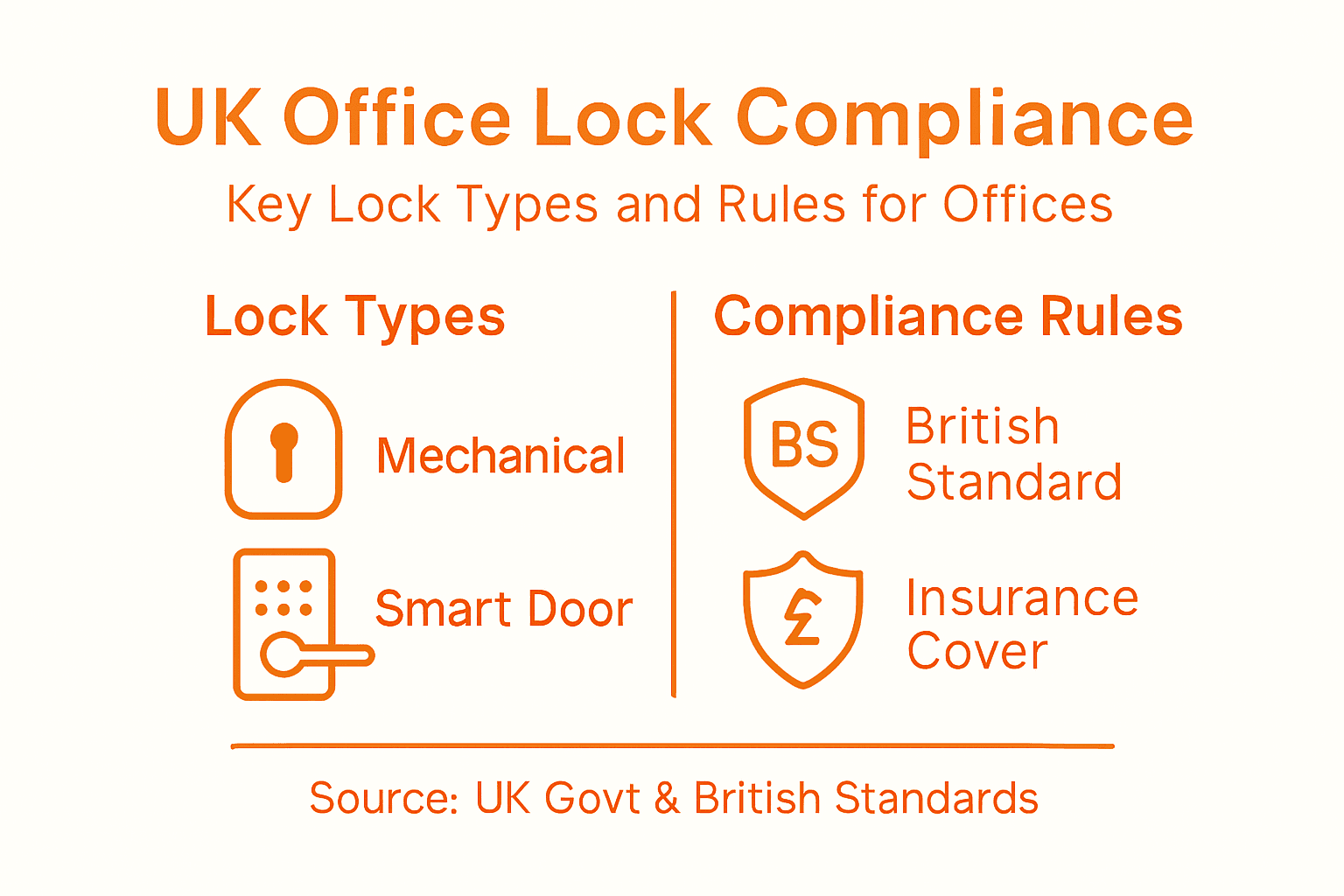
These remain the backbone of many office security systems. High-security pin tumbler locks resist picking and bumping attempts through precision engineering and controlled key systems.
Key benefits include:
- No batteries or power supply needed
- Simple maintenance and repair
- Proven track record over decades
- Integration with master key systems
- Lower upfront costs than electronic alternatives
Mechanical locks work best when combined with proper key control protocols. Your office tracks who receives keys, when they’re issued, and ensures old keys are decommissioned when staff leave.
Electromechanical and Smart Lock Systems
Smart locks with remote access represent a major shift in office security. They allow entry via mobile apps, virtual keys, and real-time access monitoring—ideal for modern workplaces with flexible staffing.
These systems offer distinct advantages:
- Remote access control from anywhere
- Real-time notifications when doors unlock
- Audit trails showing who entered and when
- Integration with other smart office systems
- Easy permission updates without physical key changes
Smart locks comply with UK standard SS504, which tests physical security, technical resilience, and IoT connectivity together.
Electromechanical locks bridge traditional and digital approaches. They combine mechanical security with electronic access control, offering flexibility without full smart lock complexity.
Master Key Systems
Master key arrangements allow different staff members access to different areas. Your reception staff might access the main office, whilst finance teams access only secure storage areas.
Commercial lock systems typically include multiple master key levels, creating layered security. This prevents any single employee from accessing everywhere unnecessarily.
Choosing the right lock type means balancing security needs against practical requirements. Your insurance provider often specifies which types meet their standards for cover eligibility.
Here is a comparison of office lock types to help you choose the most suitable solution:
| Lock Type | Security Level | Cost Range (per lock) | Ideal Office Use |
|---|---|---|---|
| Mechanical High-Security | High | £150–£400 | Small to medium offices |
| Electromechanical | Very High | £250–£600 | Offices needing flexibility |
| Smart (Digital) Lock | Highest | £300–£900 | Large/tech-driven workplaces |
| Master Key System | Variable | £200–£500 | Multi-zone access control |
Pro tip: Ask your locksmith to recommend a system that matches your current office layout and staff access needs—this avoids expensive retrofitting later.
Security Risks of Outdated Lock Systems
Oldout lock mechanisms are far more vulnerable than you might realise. They weren’t designed to resist modern break-in techniques, and they create serious weak points in your office security.
An outdated lock isn’t just inconvenient—it’s a liability. Burglars have decades of experience exploiting traditional locks, and the tools to do it are readily available.
How Thieves Defeat Old Locks
Older mechanical locks use simpler internal designs. Picking and bumping techniques work far more easily on locks installed years ago.
Common vulnerabilities include:
- Pin tumbler weaknesses that allow picking in seconds
- Key duplication without proper control or tracking
- Worn internal components that weaken security over time
- No audit trail showing who entered or when
- Lost keys that staff never properly return or decommission
A single loose key circulating outside your office—perhaps with a former employee—means anyone could enter at any time.
The Data Breach Connection
Legacy physical security measures create weak points that hackers exploit. When burglars access your office, they can steal laptops, documents, or hardware containing sensitive business data.
The UK government’s 2023 Information Security Review specifically warns about this risk. Physical intrusion through outdated locks can lead directly to data breaches affecting customer information, financial records, or intellectual property.
Your business faces two types of damage: the immediate cost of theft, plus potential regulatory fines if customer data is compromised.
Outdated locks don’t just fail when attacked—they fail silently, leaving no record of who entered your office.
Insurance and Compliance Issues
Many insurers now refuse full cover for businesses using locks that don’t meet current security standards. Your policy might include exclusions or reduced payouts if a break-in exploits an outdated lock.
Compliance with modern standards protects your cover. This ensures your insurer reimburses losses rather than denying claims based on inadequate security measures.
The Real Cost of Waiting
Replacing locks now costs far less than recovering from a breach or theft. Upgrading protects your assets, your data, and your business reputation simultaneously.
Pro tip: Document your current locks by taking photos and noting installation dates—this evidence supports insurance claims and helps your locksmith recommend the most cost-effective upgrades.
Legal and Insurance Standards for Offices
Your office lock isn’t just a security choice—it’s a legal requirement. UK law mandates that businesses implement adequate physical security controls to protect data and assets, and insurance providers enforce this through specific lock standards.
Ignoring these standards puts your business at risk of non-compliance penalties, rejected insurance claims, and potential liability issues.
What the Law Requires
UK organisations must meet data protection and network security regulations through proper physical security measures. This includes locks that genuinely restrict unauthorised access.
Physical security controls are legally mandated under data protection law. Your office locks directly affect whether your business meets these legal obligations.
If customer data is stored in your office—even on a single laptop—you’re legally responsible for protecting it. Inadequate locks weaken your defence against data breaches and can result in regulatory fines from the Information Commissioner’s Office.
British Standards and Insurance Requirements
Insurers won’t cover losses if your locks don’t meet recognised standards. Your policy likely specifies which lock types satisfy their requirements.
Key standards your office should meet include:
- BS EN 12209 for mechanical locks used in offices
- BS EN 1125 for emergency exit devices and fire safety
- SS504 for smart locks with IoT connectivity
- Insurance-approved specifications set by your provider
Meeting British Standards isn’t optional—it’s the difference between having insurance cover and discovering your claim is denied.
Each standard tests different aspects: mechanical strength, resistance to picking and bumping, emergency egress capability, and durability under use. Locks meeting these standards prove your business takes security seriously.
Below is a summary of British lock standards and their purposes:
| Standard | Applies To | Primary Purpose | Example Application |
|---|---|---|---|
| BS EN 12209 | Mechanical locks | Strength, resistance, durability | Office entryways |
| BS EN 1125 | Emergency exit devices | Safe egress in emergencies | Fire escape doors |
| SS504 | Smart locks (IoT) | Physical & digital resilience | Remote-controlled door locks |
How Standards Lower Your Costs
Complying with recognised standards often reduces insurance premiums. Insurers reward businesses that demonstrate robust security controls with better rates and broader coverage.
Upgrading locks now prevents expensive problems later. You avoid claim denials, regulatory fines, and the reputational damage of a breach.
Getting the Right Certification
When upgrading, request locks that carry British Standard certification. Ask your locksmith for documentation proving compliance.
This documentation becomes essential if you ever file an insurance claim. It proves you took reasonable precautions and met industry standards.
Pro tip: Request a compliance certificate when your locks are installed—keep it with your insurance documents as proof you meet current standards.
Costs, Common Mistakes, and Value
Lock upgrades require investment, but that investment pays back through avoided losses and reduced insurance premiums. Understanding the real costs—and the mistakes that waste money—helps you make smart decisions.
Many Bristol office managers underestimate the value of doing this correctly. A cheap upgrade that fails to meet standards costs twice as much when you have to replace it properly.
What Lock Upgrades Actually Cost
High-security locks cost more than basic alternatives. A single certified lock might run £150–400 depending on type and specification. Installation adds another £100–200 per door.
For a typical office with ten doors, expect £2,500–6,000 total. Smart lock systems cost more upfront but offer flexibility and audit capabilities that mechanical locks cannot provide.
These costs vary based on your specific needs. A small office needs fewer upgrades than a large building with multiple security zones.
Common Mistakes That Waste Money
Many businesses make expensive errors that undermine their upgrade investment. Poor key management practices create security gaps even with new locks installed.
Common mistakes include:
- Choosing locks that don’t meet British Standards
- Installing incompatible systems across different areas
- Failing to implement proper key tracking and control
- Neglecting integration with broader security systems
- Skipping compliance verification with emerging standards
- Not planning for future staff changes and key decommissioning
Choosing cheap locks that don’t meet standards guarantees you’ll replace them again—wasting the original investment.
Another major error is ignoring smart lock compliance requirements like SS504. Modern smart locks must meet specific security standards or they leave your office exposed.
The Real Value of Doing It Right
Proper upgrades deliver value across multiple areas. Insurance premium reductions often cover 15–30% of upgrade costs over three years. Prevented break-ins protect thousands of pounds in assets and data.
Certified locks with good key control prevent costly security incidents. Your business maintains compliance, protects customer data, and keeps insurance cover active.
Smart locks add convenience through mobile access and audit trails. You see exactly who entered when, eliminating key management headaches.
Making the Investment Decision
Calculate your actual costs: lock price plus installation, minus insurance savings, plus prevented losses. This reveals the true investment value.
Consult a locksmith about phased upgrades if budget is tight. Prioritise high-risk areas first—main entrance, server room, finance office.
Pro tip: Request a formal quote that specifies British Standard compliance and includes documentation proving certification—this ensures your investment meets all requirements.
Secure Your Office with Expert Lock Upgrades from AHLP Locksmiths
Upgrading your office locks to meet UK security compliance involves more than just installing new hardware. It requires advanced solutions like high-security locking mechanisms, comprehensive key control systems, and master key arrangements that reduce vulnerabilities and ensure your business meets insurance and legal standards. If you want to avoid risks such as data breaches, insurance claim denials, and costly break-ins, investing in certified lock upgrades is essential.
At AHLP Locksmiths, we understand these challenges and provide professional locksmith services tailored for offices across Bristol, South Gloucestershire, and Gloucester. Our specialists use quality British Standard and insurance-approved products to deliver secure, non-destructive lock replacements and installations, including anti-snap and master key systems. With our local expertise and transparent service, we help you stay compliant and protect what matters most.
Don’t wait until security gaps become costly problems. Contact our trusted local locksmith team today for a consultation and customised upgrade plan. Take the first step towards peace of mind by calling 07700 100146 and secure your business with confidence.
Frequently Asked Questions
What are the key reasons for upgrading office locks?
Upgrading office locks enhances security by transitioning to high-security mechanisms that are resistant to modern break-in techniques. It also ensures proper key control and compliance with insurance requirements, protecting your assets and data.
How can outdated lock systems pose security risks?
Outdated lock systems are more vulnerable to picking, bumping, and duplication. They often lack adequate tracking systems, allowing lost or unaccounted keys to remain in circulation, which increases the risk of unauthorised access and data breaches.
What types of locks are recommended for office upgrades?
High-security mechanical locks offer proven reliability, while electromechanical and smart lock systems provide flexibility and remote access. Each lock type varies in security level, cost, and suitability based on an office’s specific needs.
Why are British Standards important when upgrading locks?
British Standards ensure that locks meet specific security benchmarks, which can satisfy insurance requirements and legal obligations. Compliance with these standards helps prevent denied claims and ensures adequate protection of sensitive information.