

Many property owners underestimate how lock quality affects security and insurance. A surprising number of burglaries succeed because doors have non-certified locks that fail under simple attacks. Insurance companies recognise this risk, which is why they often require British Standard locks for valid coverage. Without proper certification, you might face claim refusals after a break-in, even if you thought your property was secure. This guide explains what British Standard locks are, why they matter for homes and businesses in Bristol and South Gloucestershire, and how to choose the right ones for your needs.
Table of Contents
- Key takeaways
- What are British Standard locks and why do they matter?
- How British Standard locks enhance security compared to non-standard locks
- The role of British Standard locks in insurance compliance and claims
- How to choose and maintain British Standard locks for your property
- Explore expert locksmith services in Bristol and South Gloucestershire
- Frequently asked questions
Key Takeaways
| Point | Details |
|---|---|
| Insurance often requires BS locks | Insurance terms hinge on locks meeting BS3621, with non certified locks risking claim refusals. |
| Anti snap technology | Certified locks include anti snap technology, drilling resistance and reinforced cores to counter common burglary methods. |
| Certification boosts claims | BS3621 certification and the Kitemark reassure insurers and support successful claims. |
| Professional installation matters | Proper fitting ensures optimal function and validates insurance requirements by demonstrating correct installation to insurers. |
What are British Standard Locks and Why Do They Matter?
British Standard locks meet rigorous testing requirements set by BS3621 and related standards. These certifications prove the lock can withstand picking, drilling, and forced entry attempts that defeat ordinary locks. The testing process evaluates durability, mechanism strength, and resistance to sophisticated attack methods that criminals commonly use.
Certification matters because it provides measurable assurance of protection. Insurance companies recognise British Standard locks as meeting security requirements, which directly influences your coverage terms and claim success. Non-certified locks may look secure but often lack the internal features needed to resist determined intruders. This gap creates vulnerability that affects both your physical security and financial protection.
BS3621 applies primarily to cylinder locks used in residential and commercial doors throughout Bristol and South Gloucestershire. These locks protect the most accessible entry points where burglars typically focus their efforts. Properties with certified locks demonstrate reasonable security precautions, which insurers consider when assessing risk and processing claims.
Key features of British Standard certified locks:
- Anti-pick pins that prevent manipulation with standard tools
- Hardened steel components resistant to drilling attacks
- Reinforced bolt mechanisms that withstand forced entry
- Minimum number of key differs to prevent easy duplication
- Tested for 240,000 operational cycles to ensure longevity
Pro Tip: Look for the British Standard Kitemark on your lock cylinder. This visible certification mark confirms the lock meets BS3621 requirements and satisfies most insurance policy conditions.
The certification process involves independent testing at approved facilities. Locks must pass multiple attack scenarios before earning approval. This thorough evaluation separates genuinely secure products from marketing claims. When you install a British Standard lock, you gain verified protection rather than assumed security.
How British Standard Locks Enhance Security Compared to Non-Standard Locks
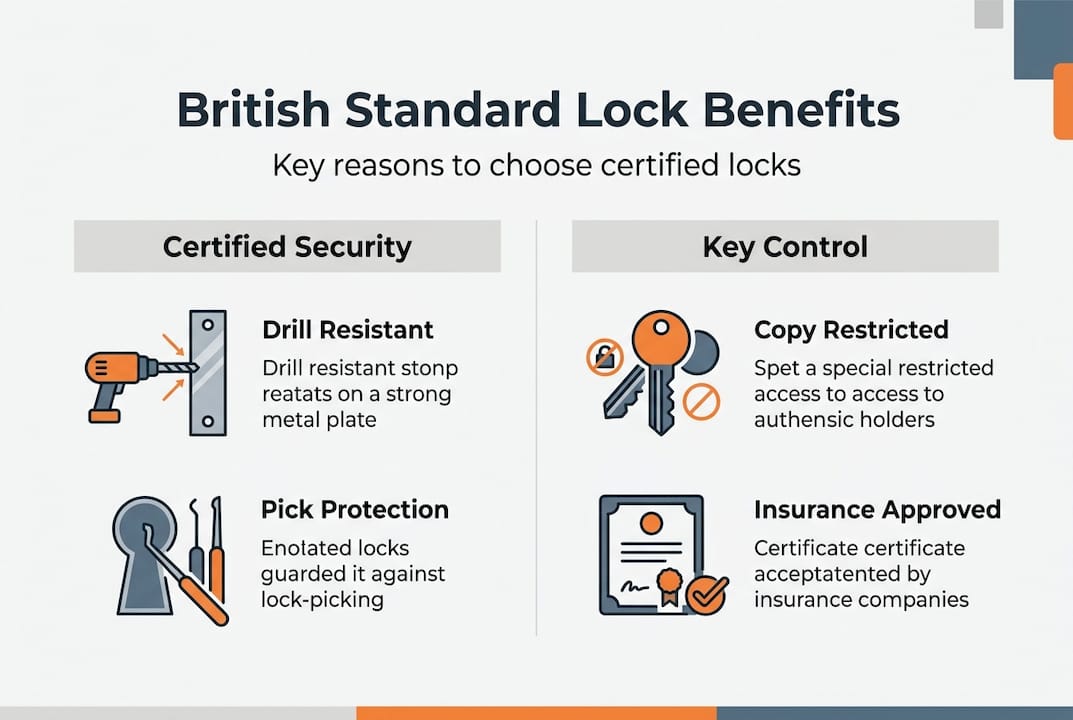
British Standard locks incorporate specific design features that address common attack methods. The most critical difference lies in anti-snap technology, which prevents the lock snapping technique used in over 27% of burglaries. Non-standard locks typically have a single weak point where the cylinder breaks cleanly, allowing immediate access. Certified locks include sacrificial sections and reinforced cores that stop this attack.
Drilling resistance represents another major advantage. British Standard locks provide tested resistance to drill attacks through hardened steel pins and rotating anti-drill plates. Generic locks use softer materials that surrender quickly to power tools. This difference means a burglar needs several minutes and multiple drill bits to defeat a certified lock, versus seconds for a standard one.

Anti-pick pins create complex internal patterns that resist manipulation. Professional lock picks work by feeling for binding pins and setting them individually. British Standard locks use mushroom pins, spool pins, and serrated pins that create false feedback and prevent this technique. Standard locks often have simple pin stacks that experienced criminals can open in under a minute.
| Security feature | British Standard locks | Non-standard locks |
|---|---|---|
| Anti-snap protection | Reinforced break points, sacrificial sections | Single weak point, clean break |
| Drill resistance | Hardened pins, rotating plates | Soft materials, direct access |
| Pick resistance | Complex pin patterns, false feedback | Simple pin stacks, clear feedback |
| Bolt strength | Reinforced steel, 20mm throw minimum | Variable quality, often inadequate |
| Key control | Restricted key blanks, patent protection | Widely available blanks, easy copying |
Bolt mechanisms in certified locks use thicker steel with longer throw distances. This creates stronger engagement with the door frame, distributing force across a larger area. Non-standard locks often have thin bolts with short throws that pull free under impact. The difference becomes critical during kick-in attempts, the most common forced entry method.
Pro Tip: Upgrading to British Standard locks works best when combined with reinforced strike plates and hinge bolts. The complete system prevents criminals from bypassing a strong lock through weak surrounding components.
Key control features restrict who can duplicate your keys. British Standard locks use patented key profiles that require authorisation for copying. Standard locks typically use common key blanks available at any hardware shop. This control prevents unauthorised access from copied keys and maintains your security perimeter.
The Role of British Standard Locks in Insurance Compliance and Claims
Insurance providers structure policies around reasonable security precautions. Most home and business insurance policies explicitly require British Standard approved locks on external doors, particularly front doors and other accessible entry points. This requirement appears in policy terms because insurers know certified locks significantly reduce successful break-ins.
Claim outcomes depend heavily on lock compliance. After a burglary, insurers investigate whether you maintained adequate security. Properties with non-certified locks may face claim denial or reduced compensation, even if the burglar entered through a window. The logic centres on demonstrating reasonable care. Installing proper locks shows you took security seriously, which supports your claim validity.
Financial implications extend beyond claim amounts. Properties with certified locks often qualify for reduced premiums because they present lower risk. The savings accumulate over years, offsetting upgrade costs. More importantly, you avoid the devastating scenario of losing possessions and then discovering your insurance won’t pay because your locks didn’t meet requirements.
Insurance benefits of British Standard locks:
- Policy validity maintained through compliance with security terms
- Full claim amounts available after verified break-ins
- Potential premium reductions for demonstrated security measures
- Legal protection showing reasonable care and due diligence
- Faster claim processing without disputes over security adequacy
“Insurance companies expect front and accessible doors to have British Standard approved locks. Failure to meet this standard can result in claim denial or reduced payouts, leaving property owners financially exposed after burglary incidents.”
Regular lock updates maintain compliance as standards evolve. A lock certified ten years ago may not meet current requirements if specifications have changed. Annual security reviews help identify when upgrades become necessary. This proactive approach prevents coverage gaps that only become apparent during claims.
Commercial properties face stricter requirements because they typically hold higher value contents and present greater liability risks. Business insurance policies often specify not just British Standard locks but particular grades matched to risk assessments. Meeting these requirements protects your business assets and demonstrates duty of care to employees and customers.
Documentation matters for insurance purposes. Keep installation receipts, certification details, and maintenance records. These documents prove compliance if questions arise during claims. Professional locksmith invoices provide the evidence insurers need to process claims without delays or disputes.
How to Choose and Maintain British Standard Locks for Your Property
Selecting appropriate British Standard locks starts with understanding grades and their applications. BS3621 covers general security requirements, but locks also carry grade ratings indicating performance levels. Grade 1 offers basic certified protection suitable for low-risk residential doors. Grade 2 provides enhanced security for standard homes and small businesses. Grade 3 delivers maximum protection for high-risk properties and commercial premises.
Door type influences lock selection significantly. UPVC doors require multipoint locking systems with British Standard cylinders. Wooden doors typically use mortice deadlocks or nightlatches meeting BS3621. Composite doors need cylinders compatible with their specific mechanisms. Professional installation ensures proper matching between lock type and door construction.
Steps for choosing the right British Standard lock:
- Assess your property’s risk level based on location, accessibility, and contents value
- Check insurance policy requirements for specific standards or grades
- Identify door types and existing lock mechanisms throughout your property
- Consult with certified locksmiths about appropriate upgrades for each door
- Verify locks display British Standard Kitemark certification before purchase
- Schedule professional installation to ensure compliance and optimal function
| Lock grade | Security level | Typical applications | Key features |
|---|---|---|---|
| BS3621 Grade 1 | Basic certified | Low-risk residential, back doors | Anti-pick pins, basic drill resistance |
| BS3621 Grade 2 | Standard security | Main residential, small business | Enhanced anti-snap, improved materials |
| BS3621 Grade 3 | High security | Commercial, high-value residential | Maximum drill resistance, advanced pick protection |
| TS007 3-star | Anti-snap focus | UPVC doors, vulnerable locations | Tested snap resistance, hardened cores |
Installation quality determines whether certified locks deliver their tested performance. Incorrect fitting creates gaps that criminals exploit. Professional locksmiths understand proper alignment, strike plate positioning, and frame reinforcement. They ensure the complete system works together rather than creating weak points around a strong lock.
Maintenance preserves lock function and certification benefits. Lubricate cylinders every six months using graphite powder or specialist lock lubricant. Avoid oil-based products that attract dirt and gum up mechanisms. Check for smooth operation without sticking or resistance. Difficulty turning keys indicates wear that needs attention before failure occurs.
Pro Tip: Test your locks seasonally by operating them from both sides with all keys. This simple check identifies problems early, before you face lockouts or security failures during critical moments.
Routine security reviews should occur annually or after any attempted break-in. Technology advances mean newer locks offer better protection than older certified models. Staying current with security improvements maintains optimal protection. Replace locks showing wear, damage, or operational issues immediately rather than waiting for failure.
Key management forms part of maintenance. Track who has keys and retrieve them when people move or employment ends. Consider restricted key systems that prevent unauthorised copying. Master key arrangements work well for businesses needing controlled access across multiple areas. These systems maintain security while providing operational flexibility.
Explore Expert Locksmith Services in Bristol and South Gloucestershire
Upgrading to British Standard locks protects your property and ensures insurance compliance, but professional installation makes the difference between adequate and optimal security. Local trusted locksmith services provide expert assessment of your specific needs, recommend appropriate lock grades, and install systems that meet both British Standards and insurance requirements.
Experienced locksmiths understand how different properties present unique security challenges. They evaluate door types, frame conditions, and access patterns to design comprehensive protection. Emergency services help after break-ins or lockouts, while consultation services prevent problems through proactive upgrades. Professional installation ensures locks function correctly and maintain their certification benefits.
Whether you need immediate assistance or want to plan security improvements, the ultimate guide to locksmith services explains available options and helps you make informed decisions. For comprehensive property protection, home security consultation services assess your entire security posture and recommend integrated solutions that work together effectively.
Frequently Asked Questions
What makes a lock British Standard certified?
A lock earns British Standard certification by passing rigorous independent testing for resistance to picking, drilling, forced entry, and operational durability. The lock must meet BS3621 requirements, which specify minimum security features, material quality, and performance standards. Certified locks display the British Standard Kitemark, confirming they passed all required tests at approved facilities.
Do I need British Standard locks on every door?
Insurance policies typically require British Standard locks on all external doors, particularly front doors and easily accessible entry points. Internal doors generally don’t need certification unless they protect high-value areas. Back doors, side doors, and garage doors leading into your home should all have certified locks to maintain full insurance coverage and optimal security.
How often should I replace British Standard locks?
Replace locks immediately if they show wear, damage, or operational problems like sticking or difficulty turning. Even without visible issues, consider upgrading every 8-10 years as security technology improves and standards evolve. Always replace locks after break-in attempts, lost keys, or when people with key access move away. Regular professional inspections help identify when replacement becomes necessary.
Can I install British Standard locks myself?
Whilst possible for experienced DIY enthusiasts, professional installation ensures locks meet certification requirements and function optimally. Incorrect installation creates vulnerabilities that criminals exploit, potentially voiding your insurance coverage. Professional locksmiths guarantee proper alignment, frame preparation, and strike plate positioning. The modest installation cost provides significant value through verified security and maintained insurance validity.
What’s the difference between BS3621 and TS007 ratings?
BS3621 covers complete lock assemblies including cylinders, bolts, and mechanisms, testing overall security performance. TS007 specifically rates cylinder security against snapping attacks, with 3-star being the highest rating. Many modern installations use TS007 3-star cylinders within BS3621 certified lock assemblies, combining both standards for maximum protection. Your insurance policy may specify one or both requirements depending on coverage terms.