
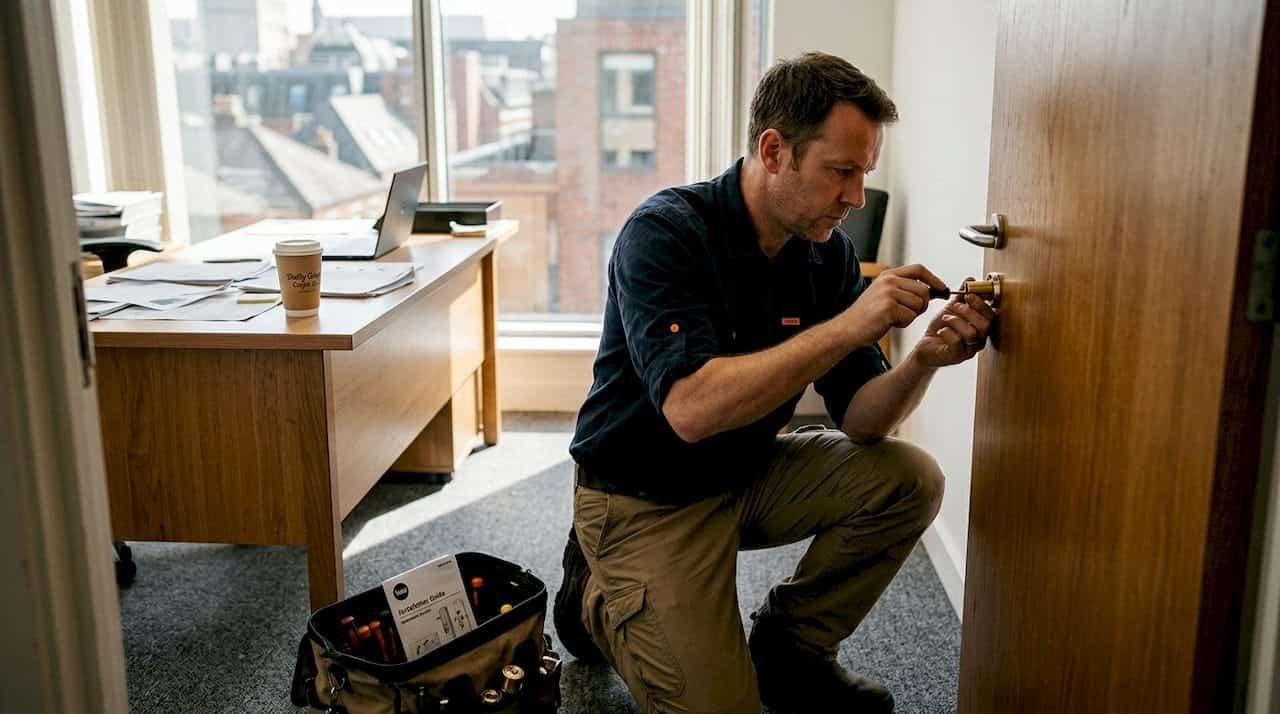
Every office manager in Bristol and South Gloucestershire knows the sinking feeling of discovering a worn lock that won’t turn smoothly or a key that sticks in the cylinder. Outdated lock systems leave your premises vulnerable to unauthorised access, insurance complications, and costly security breaches. A structured upgrade workflow transforms this risk into reliable protection, ensuring your team and assets stay safe. Professional locksmiths in Bristol deliver seamless upgrades that meet modern security standards without disrupting your daily operations.
Table of Contents
- Why upgrade your office locks?
- What you’ll need: tools, materials and choosing the right locksmith
- Step-by-step office lock upgrade workflow
- Troubleshooting and common pitfalls
- Verifying your new system and next steps
- How AHLP can support your office lock upgrade
- Frequently asked questions
Key Takeaways
| Point | Details |
|---|---|
| Upgrade for better security | Modern high-security locks greatly reduce office break-in risks. |
| Professional help matters | Experienced local locksmiths deliver safer, faster lock upgrades. |
| Follow a clear workflow | A step-by-step upgrade process ensures no security gaps are missed. |
| Plan maintenance ahead | Regular checks and reviews help keep your office secure long-term. |
Why Upgrade Your Office Locks?
Recognising when your locks need attention prevents serious security gaps. Common warning signs include visible rust or corrosion on cylinders, keys that require excessive force to turn, and locks that feel loose or wobbly in the door frame. Age alone matters too: locks installed more than ten years ago often lack the anti-snap and anti-pick features that modern burglars can exploit in seconds.
Burglary statistics in the South West show that commercial properties with outdated lock systems face significantly higher break-in rates. Insurance providers increasingly require British Standard locks for full coverage, and failing to upgrade can void your policy when you need it most. Beyond compliance, upgrading office locks delivers tangible benefits:
- Enhanced physical security: High-security cylinders resist picking, drilling, and snapping techniques
- Access control: Master key systems let you grant different access levels to staff, contractors, and cleaners
- Reduced liability: Demonstrable security measures protect you if an incident occurs
- Lower insurance premiums: Many insurers offer discounts for approved lock upgrades
Pro Tip: Schedule a security audit every two years to catch wear before it becomes a vulnerability. Small investments in maintenance prevent expensive emergency replacements.
Research shows that security upgrades reduce burglary risk by up to 50 per cent in commercial settings. That statistic alone justifies the modest cost of a professional upgrade, especially when you factor in the value of stock, equipment, and confidential data inside your office.
What You’ll Need: Tools, Materials and Choosing the Right Locksmith
Before any work begins, gather the essentials and select a qualified professional. While some office managers consider DIY upgrades, commercial lock installation requires precision and knowledge of fire safety regulations that only licensed locksmiths possess.
Essential equipment and materials
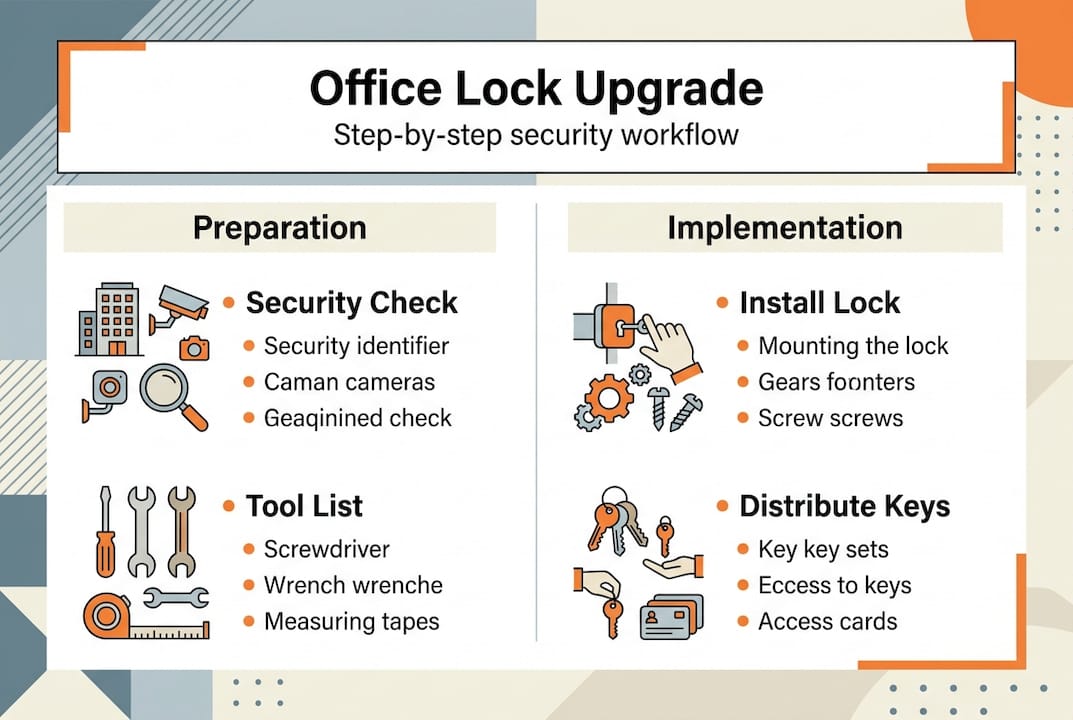
A typical office lock upgrade involves:
- New lock hardware: Anti-snap Euro cylinders, mortice deadlocks, or electronic access systems
- Keys: Cut to British Standard specifications, with spares for authorised personnel
- Installation tools: Drill, measuring tape, screwdrivers, and alignment jigs
- Security assessment report: Documents current vulnerabilities and recommended solutions
Trusted commercial locksmiths supply all necessary materials and handle installation from start to finish. They also advise on the best lock type for your specific doors, whether UPVC, composite, wooden, or metal frames.
Selecting a Qualified Locksmith
Not all locksmiths offer the same level of service or expertise. Look for these credentials:
| Criterion | What to verify |
|---|---|
| Certification | DBS-checked, insured, and trained in commercial systems |
| Local knowledge | Familiar with Bristol and South Gloucestershire security challenges |
| Emergency cover | 24/7 availability for urgent repairs or lockouts |
| Transparent pricing | Clear quotes with no hidden call-out fees |
| Product range | Stocks British Standard and insurance-approved locks |
Pro Tip: Always request a security assessment before choosing a lock type. A professional will evaluate your door material, frame condition, and access patterns to recommend the most effective solution. This prevents costly mistakes like installing a high-security cylinder on a weak door frame that burglars can simply kick in.
Local specialists supply examples of lock upgrades tailored to different office configurations, from single-door practices to multi-floor commercial buildings with complex access requirements.
Step-by-Step Office Lock Upgrade Workflow
A structured approach ensures your upgrade runs smoothly and delivers lasting security. Here’s exactly how a professional office lock upgrade unfolds, from initial assessment to final verification.
1. Security assessment
Your locksmith begins by inspecting every entry point: front doors, back doors, fire exits, and internal office doors. They check frame integrity, measure door thickness, and identify weak points like single-glazed panels or outdated cylinders. This assessment produces a written report ranking vulnerabilities and recommending specific lock types for each location.
2. Planning and product selection
Based on the assessment, you’ll choose appropriate hardware. For most Bristol offices, we recommend:
- Anti-snap Euro cylinders: Meet TS007 3-star standards and resist the snap attacks common in commercial burglaries
- Mortice deadlocks: Provide robust backup security for wooden doors
- Master key systems: Allow you to control access hierarchies without carrying dozens of keys
Consider whether you need keyed-alike cylinders for multiple doors or a master key arrangement where managers hold override keys. Office locksmith services comparison data shows that master key systems reduce key management headaches by 70 per cent in multi-room offices.
3. Installation
Professional installation follows this sequence:
- Remove old hardware: Extract worn cylinders and mortice locks without damaging the door
- Prepare the door: Drill new holes if upgrading to a different lock type, ensuring precise alignment
- Install new locks: Fit cylinders, strike plates, and handles according to manufacturer specifications
- Test operation: Verify smooth key turning, proper bolt engagement, and correct alignment
Locksmiths use Chubb Detainer Mortice, SnapSafe and anti-snap cylinders depending on your door type and security needs. Each lock is tested multiple times before the locksmith moves to the next door.
Pro Tip: Schedule upgrades outside busy hours for minimum disruption. Evening or weekend installations mean your team arrives Monday morning to fully functional, upgraded security without witnessing the work process.
“Fire exit regulations require that internal locks allow free egress without a key. Always verify that your upgrade maintains compliance with Building Regulations Part B and the Regulatory Reform (Fire Safety) Order 2005.”
4. Verification and key distribution
Once installation is complete, your locksmith will:
- Test every lock from both sides of the door
- Verify that fire exits open freely from inside without keys
- Provide you with all keys, clearly labelled by door location
- Demonstrate proper operation and maintenance procedures
Distribute keys only to authorised personnel and maintain a secure key log recording who holds which keys. This accountability prevents unauthorised duplication and helps you track access if security concerns arise.

Comparing business door lock options reveals that proper installation matters as much as lock quality. Even the best cylinder fails if installed in a misaligned door frame or paired with a weak strike plate.
Troubleshooting and Common Pitfalls
Even with careful planning, certain issues can emerge during or after an upgrade. Recognising these problems early prevents security gaps and operational headaches.
Faulty alignment after installation
If a newly installed lock feels stiff or the bolt doesn’t engage smoothly, the door frame may have shifted or the strike plate needs adjustment. Never force a misaligned lock, as this damages internal mechanisms. Contact your locksmith immediately for realignment. Most reputable professionals guarantee their work and return promptly to correct installation issues at no extra charge.
Non-compliance with safety regulations
Some office managers inadvertently install locks that violate fire safety rules. Internal doors in escape routes must allow free exit without keys, and panic hardware is required on certain fire doors. Bristol locksmiths provide 24/7 support to rectify compliance issues before they trigger enforcement notices from fire inspectors.
Lost keys during the upgrade process
Key management becomes chaotic during transitions. Establish a clear handover protocol: collect all old keys before installation begins, and distribute new keys only after verifying that every lock functions correctly. If keys go missing mid-upgrade, your locksmith can rekey cylinders or cut replacements on site.
Common mistakes to avoid
- Leaving doors unsecured during installation: Never leave an office unattended with removed locks or open entryways, even briefly
- Choosing locks based solely on price: The cheapest option often lacks anti-snap features and fails within months
- Ignoring frame condition: A high-security lock in a rotten wooden frame provides no real protection
- Skipping the security assessment: Without professional evaluation, you might upgrade the wrong doors and leave vulnerabilities unaddressed
“Emergency locksmiths in Bristol are available 24/7 for urgent fixes. If you discover a lock failure outside business hours, immediate professional help prevents leaving your premises vulnerable overnight.”
For persistent problems with older lock types, consult resources on issues with mortice locks or review guides on repairing lock problems to understand when repair is viable versus when full replacement is necessary.
Verifying Your New System and Next Steps
Completing the upgrade isn’t the end of your security journey. Proper verification and ongoing maintenance ensure your investment delivers lasting protection.
Post-upgrade testing checklist
Systematically test every upgraded lock:
- Smooth operation: Keys should turn easily without excessive force
- Bolt engagement: Deadbolts must fully extend into the strike plate
- Fire exit compliance: Internal doors on escape routes open freely from inside
- Key functionality: Test all spare keys to confirm they work before storing them
Document this testing in a security log. If any lock shows resistance or misalignment, contact your locksmith before the warranty period expires.
Maintaining a secure key log
Create a master spreadsheet recording:
- Which keys open which doors
- Who holds each key (name, role, date issued)
- Key serial numbers for reordering
- Date of next scheduled security review
Store this log securely, accessible only to senior management. Update it immediately when staff leave or keys are lost.
Scheduling regular security reviews
Expert locksmiths provide maintenance and regular upgrade advice to keep your system current. Schedule reviews:
- Annually: Basic inspection of all locks, lubrication, and minor adjustments
- Every two years: Full security audit assessing new vulnerabilities and technology advances
- After incidents: Immediate review following break-in attempts, lost keys, or staff changes
Technology evolves rapidly. Electronic access systems, biometric locks, and smart cylinders offer features that weren’t available five years ago. Regular reviews ensure you benefit from these advances without overspending on unnecessary upgrades.
Knowing when to call for expert advice
Contact your locksmith immediately if you notice:
- Keys becoming progressively harder to turn
- Visible damage to cylinders or door frames
- Staff reporting difficulty locking or unlocking doors
- Changes in insurance requirements or building regulations
Proactive maintenance costs far less than emergency callouts or dealing with the aftermath of a security breach. Resources on improving overall security provide additional strategies for protecting your Bristol or South Gloucestershire office beyond lock upgrades alone.
How AHLP Can Support Your Office Lock Upgrade
At AHLP Locksmiths, we’ve helped hundreds of Bristol and South Gloucestershire businesses transform their office security through professional lock upgrades. Our team understands the unique challenges local offices face, from Victorian buildings with non-standard door frames to modern commercial units requiring sophisticated access control.
We’re available 24/7 for emergency lockouts, urgent repairs, and after-hours installations that won’t disrupt your working day. Every upgrade begins with a thorough security assessment, ensuring you invest in the right locks for your specific needs rather than generic solutions. We supply and install British Standard and insurance-approved hardware, including anti-snap cylinders, mortice deadlocks, and master key systems tailored to your access requirements.
Our transparent pricing means no hidden call-out fees or surprise charges. You’ll receive a clear quote before any work begins, and we guarantee all installations with prompt follow-up if adjustments are needed. Whether you need a single lock replaced or a complete office security overhaul, our local knowledge and rapid response times give you complete peace of mind.
Explore our full range of 24/7 locksmith services or read the ultimate guide to locksmith services to understand how professional support protects your business. Ready to upgrade your office security? Contact AHLP today or call 07700 100146 to arrange your security assessment.
Frequently Asked Questions
How long does it take to upgrade an office lock in Bristol?
Most upgrades take one to two hours per door, depending on lock complexity and door condition. Local locksmiths offer efficient upgrades that minimise disruption to your business operations.
What are the best locks for Bristol offices?
High-security mortice locks, anti-snap Euro cylinders, and master key systems provide optimal protection. Upgrades include Chubb Detainer Mortice and SnapSafe cylinders that meet insurance standards and resist common attack methods.
Is it necessary to use a local locksmith?
Local locksmiths understand regional security challenges and respond quickly to emergencies. Bristol and South Gloucestershire locksmiths ensure compliance with local building regulations and insurance requirements.
Can a locksmith upgrade my office lock after hours?
Yes, 24/7 commercial locksmith services accommodate evening and weekend installations, allowing upgrades without disrupting your business day.
Do I need to change all locks during an upgrade?
It depends on your security assessment. Locksmiths offer tailored upgrades focusing on vulnerable entry points rather than unnecessary replacements, balancing security with budget considerations.
Recommended
- Secure Office Doors: 70% Fewer Break-Ins with BS3621 Locks
- The Ultimate Guide to Securing Your Office: Everything You Need to Succeed with Locksmiths Bristol – Auto Home Lock Pro
- Why Upgrade Office Locks for UK Security Compliance
- Why Upgrade Shop Locks: Enhanced Security for 2026
- Expert security solutions for Atlanta’s gated communities | K-Lock Executive Protections