
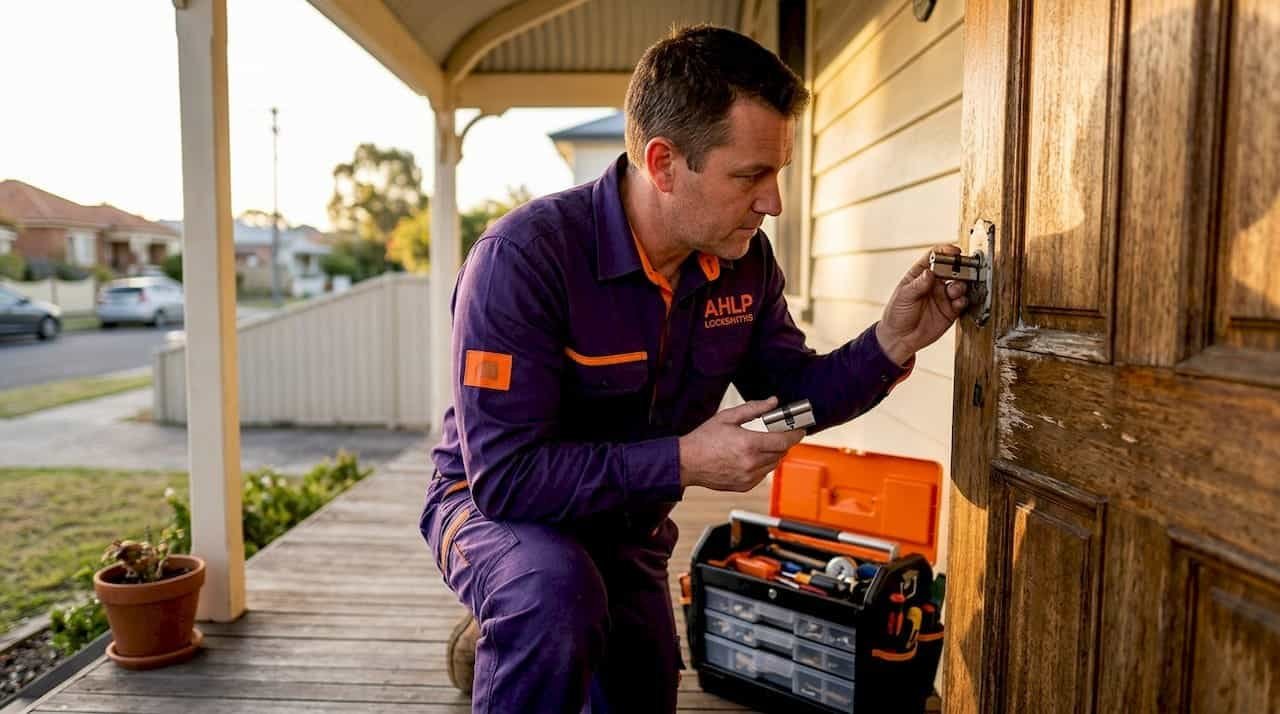
After a break-in, the first priorities are personal safety, reporting the burglary, preserving evidence and securing the property once the police have finished any necessary forensic work.
Burglary repairs can involve damaged locks, uPVC mechanisms, doors, frames and windows. Some need immediate temporary security, while others can wait until the property has been assessed properly.
This guide explains what to do after a burglary in Bristol and South Gloucestershire, how the repair process works, what security should be reviewed afterwards and what to check with your insurer if the property will be empty during repairs.
TL;DR:
If you think a burglar may still be inside or anyone is in immediate danger, move somewhere safe and call 999. Do not enter the property.
Report the burglary and avoid touching or moving things until police have decided whether forensic examination is required.
Once police confirm repairs can begin, damaged doors, locks and windows should be made secure before cosmetic work starts.
After a break-in, check the security of the complete entry point, not just the visibly broken lock. That may include the cylinder, multipoint mechanism, door frame, hinges and surrounding hardware.
Avon and Somerset Police’s Be Home Safe scheme can provide eligible burglary victims with free security advice and measures such as lock upgrades, window locks, door chains and viewers.
If burglary repairs leave your home unoccupied for an extended period, check your insurance policy. Some policies apply additional conditions after a property has been unoccupied for a specified period, commonly around 30 or 60 days.
TL;DR:
If you think a burglar may still be inside or anyone is in immediate danger, move somewhere safe and call 999. Do not enter the property.
Report the burglary and avoid touching or moving things until police have decided whether forensic examination is required.
Once police confirm repairs can begin, damaged doors, locks and windows should be made secure before cosmetic work starts.
After a break-in, check the security of the complete entry point, not just the visibly broken lock. That may include the cylinder, multipoint mechanism, door frame, hinges and surrounding hardware.
Avon and Somerset Police’s Be Home Safe scheme can provide eligible burglary victims with free security advice and measures such as lock upgrades, window locks, door chains and viewers.
If burglary repairs leave your home unoccupied for an extended period, check your insurance policy. Some policies apply additional conditions after a property has been unoccupied for a specified period, commonly around 30 or 60 days.
What Should You Do Immediately After a Break-In?
If you arrive home and think somebody may still be inside, do not enter.
Move to a safe location and call 999.
Avon and Somerset Police advises burglary victims not to enter unless they are sure the burglar has left and not to touch or move anything unnecessarily because fingerprints, footprints or other forensic evidence may remain.
Once the burglary has been reported:
Follow police instructions about entering the property.
Avoid disturbing the scene.
Contact your bank or card provider if financial items have been stolen.
Contact your insurer.
Wait for the police decision on forensic examination before permanent repairs begin.
Once cleared, arrange temporary or permanent security for damaged entry points.
Photographs can be useful for your own records and insurance claim, but do not move objects or disturb potential evidence simply to obtain better pictures.
Avon and Somerset Police specifically advises waiting until a decision has been made about forensics before damaged locks, doors and windows are repaired or replaced.
What Does a Burglary Repair Locksmith Check?
Once police have confirmed that security work can begin, the first job is to establish exactly how entry was gained and what has been damaged.
Visible damage does not always tell the whole story.
A burglary repair assessment can include:
Front and rear door locks
Euro cylinders
uPVC multipoint mechanisms
Mortice locks
Night latches
Door handles
Hinges
Door frames
Keeps and strike plates
Accessible window locks
Garage or side-door security
The immediate objective is to make the property secure again.
Cosmetic repairs come later.
The Burglary Repair Process
The exact work depends on the method of entry and extent of damage, but a typical sequence is:
1. Police and forensic work comes first
Do not rush into replacing locks before police have decided whether they need to examine them.
A damaged cylinder, frame or window can contain useful evidence.
2. Make exposed entry points secure
Once cleared by police, doors or windows that cannot be secured normally need temporary protection.
This might involve temporary locks or boarding while permanent components are sourced.
3. Assess the lock and surrounding door
The locksmith should determine whether only the lock has failed or whether the attack has also damaged:
The cylinder
The gearbox
The multipoint mechanism
Handles
Keeps
Hinges
Door frame
Replacing only the visibly broken component can leave another weakened part of the entry point untreated.
4. Replace compromised locking hardware
The correct replacement depends on the door.
A timber door may require a mortice lock or night latch.
A uPVC or composite door may use a Euro cylinder connected to a multipoint locking mechanism.
The replacement should suit the door and any relevant security or insurance requirements rather than simply copying whatever happened to be fitted before the burglary.
5. Repair the frame, glazing and structural damage
A locksmith can deal with the locking hardware, but badly damaged frames or glazing may require a carpenter, door specialist or glazier.
Temporary security should remain in place until those repairs are completed.
6. Test the repaired entry point
A replacement lock should not be considered finished simply because the key turns.
Check that:
The door closes correctly
The lock operates without excessive force
Multipoint hooks, rollers or bolts engage correctly
The frame and keeps remain secure
The key operates correctly from the required sides
There is no remaining attack damage affecting security
7. Keep repair records
Retain photographs, invoices and details of replacement hardware for your insurer and your own records.
If requested, obtain written details of the work carried out.
What We See on Real Burglary Repair Callouts
Martyn here.
One of the biggest mistakes I see after burglary callouts is trying to solve everything at once while you are still dealing with the shock of what has happened.
People understandably want the damaged lock gone and the door looking normal again as quickly as possible. But the first question should be what actually failed and what else was damaged during the attack?
Sometimes the cylinder is the obvious damage, but the frame or surrounding hardware has also taken force. On uPVC doors, the cylinder and multipoint mechanism are separate components, so both need to be considered rather than assuming that changing one automatically restores the complete door.
The other mistake is treating the repair as finished once the damaged part has been replaced.
A burglary repair is also the right time to check the other accessible doors and windows. That does not mean replacing everything. It means identifying whether the same weakness exists elsewhere before deciding what genuinely needs improving.
— Martyn
Should You Upgrade the Lock After a Burglary?
Not automatically.
The objective is to understand how the entry point was defeated and correct that weakness.
If the existing security specification remains appropriate and only a damaged component needs replacing, a like-for-like repair may be reasonable.
If the attack exposed a weakness, however, fitting exactly the same vulnerable arrangement again makes less sense.
For uPVC and composite doors using Euro cylinders, one option to consider is a TS007-rated cylinder and protective hardware arrangement.
Our anti-snap lock guide explains those ratings in more detail.
For timber doors, the appropriate standard may be different. Our British Standard locks and insurance guide explains BS3621, TS007 and other relevant security standards without treating them as interchangeable.
Always check your own insurance policy for any specific lock requirements.
What Does TS007 Mean After a Break-In?
TS007 relates to security for cylinders and associated door hardware.
The star ratings matter:
1-star: cylinder meeting the relevant TS007 requirements
2-star: protective door hardware such as a security handle or escutcheon
3-star: cylinder designed to provide the higher level of protection within the TS007 system
A 1-star cylinder can also be combined with suitable 2-star protective hardware to provide a three-star arrangement.
This is particularly relevant if the burglary involved attack on a Euro cylinder.
Do not assume, however, that installing a security-rated cylinder repairs damage elsewhere in the door. The mechanism, handles, frame and surrounding hardware still need to be checked.
Should You Review the Alarm After a Burglary?
Yes, if an alarm is already fitted or you are considering one.
Avon and Somerset Police advises dealing with physical security first and the alarm afterwards.
For professionally installed monitored alarm systems, the police identify two relevant accreditation bodies:
NSI — National Security Inspectorate
SSAIB — Security Systems and Alarms Inspection Board
Using an installer accredited by an appropriate industry body gives you a clearer basis for assessing installation standards than choosing solely on price.
The alarm should complement secure doors and windows rather than compensate for damaged or unsuitable physical security.
Avon and Somerset Police Be Home Safe Scheme
Burglary victims in Bristol and South Gloucestershire may also be eligible for practical support through Avon and Somerset Police’s Be Home Safe scheme.
The scheme is a free referral service designed to help victims of crime and vulnerable people improve their home security.
Depending on what is required, the team can:
Check door locks and upgrade them where necessary
Fit door chains
Fit door viewers
Install window locks
Fit window alarms
Supply personal alarms
Assess the property’s overall security
Provide security advice
Victims of burglary are specifically included among the people who may be eligible.
The scheme is not an emergency burglary repair service. It does not replace broken glass, board damaged doors or windows, or repair doors, windows and frames following forced entry.
Instead, it can provide additional security support after the immediate repair situation has been dealt with.
You can ask your local PCSO or police officer whether a referral to the Be Home Safe scheme is appropriate.
What If Your Home Is Empty During Burglary Repairs?
This is easy to overlook.
A badly damaged property may remain empty while doors, windows, glazing or other structural damage is repaired.
Home insurance policies can contain special conditions for properties that remain unoccupied beyond a specified period.
Depending on the insurer and policy, that threshold may be around 30 or 60 consecutive days.
Do not assume that your normal cover continues unchanged.
If the property is going to remain empty:
Contact your insurer.
Tell them why the property is unoccupied.
Ask when their definition of “unoccupied” begins.
Ask whether cover changes after 30, 60 or another number of days.
Check whether the policy requires regular property inspections.
Ask whether water, heating or other services need to be managed in a particular way.
Keep a record of what the insurer tells you.
The exact period and conditions are determined by your policy, so the 30–60 day range should be treated as a prompt to check rather than a universal insurance rule.
What About Tenants After a Burglary?
If you rent the property, notify your landlord or letting agent promptly and keep the communication in writing.
They need to know about damage affecting the property’s doors, windows, locks or structure.
For emergency security, the immediate priority is preventing the property from being left exposed once police work permits repairs.
Permanent alterations should then be coordinated with the landlord or managing agent rather than choosing new hardware without discussing it.
Keep:
Photographs of the damage
The police crime reference
Emails or messages with the landlord
Locksmith invoices
Details of replacement locks
Insurance correspondence
The previous version of this page discussed a supposed 30-day tenant relocation rule. That should not be confused with the 30–60 day home-insurance unoccupancy issue, which concerns how an insurer treats a property left empty for an extended period.
What Should You Tell Your Insurer?
Contact the insurer promptly after reporting the burglary.
Have the following information available where possible:
Police crime reference number
Photographs of visible damage
List of stolen or damaged items
Details of damaged locks, doors and windows
Emergency security work carried out
Locksmith invoices and receipts
Quotes for permanent repairs
Ask whether the insurer wants to approve permanent work before it begins.
Do not assume every insurer follows the same repair process.
Likewise, do not assume that a particular lock specification is universally required simply because it is commonly associated with home insurance.
Your own policy wording is what matters.
Burglary Repair in Bristol and South Gloucestershire
Once police have completed any required forensic work, AHLP can assess damaged locks and entry points and determine what needs to be repaired or replaced.
That can include:
Damaged Euro cylinders
uPVC multipoint mechanisms
Mortice locks
Door locks damaged during forced entry
Replacement cylinders
Security upgrades where the burglary exposed an existing weakness
For examples of the different situations where lock replacement may be appropriate, see our lock replacement examples for local homes.
For wider improvements after the immediate repairs have been completed, our home security guide for Bristol and South Gloucestershire covers doors, windows and other common entry points.
If the property cannot currently be secured, use AHLP’s emergency locksmith Bristol service for current contact and attendance information.
Frequently Asked Questions
What should I do immediately after a break-in?
If you think the intruder may still be present or anyone is in immediate danger, move somewhere safe and call 999. Do not enter the property unnecessarily or disturb potential evidence. Report the burglary and follow police instructions. Avon and Somerset Police advises waiting for a decision about forensic examination before damaged locks, doors or windows are repaired or replaced.
Should I change all my locks after a burglary?
Not automatically. Start with the entry point that was attacked and establish what was damaged. Other accessible doors and windows should also be checked for similar weaknesses or signs of attempted entry. Replace or upgrade components where there is a clear security reason rather than automatically changing every lock in the property.
What locks should I fit after a burglary?
That depends on the door and how entry was gained. A uPVC or composite door using a Euro cylinder may benefit from an appropriate TS007 arrangement, while timber doors can use different lock types and standards. Check your insurance policy for any specific requirements and choose hardware appropriate to the complete door rather than selecting a lock standard in isolation.
What is the Avon and Somerset Police Be Home Safe scheme?
Be Home Safe is a free referral service providing security support to eligible victims and vulnerable residents. Burglary victims are among those who may qualify. The scheme can assess home security and may fit or upgrade items such as door locks, chains, viewers and window locks. It is not an emergency repair or boarding service.
Does home insurance cover burglary repairs?
Burglary damage may be covered by home insurance, but the extent of cover, excess, repair approval process and security requirements depend on the individual policy. Contact your insurer promptly, retain photographs and invoices, and ask whether permanent repairs need approval before work starts.
What happens if my house is empty while burglary repairs are completed?
Check your insurance policy immediately. Some home policies change or restrict cover once a property has been continuously unoccupied for a specified period, which may be around 30 or 60 days depending on the policy. Your insurer may also impose inspection or property-management conditions. There is no single 30 or 60-day rule that applies to every policy.
Should I install an alarm after a burglary?
An alarm can form part of the security review, but physical security should be dealt with first. Avon and Somerset Police recommends using alarm installers belonging to an accredited industry body and identifies NSI and SSAIB as the two relevant accreditation organisations. Existing door and window weaknesses should not be left unresolved simply because an alarm has been installed.