

TL;DR:
- The burglary repairs process involves immediate scene preservation, thorough documentation, and obtaining insurer approval before permanent repairs to ensure claims remain valid. Upgrading security measures during repairs, such as compliant locks and alarms, can significantly reduce future burglary risk. Avoid common mistakes like rushing repairs or hiring unlicensed contractors to protect your property and insurance claim.
The burglary repairs process is a structured series of steps that restores physical security and property integrity after a break-in, covering everything from immediate lock replacement to insurance-compliant upgrades. Getting this process right matters more than most people realise. A poorly managed repair can void your insurance claim, leave your property vulnerable to repeat offences, or create costly disputes with contractors. This guide walks you through every stage, from the moment you discover the break-in to the final security upgrade, so you can act with confidence and protect what matters most.
What immediate actions should you take after discovering a burglary?
The first hour after discovering a break-in sets the tone for everything that follows. Acting quickly but carefully is the difference between a smooth insurance claim and a drawn-out dispute. Victim Support UK advises that securing your property without delay reduces the risk of further theft or damage. That said, speed must never come at the cost of evidence preservation.
Follow these steps in order:
- Leave the scene undisturbed. Do not clean, tidy, or move anything until the police have attended. Preserving the scene is critical for both the criminal investigation and your insurance claim.
- Call the police immediately. Request a crime reference number. Your insurer will require this before processing any claim.
- Assess visible security risks from a safe distance. Check whether doors, windows, or garage entry points are still open or broken. If your property is not secure, do not enter until you are certain it is safe.
- Contact a trusted emergency locksmith. A qualified locksmith can board up broken entry points or fit temporary locks to make your property secure while you wait for permanent repairs.
- Notify your insurer promptly. Most policies require you to report a burglary within 24 to 48 hours. Delays can complicate your claim.
- Avoid posting about the incident on social media. Publicising that your property has been broken into can attract further unwanted attention.
Pro Tip: Save your crime reference number in a dedicated notes app or email folder the moment you receive it. You will need it repeatedly throughout the claims and repair process, and having it to hand saves time when speaking to insurers and contractors.
How do you assess burglary damage and document it for insurance?
Thorough documentation is the foundation of a successful insurance claim and a well-planned repair. Detailed photographic records increase claim success rates and speed up the repair process considerably. Without them, insurers can dispute the extent of damage or delay reimbursement.
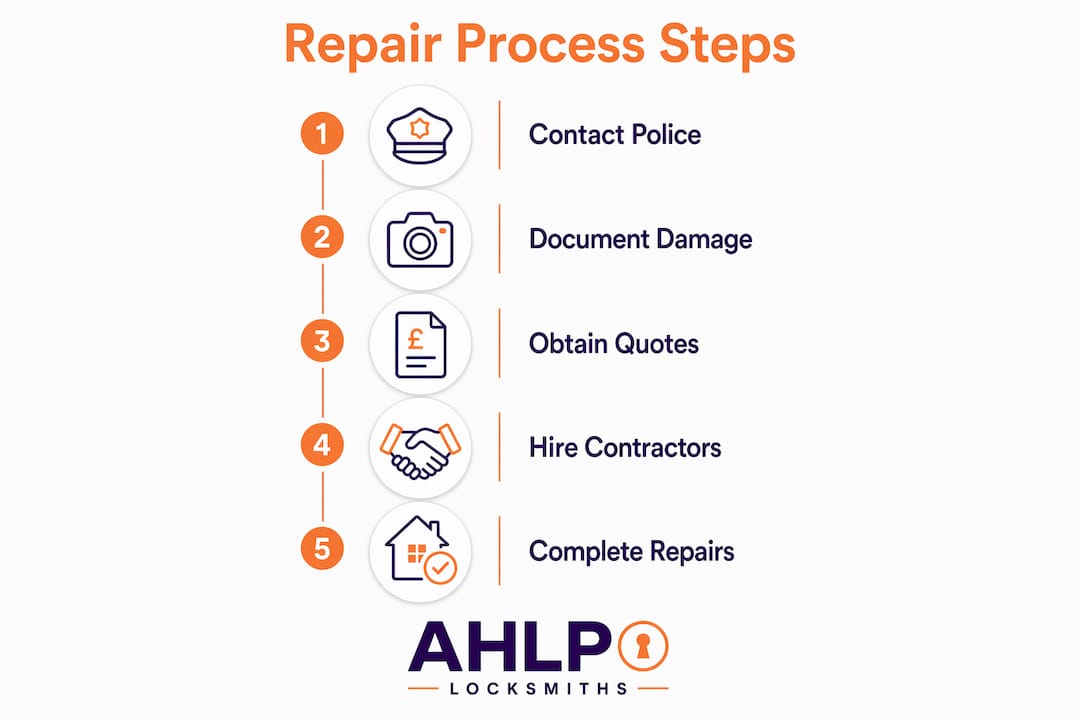
Walk through your property methodically, room by room, and record every area of damage. Focus on doors, window frames, locks, internal fixtures, and any structural damage to walls or ceilings. Photograph each damaged area from multiple angles, and make sure your device timestamps are switched on so images carry a date and time.
| Damage type | Evidence required |
|---|---|
| Broken door or frame | Photographs, locksmith assessment report |
| Damaged window or glass | Photographs, glazier quote |
| Stolen or damaged items | Serial numbers, receipts, bank statements |
| Damaged locks or mechanisms | Locksmith report, photographs |
| Structural damage | Contractor survey, photographs |
Alongside photographs, create a written inventory of every damaged or missing item. Include serial numbers, approximate values, and any proof of ownership such as receipts or bank statements. This level of detail reduces the likelihood of disputes and helps your insurer process the claim without unnecessary delays.
Pro Tip: Use a free app such as Google Photos or Apple Notes to create a timestamped, cloud-backed record of all damage. Organise images into clearly labelled folders by room or damage type so you can share them instantly with your insurer or contractor.
What are the typical steps involved in completing burglary repairs?
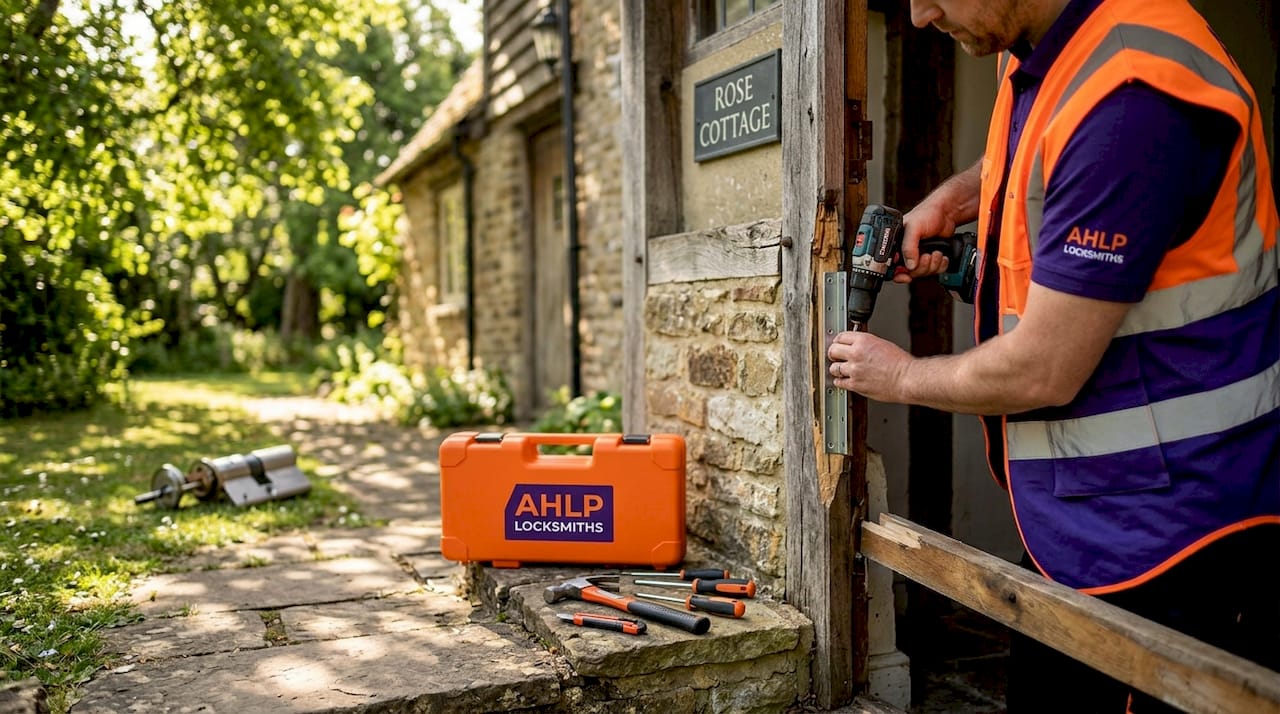
The repair phase of the burglary repairs process 2025 requires careful sequencing. Rushing into repairs before your insurer has assessed the damage can jeopardise your claim. A formal repair audit trail including photographs, contractor authorisations, and invoices is the most reliable way to avoid disputes and secure reimbursement.
The standard repair sequence runs as follows. First, obtain written quotes from qualified contractors before any work begins. Second, get written approval from your insurer before proceeding with permanent repairs. Third, carry out temporary measures such as boarding up broken windows or fitting temporary locks to maintain security in the interim. Fourth, complete permanent repairs once approval is confirmed, starting with structural integrity and then moving to locks and security hardware.
| Repair approach | Best suited for | Key consideration |
|---|---|---|
| Emergency locksmith | Immediate lock replacement, boarding up | Fast response, insurance-compliant hardware |
| Professional contractor | Door frame, window, structural repairs | Requires insurer approval before starting |
| DIY repair | Minor cosmetic damage only | Not suitable for locks or structural work |
Professional locksmiths are the right choice for lock replacements and security hardware installations. They install to British Standard specifications, which is a requirement for most UK home insurance policies. Door frame repairs typically cost between £280 and £680 depending on material and extent of damage, with solid oak and glazed doors sitting at the higher end of that range. Coordinating multiple contractors simultaneously is possible, but assign one point of contact to manage communication and keep a single log of all correspondence, quotes, and invoices.
Pro Tip: Before any contractor begins work, ask for written confirmation that their repair methods and materials meet your insurer’s requirements. A short email exchange takes minutes and protects you from unexpected out-of-pocket costs later.
How can you improve your property’s security during the repair process?
Repairing burglary damage is the right moment to upgrade your security, not just restore it to its previous state. Integrating security upgrades such as multi-point locks, alarms, and CCTV during the repair phase can reduce future burglary risk by up to 50%. Doing this work alongside repairs also saves time and reduces the disruption of having contractors return for a second visit.
Your insurance policy is the starting point. Many UK policies require BS3621-compliant mortice locks or insurance-approved Euro cylinder locks as a minimum. Non-compliant locks can void a burglary claim entirely, even if the intruder entered through a different point. Checking your policy schedule before specifying replacement hardware is not optional. It is the step that protects your claim.
Key security upgrades to consider during home security repairs 2025:
- Anti-snap Euro cylinder locks on all external UPVC and composite doors
- Multi-point locking systems on front and rear doors to replace single-point mechanisms
- Reinforced door frames and hinge bolts to prevent forced entry
- Security-rated glazing on ground-floor windows and any glazed door panels
- Alarm systems with a monitored response or audible deterrent
- CCTV cameras covering main entry points and vulnerable areas
- Motion-activated lighting at the front, rear, and side of the property
A qualified locksmith can advise on which upgrades are most appropriate for your specific property type, whether that is a terraced house in Bristol, a detached home in South Gloucestershire, or a commercial premises in Gloucester. Many insurers offer premium reductions for properties fitted with approved security systems, so the upfront investment often pays back over time.
What mistakes should you avoid during the burglary repair process?
Several common errors can delay repairs, reduce insurance payouts, or leave your property exposed. Knowing what to avoid is as useful as knowing what to do.
- Starting permanent repairs before insurer approval. This is the single most common mistake. Permanent repairs carried out before an insurer’s loss adjuster has assessed the damage can result in a reduced or rejected claim.
- Hiring unlicensed contractors. Low-cost tradespeople who cannot demonstrate qualifications or insurance carry significant risk. If their work fails or causes further damage, you bear the cost.
- Assuming your existing locks are compliant. Many homeowners discover after a burglary that their locks did not meet their policy’s requirements. Insurance policy lock clauses are specific, and non-compliance can void a claim even when the break-in occurred elsewhere on the property.
- Failing to keep a complete paper trail. Every phone call to your insurer, every contractor quote, and every invoice should be logged. A well-maintained repair audit trail is your strongest protection against disputes.
- Neglecting to review your security after repairs. Restoring your property to its pre-burglary state is not enough. The break-in identified a vulnerability. Addressing it is part of the repair process.
Pro Tip: Create a dedicated email folder or physical folder labelled with your claim reference number. File every document, photograph, quote, and correspondence in it from day one. If a dispute arises weeks later, you will have everything in one place.
Key takeaways
The burglary repairs process requires a clear sequence of actions, from evidence preservation and documentation through to professional repair and security upgrades, to protect both your property and your insurance claim.
| Point | Details |
|---|---|
| Preserve evidence first | Do not clean or repair anything until police and your insurer have assessed the scene. |
| Document everything thoroughly | Timestamped photographs and written inventories reduce claim delays and disputes. |
| Sequence repairs correctly | Obtain insurer approval before permanent repairs begin to protect your claim. |
| Use compliant hardware | BS3621 locks and insurance-approved fittings are required by most UK home policies. |
| Upgrade during repairs | Integrating security improvements at the repair stage saves time and reduces future risk. |
Martyn’s view: why the process matters more than the repairs themselves
After years of attending properties following break-ins across Bristol, South Gloucestershire, and Gloucester, the pattern I see most often is not about the physical damage. It is about the decisions made in the first few hours. Homeowners who act quickly, preserve evidence, and call a qualified locksmith before touching anything tend to have far smoother experiences with their insurers and far better outcomes overall.
The part that surprises most people is the lock compliance issue. A significant number of UK homeowners have policies that specify BS3621 mortice locks or anti-snap cylinders, but their doors carry standard locks that were fitted when the property was built or last sold. The burglary exposes this gap. The good news is that the repair process is the perfect opportunity to close it, and a qualified locksmith can assess your entire property and specify the right hardware in a single visit.
My honest advice is to treat the repair process as a security review, not just a restoration job. The role of a locksmith after a break-in goes well beyond fitting a new lock. It includes identifying every vulnerability the intruder exploited and advising on upgrades that meet both your insurer’s requirements and current security standards. That combination of speed, compliance, and forward planning is what gives you genuine peace of mind once the work is done.
— Martyn
How Ahlp supports you through every stage of burglary repairs
At Ahlp, we provide emergency locksmith callouts across Bristol, South Gloucestershire, and Gloucester with no call-out fee and fast response times. Whether you need a property secured immediately after a break-in or a full burglary repair service including lock replacement, door mechanism repair, and security upgrades, our DBS-checked locksmiths are ready to help. We install British Standard and insurance-approved hardware as standard, so every repair we carry out supports your insurance claim rather than complicating it. For a step-by-step approach to restoring your property, our burglary repair guide covers the full process in detail. Call us on 07700 100146 or visit ahlp.co.uk to arrange a visit.
FAQ
What is the first step in the burglary repairs process?
The first step is to contact the police and obtain a crime reference number before touching anything in the property. Preserving the scene protects both the criminal investigation and your insurance claim.
How much do burglary repairs typically cost?
Costs vary depending on the extent of damage. Door frame repairs typically range from £280 to £680, with specialist materials such as solid oak or glazed panels sitting at the higher end. Lock replacements and security upgrades are additional costs that vary by hardware specification.
Do I need insurance-compliant locks after a burglary?
Yes. Most UK home insurance policies require BS3621-compliant mortice locks or approved Euro cylinder locks. Fitting non-compliant replacements can void your claim, so always check your policy schedule before specifying hardware.
Can I carry out burglary repairs myself?
Minor cosmetic repairs can be handled as DIY, but lock replacements, door frame repairs, and any structural work should be completed by qualified professionals. Insurers often require evidence of professional installation for security hardware claims.
How long does the burglary repair process take?
Emergency securing of entry points can be completed within hours. Full repairs, including insurer approval, contractor scheduling, and security upgrades, typically take between three days and two weeks depending on the extent of damage and insurer response times.