
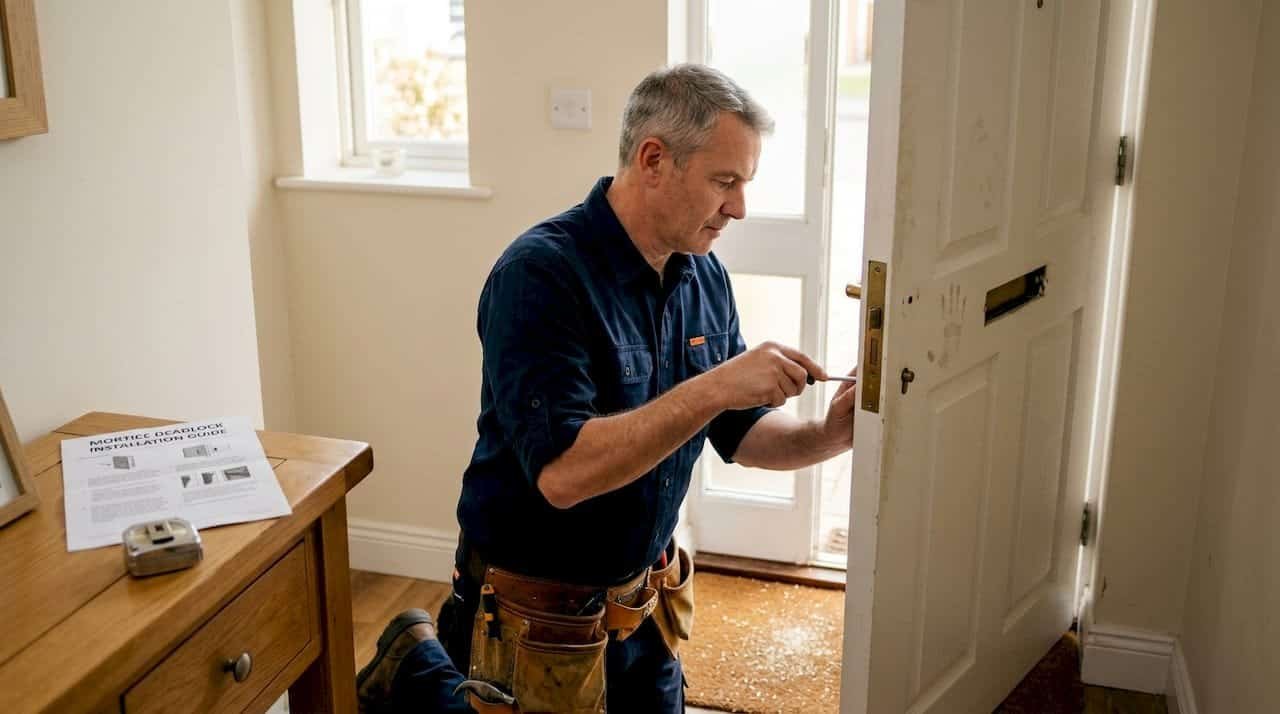
Choosing the right locks for your Bristol property can feel overwhelming, especially when insurance policies demand specific standards you might not fully understand. Many homeowners and business owners struggle to navigate the requirements for insurance-approved locks, unsure whether their current security measures meet insurer expectations or how upgrading might benefit them. This article clarifies what makes a lock insurance-approved, explores the tangible advantages these locks provide, and guides you through selecting the best options to protect your property while satisfying insurance requirements and gaining peace of mind.
Table of Contents
- Understanding The Criteria For Insurance-Approved Locks
- Top Types Of Insurance-Approved Locks And Their Benefits
- How Insurance-Approved Locks Compare With Standard Locks
- Making The Right Choice: Options And Expert Recommendations
- Enhance Your Property Security With Trusted Locksmith Services
- Frequently Asked Questions
Key takeaways
| Point | Details |
|---|---|
| Insurance compliance | Insurance-approved locks meet standards that reduce claim rejection risks and satisfy policy requirements. |
| Enhanced security | These locks include anti-snap, anti-drill, and anti-pick features that outperform standard alternatives. |
| Premium reductions | Installing approved locks can lower your insurance premiums and improve policy acceptance rates. |
| Professional installation | Expert locksmith fitting ensures optimal security performance and verifies compliance with insurer standards. |
| Peace of mind | Knowing your property meets insurance requirements and resists common break-in methods provides lasting confidence. |
Understanding The Criteria for Insurance-approved Locks
Insurance policies frequently specify lock standards to minimise theft risk and validate coverage. Insurance providers typically require locks that meet recognised standards to validate home or business insurance policies, with BS3621 being the most common benchmark for mortice locks in the UK. This British Standard ensures locks resist picking, drilling, and forced entry through rigorous testing protocols. When your locks meet these criteria, insurers recognise your property as lower risk, which directly impacts your coverage terms and claim processing.
Professional installation and ongoing maintenance form essential parts of compliance. Insurers often stipulate that approved locks must be fitted by qualified locksmiths to guarantee correct operation and security effectiveness. A poorly installed lock, even if it meets BS3621 standards, might fail during a break-in attempt or leave your claim vulnerable to rejection. Regular inspections ensure locks remain functional and compliant over time, particularly after any attempted intrusion or wear from daily use.
Failure to meet these requirements carries serious consequences. If a burglary occurs and your locks don’t comply with policy specifications, insurers may refuse your claim entirely, leaving you to cover repair costs and stolen items yourself. This risk applies equally to residential and commercial properties across Bristol, where insurance terms increasingly demand verified security measures. Understanding insurance-approved lock standards before selecting your security hardware prevents costly surprises and ensures your coverage remains valid when you need it most.
The criteria extend beyond just the lock mechanism itself. Insurers assess the entire door and frame assembly, checking that strike plates, hinges, and mounting points provide adequate resistance to forced entry. Some policies specify multiple locking points for external doors or require window locks on ground floor and accessible upper floor openings. Reviewing your specific policy terms helps you identify exactly which standards apply to your property type and location within Bristol.
Top Types of Insurance-approved Locks and Their Benefits
Mortice locks represent the gold standard for insurance-approved security. Mortice locks meeting BS3621 standard are frequently approved by insurers for security compliance, offering robust protection through their embedded design within the door itself. These locks feature anti-pick pins, hardened steel bolts, and drill-resistant plates that defeat common attack methods. The five-lever mechanism provides thousands of key combinations, making unauthorised duplication extremely difficult. Mortice deadlocks engage automatically when the door closes, ensuring you can’t accidentally leave your property unsecured.
Euro cylinder locks with anti-snap technology address one of the most prevalent break-in techniques targeting UPVC and composite doors. Standard cylinders can be snapped in seconds using basic tools, but anti-snap versions include sacrificial break points and reinforced cores that prevent this attack method. When combined with security handles featuring anti-drill plates, these cylinders provide insurance-approved protection for modern door types. Many Bristol properties use euro cylinders, making this upgrade particularly relevant for local homeowners and businesses seeking to upgrade insurance-approved locks efficiently.
Multi-point locking systems distribute force across several engagement points along the door frame, dramatically increasing resistance to forced entry. These systems typically secure the door at three to five locations simultaneously, engaging hooks, bolts, and rollers when you lift the handle and turn the key. Insurance companies favour multi-point locks for external doors because they eliminate weak points that single-bolt systems leave vulnerable. The comprehensive engagement also prevents door warping over time, maintaining security effectiveness throughout the lock’s lifespan.
Professional installation ensures these lock types function correctly and meet insurance standards without compromise. Expert locksmiths verify correct alignment, test all components, and provide certification that satisfies insurer requirements. They also advise on complementary security measures like door viewers, security chains, and alarm integration that enhance overall protection. Choosing professional locksmith benefits over DIY installation guarantees your investment delivers maximum security value and insurance compliance.
Pro Tip: Consider combining mortice deadlocks with anti-snap euro cylinders on external doors for layered security that exceeds basic insurance requirements while providing superior break-in resistance.
How Insurance-approved Locks Compare with Standard Locks
The security performance gap between insurance-approved and standard locks proves substantial when tested against real-world attack methods. Approved locks undergo rigorous certification processes that verify resistance to picking, drilling, bumping, and forced entry, whereas standard locks often lack these protections entirely. A basic cylinder lock can be snapped in under ten seconds, while an anti-snap alternative resists this attack indefinitely. This difference translates directly to your property’s vulnerability, with using insurance-approved locks significantly reducing burglary risk and supporting insurance claim approvals.
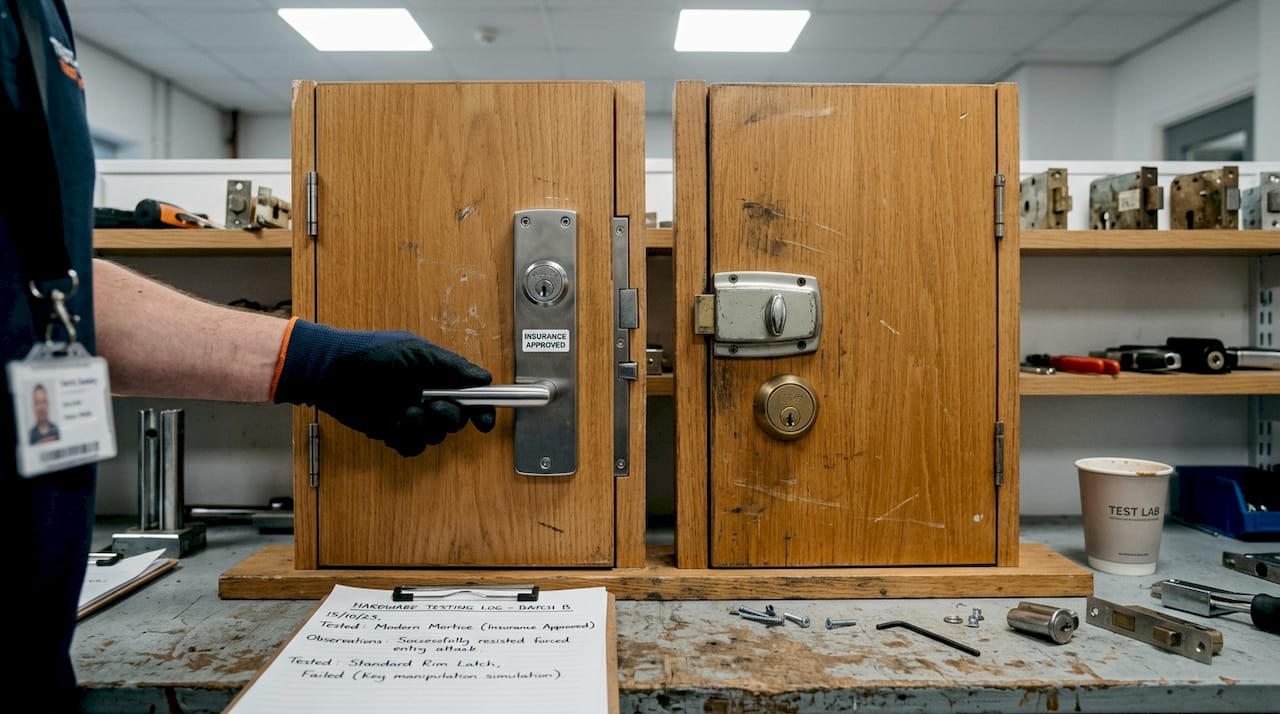
Insurance implications create the most compelling comparison point for property owners. Policies that specify approved locks may refuse claims entirely if standard alternatives were fitted at the time of a break-in, regardless of how the entry occurred. Even when policies don’t explicitly mandate approved locks, having them installed strengthens your position during claim processing and demonstrates reasonable security precautions. Many insurers offer premium discounts for properties with verified approved locks, typically ranging from five to fifteen percent annually. These savings often offset the upgrade cost within two to three years.
Standard locks leave properties vulnerable to attack methods that burglars commonly exploit. Lock snapping, cylinder pulling, and bumping techniques defeat basic mechanisms rapidly and quietly, allowing intruders to enter without triggering alarms or attracting attention. Insurance-approved locks incorporate specific design features that counter these methods, including reinforced cores, anti-drill plates, and complex pin arrangements. The table below illustrates key differences:
| Feature | Insurance-approved locks | Standard Locks |
|---|---|---|
| Certification | BS3621 or equivalent testing | No standardised testing |
| Snap resistance | Sacrificial sections and reinforced cores | Vulnerable to cylinder snapping |
| Pick resistance | Complex pin arrangements and security pins | Basic pin tumblers easily manipulated |
| Insurance recognition | Explicitly accepted and often rewarded | May void coverage or complicate claims |
| Cost difference | £80-£200 per lock installed | £20-£60 per lock installed |
The initial cost difference represents genuine value rather than unnecessary expense. While approved locks cost more upfront, they provide security that standard alternatives simply cannot match. This investment protects not just your physical property but also your insurance coverage validity and claim success. Comparing insurance-approved vs standard locks reveals that the extra expenditure delivers tangible protection against both break-ins and insurance complications, making it essential for responsible property ownership in Bristol.
Long-term financial protection extends beyond premium discounts. A successful burglary claim on a property with standard locks might face scrutiny, delays, or reduced payouts if insurers determine security measures were inadequate. Approved locks eliminate this risk entirely, ensuring full coverage when you need it most. They also increase property value and appeal to security-conscious buyers or tenants who recognise the enhanced protection these systems provide.
Making the Right Choice: Options and Expert Recommendations
Selecting suitable insurance-approved locks requires systematic evaluation of your property’s specific vulnerabilities and security requirements. Follow this decision process to ensure optimal protection:
- Assess all entry points including front and back doors, side gates, garage doors, and ground floor windows to identify which require approved locks according to your insurance policy.
- Verify your insurance policy’s exact lock requirements, noting any specific standards mentioned and whether professional installation certification is mandatory for coverage.
- Evaluate door types and conditions, as UPVC doors need different lock solutions than wooden doors, and worn frames may require reinforcement before lock upgrades provide full security.
- Research lock certifications beyond BS3621, including Sold Secure ratings and insurance company endorsements that indicate superior security performance.
- Obtain quotes from accredited locksmiths who can supply, fit, and certify approved locks while providing documentation that satisfies your insurer’s requirements.
- Schedule installation during daylight hours when locksmiths can thoroughly assess your property and recommend additional security measures that complement your new locks.
Choosing the correct lock and having it professionally installed optimises security and ensures insurance compliance without guesswork or installation errors. Professional locksmiths bring expertise in matching lock types to door materials, frame conditions, and usage patterns that affect long-term performance. They also identify vulnerabilities you might overlook, such as weak strike plates, inadequate door thickness, or hinge exposure that undermines even the best locks.
Budget considerations shouldn’t compromise essential security features. Prioritise locks with anti-snap and drill-resistant properties for external doors, even if this means upgrading fewer doors initially and addressing remaining entry points in stages. A single high-quality approved lock on your main entrance provides better protection than multiple basic locks across all doors. Focus first on the entry points burglars most commonly target, typically front and back doors and accessible ground floor windows.
Maintenance preserves both security effectiveness and insurance compliance over time. Schedule annual inspections with qualified locksmiths to verify locks remain functional, lubricate moving parts, and identify wear before it compromises security. After any attempted break-in, even unsuccessful ones, have locks professionally assessed for damage that might not be immediately visible but could weaken resistance to future attacks. Keep all installation certificates and maintenance records organised, as insurers may request these documents during claim processing.
Common pitfalls to avoid include purchasing approved locks without professional installation, mixing approved and standard locks across entry points, and neglecting to inform your insurer about security upgrades. Each mistake can undermine your coverage or security effectiveness. Always verify that locksmiths provide written certification of installation and that locks meet your specific policy requirements before finalising any work. Exploring professional locksmith services ensures you access qualified experts who understand both security best practices and insurance compliance requirements.
Pro Tip: Prioritise anti-snap euro cylinders and mortice deadlocks within your budget, as these provide the strongest protection against the most common break-in methods targeting Bristol properties while satisfying virtually all insurance requirements.
Enhance Your Property Security with Trusted Locksmith Services
Transforming your property’s security from basic to insurance-approved requires professional expertise and quality hardware that delivers lasting protection. AHLP Locksmiths specialises in supplying and fitting insurance-approved locks across Bristol, South Gloucestershire, and Gloucester, ensuring your property meets insurer standards while resisting modern break-in techniques. Our locksmiths provide detailed security assessments that identify vulnerabilities and recommend optimal lock solutions tailored to your property type, budget, and insurance requirements. We handle everything from anti-snap euro cylinders to BS3621 mortice locks, using only British Standard hardware that satisfies the most demanding insurance policies.
Emergency situations receive immediate attention through our 24/7 callout service with no call-out charges, ensuring you’re never left vulnerable after a break-in attempt or lock failure. Beyond installations, we offer comprehensive trusted locksmith services including lock repairs, key replacements, and security consultations that help you maintain compliance and protection over time. Our transparent pricing and efficient, non-destructive methods mean you’ll always know exactly what to expect, with no hidden costs or unnecessary damage to your property. Reviewing our ultimate guide to locksmith services provides detailed insights into how professional locksmiths enhance your security investment. Ready to upgrade your locks and secure proper insurance coverage? Contact AHLP locksmiths today to schedule your security consultation and take the first step towards comprehensive property protection.
Frequently Asked Questions
What are insurance-approved locks?
Insurance-approved locks meet specific security standards that insurance companies require to minimise theft risk and validate property coverage. These locks typically carry certifications like BS3621 for mortice locks or Sold Secure ratings that verify resistance to picking, drilling, and forced entry through independent testing. Insurers favour these locks because they significantly reduce successful break-in rates, which lowers claim frequency and protects both the insurer and property owner from losses.
Can insurance-approved locks reduce my insurance premium?
Many insurance companies offer premium discounts for properties fitted with approved locks, typically reducing annual costs by five to fifteen percent. These discounts reflect the reduced risk that certified security hardware provides, as properties with approved locks experience fewer successful burglaries. Installing approved locks also improves claim success rates and can prevent policy cancellations that occur when insurers determine security measures were inadequate after a break-in.
Are insurance-approved locks required for all properties in Bristol?
Not all insurance policies mandate approved locks, but many insurers covering Bristol homes and businesses do specify minimum lock standards in their terms. Requirements vary by insurer, property type, and location, with higher-value properties and commercial premises typically facing stricter demands. Checking your specific policy terms or contacting your insurer directly ensures you understand exactly which insurance lock requirements Bristol properties must meet to maintain valid coverage.
How often should insurance-approved locks be inspected or replaced?
Professional locksmiths recommend annual inspections to verify locks remain functional and compliant with insurance standards. Inspections should also occur immediately after any attempted break-in, even unsuccessful ones, as damage to internal components might not be visible but could compromise future security. Locks typically last ten to fifteen years with proper maintenance, but replacement becomes necessary when mechanisms show wear, keys become difficult to turn, or security standards evolve beyond older lock capabilities. Following guidance in our lock maintenance and repair guide helps preserve both security effectiveness and insurance compliance throughout your locks’ lifespan.