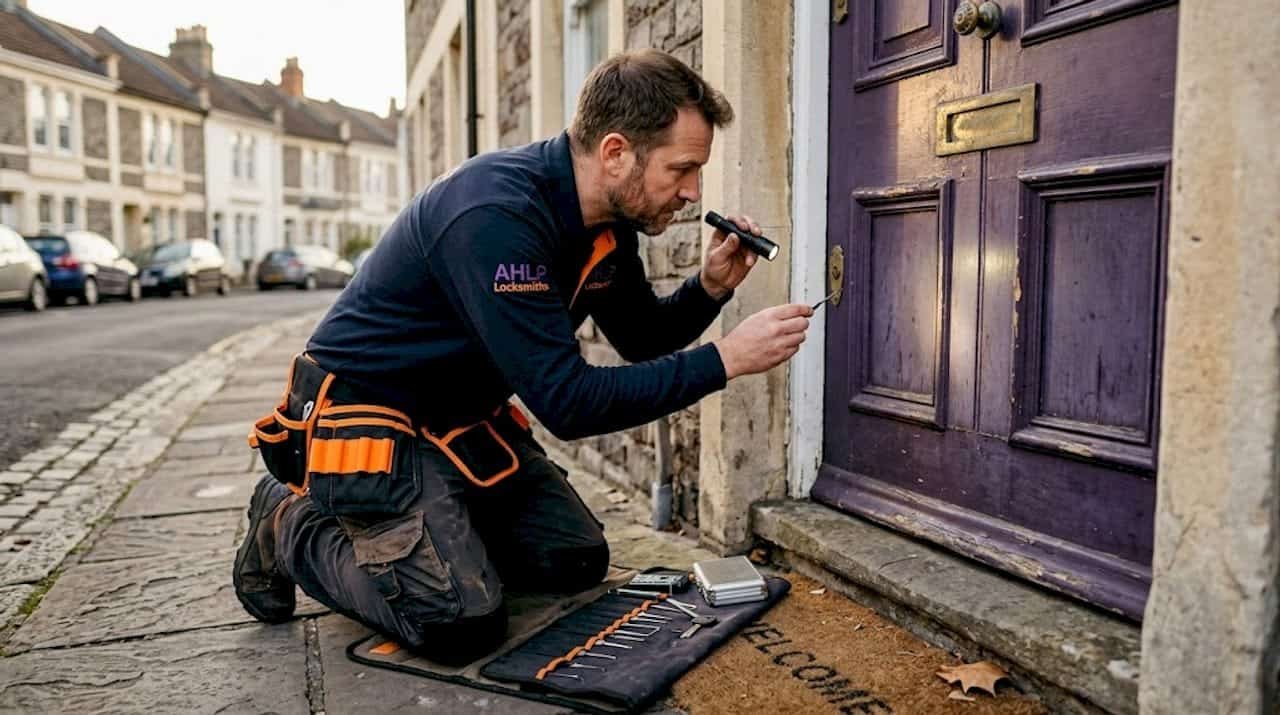
Losing your house keys creates two separate problems: getting back inside and deciding whether the missing keys create a security risk.
If you simply left your keys inside and know exactly where they are, you may only need help regaining access.
If the keys are genuinely lost or stolen, particularly if they could be connected with your address, changing who can operate the lock becomes much more important.
This guide explains your options, typical costs and what tenants and homeowners should do after losing house keys in Bristol and South Gloucestershire.
What Should You Do If You Lose Your House Keys?
Start by working out whether the keys are actually lost.
Check your bag, pockets, car and anywhere you have recently been. Contact anyone who legitimately holds a spare, such as a family member or trusted neighbour.
If you rent, contact your landlord or letting agent as well. They may hold a spare key or have an agreed procedure for lost keys and emergency access.
If you still cannot get inside, avoid forcing the door or attempting improvised entry methods that could damage the lock, frame or door.
For an immediate lockout, our locked out in Bristol guide explains what to do while you are standing outside and what happens when a locksmith arrives.
Once access has been restored, the next question is whether the existing lock can safely remain in use.
Do I Need to Change My Locks If I Lose My Keys?
Not every lost-key situation requires a new lock.
The important question is: can somebody who finds the keys connect them with your property?
Consider replacing or rekeying the affected lock if:
The keys were stolen
Your address was attached to them
They disappeared with a bag containing identification or address details
You cannot establish where they were lost
You have reason to think somebody deliberately took them
You have recently moved and cannot account for all existing keys
The situation is different if you accidentally shut the door while the keys were still inside.
Once the door has been opened and you recover those keys, there is normally no lost-key security risk requiring replacement solely because you were locked out.
Can I Just Get a Replacement House Key Cut?
Yes, if you still have another working key.
For an ordinary duplicate, cutting another key may be all you need.
The situation becomes more complicated when every copy has been lost, because there is no existing key to copy and you also need to consider whether the missing keys could still be used.
Typical key replacement costs
The cost varies considerably according to the type of key and lock.
| Key or work required | Typical price |
|---|---|
| Basic house key copy | £5 to £10 |
| Security or specialist key | £10 to £25+ |
| Rekey existing lock | £30 to £50 per lock |
| Standard lock replacement | From around £90 |
| Anti-snap cylinder supplied and fitted by AHLP | From £120 |
| uPVC multipoint mechanism replacement by AHLP | From £180 |
The first two figures refer to key cutting, while the others involve changing or replacing lock components. They should not be treated as equivalent jobs.
Restricted or specialist keys may also require particular blanks, security cards or authorised duplication depending on the system fitted.
If you have no remaining key and cannot account for the missing one, simply obtaining another key may solve the access problem without solving the security problem.
Rekeying vs Replacing the Lock
After losing keys, you do not necessarily need to replace the complete lock.
There are two main approaches.
Rekeying
Rekeying alters a compatible lock so the old key no longer operates it.
The existing lock hardware remains in place, but a different key operates it afterwards.
This can make sense when:
The existing lock is in good condition
You want the missing key to stop working
The lock is suitable for rekeying
There is no reason to replace the hardware itself
The existing guide price is around £30 to £50 per lock.
Lock replacement
Replacement removes the affected cylinder or lock and installs another.
This becomes more appropriate when:
The existing lock is worn or unreliable
The cylinder has been damaged
The lock is not suitable for rekeying
You want to change the security specification
You have recently moved and do not know how many keys exist
Replacement costs depend heavily on the hardware involved.
AHLP’s current prices start from £95 for a standard lock change and £120 supplied and fitted for an anti-snap Euro cylinder.
Rekey or Replace: Which Is Better?
| Situation | Rekey | Replace |
|---|---|---|
| Good lock but keys genuinely lost | ✓ | ✓ |
| Existing lock is worn or stiff | ✓ | |
| Keys stolen with address information | ✓ | ✓ |
| Want a security upgrade | ✓ | |
| Existing hardware is damaged | ✓ | |
| Moving into a new home | ✓ | ✓ |
| Existing lock is not suitable for rekeying | ✓ |
Neither option is automatically better.
The condition and type of lock matter just as much as the missing key.
If replacement is being considered, our examples of lock replacement for local homes explain situations where changing a lock makes sense and where a smaller repair may be sufficient.
What If I’ve Lost the Keys to a uPVC Door?
Most modern uPVC doors use a Euro cylinder operating a multipoint locking mechanism.
Losing the key does not automatically mean the entire multipoint mechanism needs replacing.
If the mechanism itself works correctly, replacing the Euro cylinder may be enough to make the missing keys useless while retaining the rest of the door’s locking system.
This is an important cost distinction.
AHLP currently charges from £120 supplied and fitted for an anti-snap cylinder, whereas a uPVC multipoint mechanism replacement starts from £180.
If the mechanism was already becoming stiff or unreliable before the keys disappeared, have that fault diagnosed separately rather than assuming a cylinder replacement will fix it.
Our uPVC door lock repair guide explains the difference between the cylinder, gearbox and multipoint mechanism in more detail.
I’ve Lost My Keys but I’m a Tenant. Who Is Responsible?
This depends on why the keys are missing, the tenancy agreement and what work is required.
If you are renting, tell your landlord or letting agent before arranging non-urgent changes to the locks where possible.
They may:
Hold a spare key
Have an agreed locksmith
Have specific requirements about changing locks
Need replacement copies of any new keys
Need to approve changes to the property’s locking hardware
If you lost the keys, you may be expected to pay reasonable costs associated with replacing them or restoring access, depending on your tenancy agreement and circumstances.
That is different from a lock that has failed through ordinary wear or a repair that is the landlord’s responsibility.
If you are locked outside and cannot reach the landlord or agent, safety and access may make the situation more urgent. Keep records of who you contacted and any work carried out.
Do not assume that changing the lock means you can permanently prevent the landlord from having whatever access rights are provided by the tenancy and applicable law.
What If I’m the Homeowner?
Homeowners can make the decision directly.
The main questions are:
Can the lost keys be connected with your address?
Is the existing lock still in good condition?
Can it be rekeyed?
Would replacing the cylinder or lock be more appropriate?
Does your insurance policy specify requirements for the affected door?
If the keys disappeared together with something containing your name and address, the security risk is clearer and there is a stronger reason to act promptly.
Check your own insurance policy rather than assuming every insurer requires the same lock or standard.
Lost Keys in Different Bristol Homes
The appropriate solution can vary with the property and door.
A Victorian terrace in Bedminster may have a timber front door with a mortice lock or night latch.
A newer home in Emersons Green or Bradley Stoke is more likely to have a uPVC or composite door using a Euro cylinder and multipoint mechanism.
Properties in Yate and elsewhere across South Gloucestershire can have either arrangement depending on their age and subsequent door replacements.
That matters because replacing a Euro cylinder is a different job from changing a mortice lock.
The useful question is therefore not simply, “How much is a replacement key?”
It is what lock is fitted, where are the missing keys, and what needs changing to make those keys useless?
Should I Upgrade the Lock at the Same Time?
You do not have to turn a lost-key problem into a larger security upgrade.
If the existing hardware is suitable and rekeying solves the problem, that may be enough.
However, if a replacement cylinder is already required, it is reasonable to consider whether you want to replace it like for like or use the opportunity to fit a more secure cylinder.
For uPVC and composite doors, our guide to anti-snap locks explains what the security ratings mean and how the cylinder works with the surrounding door hardware.
For broader questions about standards and insurance requirements, see British Standard locks, lock grades and insurance.
That is preferable to assuming that one lock standard is required by every insurer.
What Should You Tell a Locksmith?
Give as much practical information as possible.
Tell them:
Your postcode
Whether you are currently locked out
Whether all copies of the key are missing
Whether the keys may have been stolen
Whether anything with your address disappeared with them
Whether the door is timber, uPVC or composite
Whether the lock was already stiff or faulty
Whether you rent or own the property
If possible, send a photograph of the lock and door furniture.
That can help establish what is fitted before anyone attends.
Lost House Keys in Bristol: What Happens Next?
If you are simply locked outside, deal with access first.
If the keys themselves are genuinely missing, deal with the security risk afterwards.
That might mean cutting another key, rekeying an existing lock, replacing a cylinder or replacing a worn lock. The correct option depends on the lock and what happened to the keys rather than automatically choosing the most expensive solution.
If you need a locksmith to attend, AHLP provides locksmith services across Bristol and South Gloucestershire.
For an urgent lockout, use the emergency locksmith Bristol service for current booking and contact information.
Frequently Asked Questions
Should I change my locks if I lose my house keys?
Not automatically. If the keys are safely inside your locked home, regaining entry may be all that is necessary. If they are genuinely lost, stolen or could be connected with your address, rekeying or replacing the affected lock prevents the missing key from continuing to work. The condition and type of lock determine which option is appropriate.
How much does it cost to replace lost house keys?
A basic duplicate house key may cost around £5 to £10, while specialist or security keys can cost more. If no safe key remains or the missing key presents a security risk, you may need the lock rekeyed or replaced instead. The existing guide price for rekeying is around £30 to £50 per lock. AHLP’s current fitted lock prices start from £95 for a standard lock change and £120 for an anti-snap cylinder.
Is it cheaper to rekey or replace a lock?
Rekeying is generally cheaper where the existing lock is suitable and remains in good condition. The existing guide price is around £30 to £50 per lock, compared with AHLP lock changes starting from £95. However, not every lock can or should be rekeyed. A worn, damaged or unsuitable lock may make replacement the more appropriate option.
Who pays for lost keys in a rented property?
If a tenant loses the keys, the tenancy agreement and circumstances will help determine who pays the resulting reasonable costs. A landlord may already hold a spare or have an agreed locksmith, so tenants should contact the landlord or letting agent where possible before arranging non-urgent alterations. A lock that has failed through wear is a different situation from a key the tenant has lost. Keep records of any costs and communication if an emergency requires immediate action.
Can my landlord change the locks if I lose my keys?
A landlord or letting agent may arrange replacement keys, rekeying or a lock change depending on the circumstances and tenancy arrangements. If you are the tenant, contact them rather than assuming the complete lock needs replacing. If new locks are fitted, arrangements may also be needed for replacement copies of the new keys. The exact responsibilities depend on the tenancy and reason the work became necessary.
Do I need a whole new uPVC locking mechanism after losing my key?
Usually not solely because a key has been lost. The Euro cylinder that accepts the key is separate from the multipoint mechanism running along the door. If the mechanism remains serviceable, replacing the cylinder can make the missing key useless without replacing the whole system. A multipoint mechanism replacement is relevant when the mechanism itself has failed or become badly worn.