

TL;DR:
- Physical security is essential for all property types, regardless of business size or location.
- Layered security measures like CCTV, alarms, and good locks significantly deter and delay intruders.
- Regularly reviewing and maintaining security systems enhances safety and reduces the risk of theft or vandalism.
Physical security failures cost UK businesses dearly. In 2023, UK businesses lost £31.5bn to breaches, and the impact on smaller premises is just as serious as on large corporations. Whether you run a shop in Clifton, manage a warehouse in Avonmouth, or own a home in South Gloucestershire, understanding what business security means and how to act on it could save you thousands. This guide covers the key risks, the practical systems that work, and the steps you can take right now to protect your property and give yourself genuine peace of mind.
Table of Contents
- What business security means and why it matters
- The essential pillars: How business security works in practice
- Typical threats for Bristol and small business cases
- Proven steps to strengthen your security today
- A fresh perspective: Why physical security is everyone’s business
- How AHLP helps Bristol protect homes and businesses
- Frequently asked questions
Key Takeaways
| Point | Details |
|---|---|
| Layered security works | Combining alarms, CCTV, locks, and staff training cuts crime risks much more than single solutions. |
| Professional help pays off | Qualified installers and expert surveys close hidden gaps and secure insurance benefits. |
| Stay vigilant | Review your security at least yearly and after any changes or incidents. |
| Local threats are real | Bristol businesses and homes face specific risks, especially in vacant or city centre properties. |
What Business Security Means and Why it Matters
Business security is not just a concern for large companies with dedicated security teams. It applies to any property where people work, trade, or store valuables, and that includes many Bristol homes where people run businesses from their front rooms or garages. At its core, business security covers alarms, CCTV, access control, lighting, and barriers working together to protect people and property.
Many smaller business owners assume that criminals target only large retailers or corporate offices. The reality is quite different. Smaller premises are frequently chosen precisely because their defences tend to be weaker and their owners less prepared. A single break-in can result in stolen stock, damaged fixtures, lost data, and weeks of disruption. For a homeowner running a small business, the personal and financial toll can be severe.
The most common physical threats include:
- Burglary and attempted break-ins, often targeting rear doors or windows
- Theft, including opportunistic shoplifting and employee theft
- Vandalism, which can deter customers and raise insurance premiums
- Unauthorised entry, particularly in shared or multi-occupancy buildings
- Arson and fly-tipping, which pose serious risks to vacant premises
“The assumption that physical security is only for big businesses is one of the most dangerous misconceptions we encounter. A single weak lock or unlit entry point is all a determined intruder needs.”
Repeat victimisation is also a real concern. Once a property is identified as an easy target, it is far more likely to be targeted again. Investing in visible, layered security signals to would-be intruders that your property is not worth the effort. When you are thinking about choosing commercial door locks or reviewing your overall approach, it helps to understand what you are actually protecting against. You can also find practical business lock safety tips to guide your first steps.
The Essential Pillars: How Business Security Works in Practice
Effective security is built in layers. The goal is to deter, detect, delay, and respond. Each layer adds friction for a potential intruder, and together they create a system that is far harder to defeat than any single measure on its own.
Here is a practical breakdown of the core layers:
- Deter: Visible CCTV cameras, alarm boxes, and good exterior lighting signal that a property is monitored and protected.
- Detect: Motion sensors, door and window contacts, and monitored alarm systems alert you or a response centre the moment something is wrong.
- Delay: High-quality locks, reinforced doors, and physical barriers slow down any intruder and increase the chance of detection.
- Respond: A monitored alarm connected to a response service or the police ensures that detection leads to swift action.
When selecting systems, it is important to choose equipment that meets UK standards. Grade 2 or Grade 3 alarms, AI-enabled CCTV, and accredited installers are required for many insurance policies and for compliance with UK regulations. Accreditation bodies such as NSI and SSAIB provide a reliable way to verify that your installer meets these standards.
Wireless vs. wired alarm systems: a quick comparison
| Feature | Wireless | Wired |
|—|—|—|
| Installation complexity | Low | High |
| Flexibility | High | Low |
| Reliability | Very good | Excellent |
| Cost | Lower upfront | Higher upfront |
| Suitability | Rentals, retrofits | New builds, permanent sites |
Both options can be fully compliant and effective when installed correctly. The right choice depends on your property type and how long you plan to stay.
Pro Tip: A professional security consultation before you invest in any system will help you avoid spending money on measures that do not match your actual risk profile. A good consultant will assess your specific site and recommend solutions that are proportionate and cost-effective.
For Bristol businesses in particular, local factors such as building age, proximity to footfall areas, and whether you operate from a listed or period property all influence which systems are most appropriate. Bristol commercial security guidance can help you navigate these local nuances.
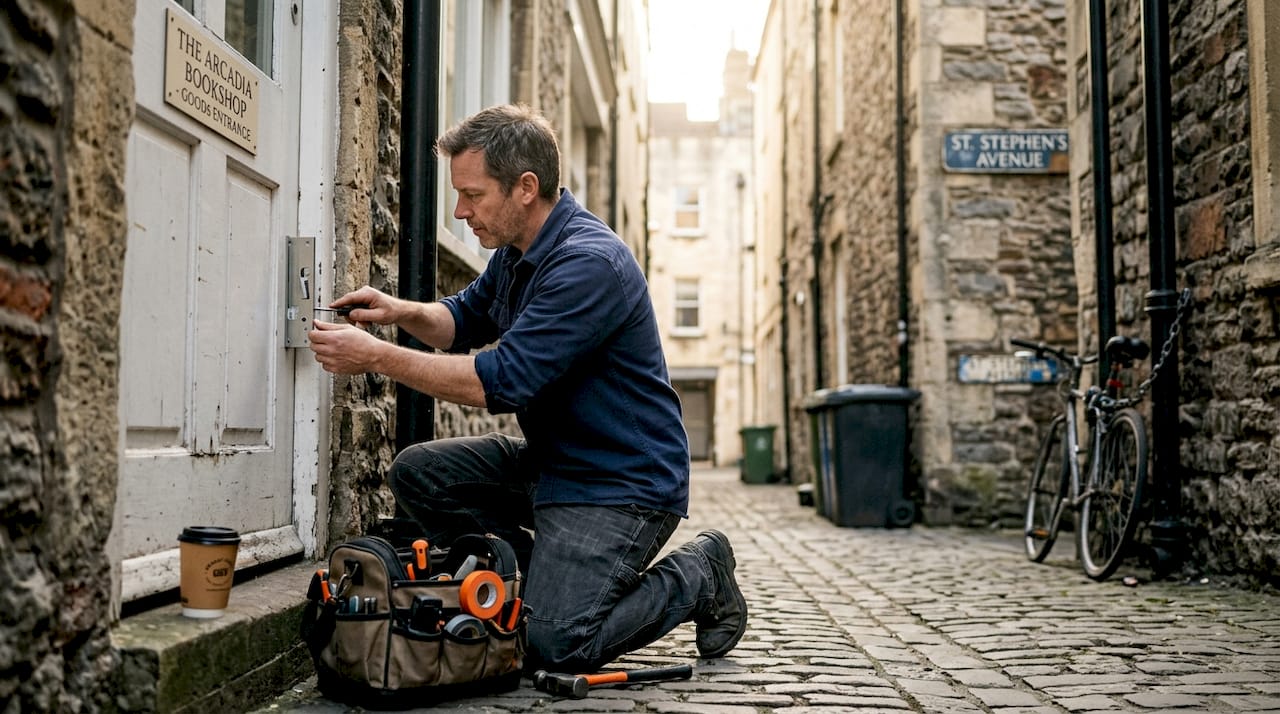
Typical Threats for Bristol and Small Business Cases
Understanding how security frameworks work is only part of the picture. Next, let us look at the real risks you are likely to face in Bristol and the surrounding area.
Nationally, 8% of UK businesses were burglarised or had an attempt made, and 14% experienced theft in the most recent survey period. For Bristol, the picture reflects these national trends, with city centre locations, retail units, and vacant properties carrying the highest risk.
Common risk factors for Bristol premises
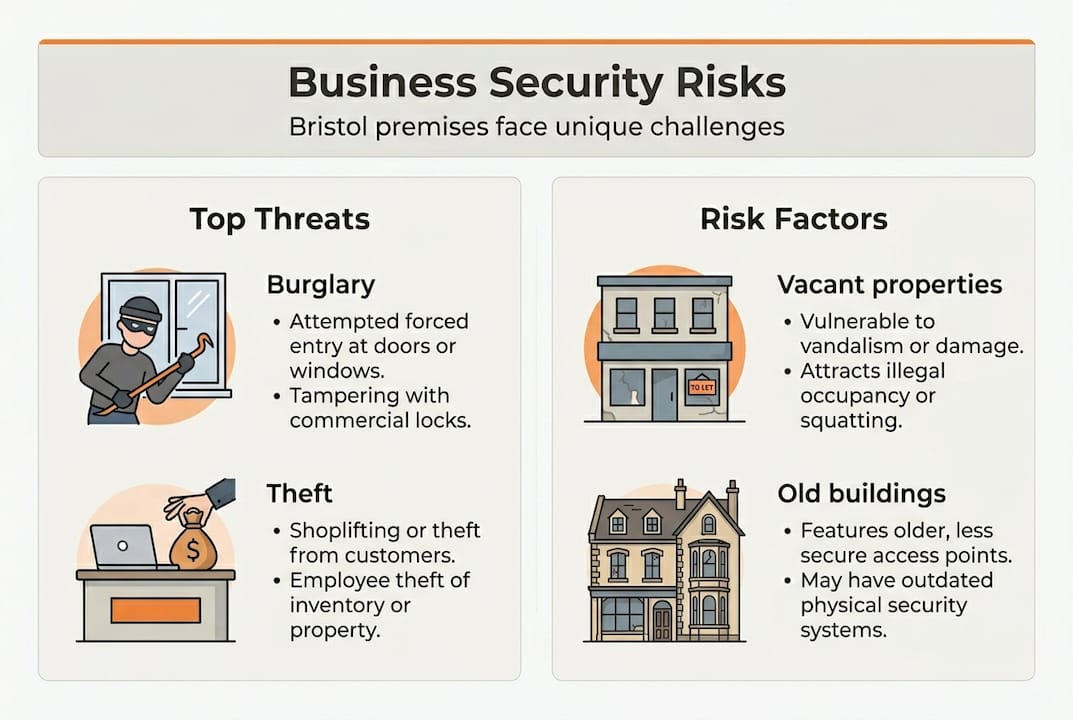
| Risk factor | Why it matters |
|---|---|
| Vacant or unoccupied properties | No occupant presence means longer undetected access |
| Cash handling on site | Attracts targeted theft and robbery |
| City centre or high-footfall location | Higher opportunistic crime rates |
| Rear or side access points | Often overlooked and easier to exploit |
| Poor or absent exterior lighting | Reduces natural surveillance |
Smaller premises in areas such as Avonmouth, Bedminster, and the city centre are particularly vulnerable after hours. Shopfronts with older glazing or standard locks are frequently targeted because they offer little resistance.
Red flags that indicate elevated risk include:
- Locks that have not been changed after a staff departure
- No alarm or CCTV coverage at rear access points
- Broken or absent exterior lighting
- Shared entry codes or keys that have not been updated
- A history of minor incidents such as attempted door forcing or vandalism
If you are thinking about upgrading your shop locks, this is often the single most cost-effective first step. For a broader view of your shopfront’s vulnerabilities, professional advice on shop front security can identify gaps you might not have considered.
Proven Steps to Strengthen Your Security Today
Now, let us turn all this insight into practical actions you can start today.
- Survey your property: Walk around your premises at night as well as during the day. Look for unlit areas, weak entry points, and any spots where someone could approach unseen.
- Prioritise weak points: Focus first on the most vulnerable access points, typically rear doors, ground-floor windows, and any shared entrances.
- Upgrade your locks: Fit BS 3621 locks on all external doors. These are the standard required by most UK insurers and offer significantly better resistance than standard locks.
- Layer your alarms and CCTV: A visible alarm box combined with monitored CCTV covers both deterrence and detection. Make sure cameras cover all entry points, not just the front.
- Improve lighting: Sensor-activated lights at all entry points are inexpensive and highly effective at deterring opportunistic crime.
- Train your team or household: Make sure everyone knows what to do if the alarm triggers, how to report suspicious activity, and why security routines matter.
Maintenance is just as important as the initial installation. Effective maintenance and staff training are vital for lasting protection. Test your alarm monthly, check CCTV footage quality regularly, and replace worn locks before they fail.
“A security system that has never been tested is a system you cannot rely on. Build testing into your routine, not just your setup.”
Pro Tip: For lock upgrades, always use a professional rather than attempting DIY installation. Incorrectly fitted locks can actually make a door easier to force. If you want to know more about how to upgrade shop locks correctly, a qualified locksmith will ensure the job is done to the right standard. You can also review security system best practices to benchmark your current setup.
A Fresh Perspective: Why Physical Security is Everyone’s Business
After years of working with Bristol homeowners and small businesses, we have noticed a consistent pattern. The properties that suffer the worst break-ins are rarely the ones with no security at all. They are the ones where security was started but never finished, or where one layer was strong and another was completely absent.
A good alarm system means very little if the back door has a lock that can be forced in seconds. Excellent CCTV is less useful if there is no lighting and the footage is too dark to identify anyone. Security works as a system, not as a collection of individual measures.
We also see a tendency to underestimate the return on investment for security upgrades. The cost of a quality lock upgrade or a monitored alarm is almost always less than the excess on a single insurance claim, let alone the disruption and stress of a break-in. Visible deterrents can reduce theft by up to 70%, which makes even modest investments worthwhile.
Local knowledge matters here too. Bristol has its own patterns of risk, its own building stock, and its own community context. A locksmith who works in the city every day understands these nuances in a way that a generic online guide cannot replicate.
How AHLP Helps Bristol Protect Homes and Businesses
Ready to act on these insights? We are here to make it straightforward for Bristol property owners to take the right steps.
At AHLP Locksmiths, our local locksmith services cover everything from emergency callouts to full security upgrades. Whether you need a business lock replacement, an anti-snap upgrade, or a security consultation to identify your biggest vulnerabilities, we bring honest advice and quality workmanship to every job. We use British Standard and insurance-approved hardware, and we always aim to complete work using non-destructive methods wherever possible. Call us on 07700 100146 or speak to an expert to arrange a visit and take the first step towards genuine peace of mind.
Frequently Asked Questions
What are the main components of business security?
Business security includes alarms, CCTV, access control, lighting, and physical barriers working together to protect your premises from crime and unauthorised entry.
Does professional installation make a difference?
Yes. Accredited professional installers ensure all systems meet UK standards and close the common gaps that DIY installations often leave behind.
How often should I review or update security measures?
You should review your security at least annually and immediately after any incident or significant change in how your premises are used. Ongoing maintenance and testing are essential to keep your systems reliable.
Are wireless and wired alarm systems equally effective?
Both deliver strong protection when installed and monitored in line with UK standards. Your choice should depend on your property type, budget, and whether you are retrofitting an existing building.
What local risks are highest for Bristol businesses?
Vacant properties, cash handling sites, and city centre locations carry the greatest risk of break-ins and vandalism in Bristol, particularly after hours and at rear access points.
Recommended
- The Ultimate Guide to Securing Your Bristol Business: Everything You Need to Succeed
- Bristol Commercial Security 101: A Beginner’s Guide to Mastering Office Safety with Locksmiths Bristol
- The Ultimate Guide to Home Security: Everything You Need to Succeed in Bristol – Auto Home Lock Pro
- Security consultation explained: expert guide for Bristol
- Why use cybersecurity to protect UK business infrastructure