
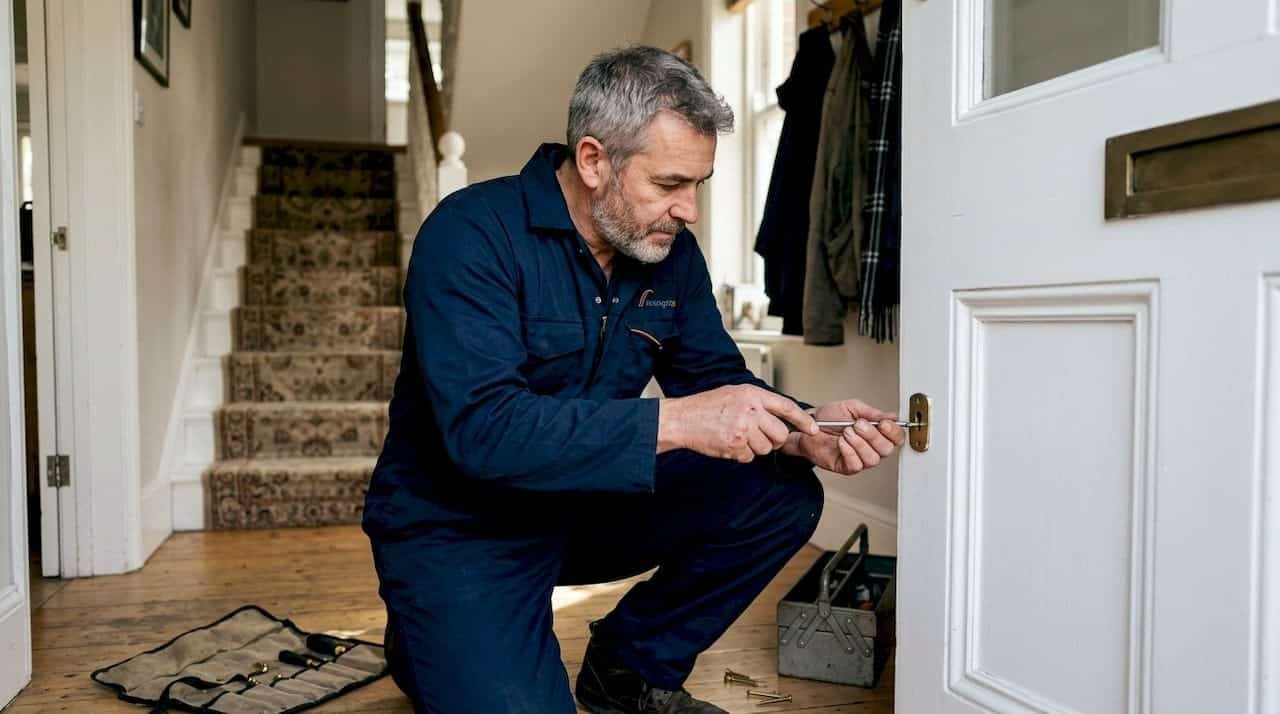
TL;DR:
- British Standard locks are independently tested for higher security and insurance compliance.
- They offer anti-snap, anti-drill, and anti-pick protections, unlike ordinary locks.
- Upgrading to certified locks is straightforward and enhances property security significantly.
Not all locks are created equal, and relying on a basic lock to protect your home or business could be a costly mistake. Many property owners in Bristol and Gloucestershire assume that any lock sold in a hardware shop offers adequate protection, but that simply is not the case. British Standard locks are independently tested, certified, and built to resist the most common methods burglars use to force entry. In this article, we explain what British Standard locks are, how they compare to ordinary alternatives, why they matter for your insurance, and how you can upgrade your property’s security with confidence.
Table of Contents
- What are British Standard locks and why do they matter?
- British Standard locks vs ordinary locks: Key differences
- Insurance and legal compliance: Why standards matter
- How to upgrade: Practical steps for homeowners and businesses
- The hard truth about property security in the South West
- Upgrade your security with expert help
- Frequently asked questions
Key Takeaways
| Point | Details |
|---|---|
| Certified protection | British Standard locks offer proven security with rigorous UK-tested features. |
| Insurance advantages | Upgrading improves compliance and may reduce your home or business insurance premiums. |
| Easy upgrade process | Switching to British Standard locks is straightforward with expert help and provides immediate benefits. |
| Legal peace of mind | Having compliant locks prevents risks and complications with insurance or legal claims. |
What are British Standard Locks and Why Do They Matter?
British Standard locks are locks that have been independently tested and certified to meet specific security benchmarks set by the British Standards Institution (BSI). The most widely recognised standard is BS3621, which applies to thief-resistant locks and is the benchmark most insurers and security professionals refer to. As lock compliance guidelines confirm, British Standard locks adhere to rigorous security standards defined in UK regulations, covering everything from material strength to resistance against physical attack.
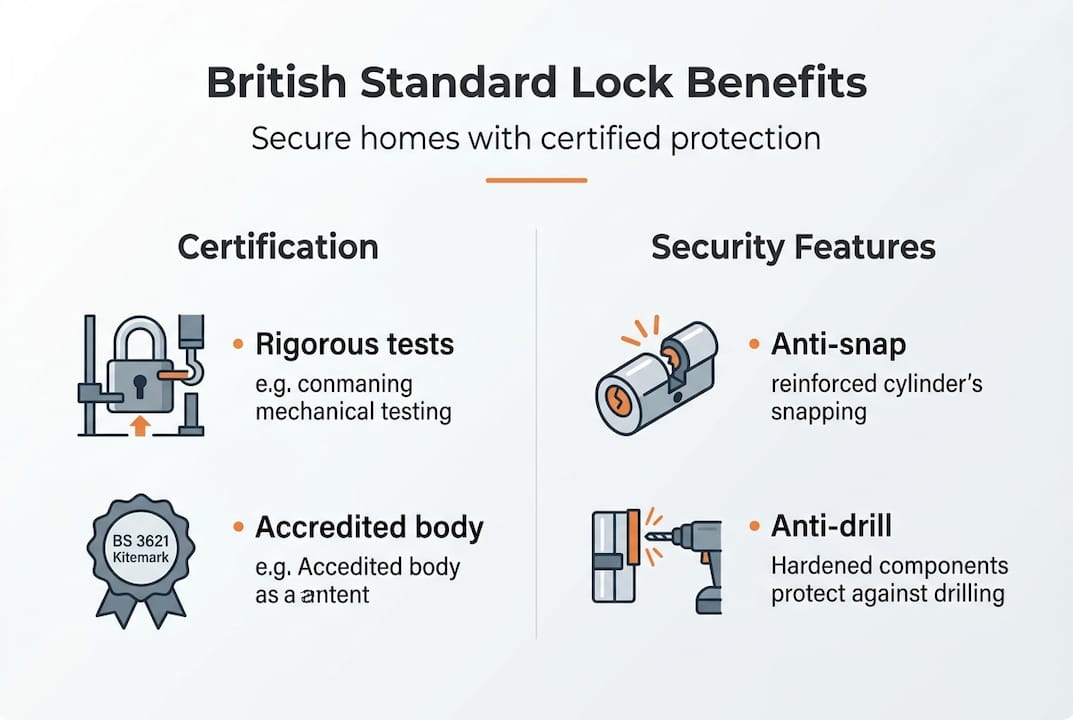
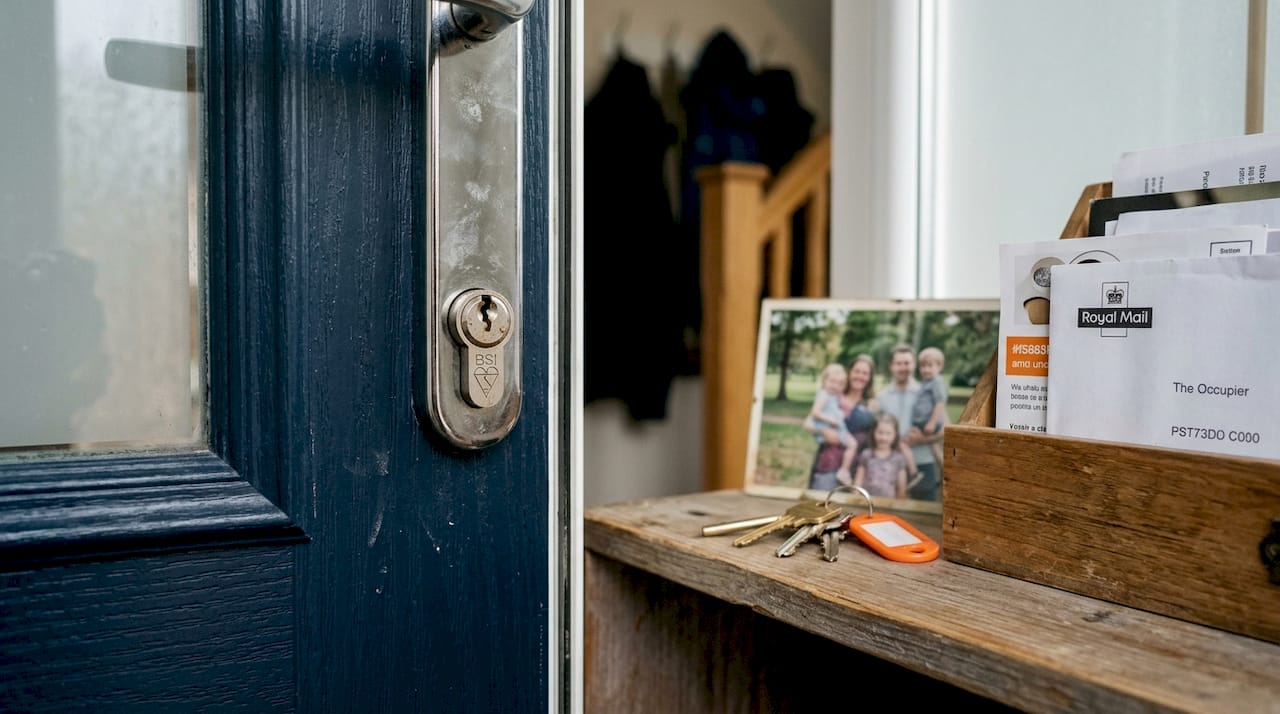
Certification is awarded only after a lock passes a series of demanding tests carried out by an accredited body. These tests assess resistance to drilling, picking, snapping, and forced entry. A lock that passes earns the right to display the BSI Kitemark, a small kite-shaped symbol that you can look for on the lock body or packaging. This mark is your assurance that the product has been independently verified, not just claimed by the manufacturer.
For homeowners and business owners across Bristol, South Gloucestershire, and Gloucester, fitting certified locks is one of the most effective steps you can take to secure your home and business. The Secured by Design security standards programme, backed by UK police forces, specifically endorses British Standard certified products as part of a wider approach to crime prevention through environmental design.
Here is a summary of the key benefits British Standard locks offer:
- Anti-snap protection: Resists cylinder snapping, one of the most common break-in methods in the UK
- Anti-drill resistance: Hardened steel components prevent drilling attacks
- Anti-pick mechanisms: Internal security pins make picking extremely difficult
- Insurance compliance: Accepted by most UK home and business insurers
- Independent certification: Tested and verified by an accredited third party, not just the manufacturer
- Deterrent effect: Visible Kitemark signals to opportunist burglars that your property is well protected
Did you know? Homes without British Standard certified locks are significantly more likely to be targeted by opportunist burglars, who typically look for the easiest entry point available.
Fitting the right lock is not just about physical security. It is about making a clear statement that your property is protected to a recognised standard.
British Standard Locks vs Ordinary Locks: Key Differences
With a clear definition in place, let us see how British Standard locks actually measure up to standard alternatives. The difference is more significant than many people realise, and understanding it can change the way you think about your front door.
Ordinary locks, often sold cheaply in DIY stores, are manufactured to a basic functional standard. They keep a door closed, but they are not designed to withstand a determined attack. British Standard locks offer features such as anti-snap, anti-drill, and anti-pick mechanisms that ordinary locks simply lack, making them a far stronger choice for any property.
The table below shows the key differences at a glance:
| Feature | British Standard lock | Ordinary lock |
|---|---|---|
| Anti-snap protection | Yes | Rarely |
| Anti-drill resistance | Yes | No |
| Anti-pick mechanisms | Yes | No |
| BSI Kitemark certified | Yes | No |
| Insurance approved | Usually | Rarely |
| Independent testing | Yes | No |
One feature worth highlighting is anti-snap protection. Euro cylinder locks, the type found in most modern UPVC and composite doors, are vulnerable to a technique called cylinder snapping. A burglar can snap the exposed part of the cylinder using simple tools in a matter of seconds, bypassing the lock entirely. British Standard Euro cylinders are engineered with a sacrificial section and internal clutch mechanism that renders snapping ineffective. This single feature alone makes a significant difference to your property’s vulnerability.
The advantages of British Standard locks extend beyond the physical. Certified locks also carry legal and insurance weight, which we cover in the next section.
Pro Tip: When purchasing a replacement lock, always check for the BSI Kitemark on the product. If it is not present, the lock has not been independently certified to British Standards, regardless of what the packaging claims. Refer to lock security guidelines from the Master Locksmiths Association for further guidance on approved products.
“Fitting a British Standard lock is one of the simplest and most cost-effective security improvements any property owner can make.”
Insurance and Legal Compliance: Why Standards Matter
Understanding physical security is just one part of the story; compliance and insurance are equally crucial. Many homeowners and business owners discover too late that their insurance policy requires specific lock standards, and that failing to meet them can result in a rejected claim.
Insurance companies often require British Standard locks for policy approval or lower premiums. This is not a minor footnote in your policy documents. It is a condition that, if unmet, can invalidate your cover entirely. Checking your lock insurance standards and understanding what your insurer expects is an essential step for any property owner.
The table below summarises common insurance requirements:
| Property type | Typical lock requirement | Standard referenced |
|---|---|---|
| Domestic front door | Five-lever mortice or BS Euro cylinder | BS3621 |
| Domestic back door | Five-lever mortice or equivalent | BS3621 |
| Commercial premises | Multi-point locking or deadlock | BS3621 / BS8621 |
| Rental property | Landlord-specified BS lock | BS3621 |
Understanding lock grades explained is also useful, as different grades apply to different risk levels and property types. Here are the steps we recommend to ensure your property is compliant:
- Check your insurance policy for specific lock requirements, usually found in the security conditions section.
- Inspect your existing locks and look for the BSI Kitemark or BS3621 marking on the lock body.
- Identify any gaps where non-compliant locks are fitted, particularly on external doors and accessible windows.
- Arrange a professional assessment with a qualified locksmith who can confirm compliance and recommend appropriate replacements.
- Keep records of any new locks fitted, including product details and receipts, in case your insurer asks for evidence.
Non-compliance carries real consequences. If you make a claim following a burglary and your insurer finds that your locks did not meet the required standard, your claim may be denied. For businesses, non-compliant locks can also affect public liability cover and, in some sectors, regulatory compliance. The cost of upgrading is far smaller than the cost of an uninsured loss.
How to Upgrade: Practical Steps for Homeowners and Businesses
With the case for British Standard locks made, let us move on to upgrading existing security effectively. The good news is that upgrading to British Standard locks is a straightforward process for most property types, and a professional locksmith can usually complete the work in a single visit.
Before you begin, it helps to know what you are working with. Walk around your property and note the type of lock on each external door and accessible window. Common types include Euro cylinder locks (found in most UPVC and composite doors), five-lever mortice locks (common in wooden doors), and rim locks (often found as secondary locks on older properties).
Here are the key steps and considerations for a successful upgrade:
- Identify your door type first. The correct British Standard lock depends on whether you have a UPVC, composite, or timber door. Fitting the wrong type can affect both security and door function.
- Measure your existing cylinder accurately. For Euro cylinders, the overall length and the distance from the centre screw to each end must be correct. An ill-fitting cylinder can actually increase vulnerability.
- Avoid cheap replacements. Not all locks labelled as British Standard are genuine. Always verify the Kitemark and check the product against professional locksmith advice from a recognised body.
- Consider upgrading window locks at the same time. Burglars do not always use the front door. Accessible ground-floor windows are a common entry point and should meet the same standards.
- Ask about anti-snap upgrades specifically. If you have UPVC or composite doors, anti-snap Euro cylinders are the single most important upgrade you can make.
You can also browse lock upgrade examples from local properties to get a clearer picture of what is involved. For businesses, reviewing how to upgrade shop locks can help you prioritise the most vulnerable points of entry.
Pro Tip: After any upgrade, photograph the new lock and note the product name and standard it meets. Store this with your insurance documents so you can provide evidence quickly if needed.
The Hard Truth About Property Security in The South West
We have fitted hundreds of locks across Bristol and Gloucestershire, and one pattern stands out clearly. Most break-ins we attend could have been prevented with a certified lock already on the market. The issue is rarely a lack of available products. It is a mindset that treats security as an afterthought rather than a priority.
The ‘cheap lock’ approach is understandable. Nobody wants to spend more than necessary. But a low-cost lock on your front door is a false economy when you consider the cost of replacing stolen property, repairing a forced door, and dealing with the emotional impact of a break-in.
What experienced locksmiths genuinely recommend is not the most expensive product on the shelf. It is the right certified product, correctly fitted. A poorly installed British Standard lock offers less protection than a well-fitted one. The security advantages only materialise when the lock is the correct type, the correct size, and installed by someone who knows what they are doing. In the South West, where older housing stock is common, getting that combination right matters more than most people realise.
Upgrade Your Security with Expert Help
If you are considering an upgrade, working with experienced professionals ensures you get the maximum benefit from your investment. At AHLP Locksmiths, we specialise in British Standard lock upgrades for homes and businesses across Bristol, South Gloucestershire, and Gloucester. Our locksmith services cover everything from anti-snap Euro cylinder replacements to full security assessments, using only quality, insurance-approved hardware. For businesses, we can also advise on commercial lock options suited to your premises and sector. With transparent pricing and no call-out fees, getting expert help is straightforward. Contact AHLP today on 07700 100146 or visit ahlp.co.uk to arrange a visit and secure your property with confidence.
Frequently Asked Questions
What makes a lock British Standard certified?
British Standard certified locks are tested to rigorous UK standards, including BS3621 for enhanced security, covering durability, anti-tamper features, and compliance with legal and insurance requirements. Only locks that pass independent testing by an accredited body earn the right to display the BSI Kitemark.
Will upgrading to British Standard locks reduce my insurance premium?
Many insurers offer lower premiums or policy approval for homes fitted with British Standard locks, as they are considered more secure and reliable. Insurance policies often require these locks for coverage, so upgrading can both protect your property and improve your policy terms.
How can I check if my locks meet British Standards?
Look for the BSI Kitemark, which is typically etched onto the lock body or printed on the packaging, indicating that the lock has been independently certified. The Kitemark for identification is the most reliable way to confirm compliance without specialist knowledge.
Is upgrading to British Standard locks expensive?
Upgrading typically costs more than fitting ordinary locks, but the long-term security and insurance benefits far outweigh the initial outlay. As professional guidance confirms, the process is straightforward for most property types and can often be completed in a single visit by a qualified locksmith.