

Managing multiple keys for your home or business can quickly become overwhelming. You might think each lock needs its own key, creating bulky keyrings and constant frustration when searching for the right one. Master key systems use hierarchical pin configurations to solve this problem, allowing one key to open multiple locks while maintaining individual access control. This guide explains how these systems work, their security benefits, and why they’re increasingly popular among property owners in Bristol and South Gloucestershire seeking efficient access solutions.
Table of Contents
- Key takeaways
- How master key systems work to simplify security
- Security benefits and risk management of master key systems
- Practical advantages for home and business owners
- Discover expert locksmith services in Bristol and South Gloucestershire
- Frequently asked questions
Key Takeaways
| Point | Details |
|---|---|
| Key consolidation reduces clutter | Master key systems allow one key to open multiple locks while maintaining each lock’s own change key. |
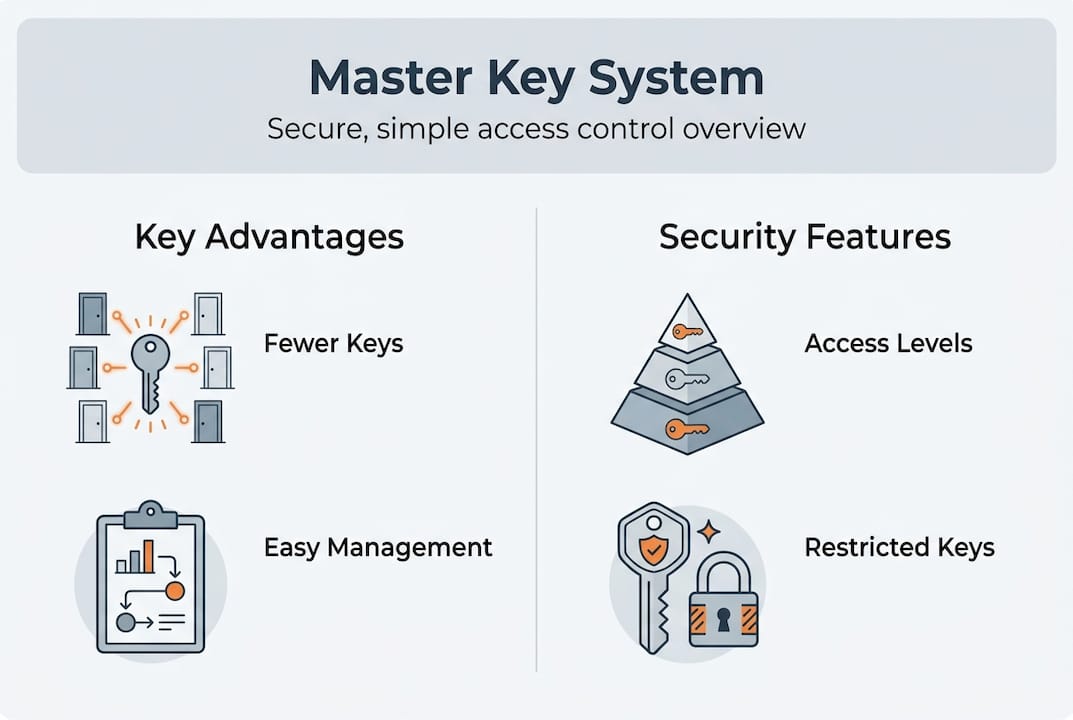
| Security by hierarchy | Access levels such as change keys, master keys and grand master keys reduce breaches and ease rekeying after losses. |
| Limit hierarchy levels | Excessive hierarchy levels weaken pin stacks and can make locks easier to pick or bump. |
| Restricted keyways and audits | Restricted keyways prevent unauthorised duplication and quarterly audits track who holds which keys. |
| Professional installation essential | Precise pin calculations and measurements require professional installation to prevent malfunctions and vulnerabilities. |
How Master Key Systems Work to Simplify Security
A master key system creates multiple access levels within a single locking infrastructure. Instead of carrying separate keys for your office, storage room, and main entrance, you use one master key that opens all designated locks. Each lock still has its own change key for individual users, but how lock mechanisms work uk reveals the clever engineering behind this dual functionality.
The system relies on precisely machined pin configurations inside each lock cylinder. When you insert a change key, the pins align at one specific shear line, allowing only that particular lock to turn. The master key works differently because it aligns pins at a second shear line, creating what locksmiths call multiple shear points. This means the same cylinder responds to two different keys without compromising security.
Here’s how the system functions step by step:
- Each lock cylinder contains specially cut pins with extra breaks
- Change keys align pins at the first shear line for individual access
- Master keys align pins at the second shear line for broader access
- Grand master keys can add a third level for entire building access
- Pin stacks are calculated to prevent unauthorised key combinations
- Restricted keyways ensure only authorised locksmiths can duplicate keys
Understanding these technical details helps you appreciate system capabilities and limitations. You’ll know why certain configurations work better for different properties and why professional installation matters. The pin stack calculations require precise measurements, as even 0.1mm variations can cause malfunction or security vulnerabilities.
Pro tip: Ask your locksmith to explain the shear line configuration for your specific system. This knowledge helps you understand how many hierarchy levels you can add without weakening security, especially if you plan future expansion.
Security Benefits and Risk Management of Master Key Systems
Centralised key control transforms security management for both homes and businesses. Properly designed systems reduce security breaches by 40% in the first year because you track fewer keys and rekey individual locks quickly after losses. Instead of replacing entire lock sets when an employee leaves or a key goes missing, you change just the affected cylinder whilst maintaining the master key functionality.
This efficiency doesn’t mean systems are foolproof. Several vulnerabilities require careful management. Phantom keys can emerge when poor initial design creates unintended key combinations that work across multiple locks. Master key loss requires broader rekeying than individual key loss because one compromised master potentially exposes multiple access points. Excessive hierarchy levels weaken pin stacks, making locks easier to pick or bump.
Properly designed systems reduce security breaches by 40% in the first year due to centralised control, fewer untracked keys, and easier rekeying of individual locks after losses.
Effective risk mitigation requires multiple strategies working together:
- Implement restricted keyways that prevent unauthorised duplication at high street key cutters
- Conduct quarterly audits of who holds which keys and their authorisation levels
- Limit master key distribution to essential personnel only, typically senior managers
- Use patented key blanks that require manufacturer authorisation for cutting
- Install audit trails through electronic access logs on critical doors
- Plan rekeying schedules aligned with staff turnover and security reviews
- Document all key issuance with signed agreements and return protocols
The master key systems security benefits extend beyond simple convenience. You gain granular control over who accesses which areas whilst maintaining emergency override capabilities. A facilities manager might hold a grand master key for the entire building, department heads receive floor masters, and individual staff get change keys for their specific offices. This hierarchy prevents unauthorised access whilst ensuring appropriate personnel can respond quickly during emergencies.

Restricted keyways deserve particular attention. Standard keys can be copied at any key cutting shop, creating security gaps you’ll never detect. Restricted systems require manufacturer authorisation, meaning you control every duplicate. This protection costs more initially but prevents the common scenario where departed employees retain copied keys you didn’t authorise.
Practical Advantages for Home and Business owners
Beyond security improvements, master key systems deliver daily operational benefits that justify the investment. Compare the traditional approach against a properly designed master system:
| Aspect | Multiple Individual Keys | Master Key System |
|---|---|---|
| Keys carried | 5-15 separate keys | 1 master key |
| Time finding right key | 30-60 seconds per door | Immediate |
| Rekeying after loss | Replace all affected locks | Change single cylinder |
| New employee setup | Cut multiple keys | Issue one change key |
| Emergency access | Search for specific key | One key opens all |
| Key tracking | Monitor dozens of keys | Track master plus change keys |
The efficiency gains compound over time. Systems simplify employee turnover and emergency access by allowing rekeying of single locks without full replacement and providing one key for multiple doors. When staff leave, you rekey their office lock in minutes rather than replacing hardware. The master key continues working whilst the old change key becomes useless.
Consider practical scenarios where these benefits matter most:
- Landlords managing multiple rental properties access all units with one key whilst tenants receive individual keys
- Office managers grant cleaning crews access to common areas but restrict them from private offices
- Homeowners with large properties unlock garden sheds, garages, and side gates without carrying separate keys
- Retail managers give shop floor staff access to sales areas whilst restricting stockroom entry to supervisors
- Healthcare facilities allow nurses into patient rooms but limit pharmacy access to authorised personnel
The emergency lockout procedure becomes significantly simpler with master key systems. Instead of identifying which specific key opens which door during stressful situations, you use the master key for immediate access. This matters during medical emergencies, security incidents, or when you need to shut off utilities quickly.
Pro tip: Create a key distribution matrix before implementing your system. List every door, who needs access, and when they need it. This planning prevents over-issuing master keys, which undermines the entire security structure. Limit master key holders to people who genuinely need building-wide access, typically no more than two or three individuals.
Cost considerations favour master key systems over time despite higher initial investment. Standard lock replacement costs £80-150 per door in Bristol and South Gloucestershire. With traditional systems, losing keys often means replacing multiple locks simultaneously. Master systems let you rekey individual cylinders for £40-60, replacing only the pins rather than entire mechanisms. After three or four rekeying events, you’ve recovered the additional setup costs.
Maintenance simplicity also improves. You service locks on a scheduled basis rather than reactive replacement after key losses. This preventive approach extends hardware lifespan and reduces emergency callout costs. Regular maintenance visits cost less than urgent repairs, especially outside normal business hours when emergency rates apply.
Discover Expert Locksmith Services in Bristol and South Gloucestershire
Implementing a master key system requires professional expertise to ensure security and functionality. AHLP Locksmiths specialises in designing and installing master key systems tailored to your specific property needs across Bristol and South Gloucestershire. Whether you manage a small business, oversee multiple rental properties, or want simplified access control for your home, our experienced team creates systems that balance convenience with robust security.
Our trusted locksmith services include comprehensive security consultations to assess your access requirements and recommend optimal configurations. We use British Standard and insurance-approved hardware, ensuring your system meets regulatory requirements whilst providing reliable long-term performance. Installation includes detailed documentation of your key hierarchy and guidance on proper key management protocols.
Need urgent assistance or planning a security upgrade? Our emergency locksmith process ensures fast response times without call-out fees. Explore our ultimate guide to locksmith services to understand how professional installation protects your investment. Call 07700 100146 to discuss your master key system requirements and arrange a consultation.
Frequently Asked Questions
What is a master key system?
A master key system uses specially configured locks where one key opens all designated locks whilst individual change keys open only specific locks. The system creates hierarchical access levels, allowing property owners or managers to access all areas whilst restricting others to authorised zones. This arrangement simplifies key management without sacrificing security control.
How does a master key system improve security for my business?
Centralised control limits untracked key distribution, preventing the common problem of employees copying keys without authorisation. When keys go missing, you rekey individual locks quickly rather than replacing entire systems, reducing the window of vulnerability. Properly designed systems reduce security breaches by 40% through better tracking and faster response to security incidents.
Can a master key system reduce my key management hassle at home?
One master key opens your front door, back door, garage, shed, and any other locks in the system, eliminating bulky keyrings. This proves especially valuable in larger properties where you might otherwise carry five or more separate keys. Family members receive change keys for main entrances whilst you retain master access to all areas. The master key systems convenience extends to guests and service providers who need temporary access to specific areas.
What should I consider when implementing a master key system?
Assess your property’s access requirements carefully, identifying who needs entry to which areas and when. Control master key distribution strictly, limiting it to essential personnel who genuinely require building-wide access. Plan for regular audits and easy rekeying by documenting your key hierarchy and maintaining relationships with qualified locksmiths. Review tips to prevent lockouts to ensure your system includes appropriate backup access methods. Consider future expansion needs during initial design, as adding hierarchy levels later can require complete system replacement.