
TL;DR:
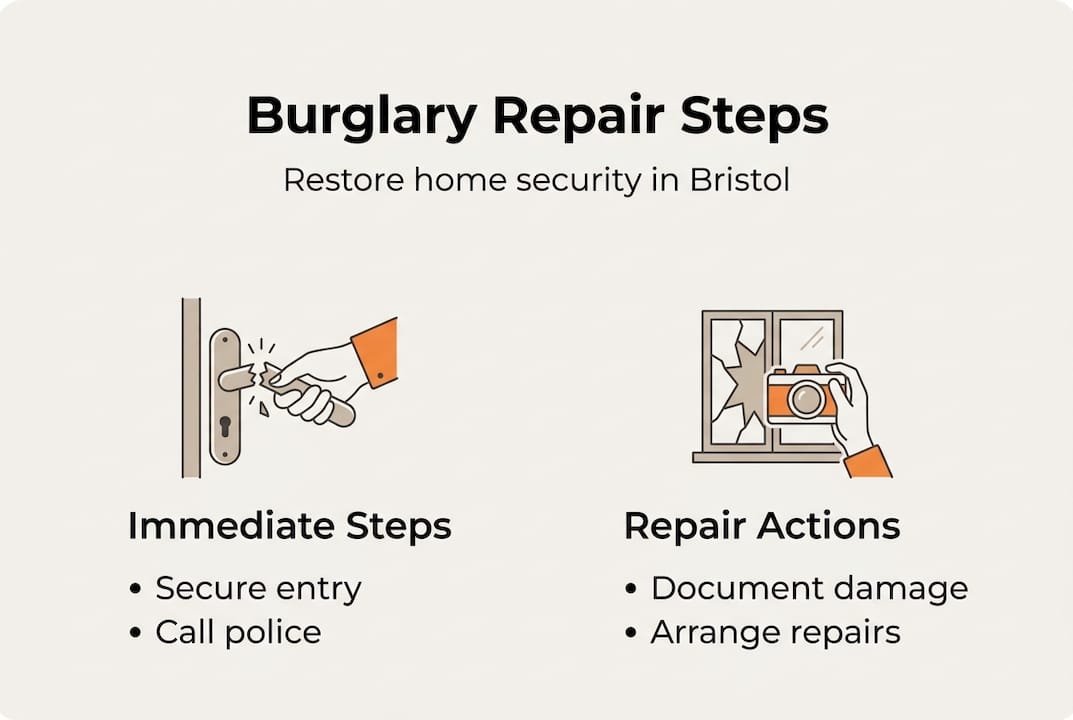
- Immediate safety and police notification are critical after a burglary to preserve evidence and ensure security.
- Proper documentation with photos and detailed records strengthens insurance claims and guides repairs.
- Using approved professionals and compliant locks enhances long-term security and avoids claim issues.
A burglary does more than break locks and scatter belongings. It shatters the sense of safety that makes a house feel like a home. For Bristol homeowners, the hours immediately after a break-in are critical. The decisions you make in that window affect your insurance claim, the police investigation, and how quickly you can feel secure again. This guide walks you through every stage, from the moment you discover the break-in to the final security checks that help prevent a repeat attack. We’ll cover evidence gathering, insurer contact, repair priorities, and the local support schemes available to you.
Table of Contents
- Immediate actions after a burglary
- Assessing damage and documenting evidence
- Reporting to insurers and starting repairs
- Essential tools, materials and support for repair
- Final checks and preventing future break-ins
- Our perspective on effective burglary repair in Bristol
- Fast-track your burglary repairs with local experts
- Frequently asked questions
Key Takeaways
| Point | Details |
|---|---|
| Act fast and preserve evidence | Contact the police and avoid disturbing the scene to protect your claim and investigation. |
| Document thoroughly | Take clear photos and inventory all damage and stolen items for smooth insurance processing. |
| Correct repairs and upgrades vital | Use approved professionals and comply with insurance standards, particularly BS3621 locks, to restore and safeguard your home. |
| Local support makes a difference | Schemes like Bristol’s ‘Be Home Safe’ offer free security upgrades to eligible residents recovering from a break-in. |
| Layered security reduces risk | Upgrade to motion lights, alarms, and quality locks to deter future burglaries and improve peace of mind. |
Immediate Actions After a Burglary
Discovering a burglary is deeply unsettling. Your instinct may be to rush inside, check what’s missing, or start tidying up. Resist all of those urges. The very first thing to consider is your personal safety, because understanding why burglary repairs matter starts with recognising that an intruder may still be on the premises.
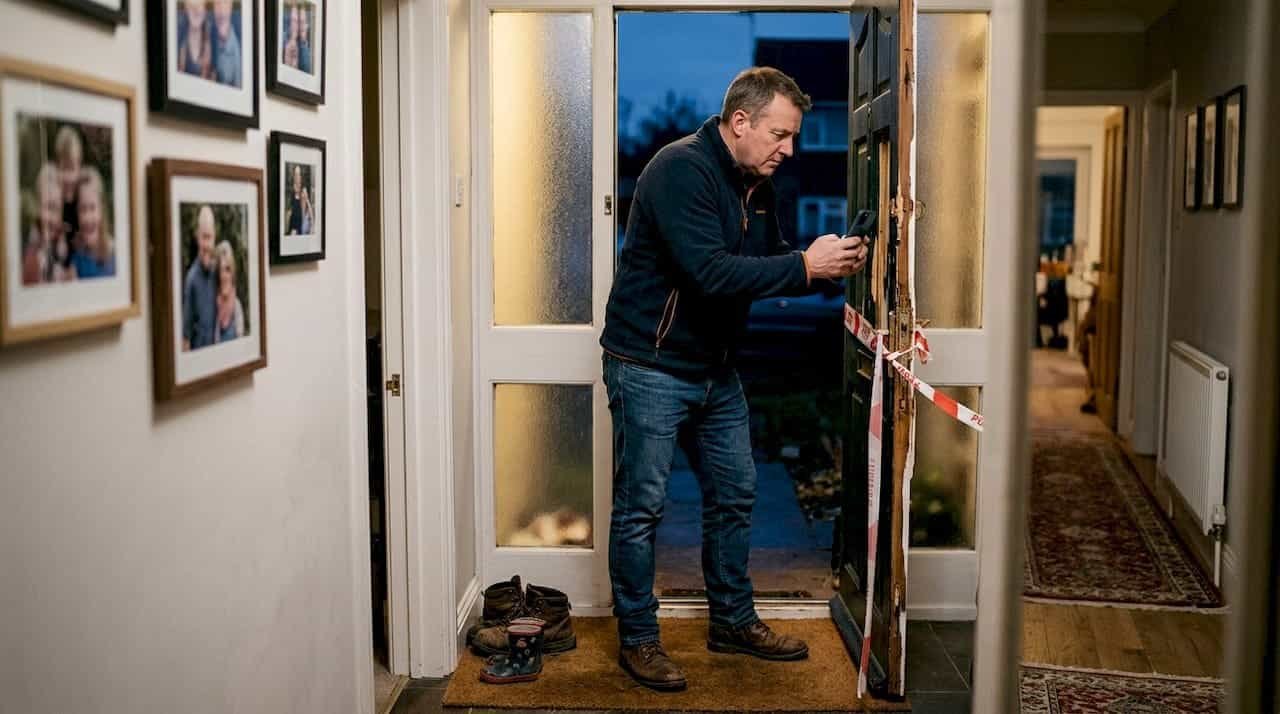
If you suspect someone is still inside, do not enter. Move to a safe distance and call 999 immediately. If you’ve returned home to find signs of a break-in and the property appears empty, call 101 to report it. As police and insurance steps guidance confirms, you should call police immediately and avoid entering or touching anything until officers have attended.
Here are the first steps to follow in order:
- Stay outside and assess the situation from a safe distance.
- Call 999 if the burglary is in progress, or 101 if the intruder has left.
- Wait for police before entering the property.
- Do not touch anything, including doors, drawers, or surfaces that may hold fingerprints.
- Request a crime reference number from the attending officers. You will need this for your insurer.
- Note the time you discovered the break-in, as insurers may ask for a timeline.
“Do not enter the property or touch anything until the police have attended. Preserving the scene gives investigators the best chance of gathering useful evidence and strengthens your insurance claim.”
The explained Bristol repair process always begins here, with a secure scene and a clear record. Getting this right from the start protects both you and your claim.
Assessing Damage and Documenting Evidence
With the police informed, it’s time to gather essential evidence supporting both recovery and compensation. Once officers have cleared the scene and given you permission to move through your home, you can begin a careful, methodical assessment of the damage.
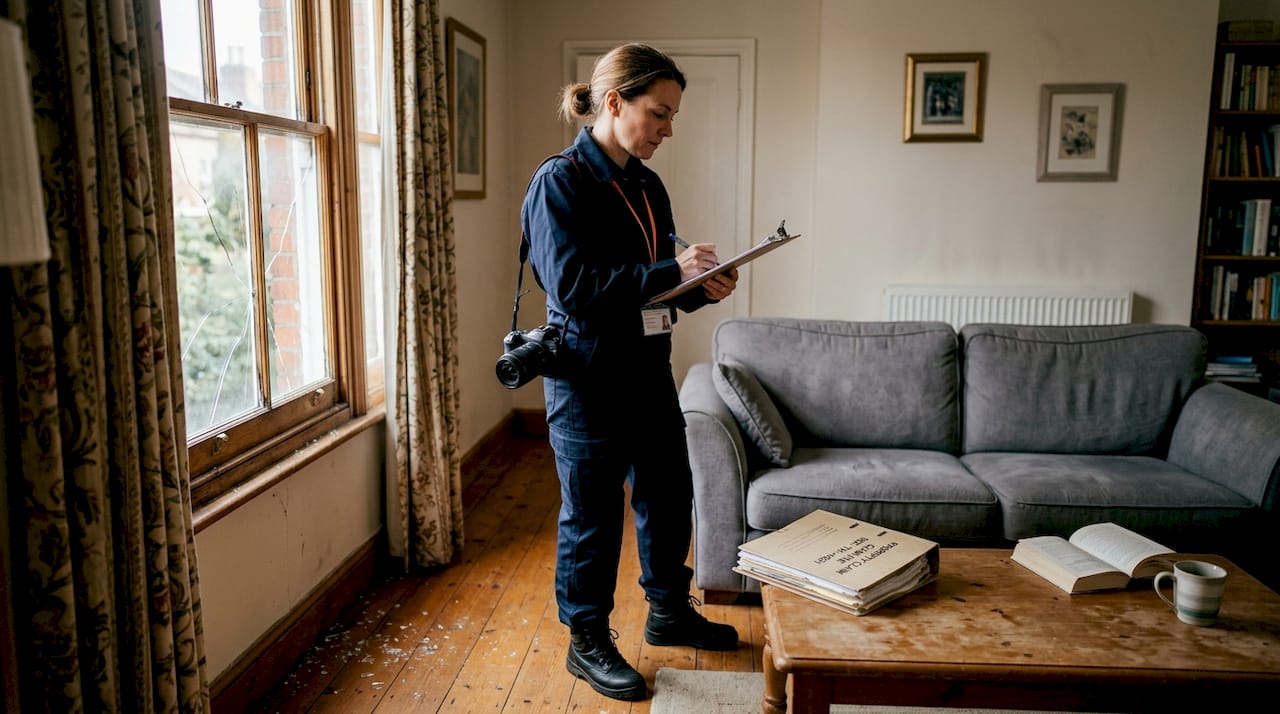
Photography is your most powerful tool at this stage. Use your mobile phone to capture both wide shots and close-up images of every affected area. Document damage thoroughly before any cleanup begins, including photos of stolen items if you have them, serial numbers, and receipts.
Here’s what to photograph and record:
- Entry points: damaged door frames, broken window glass, forced locks, and any tool marks left behind.
- Ransacked rooms: overturned furniture, opened drawers, and scattered belongings.
- Stolen items: photograph where items were kept, and note serial numbers from any remaining documentation.
- Broken hardware: close-up shots of damaged Euro cylinder locks, mortice locks, or multipoint locking mechanisms.
For real-life burglary repair examples and what to expect at each stage, it helps to see how other Bristol homeowners have navigated this process. When listing stolen items, check for warranties, bank statements, or receipts that confirm ownership and value. The documenting and reporting process is far smoother when you have clear, timestamped evidence.
Pro Tip: Take both landscape and portrait shots of each damaged area, then photograph the same spot from two different distances. This gives your insurer and the police a full picture without ambiguity.
Avoid tidying up, vacuuming, or making repairs until your insurer has confirmed they don’t need a loss adjuster to visit. Rushing this step can undermine your claim significantly. Follow the step-by-step repair process only after this documentation phase is complete.
Reporting to Insurers and Starting Repairs
Once you’ve captured the necessary evidence, you’ll need to report to your insurer and organise urgent repairs. Speed matters here. Contact your insurer within 24 hours with your crime reference number and a clear inventory of damage and stolen items.
It’s worth understanding the difference between two types of claim:
- Buildings insurance claim: covers physical damage to the structure, including broken door frames, smashed windows, and damaged locks.
- Contents insurance claim: covers stolen or damaged belongings inside the property.
Some policies bundle both, but many do not. Check your policy documents carefully before calling.
| Claim type | What it covers | Documents needed |
|---|---|---|
| Buildings | Doors, frames, locks, windows | Crime reference, repair quotes |
| Contents | Stolen or damaged belongings | Serial numbers, receipts, photos |
| Combined | Both of the above | All of the above |
Pro Tip: Even if nothing was stolen, report for repairs and insurance purposes. Many policies require you to report all break-ins, and some insurers specifically require BS3621 British Standard locks to be fitted before they will honour a claim. Fitting non-compliant locks, or skipping this check entirely, can result in a denied claim.
For examples of successful insurance claims and how professional repairs support the process, see how other homeowners have handled this stage. Temporary boarding may be needed to secure the property before permanent repairs can be completed, and your insurer should be made aware of any interim measures you take. The full insurance reporting process is outlined in detail by consumer guidance services if you need further clarity.
Essential Tools, Materials and Support for Repair
Having started the claim, it’s time to organise repairs with the right tools and support. Whether you’re handling minor cosmetic fixes yourself or bringing in professionals for lock replacements and frame repairs, knowing what you need saves time and reduces further risk.
For local security upgrade options in Bristol, professional support is almost always the better route. Here’s a comparison of DIY versus professional repair:
| Repair approach | Advantages | Risks |
|---|---|---|
| DIY | Lower upfront cost | May void insurance; incorrect fitting reduces security |
| MLA-approved locksmith | Insurance-compliant; correct hardware | Higher cost, but lasting protection |
For short-term and long-term repair, you’ll need:
- Temporary boarding materials: plywood sheets, screws, and a cordless drill for securing broken entry points overnight.
- Replacement locks: BS3621 mortice deadlocks or anti-snap Euro cylinders for doors.
- Door frame repair kits: available from builders’ merchants for minor splits and frame damage.
- Window locks: key-operated sash locks or casement locks for ground-floor windows.
- Security screws: tamper-resistant fixings for hinges and strike plates.
When choosing a tradesperson, use an MLA-approved locksmith to ensure the work meets insurance and British Standard requirements. Avon and Somerset Police run the ‘Be Home Safe’ scheme, which offers free security upgrades for qualifying vulnerable or repeat-victim residents. For further guidance on choosing a locksmith, look for Master Locksmith Association membership as a minimum standard.
Layered security, combining upgraded locks, window restrictors, and visible deterrents, is far more effective than any single measure. For practical Bristol security tips and an ultimate security guide covering every aspect of home protection, we’ve put together detailed resources to help you build a genuinely robust setup.
Final Checks and Preventing Future Break-ins
After repairs are complete, it’s crucial to ensure your property is not just restored but protected for the future. A repaired door that still has a weak frame, or a new lock fitted to a damaged keep, offers far less protection than it should.
Work through this checklist once repairs are done:
- Test every lock on doors and windows. They should engage smoothly without force.
- Inspect door frames for any remaining splits, gaps, or soft wood that could be kicked in.
- Check hinge bolts are fitted to outward-opening doors to prevent hinge removal.
- Verify lock compliance: confirm that any new locks carry the BS3621 kitemark if your policy requires it.
- Review window security: ensure ground-floor and accessible windows have key-operated locks fitted.
- Consider additional deterrents: motion-activated lighting, a visible alarm box, and CCTV cameras all discourage opportunist intruders.
Pro Tip: Choose NSI or SSAIB-approved alarm installers for any new alarm system. These accreditations are widely recognised by insurers and may reduce your premium.
Enhance security with layered measures including motion lights, alarms, and CCTV. It’s a sobering fact that 1 in 4 UK burglaries involve no force at all, meaning an unlocked door or window is all an intruder needs. Police-led schemes actively reduce repeat victimisation, so registering with local initiatives is well worth the effort.
For targeted prevention tips for Bristol homes, we’ve gathered the most effective measures specific to the area, including advice on the types of locks and alarms that perform best in local housing stock.
Our Perspective on Effective Burglary Repair in Bristol
Having supported Bristol homeowners through hundreds of burglary repairs, we’ve seen a clear pattern. The homeowners who struggle most are not those with the worst damage. They’re the ones who tried to cut corners in the early stages, whether by tidying up too soon, fitting budget locks, or skipping the insurer notification step.
DIY lock fitting carries real risk. A lock that appears secure but isn’t correctly aligned or torqued provides minimal resistance. Worse, DIY misfitting can void insurance if the insurer determines the repair didn’t meet policy standards. We’ve spoken with homeowners who paid twice, once for a DIY attempt and again for a professional to correct it.
The right professional support does more than fix a lock. It gives you documented, compliant repairs that hold up under insurer scrutiny. For vulnerable residents, the ‘Be Home Safe’ scheme means professional-grade security is available at no cost. For everyone else, the investment in an MLA-approved locksmith typically pays for itself in avoided claim complications and long-term security.
We believe safeguarding your home after a break-in is not just about hardware. It’s about restoring confidence in your own front door.
Fast-Track Your Burglary Repairs with Local Experts
If you’re ready to restore safety and move forward more securely, here’s how to get expert support for the next steps. At AHLP Locksmiths, we work with Bristol homeowners every day to deliver fast, insurance-compliant burglary repairs across the city and surrounding areas. From emergency boarding to full lock upgrades, we handle every stage with care.
You can get professional repair help and understand exactly what the process involves before we arrive. Our specialist repair services cover everything from UPVC door mechanisms to composite door locks and wooden frame repairs. If you need immediate assistance, our emergency locksmiths are available across Bristol with fast response times and no call-out fees. Call us on 07700 100146 or visit ahlp.co.uk to book a visit today.
Frequently Asked Questions
Do I need to replace locks after every burglary?
Yes, replacing or upgrading locks after a burglary is strongly advised to prevent further unauthorised entry and to meet most UK insurance policy conditions. BS3621 locks deter common attacks such as picking and drilling, and many insurers require them as a condition of cover.
What should I do if my insurer refuses the claim after a burglary repair?
If your claim is refused, check whether your locks meet BS3621 or other compliance requirements stated in your policy. A BS3621 requirement check is the first step, and if you believe the refusal is unjust, you can appeal or seek advice from the Financial Ombudsman Service.
Are there any free support schemes for burglary victims in Bristol?
Yes, the ‘Be Home Safe’ scheme offers free locks and security upgrades for eligible vulnerable or repeat-victim Bristol residents. The Be Home Safe scheme is run by Avon and Somerset Police and has been operating for over 25 years.
Can I clean up damage before the police arrive?
No, you should avoid cleaning or moving anything until the police have completed their investigation to preserve evidence. Do not touch anything until officers have attended and given you clearance to do so.
Which repairs are most urgent after a burglary?
Securing doors, windows, and broken entry points with temporary boarding and lock changes are the highest priority before other restoration steps. Temporary boarding before permanent upgrades keeps your property safe while you arrange compliant, lasting repairs.
Recommended
- DIY burglary repair steps to secure your Bristol home
- Burglary Repair: Restoring Safety in Bristol Homes
- Burglary Repairs: Safeguarding Bristol Homes After Break-In
- Burglary repair process: Your step-by-step guide to safer properties
- Step-by-Step Workflow for Emergency Lock Repair Success – A To Z Locksmith Inc