
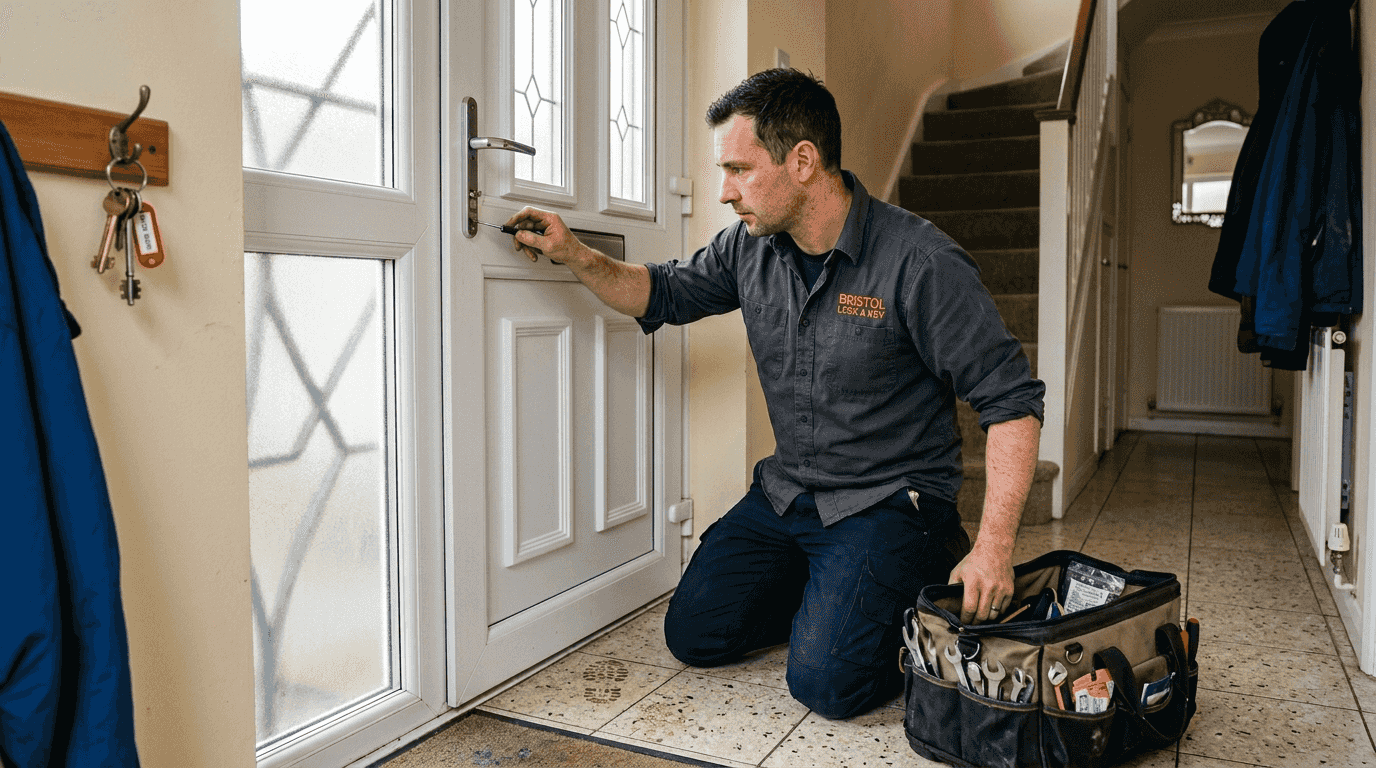
UPVC locks protect your home and business, but they fail more often than you think. Misaligned doors, worn gearboxes, and stiff cylinders leave Bristol properties vulnerable. Most faults don’t need full replacements. This guide walks you through a clear repair workflow that saves money, restores security, and helps you decide when to call a professional locksmith.
Table of Contents
- Introduction To UPVC Lock Repair
- Prerequisites: Tools And Knowledge Needed
- Understanding The UPVC Lock Mechanism
- Step-By-Step UPVC Lock Repair Workflow
- Common Mistakes And How To Avoid Them
- When To Call A Professional Locksmith
- Expected Timelines, Costs, And Outcomes
- Conclusion And Next Steps
- Professional Locksmith Services In Bristol
- Frequently Asked Questions
Key takeaways
| Point | Details |
|---|---|
| Diagnose first | Identify lock type and fault cause before attempting repairs to avoid unnecessary damage. |
| Gather tools | Use correct screwdrivers, measuring tape, safety gloves, and British Standard replacement parts. |
| Follow workflow | Clean, lubricate, adjust, and replace components methodically for safe and effective repairs. |
| Know limits | Call professional locksmiths for complex multipoint failures or when DIY fixes don’t work. |
| Use approved parts | British Standard cylinders improve security and meet insurance requirements. |
Introduction to UPVC lock repair
Bristol homes and businesses rely on UPVC doors for security and energy efficiency. Most use euro cylinders and multipoint locking systems that engage hooks, rollers, and deadbolts simultaneously. When these mechanisms fail, properties become easy targets for intruders.
Common faults include jammed gearboxes, loose strike plates, and misaligned doors. Stiff keys, handles that won’t lift, and cylinders that won’t turn signal mechanical wear. These issues stem from dirt buildup, poor lubrication, or settling foundations that shift door alignment.
Faulty locks create genuine security risks. A non-functioning deadbolt leaves your property protected by a single latch. Broken multipoint systems fail to engage all locking points, weakening perimeter defence. The inconvenience compounds when you’re locked out or unable to secure your premises overnight.
Understanding UPVC door lock mechanisms in Bristol helps you identify which components need attention:
- Euro cylinders contain the key mechanism and cam that operates the gearbox
- Multipoint gearboxes coordinate simultaneous engagement of hooks, rollers, and bolts
- Strike plates and keeps on the door frame receive locking points
- Handle spindles connect external handles to internal mechanisms
Addressing faults early prevents complete lock failure and costly emergency callouts.
Prerequisites: tools and knowledge needed
Successful UPVC lock repair starts with proper preparation. Gathering the right tools and understanding basic lock mechanics prevents damage and injury.
Essential tools include:
- Flathead and Phillips screwdrivers in multiple sizes for handle and cylinder screws
- Measuring tape for recording cylinder length and dimensions
- Graphite or silicone spray lubricant suitable for lock mechanisms
- Replacement components that match existing lock specifications
- Torch for inspecting internal components in poor lighting
Safety equipment matters. Wear protective gloves when handling locks with sharp edges or broken components. Eye protection prevents metal shavings or spring tension releases from causing injury.
Basic mechanical knowledge helps you work confidently. Learn how your lock type operates before disassembly. Understand which screws secure cylinders versus handles. Recognise when components are worn beyond safe use.
The UPVC door lock repair process guide explains component interactions in detail.
Pro Tip: Photograph each disassembly stage with your phone. These images guide reassembly and help locksmiths diagnose issues if you need professional assistance later.
Preparation minimises the risk of stripped screws, lost components, or damaged mechanisms. Investing 15 minutes in setup saves hours of frustration and potential property damage.
Understanding the UPVC lock mechanism
Multipoint locking systems dominate UPVC door installations. These mechanisms engage multiple points along the door edge when you lift the handle and turn the key.
Key components work together:
- Gearboxes convert handle lifting and key turning into simultaneous bolt movement
- Euro cylinders house the key mechanism and rotate a cam that triggers the gearbox
- Hooks catch into keeps on the door frame, pulling the door tight against seals
- Rollers engage strike plates to secure the door at multiple heights
- Deadbolts throw horizontally into frame keeps for maximum security
When you lift the handle, the gearbox deploys hooks and rollers. Turning the key throws the deadbolt and locks everything in position. This coordinated action distributes force across multiple points, making forced entry extremely difficult.
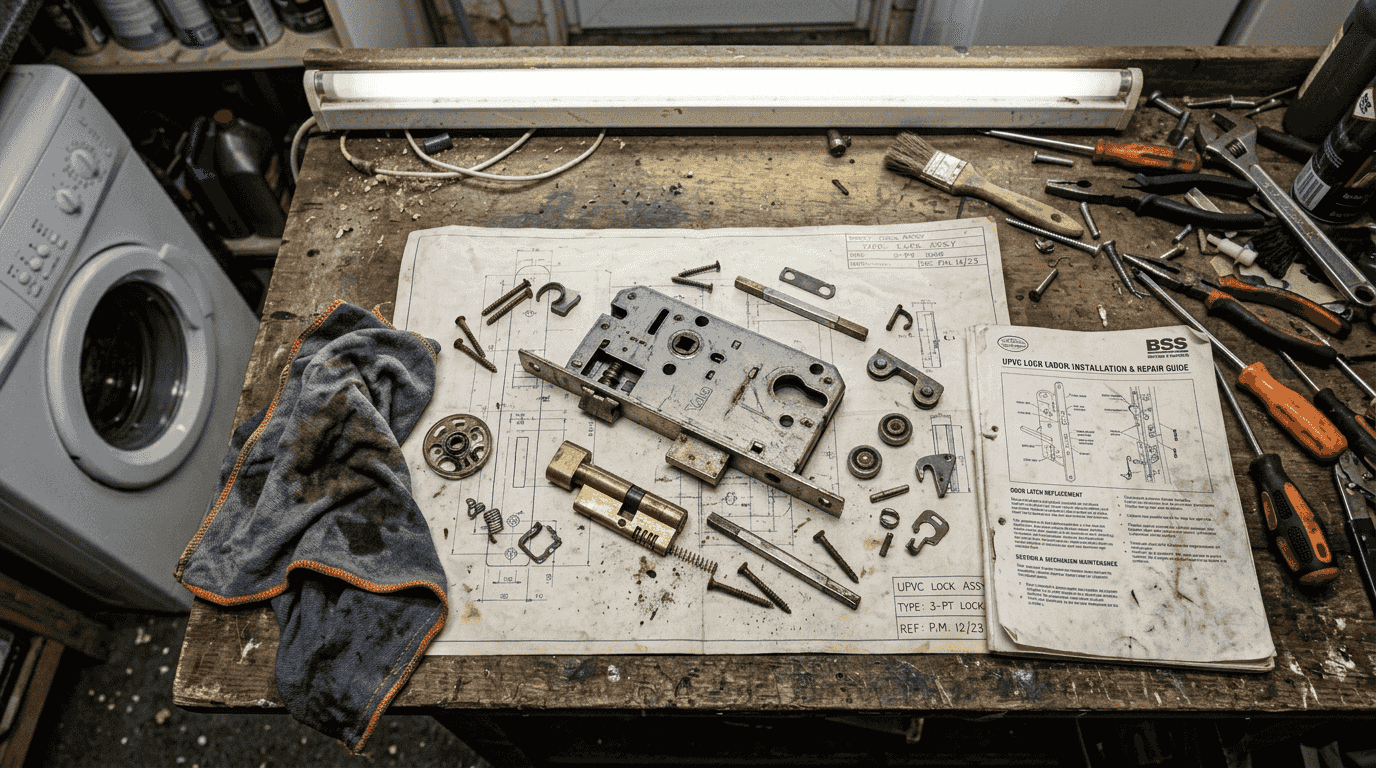
Common wear points affect lock function. Gearbox teeth strip after years of use. Euro cylinder cams break under stress. Hook springs weaken and fail to engage keeps properly. Dirt accumulation in the gearbox causes stiffness and binding.
Understanding these UPVC lock components and mechanisms enables accurate diagnosis. A stiff handle suggests gearbox issues. Key turning problems indicate cylinder wear. Hooks that don’t engage point to spring failure or misalignment.
Mechanical knowledge transforms guesswork into systematic troubleshooting.
Step-by-step UPVC lock repair workflow
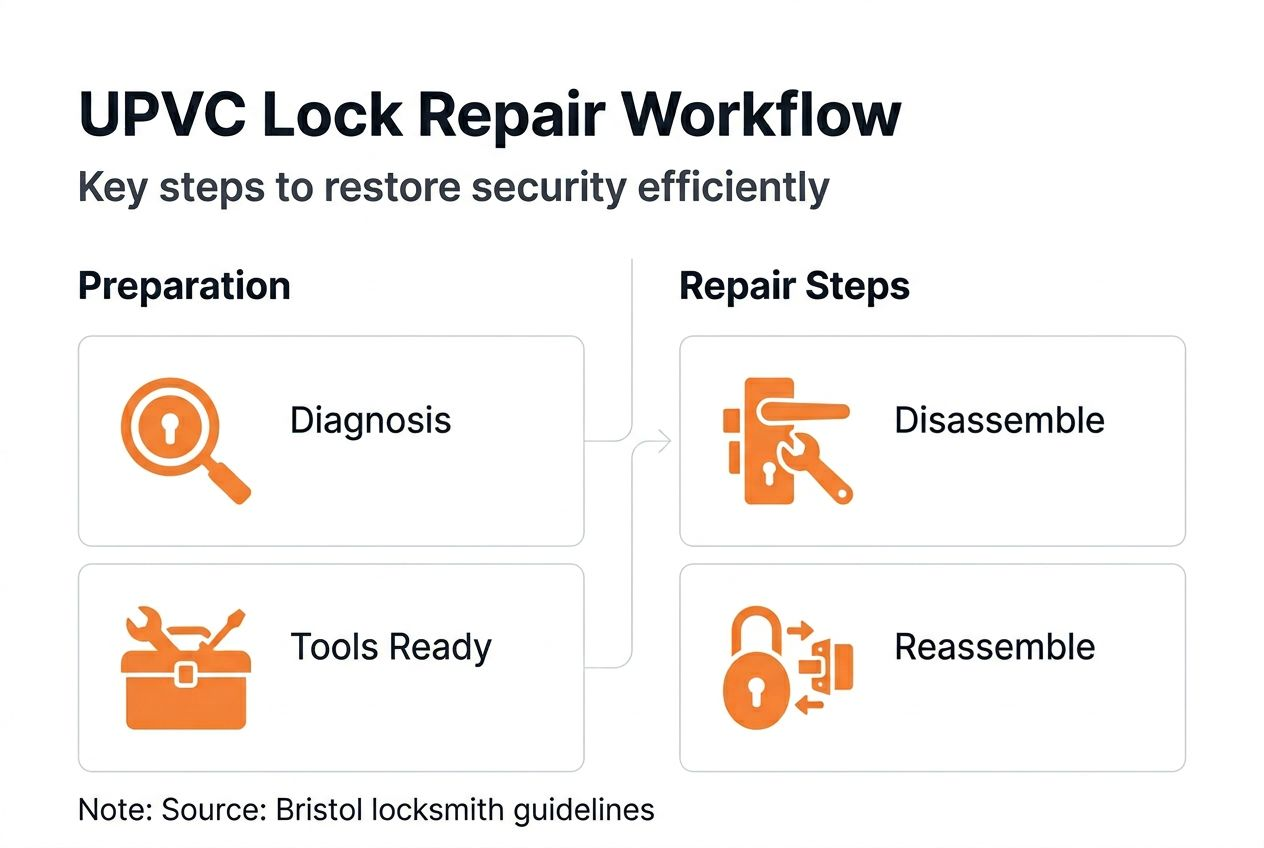
Follow this methodical sequence for safe and effective UPVC lock repairs:
-
Identify your lock type and manufacturer by examining visible markings on the faceplate and cylinder. Record measurements including cylinder length, handle centres, and backset distance from door edge to mechanism centre.
-
Diagnose the fault cause through systematic testing. Check if the key turns smoothly in the cylinder. Test whether the handle lifts easily and engages all locking points. Inspect door alignment by checking gaps around the frame.
-
Prepare your workspace with tools, replacement parts meeting British Standard specifications, and safety equipment. Clear the area around the door and ensure good lighting.
-
Disassemble components carefully starting with handle screws, then cylinder retaining screws. Remove the euro cylinder by inserting the key, turning slightly, and pulling whilst depressing the cam. Extract the gearbox if replacement is needed.
-
Clean all components with a dry cloth, removing dirt and old lubricant. Apply fresh graphite or silicone spray to moving parts. Adjust strike plates if door misalignment prevents proper engagement. Tighten loose screws on handles and keeps.
-
Install new components by aligning cylinders correctly with handle spindles. Replacing the euro cylinder lock with anti-snap British Standard approved cylinders increases home security and prevents common break-in methods such as lock snapping or bumping. Match gearbox specifications exactly to existing dimensions.
-
Reassemble by securing cylinder retaining screws first, then handle screws. Test operation at each stage. Verify smooth key turning, handle lifting, and full engagement of all locking points.
The UPVC lock replacement workflow provides additional detail for complex installations.
Pro Tip: Never force components during assembly. If parts don’t fit smoothly, recheck alignment and measurements rather than applying excessive pressure.
| Repair Stage | Time Required | Key Actions |
|---|---|---|
| Diagnosis | 10 minutes | Test key, handle, and locking point engagement |
| Disassembly | 15 minutes | Remove handles, cylinder, and gearbox if needed |
| Cleaning | 10 minutes | Remove debris and apply appropriate lubricant |
| Installation | 20 minutes | Fit new components with correct alignment |
| Testing | 10 minutes | Verify smooth operation and full security engagement |
Consult the Screwfix guide on UPVC lock replacement for manufacturer-specific installation details.
Common mistakes and how to avoid them
DIY repairs go wrong when you rush or ignore proper procedures. These frequent errors cause permanent damage and increase costs.
Forcing jammed locks destroys internal components. Applying excessive pressure to stiff keys breaks cylinder cams. Levering stuck handles cracks gearbox housings. When resistance occurs, stop and diagnose the obstruction rather than forcing movement.
Using wrong tools strips screws and damages finishes. Incorrect screwdriver sizes round off screw heads, making removal impossible without drilling. Pliers scratch visible surfaces. Invest in proper tools or face costly component replacement.
Neglecting safety creates injury risk. Sharp edges on broken components cause cuts. Spring-loaded mechanisms release unexpectedly. Metal shavings enter eyes during drilling. Always wear appropriate protective equipment.
Skipping lubrication produces recurring problems. Dry mechanisms wear rapidly and seize. Dirt accumulation accelerates component failure. Regular maintenance with correct lubricants extends lock life significantly.
The common UPVC lock repair errors guide details additional pitfalls:
- Installing cylinders with incorrect measurements leaves doors vulnerable to snapping attacks
- Overtightening screws cracks plastic components and strips threads
- Mixing incompatible components from different manufacturers causes binding
- Failing to test thoroughly before completion leaves faults undetected
Patience and methodical work prevent these mistakes. Take time to understand each step before proceeding.
When to call a professional locksmith
Some situations demand professional expertise. Recognising these scenarios saves time, money, and prevents additional damage.
Complex multipoint lock failures exceed DIY capabilities. When multiple locking points fail simultaneously, the gearbox usually needs replacement. These repairs require specialised knowledge of manufacturer-specific mechanisms and proper alignment techniques.
Broken gearboxes or cylinders beyond basic repair need professional attention. Snapped cylinder cams, stripped gearbox teeth, and fractured housings require complete replacement with precisely matched components.
Non-responsive locks after attempted fixes indicate deeper problems. If cleaning, lubrication, and adjustment don’t restore function, internal damage exists that requires diagnostic expertise.
British Standard hardware ensures insurance compliance and maximum security. Professional locksmiths source and install approved components that meet insurance requirements. DIY installations using non-compliant parts may void coverage.
The professional locksmith services guide explains additional scenarios:
- Emergency lockouts requiring non-destructive entry techniques
- Security upgrades to anti-snap cylinders after attempted break-ins
- Complete mechanism replacement in composite or unusual door types
- Master key system installation for multiple access points
Professional work comes with guarantees and insurance. If something goes wrong, you’re protected. DIY repairs carry full responsibility for any resulting damage or security failures.
Expected timelines, costs, and outcomes
Realistic expectations help you plan repairs and budget appropriately. Understanding typical durations and cost factors prevents surprises.
DIY repairs take 30 to 90 minutes depending on lock complexity. Simple cylinder replacement occupies the lower end. Complete multipoint mechanism work requires more time. Typical repair timelines for UPVC lock replacement range from 30 minutes to 1.5 hours, depending on lock type and complexity of multipoint mechanisms.
Cost factors vary significantly:
| Repair Type | DIY Cost | Professional Cost | Time Saved |
|---|---|---|---|
| Cylinder replacement | £20 to £40 | £80 to £120 | 1 hour |
| Gearbox replacement | £30 to £60 | £100 to £150 | 1.5 hours |
| Complete mechanism | £60 to £100 | £150 to £250 | 2 hours |
| Emergency callout | N/A | £80 to £150 | Immediate |
Replacement parts meeting British Standard specifications cost more but deliver superior security. Insurance-approved cylinders resist snapping and bumping attacks. Quality gearboxes last years longer than budget alternatives.
Timely maintenance prevents expensive future repairs. Annual lubrication and adjustment catch wear before complete failure occurs. Small investments in preventive care avoid emergency callouts and rushed installations.
Professional repairs offer guaranteed outcomes. The UPVC lock repair timelines and costs analysis shows that expert work typically includes warranties covering parts and labour. This protection provides peace of mind that DIY repairs cannot match.
Consult UPVC lock repair time and cost details for current market rates and component pricing.
Conclusion and next steps
Regular maintenance and correct repair procedures protect your property effectively. Following the systematic workflow outlined here prevents costly mistakes and restores security safely. Most UPVC lock issues resolve through cleaning, lubrication, and proper adjustment.
When complexity exceeds your comfort level, professional locksmiths provide expertise and compliance guarantees. Don’t risk property security on uncertain DIY fixes. Contact qualified Bristol locksmiths promptly for complex multipoint failures or when repairs don’t resolve issues.
Professional locksmith services in Bristol
AHLP Locksmiths delivers reliable UPVC lock repairs across Bristol, South Gloucestershire, and Gloucester. Our trusted locksmith services in Bristol include 24/7 emergency response with no call-out charges. We specialise in UPVC lock repair services in Bristol, fitting British Standard approved cylinders and mechanisms that meet insurance requirements. Every repair comes with workmanship guarantees and transparent pricing. Our experienced locksmiths handle simple cylinder replacements to complex multipoint system overhauls efficiently. Contact AHLP locksmiths today on 07700 100146 for prompt quotes and appointments.
Frequently asked questions
What safety precautions should I take when repairing a UPVC lock?
Always wear safety gloves to protect against sharp edges on broken components and cuts from metal parts. Eye protection prevents injury from metal shavings during drilling or spring releases. Work in good lighting and clear your workspace of obstructions.
How can I tell if my UPVC lock needs a full replacement?
Locks with broken gearboxes, snapped cylinders, or persistent failure after adjustment need complete replacement. If lubrication and tightening don’t restore smooth operation, internal damage exists. The UPVC lock replacement signs guide helps identify components beyond repair.
Can I use any lubricant on my UPVC lock?
Use graphite or silicone-based lubricants specifically designed for lock mechanisms. These products don’t attract dirt or cause sticking. Avoid oil-based lubricants including WD-40, which accumulate debris and worsen performance over time.
How long does a typical UPVC lock repair take?
Basic repairs take around 30 minutes to one hour for straightforward work. More complex multipoint lock repairs may take up to 1.5 hours depending on the number of components needing replacement. Typical repair timelines for UPVC lock replacement range from 30 minutes to 1.5 hours, depending on lock type and complexity of multipoint mechanisms.