
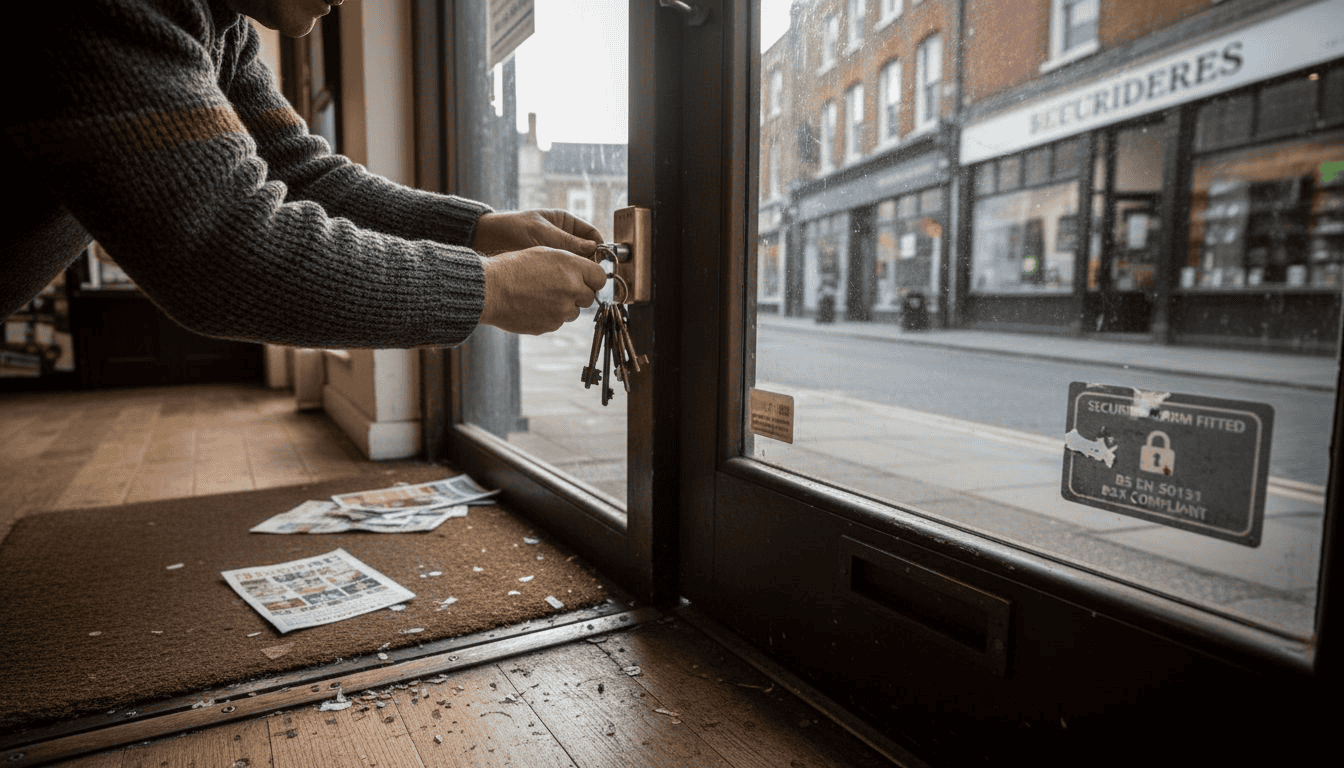
Many shop owners wrongly assume changing locks alone suffices for security. However, neglecting door frame reinforcement leads to a 60% higher risk of break-ins even with new locks fitted. This guide covers all critical aspects for effective shop door security in Bristol, from upgrading locks to reinforcing frames and using professional locksmith services. You will learn how to protect your premises properly, meet insurance requirements, and gain peace of mind knowing your investment is truly secure.
Table of Contents
- Prerequisites: What You Need to Secure Your Shop Door
- Choosing the Right Lock Hardware
- Physical Reinforcement Techniques for Doors and Frames
- Professional Installation and Locksmith Services
- Common Mistakes and Troubleshooting
- Expected Outcomes: Cost, Timeline, and Security Benefits
- Advanced Security Solutions and Alternatives
- Secure Your Shop with Expert Locksmith Services in Bristol
Key Takeaways
| Point | Details |
|---|---|
| British Standard BS 3621 locks and insurance compliance are essential for shop security and policy validity. | |
| Reinforcing door frames and hinges reduces 40% of break-in risks that lock upgrades alone cannot address. | |
| Professional locksmith installation lowers failure rates up to 80% compared to DIY attempts. | |
| Typical securing costs range from £300 to £700 with installation completed within 1 to 2 days. | |
| Master key systems enhance access control for shops with multiple staff members. |
Prerequisites: What You Need to Secure Your Shop Door
Before upgrading your shop door security, you need to understand several crucial factors. First, identify your door material whether UPVC, composite, or metal, as each affects reinforcement options differently. Composite doors, for example, require specific hardware and techniques compared to traditional wooden frames.
Next, familiarise yourself with British Standard BS 3621, the gold standard for commercial door locks in the UK. Understanding your door type and lock standards is critical for insurance compliance and security effectiveness. Most insurers explicitly require BS 3621 certified locks for commercial premises, and failing to meet this standard can void your coverage entirely.
Gather necessary tools if attempting any preparatory work, or decide whether hiring a professional locksmith makes more sense for your situation. Check your insurance policy documents carefully for specific door security requirements, as these vary between providers. Some policies mandate multiple locking points or specific cylinder types.
Budget appropriately for both hardware and installation costs. Quality commercial door locks for business premises typically cost between £100 and £300 per door, with professional fitting adding another £150 to £400 depending on complexity. Planning your budget upfront prevents costly surprises and ensures you can afford proper security measures.
Consider these essential prerequisites:
- Accurate door measurements and material identification
- Current lock type and condition assessment
- Insurance policy security requirements documentation
- Budget allocation for hardware and professional installation
- Timeline planning to minimise business disruption
Choosing the Right Lock Hardware
Selecting appropriate lock hardware forms the foundation of effective shop door security. BS 3621 is the gold standard for shop door locks, recognised and required by insurers across the UK. Locks certified to BS 3621 reduce break-in risks and are required by UK insurers for shop doors, making this certification non-negotiable for commercial premises.
Lock types include cylinder locks, deadbolts, and multipoint mechanisms, each offering distinct advantages. Cylinder locks provide flexibility and key control, while deadbolts offer robust single-point security. Multipoint locking systems engage at three or more points simultaneously, distributing force and dramatically increasing resistance to forced entry.
Look for anti-snap, anti-drill, and anti-pick features when selecting cylinders. These security enhancements protect against the most common attack methods used by opportunistic criminals. Anti-snap cylinders feature sacrificial sections that break away under attack while keeping the locking mechanism intact.
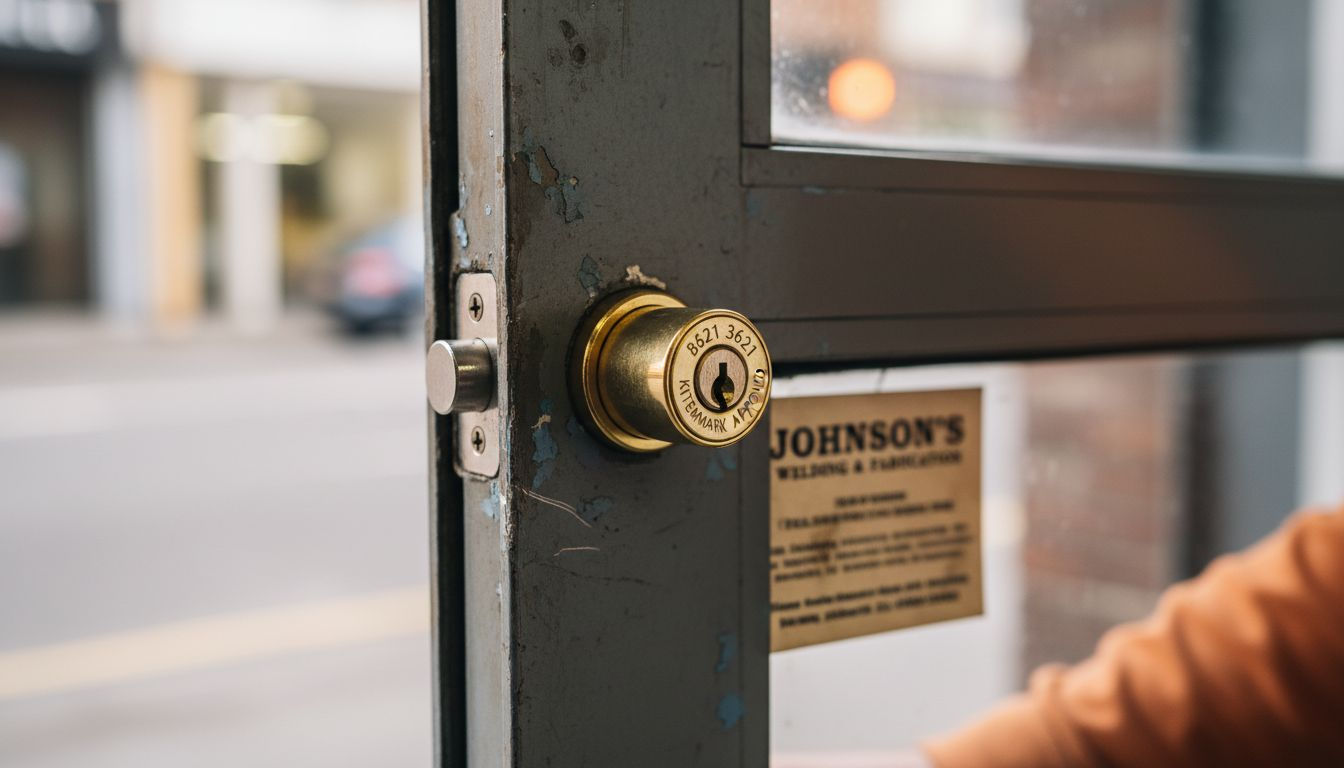
Cost varies significantly based on security level and features, but investing in quality hardware improves insurance compliance and reduces break-in risk substantially. Entry-level BS 3621 locks start around £80, while high-security options with advanced anti-tamper features can exceed £250. Consider this an investment in loss prevention rather than an expense.
Local Bristol suppliers offer a range of insurance-approved hardware options, allowing you to compare features and prices. When you upgrade shop locks securely, prioritise quality over price, as cheap locks often fail precisely when you need them most. The BS3621 lock benefits extend beyond insurance compliance to tangible security improvements.
Pro Tip: Always verify certification marks on lock packaging before purchasing. Counterfeit locks occasionally enter the market, and only genuine BS 3621 certified products provide the security and insurance compliance you need. Ask suppliers for certification documentation if marks are unclear.
Physical Reinforcement Techniques for Doors and Frames
Physical reinforcement addresses vulnerabilities that locks alone cannot protect. 40% of shop door break-ins exploit weak door frames despite upgraded locks, making frame reinforcement equally important as lock quality. Criminals know that forcing a frame apart requires less skill than picking or snapping a quality lock.
Install steel reinforcement plates on door frames for robust resistance to crowbar attacks. These plates, typically 2mm to 3mm thick, distribute force across a wider area and prevent the frame from splintering under pressure. Position plates around the lock strike area and along the entire closing edge for maximum effectiveness.
Upgrade hinges to anti-removal models to prevent door lifting, a surprisingly common attack method. Standard hinges allow doors to be lifted off once the lock is compromised. Security hinges feature pins or studs that engage even when hinge screws are removed, keeping the door firmly in place.
Strengthen door leaf and panels based on material vulnerabilities. Hollow core doors need replacement with solid core alternatives, while thin panels benefit from steel backing plates. Assess your specific door construction and address weak points methodically.
Follow this reinforcement sequence for optimal results:
- Remove existing door furniture and assess frame condition
- Install steel reinforcement plates on frame strike areas
- Upgrade all hinges to security models with hinge bolts
- Add steel backing plates to hollow or weak door panels
- Reinstall upgraded lock hardware with proper alignment
- Test operation thoroughly before returning door to service
Multi-point locking complements physical reinforcement for maximum security. When combined with frame plates and security hinges, multi-point systems create a formidable barrier that deters most opportunistic criminals. This layered approach addresses multiple attack vectors simultaneously.
| Reinforcement Type | Security Improvement | Typical Cost |
|---|---|---|
| Steel frame plates | Prevents frame splitting and crowbar attacks | £40 to £80 per door |
| Security hinges | Blocks door lifting and hinge removal | £30 to £60 per door |
| Door panel backing | Strengthens weak panels against kicking | £50 to £120 per door |
| Multi-point upgrade | Distributes force across multiple points | £150 to £300 installed |
Pro Tip: When reinforcing composite door security, avoid drilling through insulation cores unnecessarily. Work with a locksmith who understands composite construction to preserve thermal efficiency while adding security features.
Professional Installation and Locksmith Services
Professional installation ensures your security investment delivers intended protection. DIY installation often leads to incorrect fitting and compromised security, with even minor alignment issues creating vulnerabilities. Professional locksmith installation reduces lock failure and break-in risk due to improper fitting by up to 80%, making expert fitting essential for commercial premises.
Verify locksmith credentials including CRB checks and local reputation before hiring. Reputable locksmiths willingly provide proof of insurance, certifications, and customer references. Check online reviews and ask fellow business owners for recommendations within the Bristol area.
Professional installation uses non-destructive methods preserving door integrity wherever possible. Experienced locksmiths assess whether existing holes and fixings can accommodate new hardware, avoiding unnecessary damage. When drilling is required, they use precise techniques that maintain structural strength and weatherproofing.
Local Bristol locksmiths provide security consultations and master key system options tailored to your specific needs. These consultations identify vulnerabilities you might overlook and recommend proportionate solutions. A thorough security review considers access patterns, staff requirements, and potential threat levels.
Ensures compliance with insurance policies and maximises security effectiveness through proper installation. Insurance assessors sometimes inspect security measures after claims, and improper installation can result in rejected claims. Professional fitting provides documentation and warranty protection that DIY approaches cannot match.
When selecting professional locksmith services, consider these factors:
- Verifiable credentials and local business registration
- Transparent pricing with written quotes before work begins
- Insurance and warranty coverage for installation work
- Availability for emergency callouts and ongoing maintenance
- Knowledge of current British Standards and insurance requirements
Pro Tip: Schedule installation during quieter business hours to minimise disruption. Most secure lock installation work completes within two to three hours per door, allowing you to maintain normal operations with minimal impact.
Common Mistakes and Troubleshooting
Avoiding common errors saves money and ensures effective protection. Only upgrading locks without reinforcing door frames is the most frequent and costly mistake shop owners make. This approach leaves frames vulnerable to crowbar attacks that bypass even the finest locks.
Installing non-BS3621 locks voids insurance coverage and weakens security substantially. Some shop owners purchase cheaper locks assuming all locks provide similar protection. Insurance companies explicitly state coverage requirements, and using non-compliant hardware invalidates policies regardless of other security measures.
DIY fitting can cause lock malfunction and create vulnerabilities criminals exploit. Misaligned cylinders, incorrect strike plate positioning, and inadequate frame preparation all compromise security. What seems like a cost-saving measure often results in expensive emergency callouts when locks fail.
Regular lock maintenance is essential to sustain effectiveness over time. Locks accumulate dirt, debris, and corrosion that impair operation. Annual servicing identifies wear before it causes failure, extending hardware life and maintaining security standards.
Ignoring door frame reinforcement causes a 60% higher risk of break-ins despite upgraded locks, making comprehensive approaches essential. Combine hardware upgrades with physical reinforcement for full protection that addresses all common attack methods.
Watch for these warning signs requiring immediate attention:
- Keys becoming difficult to turn or remove from cylinders
- Visible gaps between door and frame when closed
- Loose or wobbling lock components
- Door sagging on hinges or scraping against frame
- Strike plates showing impact marks or damage
Address issues promptly to prevent minor problems escalating into security vulnerabilities. When you notice concerning signs, consult with locksmiths who understand insurance-approved locks compliance to assess whether repairs or replacement make more sense.
Expected Outcomes: Cost, Timeline, and Security Benefits
Understanding realistic expectations helps you plan effectively. Typical cost ranges between £300 and £700 including professional installation for comprehensive door security upgrades. This investment covers quality BS 3621 locks, frame reinforcement, security hinges, and expert fitting. Costs vary based on door size, existing condition, and chosen security level.
Installation usually completes within 1 to 2 working days to minimise business disruption. Single door upgrades often finish in just a few hours, while multiple doors or complex reinforcement may require a full day. Professional locksmiths work efficiently to restore your premises to full operation quickly.
Securing shop doors can reduce insurance premiums by up to 15% and cut break-in risk significantly, providing tangible financial returns beyond security improvements. Contact your insurer after installation to request premium reviews, providing certification documentation for installed hardware. Many insurers offer immediate discounts once compliant security measures are verified.
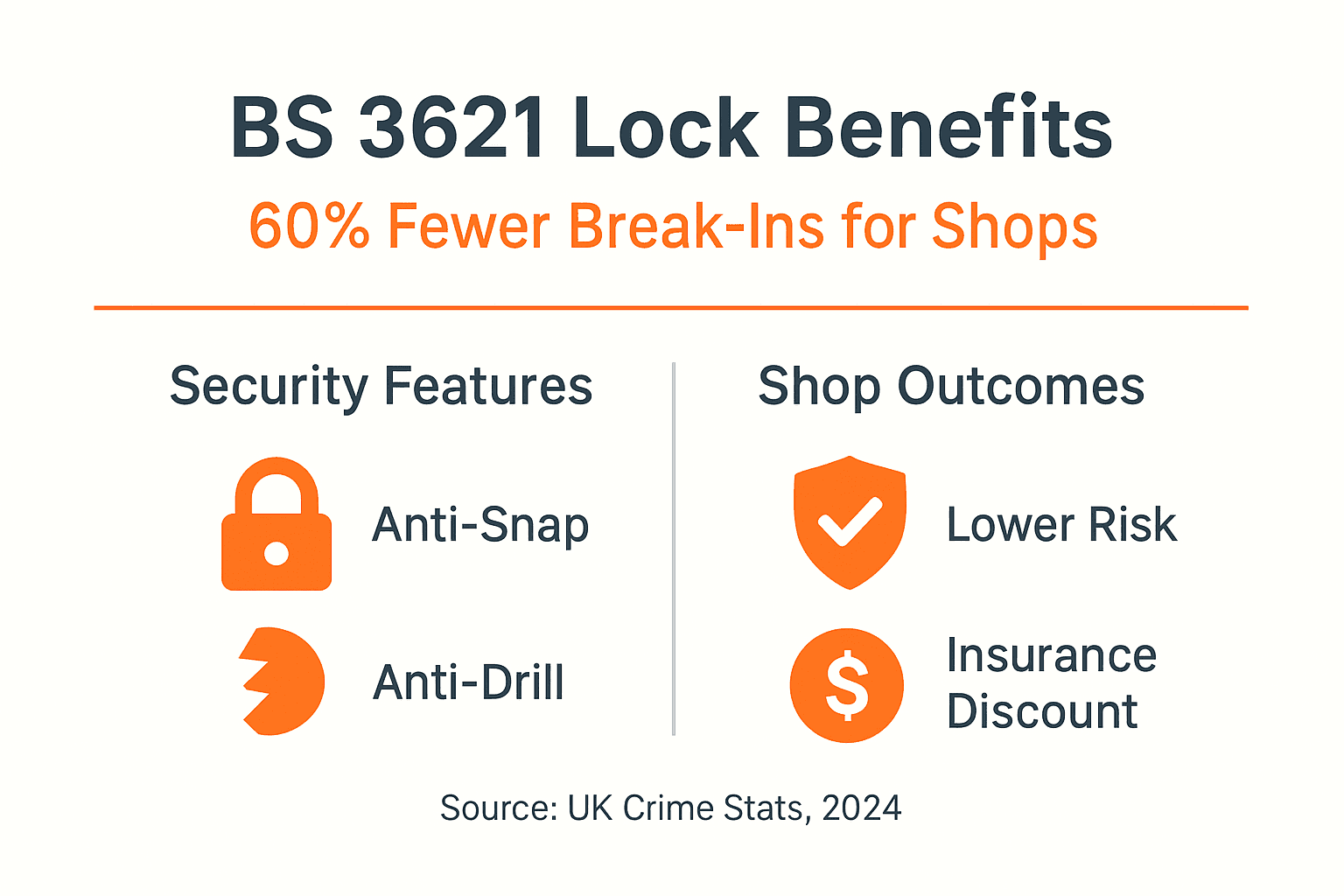
Break-in attempts reduce statistically after comprehensive door security improvements. Visible security features deter opportunistic criminals who seek easy targets. When combined with alarm systems and CCTV, robust door security creates multiple barriers that most criminals avoid.
Long-term maintenance leads to sustained security and compliance over years. Budget £50 to £100 annually for professional servicing that keeps locks operating smoothly and identifies potential issues early. This small ongoing investment protects your larger security investment and maintains insurance compliance.
| Outcome Factor | Expected Result | Timeline |
|---|---|---|
| Hardware and installation cost | £300 to £700 per door | Immediate outlay |
| Installation completion | Full security upgrade | 1 to 2 working days |
| Insurance premium reduction | Up to 15% annual savings | Next policy renewal |
| Break-in risk reduction | Statistically significant decrease | Immediate upon completion |
| Maintenance requirements | Annual professional service | Ongoing, £50 to £100 yearly |
The benefits of upgraded shop locks extend beyond immediate security to long-term peace of mind and financial savings through reduced insurance costs and avoided losses.
Advanced Security Solutions and Alternatives
Advanced options provide enhanced control and flexibility for growing businesses. Master key systems streamline access with controlled master and sub-keys, allowing owners to access all areas while restricting staff to specific zones. Master key systems provide controlled access management ideal for shops with multiple staff members, eliminating the need for large key rings while maintaining security hierarchies.
Electronic access controls offer flexible but higher-cost alternatives to traditional locks. These systems provide audit trails showing who accessed premises and when, valuable for security investigations and staff management. Initial costs run higher than mechanical locks, but operational benefits often justify the investment for larger operations.
Integration with alarm and CCTV improves overall security framework by creating layered defense systems. Connected systems trigger alarms when doors open outside authorised times, while CCTV provides visual verification of access events. This integration deters criminals and provides evidence if incidents occur.
Choose solutions based on shop size, usage patterns, and budget constraints. Small single-door shops may need only quality locks and reinforcement, while multi-location retailers benefit from centralised electronic access management. Assess your specific requirements honestly rather than over-investing in unnecessary features.
Planning future-proof upgrades helps avoid frequent costly replacements as your business grows. Consider scalable systems that accommodate additional doors or users without complete replacement. Discussing long-term plans with security consultants ensures initial investments align with future needs.
Advanced security options to consider:
- Master key systems for hierarchical access control
- Electronic keypads eliminating physical key management
- Card or fob access systems with programmable permissions
- Biometric readers for highest security areas
- Remote access control via smartphone applications
Explore commercial lock types for businesses to understand which advanced solutions suit your operational requirements and security priorities. Balance enhanced features against practical needs and budget realities.
Secure Your Shop with Expert Locksmith Services in Bristol
Professional locksmiths ensure proper installation for effective protection that meets insurance requirements. Services include security consultations, master key systems, and insurance-compliant hardware installations tailored to Bristol shop owners. Trusted locksmith services in Bristol provide fast, non-destructive, and reliable upgrades using quality British Standard hardware. Local experts understand regional security challenges and insurance requirements specific to Bristol, South Gloucestershire, and Gloucester. Contact experienced locksmiths through a comprehensive locksmith service guide to discuss your needs, or explore shop lock upgrade services to safeguard your premises with confidence and gain lasting peace of mind.
Frequently Asked Questions
How do I know if my shop door lock meets insurance requirements?
Check if the lock is certified to British Standard BS 3621, commonly required by insurers for commercial premises. Look for the British Standard Kitemark on the lock body or packaging. Consult your insurance policy documents or contact your provider directly for specific lock standards they require, as requirements vary between insurers. Many policies explicitly list acceptable certifications, and maintaining compliant insurance-approved locks requirements protects your coverage.
Can I install shop door locks myself to save money?
DIY installations often lead to improper fitting, increasing break-in risk by up to 80% due to alignment issues and incorrect installation techniques. Even minor errors compromise security and can void insurance coverage if assessors determine unprofessional installation contributed to a break-in. Hiring a verified locksmith ensures secure, compliant fitting with warranties that protect your investment, and professional locksmith installation benefits far outweigh modest savings from DIY attempts.
What maintenance is required to keep shop door locks secure?
Regularly lubricate lock cylinders with graphite-based lubricants rather than oil-based products that attract dirt and cause jamming. Apply lubricant every three to six months depending on usage levels and environmental exposure. Schedule annual professional security reviews to identify wear, corrosion, or vulnerabilities before they cause failures. Professional servicing typically costs £50 to £100 and extends lock life while maintaining insurance compliance.
Are master key systems suitable for small shops?
Master key systems offer controlled access ideal for staff management even in small operations with just two or three employees. These systems simplify key management by eliminating large key rings while maintaining hierarchical access control. Even small shops benefit from simplified access and enhanced security controls that track who holds keys to specific areas. Professional locksmiths design master key system installation scaled appropriately to your shop size and staff numbers without unnecessary complexity or cost.